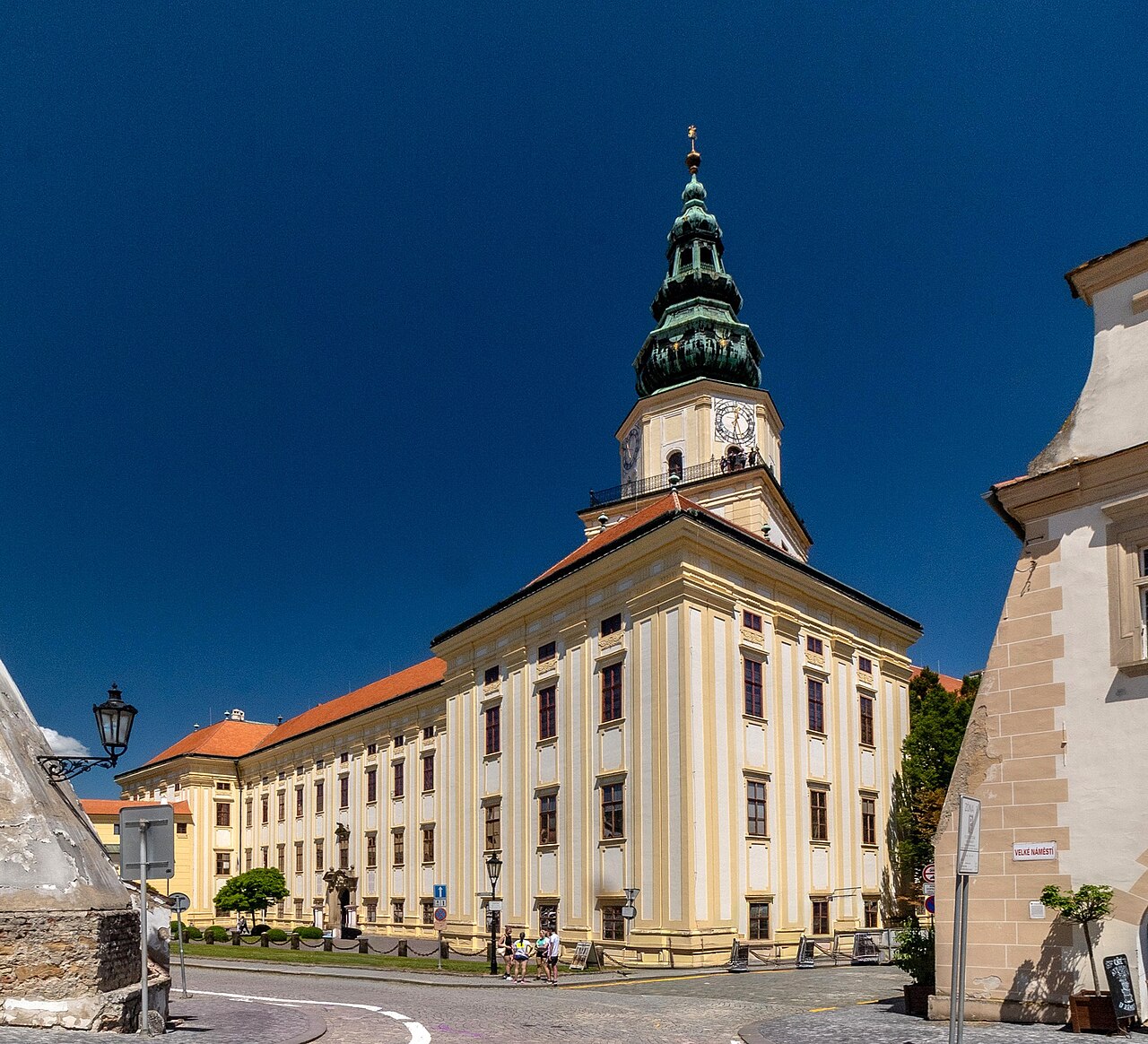
Kromeriz Castle and Gardens
Kroměříž Castle and Gardens in the Czech Republic represent a remarkable example of a European Baroque princely residence and its gardens, recognized as a UNESCO World Heritage Site. The site originated as a Late Gothic residence founded in 1497 by Bishop Stanislas Thurzo, situated strategically on the site of an earlier ford across the River Morava. This initial structure incorporated some Renaissance details, reflecting the architectural transition of the late 15th century.
Historical development and architectural evolution
The castle's history is marked by significant events and transformations. During the Thirty Years' War, the castle suffered damage when it was sacked by the Swedish army in 1643. This devastation led to a major rebuilding phase initiated in 1664 under the direction of a bishop from the influential Liechtenstein family. The bishop commissioned the architect Filiberto Lucchese to renovate the palace in the Baroque style, a style characterized by grandeur, dynamic shapes, and elaborate ornamentation.
Lucchese's most notable contribution was the design of the Pleasure Garden in front of the castle, a formal garden that remains a rare and largely intact example of Baroque garden design. After Lucchese's death in 1666, the architect Giovanni Pietro Tencalla completed the garden and oversaw the palace's reconstruction. Tencalla's work reflects the Turinese school of architecture, known for its sophisticated Baroque features.
The 1752 fire and artistic enrichment
A catastrophic fire in March 1752 gutted the palace, prompting Bishop Hamilton to commission leading imperial artists to redecorate the interiors. The painters Franz Anton Maulbertsch and Josef Stern were invited to adorn the palace halls with their works, enriching the palace's artistic heritage. Their frescoes and paintings contribute to the palace's reputation as a cultural treasure.
The art collection and cultural significance
The palace houses an outstanding art collection, considered the second finest in the Czech Republic. Among its prized possessions is Titian's last mythological painting, The Flaying of Marsyas. Much of the collection was acquired by Bishop Karel in 1673 in Cologne, reflecting the bishopric's extensive cultural investments.
Beyond visual arts, the castle contains a significant musical archive and a library of approximately 33,000 volumes, highlighting its role as a center of intellectual and cultural activity. This rich cultural environment attracted filmmakers centuries later; the palace interiors were used in the film Amadeus (1984) to represent Vienna's Hofburg Imperial Palace. The main audience chamber also featured in the film Immortal Beloved (1994), underscoring the castle's evocative atmosphere.
Gardens and landscape design
The Pleasure Garden remains the castle's most significant garden feature, exemplifying Baroque principles of symmetry, perspective, and controlled nature. Its design includes formal parterres, alleys, fountains, and sculptures, creating a theatrical landscape that complements the palace's grandeur. The garden's preservation makes it a rare surviving example of its kind in Europe.
In addition to the Baroque garden, there is a nineteenth-century English garden on the grounds, which offers a contrasting, more naturalistic landscape style. This garden suffered damage during the 1997 floods but remains an important part of the castle's extensive grounds.
Architectural features and layout
The castle complex includes fortified walls, courtyards, and a variety of ornate halls and chambers. The architectural progression from the original Late Gothic and Renaissance elements to the later Baroque renovations is evident in the structural details and decorative schemes. The palace's layout reflects both defensive needs of earlier periods and the representational functions of a princely residence in the Baroque era.
Current status and visitor information
Today, Kroměříž Castle and Gardens are well preserved and open to the public. The site offers visitors a comprehensive experience of Baroque architecture, art, and garden design. Its designation as a UNESCO World Heritage Site underscores its international cultural importance. Visitors can explore the richly decorated interiors, the art collection, and the expansive gardens that have been carefully maintained to reflect their historical appearance.
The castle's role in film history adds an additional layer of interest, attracting visitors who appreciate both history and cinema. The gardens, especially the Pleasure Garden, provide a peaceful and visually stunning environment, illustrating the artistic ambitions of the Baroque period.
Frequently asked questions (FAQ)
- How do I get to Kromeriz Castle and Gardens?
- Kromeriz Castle and Gardens are easily accessible by public transport, with regular train and bus services connecting it to major cities in the Czech Republic. If you're driving, the castle is located just off the D1 highway, and there is parking available nearby.
- What is the historical significance of Kromeriz Castle?
- Kromeriz Castle, a UNESCO World Heritage site, was originally built in the 13th century and served as a residence for archbishops. It is renowned for its Baroque architecture and its gardens, which are considered among the finest in Europe, reflecting the cultural and political history of the Czech Republic.
- When was Kromeriz Castle built?
- The original structure of Kromeriz Castle dates back to the 13th century, but it underwent significant renovations in the 17th century, particularly under the guidance of architect Giovanni Battista Alliprandi. The transformation into a Baroque masterpiece was completed in the 18th century.
- Can I visit the gardens at Kromeriz Castle?
- Yes, the gardens at Kromeriz Castle are open to visitors and are a major attraction of the site. They feature beautifully landscaped areas, fountains, and a variety of plant species, making it a perfect spot for leisurely walks and photography.
- Why is Kromeriz Castle a UNESCO World Heritage site?
- Kromeriz Castle is recognized as a UNESCO World Heritage site due to its outstanding universal value, which includes its architectural significance and the historical context of its gardens. The site exemplifies the Baroque style and reflects the cultural heritage of the region.
- Is it possible to take guided tours of Kromeriz Castle?
- Yes, guided tours of Kromeriz Castle are available and highly recommended for a deeper understanding of its history and architecture. Tours are conducted in multiple languages, providing insights into the castle's art, furnishings, and historical context.
- What are the opening hours for Kromeriz Castle and Gardens?
- Kromeriz Castle and Gardens typically open to visitors from April to October, with varying hours depending on the season. It is advisable to check the official website for the most current opening times and any seasonal variations.
- What are the ticket prices for Kromeriz Castle?
- Ticket prices for Kromeriz Castle vary depending on the type of tour and access to different areas. Discounts are often available for children, students, and seniors, so it's a good idea to review the pricing details on the official site before your visit.
- What is the best time to visit Kromeriz Castle and Gardens?
- The best time to visit Kromeriz Castle and Gardens is during spring and early autumn when the gardens are in full bloom and the weather is pleasant. Summer can also be a great time, but it tends to attract more tourists, so plan your visit accordingly to avoid crowds.
- Are there any nearby attractions to visit while at Kromeriz Castle?
- Yes, while visiting Kromeriz Castle, you can also explore nearby attractions such as the Kroměříž Flower Gardens and the Archbishops' Palace. The charming town of Kroměříž itself is rich in history and features several museums and local shops worth visiting.
Information
Loading map...
Visitor reviews
No reviews yet. Been here? Write the first review and help other travelers!
Write the first reviewVisited this castle? Share your experience
Your review helps other travelers and adds first-hand knowledge to our encyclopedia.