Kristiansten Fortress
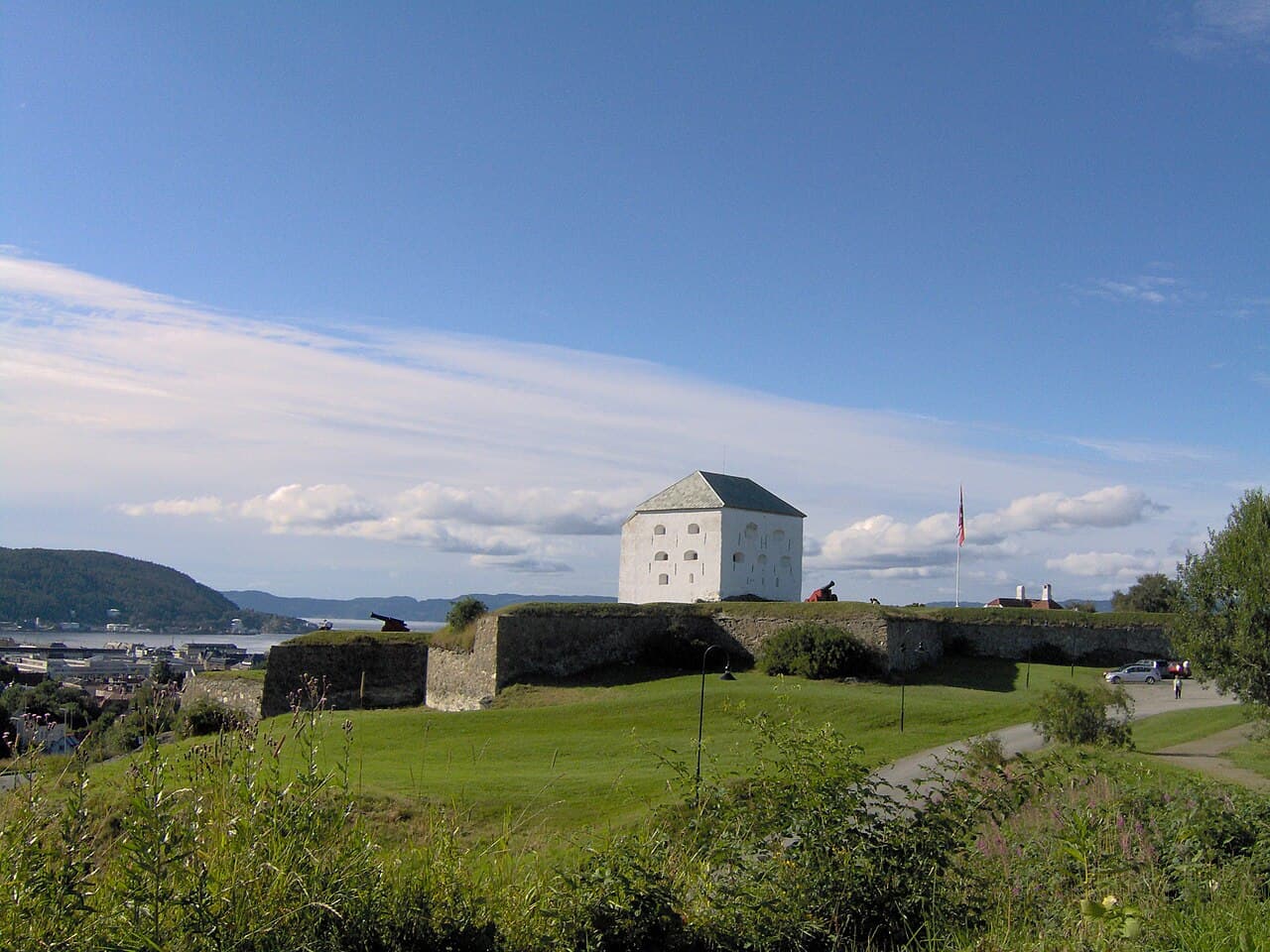
Kristiansten Fortress is a prominent bastioned fortress situated on a strategic hill east of Trondheim in Trøndelag county, Norway. Constructed between 1681 and 1685, the fortress was designed to protect the city from eastern invasions following the devastating fire of 1681. Its name honors Christian V of Denmark-Norway, under whose reign the fortress was commissioned as part of a broader effort to modernize the city's defenses and urban plan.
The fortress was the brainchild of General Johan Caspar von Cicignon, the chief inspector of the kingdom's fortifications. After the great fire on 18 April 1681, Cicignon was tasked with redesigning Trondheim and fortifying it against future attacks. His comprehensive plan included the construction of Kristiansten Fortress, which was built on a hill offering commanding views over the eastern approaches to the city. This elevated position allowed defenders to monitor and repel potential invaders effectively.
Architectural design and fortification features
Kristiansten Fortress exemplifies Renaissance military architecture with its bastioned design, which was state-of-the-art for its time. The fortress was constructed with angled bastions that allowed for overlapping fields of fire, minimizing blind spots and enhancing defensive capabilities. The main defensive structure, known as the donjonen or defensive tower, served multiple purposes including artillery emplacement, troop quarters, and storage.
Between 1691 and 1695, the fortress’s defenses were further strengthened. An advanced post called Kristiandsands bastion was added to the east, and the now-vanished Møllenberg skanse was built near the river Nidelven. These additions were connected to the main fortress and the city by a continuous palisade, creating a fortified perimeter. In the mid-18th century, around 1750, the fortress underwent modernization to withstand advances in mortar artillery. New bastions and casemates were constructed, and two isolated defensive works—Grüners redutt and Frølichs redutt—were built to the east, although these are scarcely visible today.
Historical significance and military engagements
The fortress played a crucial role during the Great Northern War in 1718 when King Charles XII of Sweden launched a second invasion of Norway. General Carl Gustaf Armfeldt led a Swedish force into the Trøndelag region with the objective of capturing Trondheim. The city was defended by approximately 6,900 Norwegian troops under Vincens Budde, supported by local resistance from the countryside, which remembered previous Swedish occupations with hostility.
Despite laying siege to Trondheim, the Swedish forces were unable to breach the strong defenses of Kristiansten Fortress and other fortifications. The harsh Norwegian winter and lack of supplies further weakened Armfeldt’s army, which dwindled to around 4,000 men. After the death of King Charles XII at Fredriksten Fortress in December 1718, the Swedish army was ordered to retreat. The retreat across the mountains was catastrophic, with severe losses due to snow, cold, and blizzards, drawing comparisons to Napoleon’s retreat from Moscow.
Post-military use and modern history
Following its decommissioning in 1816 by King Charles XIV John, Kristiansten Fortress was repurposed as a fire watch station. Since 1997, it has operated as a museum, preserving its historical legacy and offering insights into Norway’s military past. The fortress remains a significant cultural landmark in Trondheim.
In the early 20th century, Kristiansten Fortress was a site of national symbolism. On 9 June 1905, the Norwegian war flag was raised here, replacing the union flag with Sweden, marking Norway’s independence. Later that year, on 18 November, a twenty-one gun salute from the fortress celebrated the election of Prince Carl of Denmark as King Haakon VII of Norway.
Role during world war ii and legal purge
During the German occupation of Norway in World War II, Kristiansten Fortress was used by the Nazis as an execution site for Norwegian patriots. After the war, the fortress served as the official location for executing convicted traitors and war criminals during Norway’s legal purge. Notably, the infamous collaborator Henry Rinnan was executed here in 1947, along with several of his followers.
Visitor experience and cultural importance
Today, Kristiansten Fortress stands as a well-preserved example of 17th-century military architecture and offers visitors panoramic views of Trondheim and the surrounding landscape. The museum housed within the fortress provides detailed exhibitions on its construction, military history, and role in Norwegian national identity. Walking the bastions and ramparts allows visitors to appreciate the strategic design and historical context of this important fortress.
Frequently asked questions (FAQ)
- When was Kristiansten Fortress built and by whom?
- Kristiansten Fortress was constructed between 1681 and 1685, designed by General Johan Caspar von Cicignon following the great fire of Trondheim in 1681.
- What role did Kristiansten Fortress play in the Great Northern War?
- During the Great Northern War in 1718, Kristiansten Fortress successfully defended Trondheim against a Swedish siege led by General Carl Gustaf Armfeldt.
- Is Kristiansten Fortress open to the public?
- Yes, Kristiansten Fortress operates as a museum and is open to visitors who can explore its bastions, museum exhibits, and enjoy panoramic views of Trondheim.
- What significant events took place at Kristiansten Fortress during World War II?
- During World War II, the fortress was used by the Nazis as an execution site for Norwegian patriots, and after the war, it was the official place for executing convicted war criminals.
- How has Kristiansten Fortress been preserved and used since its decommissioning?
- After being decommissioned in 1816, Kristiansten Fortress served as a fire watch station and since 1997 has been maintained as a museum showcasing its military history.
Photo gallery

Information
Current owner
Municipality of Trondheim
Loading map...
Visitor reviews
No reviews yet. Been here? Write the first review and help other travelers!
Write the first reviewVisited this castle? Share your experience
Your review helps other travelers and adds first-hand knowledge to our encyclopedia.