Kreuzenstein Castle
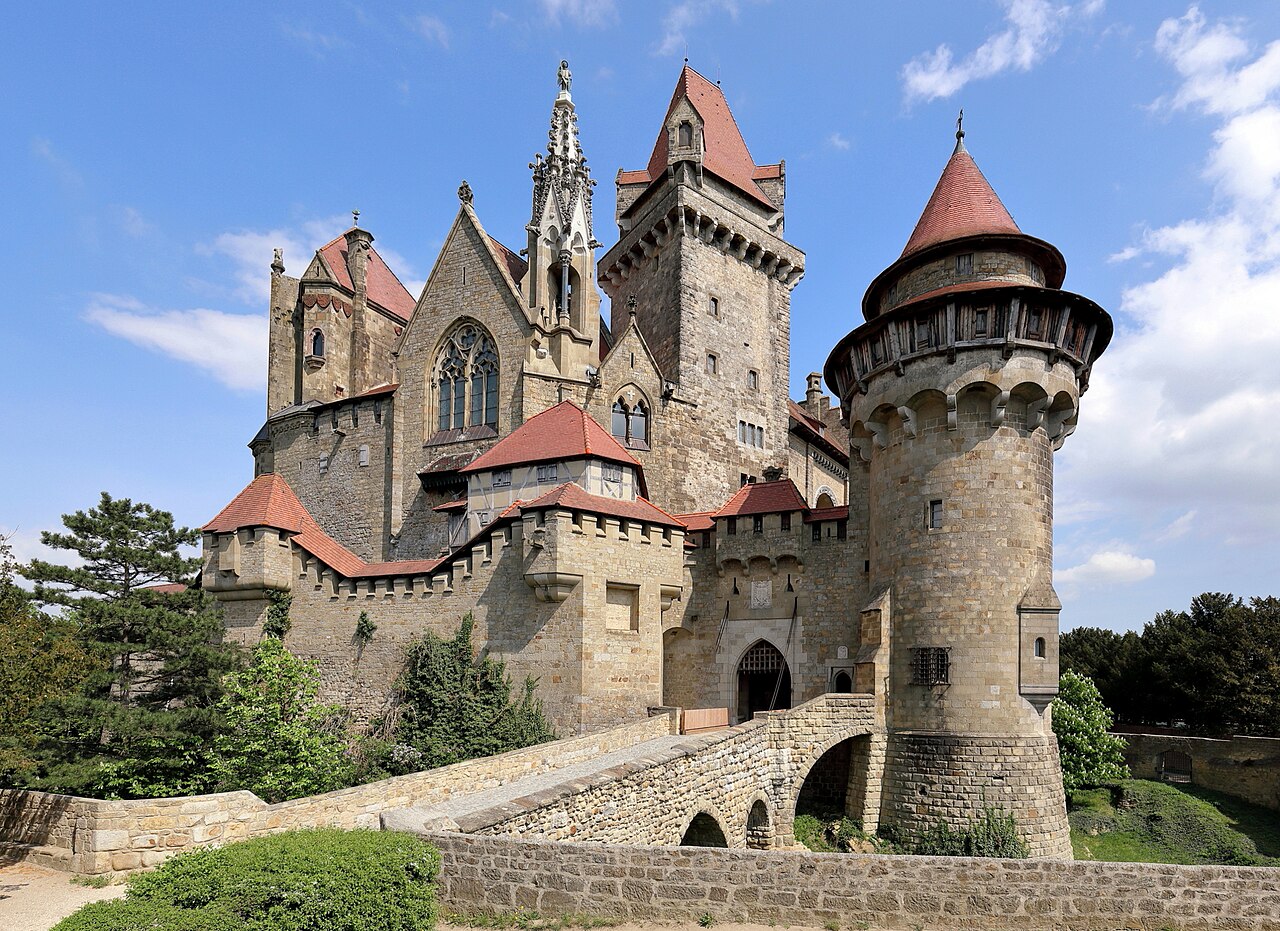
Kreuzenstein Castle, locally known as Burg Kreuzenstein, stands prominently north of the village of Leobendorf, east of Stockerau in the province of Lower Austria. Perched atop a small mountain, the castle commands sweeping views of the surrounding countryside, making it a striking landmark in the region.
The origins of Kreuzenstein Castle trace back to the 12th century, with the earliest known mention in a 1115 document referring to it as 'Grizanessstein.' Originally constructed by the Counts of Formbach (later known as Vornbach, Bavaria), the castle later passed through the hands of the Counts of Wasserburg by marriage. By the late 13th century, in 1278, it became part of the extensive possessions of the Habsburg dynasty through the reign of Ottokar II of Bohemia.
Medieval history and destruction
Throughout the High Medieval period, Kreuzenstein was a formidable fortress that remained unconquered until the Thirty Years' War. In April 1645, during this devastating conflict, the castle was seized by the Swedish army under Field Marshal Lennart Torstensson. The Swedish occupation was short-lived, as Imperial troops besieged the castle later that year, forcing the Swedes to retreat. In their departure, the Swedes deliberately destroyed three sections of the castle, leaving it in ruins.
The castle also played a role in religious history; in July 1527, the Anabaptist preacher Balthasar Hubmaier was arrested in Mikulov, Moravia, and brought to Kreuzenstein. Despite interrogation at the castle, he refused to renounce his beliefs and was subsequently executed in Vienna.
19th-century reconstruction and romantic revival
After centuries of ruin, the castle was reborn in the late 19th century. Between 1874 and 1907, Count Nepomuk Wilczek undertook an ambitious project to reconstruct Kreuzenstein Castle. Funded by the wealth generated from the Wilczek family's Silesian coal mines, the new castle was designed as a romanticized Romanesque-Gothic revival masterpiece. It was intended as a family vault and a symbol of noble heritage.
What makes Kreuzenstein unique is that its reconstruction incorporated authentic medieval architectural elements salvaged from various European sites. These fragments were carefully integrated to create a castle that, while not originally medieval, offers an authentic medieval appearance. This approach reflects the 19th-century fascination with medievalism and historicism, making Kreuzenstein a prime example of a romantic neo-Gothic castle.
Architectural features and design
The castle features characteristic elements of medieval fortifications, including towers, battlements, gatehouses, and courtyards. The design emphasizes a harmonious blend of Romanesque solidity and Gothic verticality. The interiors include grand halls, chambers, and dungeons reconstructed to evoke the atmosphere of a medieval stronghold.
20th century damage and restoration
During World War II in 1945, Kreuzenstein Castle suffered significant damage. However, it was carefully restored in the post-war years to preserve its historical and architectural value. Today, the castle is well-preserved and functions as a museum, attracting visitors interested in both its romantic architecture and rich history.
Cultural activities and tourism
Kreuzenstein Castle hosts a variety of cultural events, including the renowned Adlerwarte Kreuzenstein falconry shows held from April to October. These events showcase birds of prey in flight, adding to the castle's allure as a living historical site. The recently renovated Burgtaverne Kreuzenstein offers visitors a taste of medieval ambiance with its themed restaurant setting.
The castle is accessible to the public through guided tours during the warmer months, providing an immersive experience of its architecture and history. Photography inside the castle is restricted to preserve its interiors, but the exterior and surrounding landscape offer ample opportunities for memorable photographs.
Location and visitor information
Located on Kreuzensteiner Strasse, the castle's hilltop position not only provided strategic defense in medieval times but now offers visitors panoramic views of Lower Austria's countryside. Its proximity to Vienna makes it a popular day-trip destination for tourists seeking to explore Austria's medieval heritage and romantic revival architecture.
Visitors are advised to check opening hours before planning their visit, as the castle operates seasonally. The combination of historical significance, architectural beauty, and engaging cultural programs makes Kreuzenstein Castle a must-see attraction in Austria.
Frequently asked questions (FAQ)
- How do I get to Kreuzenstein Castle?
- Kreuzenstein Castle is located in Leobendorf, Austria, easily accessible by car or public transport. If you're traveling by train, take the train to Korneuburg and then a short bus ride will bring you to the castle. Ample parking is available for those arriving by car.
- What is the historical significance of Kreuzenstein Castle?
- Kreuzenstein Castle has a rich history dating back to the 12th century and is known for its well-preserved medieval architecture. It was rebuilt in the late 19th century by architect Count Johann Nepomuk Wilczek, who sought to create a historicist castle that reflects various architectural styles. The castle is also notable for its extensive collection of medieval artifacts and weaponry.
- When was Kreuzenstein Castle built?
- The original structure of Kreuzenstein Castle was built in the 12th century, though it underwent significant renovations and expansions in the late 19th century. The restoration was led by Count Wilczek, who added features that blended various historical styles. This makes the castle a fascinating example of both medieval and 19th-century architectural influences.
- Can I take guided tours of Kreuzenstein Castle?
- Yes, guided tours are available at Kreuzenstein Castle, providing visitors with in-depth information about its history and architecture. The tours typically run throughout the day, and you can join them to explore the castle's impressive interiors and learn about its fascinating past. It's recommended to check the schedule ahead of your visit for tour times.
- Is Kreuzenstein Castle accessible for visitors with mobility challenges?
- Kreuzenstein Castle has made efforts to accommodate visitors with mobility challenges, but due to its historical nature, some areas may be difficult to access. While there are accessible paths, certain parts of the castle, including narrow staircases, may pose challenges. It's advisable to contact the castle administration directly for specific accessibility inquiries before your visit.
- What are the opening hours for Kreuzenstein Castle?
- Kreuzenstein Castle is typically open to visitors from March to November, with varying hours depending on the season. During peak summer months, the castle often has extended hours to accommodate tourists. Always check the official website or contact the castle for the most current opening hours before planning your visit.
- What are the ticket prices for visiting Kreuzenstein Castle?
- Ticket prices for Kreuzenstein Castle vary depending on age and group size, with discounts available for children, students, and seniors. Generally, entrance fees are reasonable, making it an affordable option for families and history enthusiasts alike. It's best to purchase tickets on-site or check online for any special deals or packages.
- When is the best time to visit Kreuzenstein Castle?
- The best time to visit Kreuzenstein Castle is during the spring and early autumn when the weather is mild and the surrounding landscape is beautiful. Additionally, visiting during weekdays can help you avoid larger crowds, allowing for a more enjoyable experience. Special events and medieval festivals are often held in the summer, providing a unique experience.
- Are there any nearby attractions to visit after Kreuzenstein Castle?
- Yes, nearby attractions include the charming town of Korneuburg, where visitors can explore local shops and cafes. Additionally, the Danube River offers scenic views and opportunities for outdoor activities. The Vienna Woods and other historical sites are also within a short drive, making it easy to extend your visit beyond the castle.
Information
Sources & official resources
Verify the information above using these authoritative references.
Loading map...
Visitor reviews
No reviews yet. Been here? Write the first review and help other travelers!
Write the first reviewVisited this castle? Share your experience
Your review helps other travelers and adds first-hand knowledge to our encyclopedia.