Klosterneuburg Abbey
Klosterneuburg Abbey, located in Klosterneuburg, Austria, is a monumental monastery complex with origins dating back to the early 12th century. Founded in 1114 by Saint Leopold III of Babenberg, the patron saint of Austria, together with his wife Agnes of Germany, the abbey has served as a religious, cultural, and architectural landmark for over nine centuries. It stands as a testament to the evolving styles and historical developments from the High Medieval period through the Baroque and neo-Gothic eras.
The foundation and early medieval architecture
The abbey was established as a religious institution and fortified complex, initially designed in the form of a basilica. The original abbey church, dedicated to the Nativity of Mary, was consecrated in 1136 after 22 years of construction. Remarkably, the fundamental form of this basilica has endured for more than nine centuries despite numerous modifications and restorations. The complex's foundations include a castle tower and a Gothic chapel dating back to the 12th century, reflecting its dual function as both a spiritual center and a fortified site.
The chapel of Saint Leopold and early Gothic elements
One of the oldest extant structures within the complex is the chapel built in 1318, which houses the tomb of Saint Leopold. This chapel exemplifies early Gothic architectural features, including pointed arches and ribbed vaults, which were innovative for the period and contributed to the spiritual ambiance of the monastery. The integration of religious relics and tombs within the chapel underscores the abbey's significance as a pilgrimage site and dynastic mausoleum for the Babenberg family.
Baroque transformation and architectural expansion
Beginning in 1634, the abbey underwent extensive rebuilding and embellishment in the Baroque style. This transformation was commissioned by the Habsburg rulers, who sought to enhance the monastery's grandeur and religious symbolism. The work was led by prominent architects such as Jakob Prandtauer and Donato Felice d'Allio, whose designs introduced dynamic forms, elaborate stuccoes, and richly decorated interiors.
The Baroque period saw the construction of many of the monastery's impressive structures, which were mostly completed between 1730 and 1834. These include grand halls, ornate chapels, and expansive courtyards that reflect the era's emphasis on theatricality and spiritual intensity. The abbey's transformation during this period aligned it with other major European religious complexes, emphasizing its importance within the Habsburg domains.
Neoclassical influences and later developments
In the late 18th and early 19th centuries, plans were made to further embellish the monastery on a scale comparable to the Spanish Escorial. These plans were undertaken by the Neoclassical architect Joseph Kornhäusel, although only a few elements of his vision were realized. This phase introduced restrained classical forms and balanced proportions, contrasting with the exuberance of the Baroque period.
Neo-Gothic restoration and 19th-century enhancements
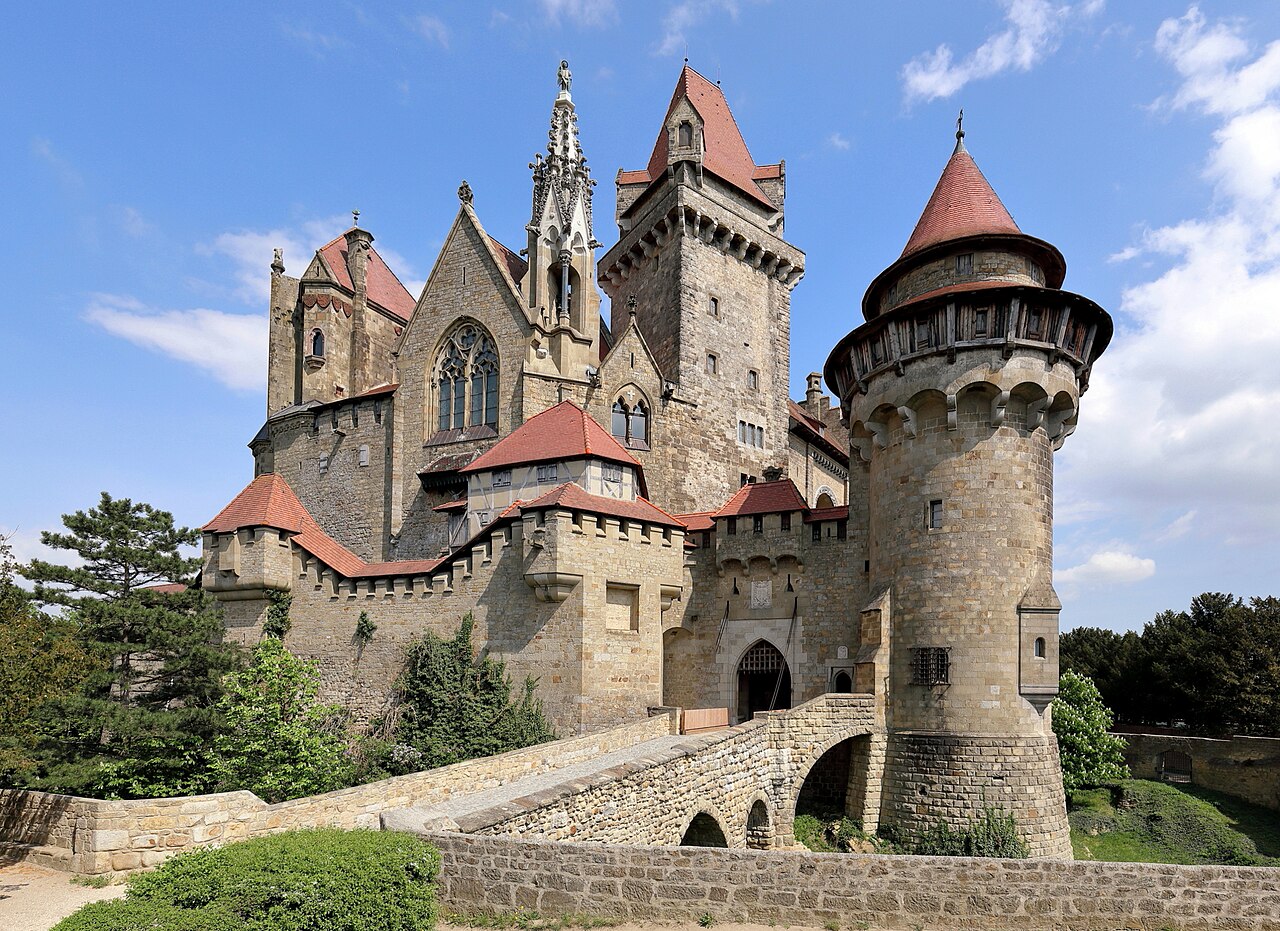
The abbey experienced a significant restoration in 1879 under the direction of the architect Friedrich von Schmidt, a leading figure in the neo-Gothic revival. This restoration included the erection of the striking twin neo-Gothic steeples, which have since become iconic features of the monastery's silhouette. The neo-Gothic elements reintroduced medieval stylistic motifs, such as pointed arches, intricate tracery, and decorative finials, reinforcing the abbey's historic character.
Artistic treasures and cultural significance
Klosterneuburg Abbey is renowned for its remarkable artistic collections, most notably the Verduner Altar, created in 1181 by the goldsmith Nicholas of Verdun. This altar is composed of 45 gilded copper plates modeled on Byzantine art, featuring intricate reliefs and iconography. It is often compared to the Shrine of the Three Kings at Cologne Cathedral for its craftsmanship and religious importance.
The monastery also houses a museum with extensive collections of Gothic and Baroque sculpture and a gallery of paintings. Among the highlights are fifteen panel paintings by Rueland Frueauf dating from 1505, four Passion paintings from the back of the Verduner Altar created in 1331, and a genealogical tree of the Babenberg dynasty. These artworks provide insight into the religious, artistic, and dynastic history of the region.
Architectural layout and features of the monastery complex
The monastery complex is a blend of architectural styles and functions, reflecting its long history. It includes fortified elements such as castle towers and defensive walls, alongside religious structures like the basilica and chapels. The courtyards and cloisters provide serene spaces for contemplation and monastic life.
The abbey's integration of different architectural styles—from Romanesque foundations through Gothic and Baroque to neo-Gothic—illustrates the evolving tastes and religious practices over centuries. This mixture creates a unique architectural tapestry that attracts historians, architects, and visitors alike.
Present-day status and visitor experience
Today, Klosterneuburg Abbey remains a functioning monastery and a major cultural landmark. It is well preserved and partially restored, allowing visitors to explore its historic buildings, art collections, and religious heritage. The abbey hosts religious services, cultural events, and guided tours that highlight its architectural and historical significance.
Visitors can admire the impressive neo-Gothic twin steeples, explore the museum's rich collections, and appreciate the peaceful atmosphere of the cloisters and chapels. The abbey's location near Vienna makes it accessible for day trips and educational visits.
Frequently asked questions (FAQ)
- How do I get to Klosterneuburg Abbey?
- Klosterneuburg Abbey is easily accessible via public transport from Vienna. You can take the S-Bahn (S40) or various bus lines that connect to the abbey, making it a convenient day trip from the city.
- What is the historical significance of Klosterneuburg Abbey?
- Founded in 1114, Klosterneuburg Abbey is one of the oldest monasteries in Austria and has played a vital role in the region's religious and cultural history. The abbey is also known for its impressive collection of art and artifacts, including the famous Verdun Altar.
- When was Klosterneuburg Abbey built?
- The construction of Klosterneuburg Abbey began in 1114, and it has undergone numerous expansions and renovations throughout the centuries. The architecture reflects various styles, including Romanesque, Gothic, and Baroque elements.
- Can I take a guided tour of Klosterneuburg Abbey?
- Yes, guided tours are available and provide in-depth insights into the abbey's history, architecture, and art. It's recommended to check the schedule in advance as tours may vary based on the season.
- Why is the architecture of Klosterneuburg Abbey noteworthy?
- The architecture of Klosterneuburg Abbey is noteworthy due to its blend of different styles, showcasing the evolution of ecclesiastical architecture over the centuries. Highlights include the stunning Baroque facade and the intricate Gothic details in the church interior.
- Is it possible to visit the abbey year-round?
- Yes, Klosterneuburg Abbey is open to visitors year-round, although opening hours may vary by season. It's best to check the official website for the most current information regarding operational hours and any special events.
- What are the ticket prices for Klosterneuburg Abbey?
- Ticket prices for Klosterneuburg Abbey vary depending on the type of tour you choose. General admission typically includes access to the church, museum, and gardens, with reduced prices for students and seniors available.
- What is the best time to visit Klosterneuburg Abbey?
- The best time to visit Klosterneuburg Abbey is during the spring and early fall when the weather is pleasant, and the gardens are in full bloom. Visiting during weekdays can also help you avoid larger crowds and enjoy a more peaceful experience.
- Are there any nearby attractions to visit after Klosterneuburg Abbey?
- Yes, nearby attractions include the picturesque town of Klosterneuburg itself, the Danube River, and the scenic hiking trails in the Vienna Woods. These locations offer a wonderful opportunity to explore the natural beauty and charm of the region following your visit to the abbey.
Information
Website
Visit websiteSources & official resources
Verify the information above using these authoritative references.
Loading map...
Visitor reviews
No reviews yet. Been here? Write the first review and help other travelers!
Write the first reviewVisited this castle? Share your experience
Your review helps other travelers and adds first-hand knowledge to our encyclopedia.