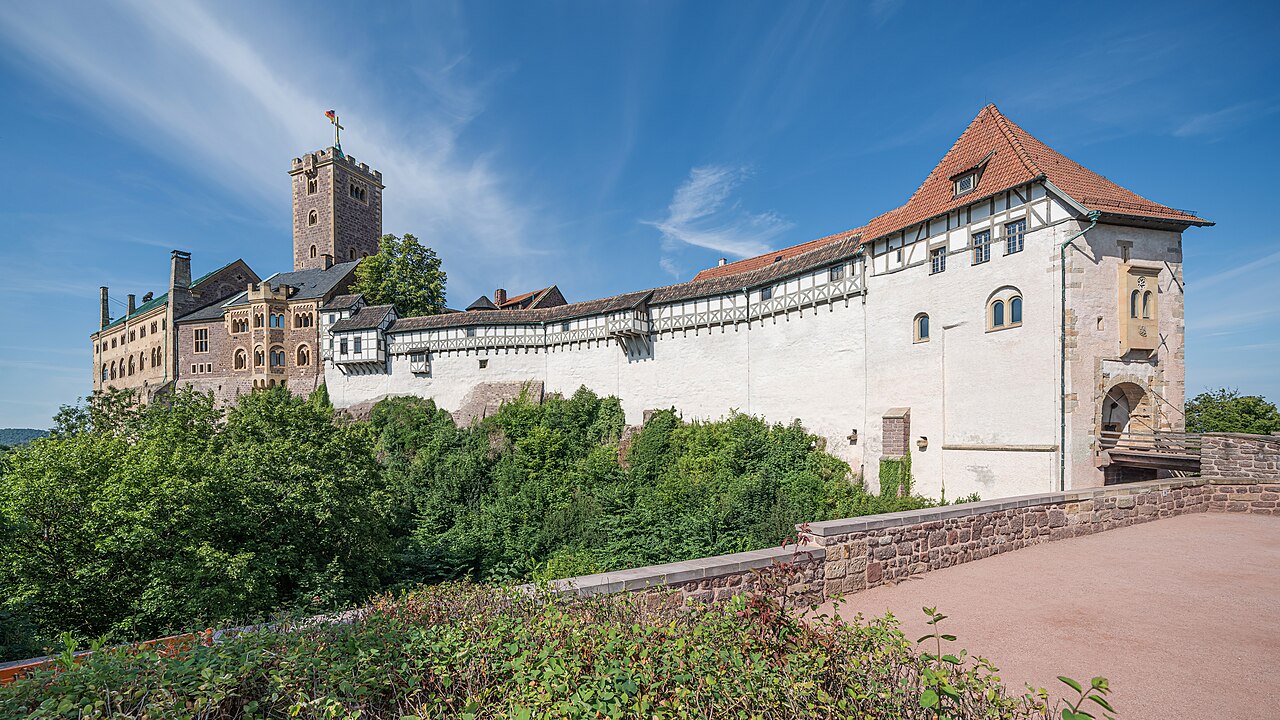
Krayenburg — Germany castle

Krayenburg

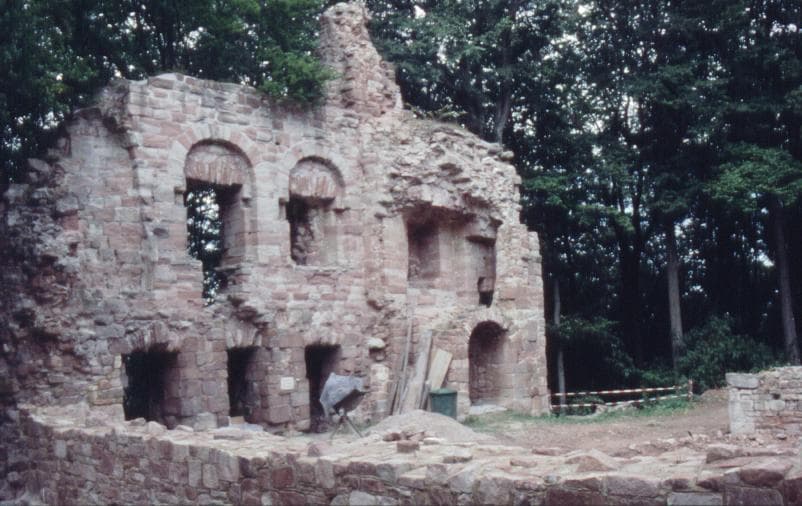
Krayenburg castle ruins on krayenberg hill, germany
High Medieval (11th–13th c.)
Ruins

Krayenburg Castle is a significant high medieval fortress located on the Krayenberg hill in Germany, near the towns of Tiefenort and Merkers-Kieselbach. The castle's strategic position offers commanding views over a large section of the Werratal valley, a feature that made it an important defensive and administrative site throughout its history.

Early foundation and historical significance

The origins of Krayenburg date back to the 12th century, although its historical roots are tied to earlier events. On 31 August 786, the Frankish ruler Charlemagne granted the village of Dorndorf and its possessions to the Hersfeld Abbey. It was the abbey that later constructed the castle to protect its territorial interests and ensure control over the region. This ecclesiastical origin highlights the castle's initial role as a protective stronghold for monastic lands.

Ownership and medieval role

Throughout the centuries, Krayenburg changed hands multiple times, reflecting the turbulent political landscape of medieval Germany. One notable owner was Graf Adam von Beichlingen, a nobleman who died in 1538 and was interred in the church of Tiefenort. Ownership transitions often coincided with shifts in regional power, underscoring the castle's importance as a feudal seat and military asset.

Destruction and military history

The castle's military significance endured until the Thirty Years' War (1618–1648), a devastating conflict that reshaped much of Central Europe. In the early phase of the war, Croatian troops under the command of Johann Ludwig Hektor von Isolani captured Krayenburg, initiating its decline. The occupation led to substantial damage, marking the beginning of the castle's physical deterioration and eventual ruin.

Cultural connections and later history

Despite its decline, Krayenburg remained culturally significant into the 18th and 19th centuries. The famed German writer Johann Wolfgang von Goethe visited the castle in 1782, the same year he was ennobled. Goethe's visit reflects the castle's status as a site of historical interest and romantic inspiration during the period.

Architectural features and current state

Originally, Krayenburg was an extensive fortress, reportedly larger than the renowned Wartburg Castle. Its architecture included multiple defensive walls, towers, and a prominent watchtower that provided sweeping views of the surrounding Werratal valley. Today, the castle stands in a state classified as ruins, but significant restoration efforts have preserved much of its structure for visitors.

The site now features a restaurant and hotel built within the castle grounds, blending hospitality with heritage tourism. Visitors can climb the restored tower to enjoy panoramic views, connecting them with the castle's historical role as a lookout and stronghold.

Visitor information and heritage value

Krayenburg Castle ruins are accessible to the public, offering a tangible link to Germany's medieval past. The combination of natural beauty, historical architecture, and cultural legacy makes it a notable destination for those interested in medieval castles, historic fortifications, and German history.

The castle's location on Krayenberg hill not only provides strategic views but also a scenic setting that enhances the visitor experience. Its preservation as archaeological ruins ensures that the site continues to convey the story of its high medieval origins and the complex history that unfolded there over centuries.

Frequently asked questions (FAQ)

How do I get to Krayenburg Castle?
Krayenburg Castle is located in Germany and is accessible by car or public transportation. The nearest train station is a short bus ride away, and there are parking facilities available for visitors arriving by car.
What is the historical significance of Krayenburg Castle?
Krayenburg Castle dates back to the 12th century and has played a crucial role in the region's history, serving as a stronghold during various conflicts. Its architectural features reflect the evolution of military design and residential comfort through the ages.
When was Krayenburg Castle built?
Krayenburg Castle was constructed in the early 1100s, making it one of the oldest fortifications in the area. Its original purpose was to protect the surrounding lands from invasions and to serve as a residence for local nobility.
Can I take guided tours of Krayenburg Castle?
Yes, guided tours are available and provide an in-depth look at the castle's history, architecture, and legends. Tours typically last around an hour and are led by knowledgeable guides who are passionate about the castle's heritage.
Why is Krayenburg Castle popular among tourists?
Krayenburg Castle attracts visitors due to its stunning architecture, rich history, and picturesque views of the surrounding landscape. The castle also hosts various events and exhibits, making it a vibrant cultural site.
Is it possible to visit Krayenburg Castle with children?
Absolutely! Krayenburg Castle is family-friendly and offers activities specifically designed for children, including interactive exhibits and treasure hunts. The castle grounds are spacious for kids to explore safely.
What are the opening hours for Krayenburg Castle?
Krayenburg Castle is open to visitors from 10 AM to 6 PM during the summer months and from 10 AM to 4 PM in the winter. It is advisable to check the official website for any seasonal changes or special events.
Are there any nearby attractions to visit while at Krayenburg Castle?
Yes, there are several nearby attractions, including beautiful hiking trails and quaint villages that offer a glimpse into the local culture. Additionally, museums and parks in the vicinity provide further opportunities for exploration.
What are the ticket prices for Krayenburg Castle?
Tickets for Krayenburg Castle are reasonably priced, with discounts available for students, seniors, and families. Children under a certain age may enter for free, so be sure to check the official website for the latest pricing details.

Photo gallery

Krayenburg
Click to view

Photo by Metilsteiner•CC BY-SA 3.0

1 photo • Click any image to view in full screen

Information

Archaeological Site / Ruins

Loading map...

Visitor reviews

No reviews yet. Been here? Write the first review and help other travelers!

Write the first review

Visited this castle? Share your experience

Your review helps other travelers and adds first-hand knowledge to our encyclopedia.

Write a review

(5/5)

0/2000 characters

Your review will be visible after admin approval

Nearby castles

18 km

Burgruine Dreienburg

Germany, Germany

Burgruine Dreienburg stands as a notable example of a medieval hill castle ruin located in the municipality of Friedewald, Germany. Constructed likely under the auspices of the Hersfeld Abbey during the High Medieval period, this fortress was strategically positioned to protect the abbey's territorial interests against encroachment from neighboring Hesse. The castle's remains offer valuable insights into the defensive architecture and feudal power structures of the 13th century. Historical background and significance The earliest indirect mention of Burgruine Dreienburg dates to 1257, referencing a castle lord named Hertwig von Drigenberg. This establishes the castle's active role during the 13th century as a fortified residence and administrative center. Further documentary evidence from 1296 cites Wolprat de Drigenberck, indicating continued occupation and management. The castle likely functioned as a key stronghold in the region, overseeing important territorial boundaries. By 1428, the castle may be associated with a watchtower at Lautenhausen, mentioned in border descriptions involving the Hessian Amt Friedewald and Hersfeld Abbey lands. This suggests the castle's role evolved to include surveillance and border control functions. However, by 1579, records describe the site as deserted, marking its decline and abandonment. The ruin was depicted on a map by the renowned cartographer Gerardus Mercator in 1592, confirming its recognized status as a historical landmark even in the late 16th century. The last known historical reference to the castle dates from 1642. Archaeological excavations in 1901 and 1973 uncovered structural remains that validate the castle's historical importance and provide physical evidence of its architectural features. Architectural features and layout Main tower and defensive structures The castle's layout centers on a square residential tower, measuring approximately 8.5 meters per side. This tower was constructed using rusticated ashlar blocks (Buckelquadern), a masonry technique characterized by rough, protruding surfaces that enhanced both the tower's strength and visual presence. The surviving wall fragments reveal the tower's robust construction, typical of High Medieval fortifications. Defensive measures include a neck ditch (Halsgraben) on the uphill side, designed to prevent attackers from approaching from higher ground. Surrounding the main tower is a moat (Burggraben), which served as a formidable obstacle to invaders. An additional outer embankment (Außenwall) further reinforced the castle's defenses, illustrating a layered approach to protection. Outer bailey and subsidiary features At the eastern end of the site, a depression marks the location of a former building and the original southeastern entrance. Beyond this lies a suspected outer bailey (Vorburg), separated from the main castle by a section ditch (Abschnittsgraben). This separation indicates a deliberate spatial organization, with the outer bailey likely housing ancillary structures or serving as a buffer zone. Further east, an additional ditch has been identified, possibly delineating the eastern boundary of the castle complex or subdividing internal areas. These features reflect the castle's strategic design adapted to its spur castle location, maximizing natural terrain advantages. Archaeological investigations and preservation Excavations conducted in the early 20th century and again in the 1970s uncovered significant elements of the castle's structure, confirming its historical layout and defensive complexity. These archaeological efforts have been crucial in understanding the castle's construction techniques and functional design. Today, the ruins of Burgruine Dreienburg remain an important cultural heritage site, offering a tangible connection to medieval fortification practices and the regional history of Hersfeld Abbey's territorial influence. The site is characterized by partially preserved walls and earthworks that continue to attract historians and visitors interested in medieval architecture and history.

Details
19 km

Wartburg Castle

Eisenach, Germany

Wartburg Castle, perched on a steep rocky ridge overlooking the town of Eisenach in Thuringia, Germany, is one of the most remarkable and best-preserved medieval fortresses in Europe. Founded around 1067 by the Thuringian count Ludwig der Springer, this hill castle has played a pivotal role in German history, culture, and architecture for nearly a millennium. The castle's name likely derives from the German word “Warte,” meaning watch or guard, reflecting its original purpose as a strategic lookout fortress. Situated approximately 220 meters above Eisenach at an elevation of about 411 meters above sea level, the Wartburg commands sweeping views of the surrounding landscape, which was essential for its defensive role during the High Medieval period. Architectural evolution and medieval significance The Wartburg's initial construction in the late 11th century established it as a formidable fortification. Its earliest surviving structure, the Palas (residential hall), was built between 1156 and 1162 under the reign of Landgrave Ludwig II. This building is historically significant as the oldest princely residential hall of its kind in the German-speaking world, showcasing early Romanesque architectural influences reminiscent of Roman palace designs. The castle complex originally comprised four main sections, but today only the outer bailey (Vorburg) and the main castle (Hauptburg) remain. The outer bailey features a drawbridge and gatehouse, which were added during the castle's transformation into a princely residence. Surrounding it are late medieval structures such as the Ritterhaus and Vogtei. The ring wall dates partially to the 12th century and was modified in the 15th century with timber-framed overhangs known as the Margaretengang and Elisabethgang. The main castle contains both medieval and 19th-century historicist elements. The Palas houses notable rooms including the Rittersaal (Knight’s Hall), the Speisezimmer (dining room), and the Elisabeth-Kemenate, which was redecorated with neobyzantine glass mosaics by August Oetken between 1902 and 1906, illustrating scenes from the life of Saint Elisabeth of Hungary. The second floor features the Wartburg chapel and the Sängersaal (Singers’ Hall), adorned with 19th-century frescoes by Moritz von Schwind depicting the legendary Sängerkrieg, a medieval contest of minnesänger poets. The Elisabethgalerie frescoes were restored between 2015 and 2017. The third floor contains a 40-meter-long Festsaal (festival hall), added after the castle became a Ludowing residence. The Südturm (South Tower), dating from the 13th century and rebuilt after a fire in 1318, is the only original medieval tower still standing in the main castle. The Bergfried (main tower) was reconstructed in the 19th century on the foundations of the original medieval tower, using local red Rotliegend sandstone and Seeberg sandstone. The castle grounds include the Burggarten (castle garden), located below the Gadem building, which served variously as a magazine, armory, and kitchen. The Gadem was rebuilt in the late 19th century, preserving its vaulted cellar. Historical and cultural importance Throughout its history, Wartburg Castle has been a center of political power, culture, and religious significance. From 1172 to 1211, it served as a princely court under Landgrave Hermann I, who patronized the arts and supported renowned minnesänger poets such as Walther von der Vogelweide and Wolfram von Eschenbach. The castle is famously linked to the Sängerkrieg, a legendary contest of singers immortalized in German folklore. Saint Elisabeth of Hungary lived at Wartburg from 1211 until 1227. She was renowned for her charitable works and was canonized just five years after her death in 1231. Her life and legacy remain integral to the castle's identity, celebrated through dedicated architectural features and artworks. The castle's most internationally significant chapter occurred between May 1521 and March 1522, when Martin Luther was hidden there under the alias Junker Jörg (Knight George) following his excommunication from the Catholic Church. During his enforced stay, Luther translated the New Testament from Ancient Greek into German in just eleven weeks. This translation was not the first German Bible but became the most influential, contributing to the standardization of the German language and fueling the Protestant Reformation. After the extinction of the Ludowing dynasty in 1247, the castle passed to the Wettin family, who maintained and expanded it. A devastating fire in 1317 or 1318 caused significant damage, prompting substantial reconstruction, including the addition of a chapel to the Palas. 19th-century restoration and modern legacy By the 19th century, Wartburg had fallen into disrepair. The castle was revitalized under the patronage of Grand Duke Carl Alexander of Saxe-Weimar-Eisenach, who commissioned a historicist restoration beginning in 1838. The lead architect, Hugo von Ritgen, dedicated much of his life to this project, which was only completed after his death in 1889. This restoration introduced many of the castle's current features, blending medieval remains with 19th-century Romanticism. The castle became a symbol of German nationalism and unity, hosting the Wartburg Festival in 1817 and again in 1848, where students and intellectuals gathered to celebrate the Reformation's legacy and advocate for German unification. During the Nazi era, the castle was appropriated for propaganda purposes, including the temporary replacement of the original tower cross with a swastika in 1938, which was restored after public protest. The castle sustained minor damage from American artillery in 1945 but was promptly repaired. Post-World War II, under East German administration, extensive restoration took place from 1952 to 1954, focusing on returning parts of the Palas to their original Romanesque appearance. Modern infrastructure improvements have continued since German reunification, supported by federal cultural funds. In 1999, Wartburg Castle was designated a UNESCO World Heritage Site, recognized for its outstanding medieval architecture and profound cultural significance. Today, it remains a major tourist attraction, hosting exhibitions, concerts, and commemorative events, including celebrations marking the 500th anniversary of the Reformation in 2017. Castle grounds and visitor experience The Wartburg is surrounded by a protected forest area known as the “Blue Line,” established in the 1930s to preserve the castle's natural and historical landscape. Visitors can explore the outer bailey with its historic gatehouse and late medieval buildings, as well as the main castle with its richly decorated interiors and significant historical rooms. The Vogtei building houses the Lutherstube, where Martin Luther stayed and worked on his Bible translation. It also features the Nürnberger Erker, a Gothic oriel window transplanted from a patrician house in Nuremberg, and the Pirckheimer Stübchen, a late 15th-century cabinet room relocated to the castle in the 19th century. The castle also includes a concert hall influenced by composer Franz Liszt, enhancing its cultural offerings. The Wartburg-Gasthof guesthouse, built between 1912 and 1914, provides accommodation for visitors. Visitor information Wartburg Castle is accessible to the public year-round, offering guided tours that delve into its rich history and architecture. Its location near Eisenach makes it a convenient destination for cultural tourism in Thuringia. Visitors can enjoy panoramic views, explore the historic interiors, and attend various cultural events hosted at the castle. Architectural highlights Palas: The oldest surviving princely residential hall in Germany, featuring Romanesque architecture and historic interiors. Sängersaal: The singers’ hall decorated with frescoes depicting the legendary Sängerkrieg. Elisabeth-Kemenate: A chamber adorned with neobyzantine mosaics illustrating Saint Elisabeth’s life. Südturm: The surviving medieval tower guarding the southern slope. Bergfried: The main tower rebuilt in the 19th century on medieval foundations. Lutherstube: Martin Luther’s study during his refuge at the castle.

High Medieval (11th–13th c.)
Details
20.3 km
Wartburg — Germany castle

Wartburg

Eisenach, Germany

Wartburg Castle stands as a monumental example of high medieval hill castle architecture, perched on a commanding 410-meter precipice overlooking the historic town of Eisenach in Thuringia, Germany. Founded in the 12th century, this fortress has witnessed centuries of European history, serving as a royal residence, a cultural hub, and a symbol of German heritage. Recognized as a UNESCO World Heritage Site since 1999, Wartburg Castle is celebrated for its remarkable preservation and its profound impact on religious, cultural, and architectural history. Architectural evolution and structural features The castle's original construction dates to the early 12th century, characterized by robust Romanesque and early Gothic elements. Its strategic location atop a steep hill provided natural defenses enhanced by formidable stone walls, towers, and a deep moat. Over the centuries, Wartburg underwent significant expansions and renovations, especially during the 13th to 15th centuries, which introduced more elaborate Gothic architectural features such as pointed arches, ribbed vaults, and ornamental stonework. The castle complex includes notable structures such as the keep (donjon), the palas (main residential building), the chapel, and the great hall. The palas houses the famous Elisabeth Hall, named after St. Elisabeth of Hungary, whose presence at the castle in the early 13th century is a key part of its history. The castle's defensive elements include battlements and watchtowers that offer panoramic views of the surrounding landscape, underscoring its military significance in the medieval period. Historical significance and notable residents Wartburg Castle is perhaps best known as the refuge of Martin Luther during 1521-1522, when he translated the New Testament from Greek into German. This monumental achievement not only influenced the Protestant Reformation but also helped standardize the German language. Luther's stay in the castle is commemorated by preserved rooms and exhibitions that attract scholars and tourists alike. Earlier, the castle was home to St. Elisabeth of Hungary, who lived there in the early 13th century. Her charitable works and piety made her a revered figure, and the castle's Elisabeth Hall honors her legacy. Additionally, Wartburg is linked to the legendary Sängerkrieg or minstrels' contest of 1207, a cultural event immortalized in German folklore and literature. The castle also played a symbolic role during the Wartburg Festival of 1817, a gathering of German students advocating for national unity and liberal reforms, marking it as a site of political and cultural importance in the 19th century. 19th-century restoration and influence on romantic architecture Much of Wartburg's interior appearance today results from extensive 19th-century restoration efforts inspired by the Romantic movement. These restorations aimed to revive and idealize medieval architectural styles, blending historical accuracy with artistic interpretation. The work influenced notable figures such as Ludwig II of Bavaria, who drew inspiration from Wartburg when commissioning the construction of Neuschwanstein Castle, a masterpiece of Romantic Neo-Gothic architecture. The restoration preserved important medieval elements while introducing decorative features that enhance the castle's fairy-tale appearance, making it a popular destination for tourists and history enthusiasts. The castle's museum displays artifacts, medieval art, and exhibitions on its varied history, further enriching the visitor experience. Cultural heritage and tourism today Today, Wartburg Castle stands as the second most-visited tourist attraction in Thuringia, after the city of Weimar. Its combination of architectural grandeur, historical depth, and cultural significance makes it a focal point for visitors interested in medieval history, the Reformation, and German nationalism. The castle hosts various cultural events, medieval reenactments, and concerts that celebrate its rich heritage. Visitors can explore the castle's extensive grounds, including the courtyards, chapel, and towers, which offer spectacular views of the surrounding Thuringian Forest. Wartburg's preservation as a restored high medieval hill castle ensures that its legacy endures, bridging the past and present through its enduring stone walls and storied halls. Visiting information The castle is accessible year-round, with guided tours available that detail its architectural features and historical narratives. Visitors are encouraged to plan their visit during spring and summer for the best weather and to experience outdoor events. The castle also provides educational programs and exhibitions that deepen understanding of its significance.

High Medieval (11th–13th c.)
Details