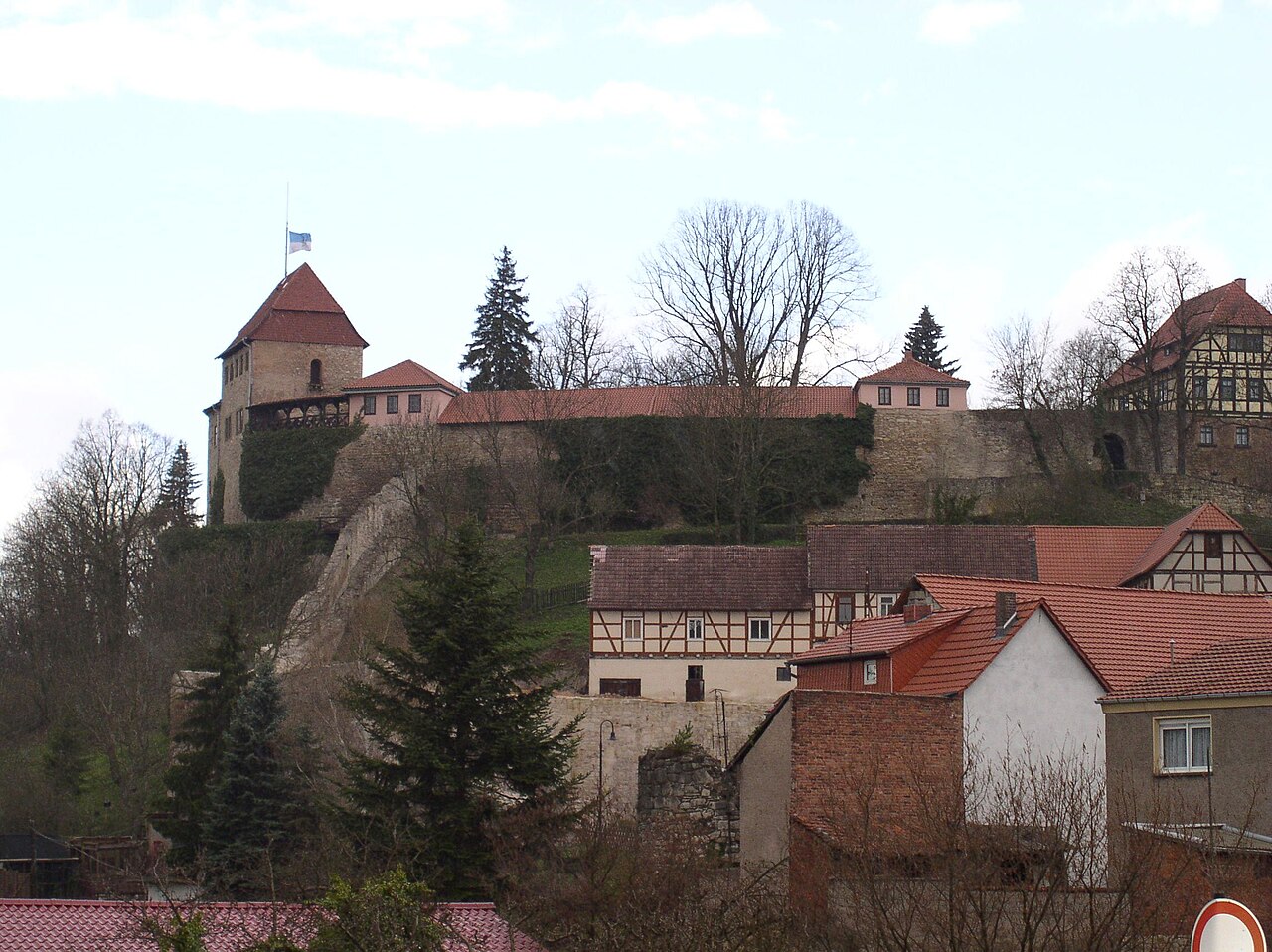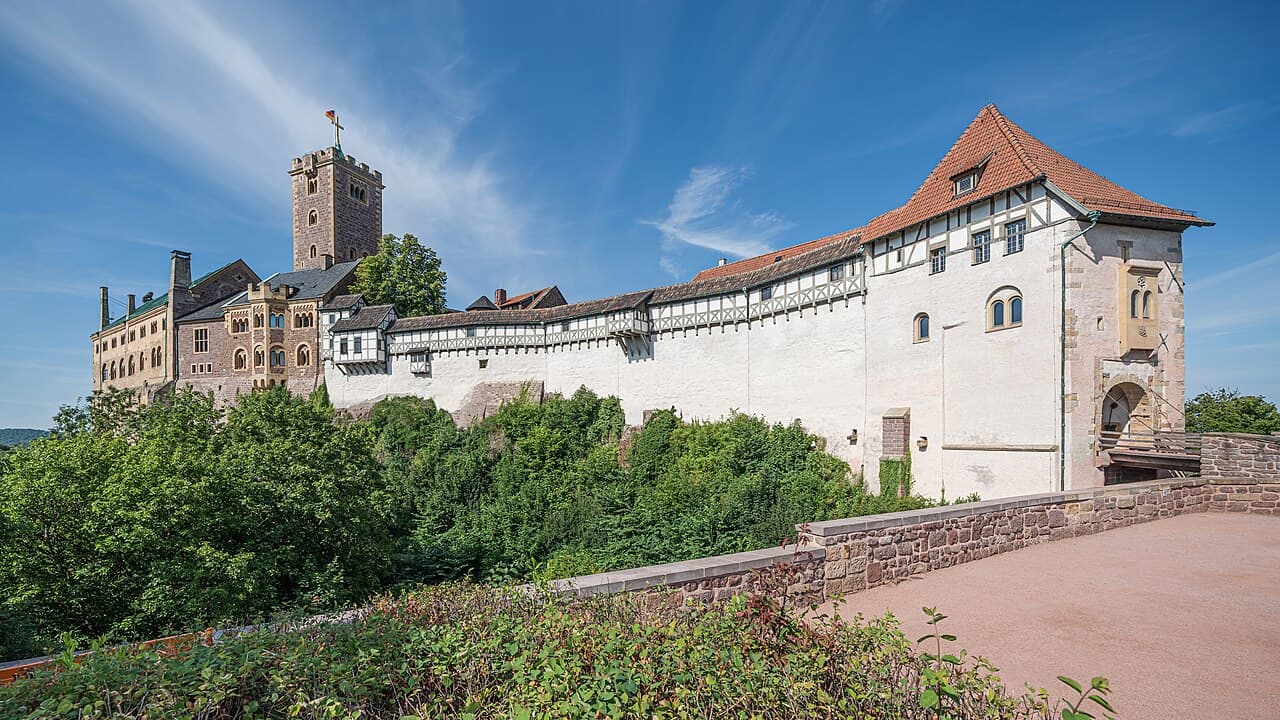
Wartburg Castle stands as a monumental example of high medieval hill castle architecture, perched on a commanding 410-meter precipice overlooking the historic town of Eisenach in Thuringia, Germany. Founded in the 12th century, this fortress has witnessed centuries of European history, serving as a royal residence, a cultural hub, and a symbol of German heritage. Recognized as a UNESCO World Heritage Site since 1999, Wartburg Castle is celebrated for its remarkable preservation and its profound impact on religious, cultural, and architectural history.
Architectural evolution and structural features
The castle's original construction dates to the early 12th century, characterized by robust Romanesque and early Gothic elements. Its strategic location atop a steep hill provided natural defenses enhanced by formidable stone walls, towers, and a deep moat. Over the centuries, Wartburg underwent significant expansions and renovations, especially during the 13th to 15th centuries, which introduced more elaborate Gothic architectural features such as pointed arches, ribbed vaults, and ornamental stonework.
The castle complex includes notable structures such as the keep (donjon), the palas (main residential building), the chapel, and the great hall. The palas houses the famous Elisabeth Hall, named after St. Elisabeth of Hungary, whose presence at the castle in the early 13th century is a key part of its history. The castle's defensive elements include battlements and watchtowers that offer panoramic views of the surrounding landscape, underscoring its military significance in the medieval period.
Historical significance and notable residents
Wartburg Castle is perhaps best known as the refuge of Martin Luther during 1521-1522, when he translated the New Testament from Greek into German. This monumental achievement not only influenced the Protestant Reformation but also helped standardize the German language. Luther's stay in the castle is commemorated by preserved rooms and exhibitions that attract scholars and tourists alike.
Earlier, the castle was home to St. Elisabeth of Hungary, who lived there in the early 13th century. Her charitable works and piety made her a revered figure, and the castle's Elisabeth Hall honors her legacy. Additionally, Wartburg is linked to the legendary Sängerkrieg or minstrels' contest of 1207, a cultural event immortalized in German folklore and literature.
The castle also played a symbolic role during the Wartburg Festival of 1817, a gathering of German students advocating for national unity and liberal reforms, marking it as a site of political and cultural importance in the 19th century.
19th-century restoration and influence on romantic architecture
Much of Wartburg's interior appearance today results from extensive 19th-century restoration efforts inspired by the Romantic movement. These restorations aimed to revive and idealize medieval architectural styles, blending historical accuracy with artistic interpretation. The work influenced notable figures such as Ludwig II of Bavaria, who drew inspiration from Wartburg when commissioning the construction of Neuschwanstein Castle, a masterpiece of Romantic Neo-Gothic architecture.
The restoration preserved important medieval elements while introducing decorative features that enhance the castle's fairy-tale appearance, making it a popular destination for tourists and history enthusiasts. The castle's museum displays artifacts, medieval art, and exhibitions on its varied history, further enriching the visitor experience.
Cultural heritage and tourism today
Today, Wartburg Castle stands as the second most-visited tourist attraction in Thuringia, after the city of Weimar. Its combination of architectural grandeur, historical depth, and cultural significance makes it a focal point for visitors interested in medieval history, the Reformation, and German nationalism.
The castle hosts various cultural events, medieval reenactments, and concerts that celebrate its rich heritage. Visitors can explore the castle's extensive grounds, including the courtyards, chapel, and towers, which offer spectacular views of the surrounding Thuringian Forest.
Wartburg's preservation as a restored high medieval hill castle ensures that its legacy endures, bridging the past and present through its enduring stone walls and storied halls.
Visiting information
The castle is accessible year-round, with guided tours available that detail its architectural features and historical narratives. Visitors are encouraged to plan their visit during spring and summer for the best weather and to experience outdoor events. The castle also provides educational programs and exhibitions that deepen understanding of its significance.
Frequently asked questions (FAQ)
- How do I get to Wartburg Castle?
- Wartburg Castle is conveniently located just outside of Eisenach, Germany. You can reach it by car, with ample parking available, or by taking public transport such as the bus, which connects directly from the Eisenach train station to the castle.
- What is the historical significance of Wartburg Castle?
- Wartburg Castle is renowned for its role in German history, particularly as the residence of Martin Luther during his translation of the New Testament. It is also recognized as a UNESCO World Heritage Site due to its architectural significance and its influence on German culture.
- When was Wartburg Castle built?
- Construction of Wartburg Castle began in the year 1067, making it one of the oldest castles in Germany. Over the centuries, it has undergone various renovations and expansions, reflecting different architectural styles.
- Can I take a guided tour of Wartburg Castle?
- Yes, guided tours of Wartburg Castle are available and highly recommended for a deeper understanding of its rich history and architecture. Tours are conducted in multiple languages and provide insights into the castle's past and its famous residents.
- Why is Wartburg Castle a UNESCO World Heritage Site?
- Wartburg Castle is designated as a UNESCO World Heritage Site due to its outstanding architecture and its pivotal role in the history of Germany. The castle is a prime example of medieval fortification and has been a center of cultural and political significance throughout its history.
- Is it possible to visit the castle year-round?
- Yes, Wartburg Castle is open to visitors throughout the year, although opening hours may vary by season. It is advisable to check the official website for current visiting hours and any seasonal events.
- What are the ticket prices for Wartburg Castle?
- Ticket prices for Wartburg Castle typically range from €8 to €12, with discounts available for students and seniors. Children under a certain age may enter for free, making it an affordable outing for families.
- What is the best time to visit Wartburg Castle?
- The best time to visit Wartburg Castle is during the spring and early autumn when the weather is pleasant, and the surrounding scenery is particularly beautiful. However, summer months can be busy, so consider visiting during weekdays for a quieter experience.
- Are there any nearby attractions to visit?
- Yes, there are several attractions near Wartburg Castle, including the beautiful town of Eisenach, the Lutherhaus, and the Bach House. Exploring these sites can enrich your visit and provide a deeper insight into the area's historical significance.

Information
Website
Visit websiteSources & official resources
Verify the information above using these authoritative references.
Loading map...
Visitor reviews
No reviews yet. Been here? Write the first review and help other travelers!
Write the first reviewVisited this castle? Share your experience
Your review helps other travelers and adds first-hand knowledge to our encyclopedia.