Koskinou

Koskinou castle ruins in Rhodes, Greece
Koskinou, Greece
High Medieval (11th–13th c.)
Well Preserved

Koskinou castle is a modest medieval fortress located in the southwestern part of the village of Koskinou on the island of Rhodes, Greece. This small castle, built on a rectangular plan, is notable for its limited defensive capabilities, reflecting its probable role as a local stronghold rather than a major military fortress. Although much of its detailed history remains obscure, the castle is believed to have existed since the 13th century, placing it within the high medieval period.

Historical context and significance

The castle's origins are not well-documented, and it is not associated with the activities of the Knights Hospitaller (Joannites), who were prominent on Rhodes during the medieval era. Instead, Koskinou castle likely served as a minor defensive site or a fortified residence for local nobility or officials. Its location near the village church suggests it may have had a role in overseeing the surrounding community or protecting local interests rather than serving as a primary military bastion.

Architectural features and layout

The surviving remains of Koskinou castle reveal a simple rectangular enclosure constructed from local stone. The walls, although partially hidden among later buildings, indicate a structure designed more for basic protection than for withstanding prolonged sieges or large-scale attacks. Unlike larger fortresses on Rhodes, Koskinou lacks extensive towers, curtain walls, or complex defensive elements such as moats or barbicans.

Defensive characteristics

The castle's limited fortifications suggest it was not intended to serve as a frontline fortress. Its defensive walls are relatively low and thin, providing minimal resistance to attackers. This simplicity aligns with the castle's probable function as a small garrison point or noble residence rather than a major military installation.

Current condition and preservation

Today, the remains of Koskinou castle are well-preserved in terms of structural fragments, though much of the original fabric is obscured by modern construction. The castle's ruins are integrated into the village landscape, with portions of the walls visible adjacent to the local church. This integration reflects the castle's longstanding presence within the community and its gradual transition from a defensive site to a historical landmark.

Koskinou village and cultural heritage

The village of Koskinou itself is renowned for its traditional architecture and cultural heritage, making the castle ruins an important part of the local historical narrative. Visitors to Koskinou can explore the castle remains alongside the village's characteristic houses and churches, gaining insight into the medieval period of Rhodes beyond the well-known grand fortifications of the Knights Hospitaller.

Tourism and accessibility

While the castle is not a major tourist attraction compared to larger sites on Rhodes, it offers a unique glimpse into the island's lesser-known medieval history. The ruins are accessible within the village, though there are no extensive visitor facilities or detailed interpretive signage. Those interested in medieval architecture and local history will find Koskinou castle a valuable and authentic site to explore.

Frequently asked questions (FAQ)

What is the historical significance of Koskinou castle?
Koskinou castle is a small medieval fortress from the 13th century that served as a local stronghold rather than a major military bastion on Rhodes.
Can visitors access the ruins of Koskinou castle?
Yes, the castle ruins are accessible within the village of Koskinou, although visitor facilities and signage are limited.
How does Koskinou castle differ from other castles on Rhodes?
Unlike larger fortresses like those of the Knights Hospitaller, Koskinou castle is modest with limited defensive features and was likely a local noble residence or small garrison.

Information

Lowland Castle

Loading map...

Visitor reviews

No reviews yet. Been here? Write the first review and help other travelers!

Write the first review

Visited this castle? Share your experience

Your review helps other travelers and adds first-hand knowledge to our encyclopedia.
Write a review

(5/5)

0/2000 characters

Your review will be visible after admin approval

Nearby castles

5.9 km
Acropolis of Rhodes — Greece castle

Acropolis of Rhodes

Rhodes, Greece

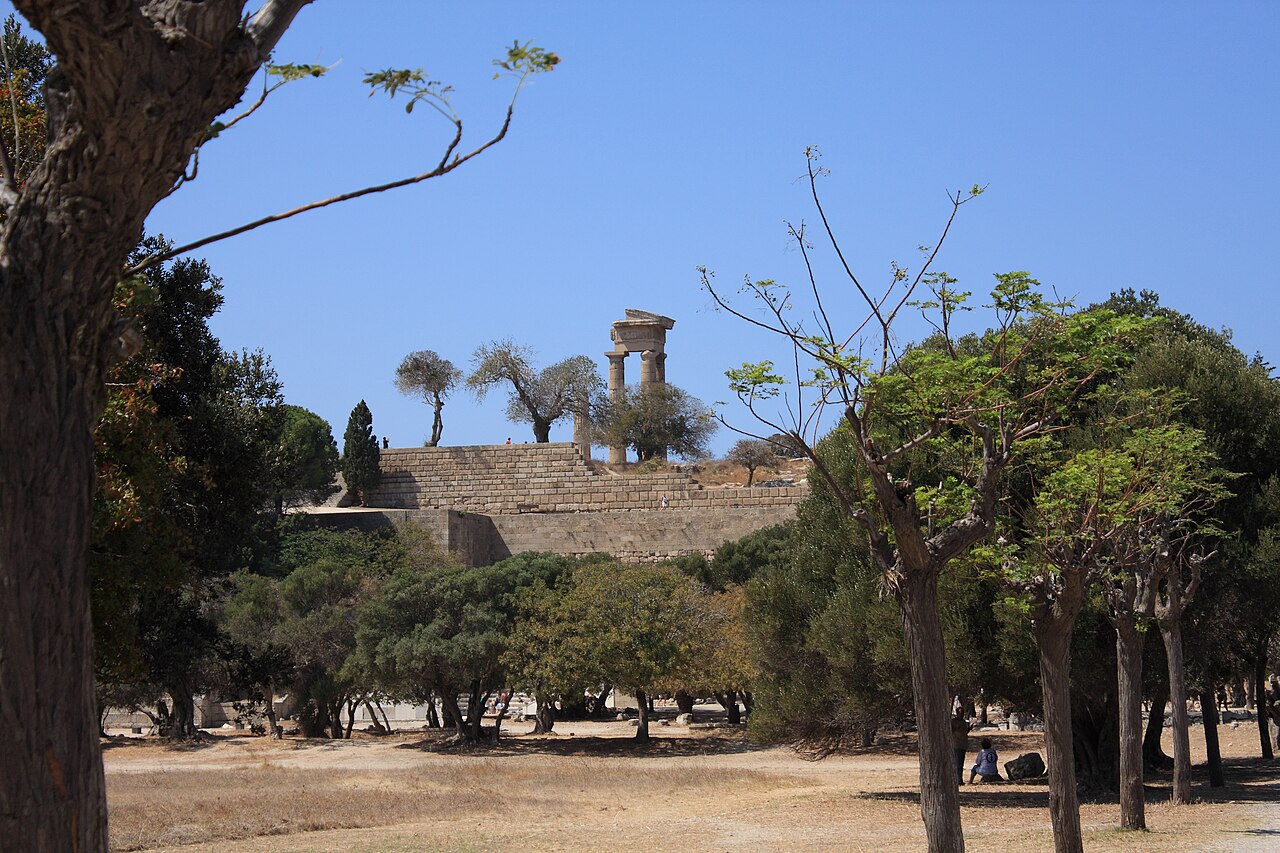
The Acropolis of Rhodes is a significant ancient site located on Monte Smith, a hill overlooking the west coast of Rhodes island, approximately 3 kilometers southwest of the modern city center. This hill castle is not a fortress in the traditional sense but an elevated sacred precinct and civic center dating back to the 5th century BC, during the Classical period of ancient Greece. Unlike typical acropoleis that often feature fortified walls and defensive structures, the Acropolis of Rhodes was primarily a religious and cultural complex without a walled citadel, emphasizing its role as a sanctuary and public gathering place rather than a military stronghold. Historical significance and location The Acropolis served as the upper town of ancient Rhodes, a city-state that flourished as a maritime power in the Aegean Sea. Its elevated position on Monte Smith provided commanding views of the surrounding landscape and sea routes, underscoring its importance as both a religious center and a symbol of civic pride. The site was developed during the Classical era, a period marked by the rise of democracy, art, and architecture in Greece, and it continued to be a focal point through the Hellenistic and Roman periods. Architectural features and monuments Temples The Acropolis contains several major temples dedicated to important deities. The most prominent are the Temple of Athena Polias and Zeus Polieus, which reflects the dual worship of Athena, goddess of wisdom and warfare, and Zeus as protector of the city. Another key temple is the Temple of Apollo, situated on a lower terrace, which was central to religious festivals and oracular activities. Public buildings and recreational structures Beneath the temples lies a complex of public buildings including a stadium used for athletic competitions, an odeon which served as a covered theater for musical performances and assemblies, and a gymnasium that functioned as a training ground for athletes and a social hub for citizens. These structures highlight the Acropolis’s role as a multifaceted center for religion, culture, sport, and education. Architectural style and construction The buildings on the Acropolis of Rhodes exhibit characteristics of Classical Greek architecture, including the use of Doric and Ionic columns, proportional design, and emphasis on harmony and balance. The temples were constructed with local stone and marble, featuring sculptural decorations and reliefs that celebrated mythological themes and civic ideals. The layout of the site reflects careful urban planning to integrate religious, cultural, and athletic functions within a cohesive sacred precinct. Later history and preservation Over the centuries, the Acropolis underwent changes during the Hellenistic and Roman periods, including additions and renovations to its buildings. Despite damage from natural disasters and human activity, many ruins remain well-preserved, allowing for ongoing archaeological study. The site does not have defensive walls, which is unusual for an acropolis, but this absence emphasizes its role as a peaceful sanctuary rather than a military fortress. Visiting the Acropolis of Rhodes Today, the Acropolis of Rhodes is an important archaeological site open to visitors interested in ancient Greek history and architecture. Its location on Monte Smith offers panoramic views of the city of Rhodes and the surrounding sea, making it a popular destination for tourists and scholars alike. The site provides insight into the religious practices, civic life, and architectural achievements of ancient Rhodes. Frequently asked questions What is the Acropolis of Rhodes? It is the ancient upper town of Rhodes featuring temples, a stadium, an odeon, and a gymnasium from the 5th century BC. When was the Acropolis of Rhodes built? Construction began in the 5th century BC during the Classical period of ancient Greece. Can I visit the Acropolis of Rhodes today? Yes, it is open to the public as an archaeological site with accessible ruins and scenic views. Why does the Acropolis of Rhodes lack defensive walls? Unlike typical acropoleis, it was designed as a religious and cultural center rather than a military fortress. What architectural styles are present at the site? The site features Classical Greek architectural styles, including Doric and Ionic elements. What notable structures are found on the Acropolis? Key monuments include the Temples of Athena Polias and Zeus Polieus, the Temple of Apollo, a stadium, an odeon, and a gymnasium. Is the Acropolis of Rhodes located within the modern city? It is located about 3 kilometers southwest of the modern city center on Monte Smith hill.

Early Medieval (5th–10th c.)
Details
6 km

Filerimos

Filerimos, Greece

Filerimos Castle, located on the pine-forested hill of Filerimos on the island of Rhodes, Greece, stands as a significant historic site with layers of occupation spanning from the ancient to the medieval periods. This hill, one of the oldest archaeological sites on Rhodes, was originally home to the ancient city of Jalisos, one of the island's three wealthiest cities in antiquity. The strategic location of the hill overlooking the coastline and inland routes made it a coveted site for successive civilizations. Ancient origins and early constructions The earliest known settlers to exploit the hill's natural advantages were the Minoans, who arrived on Rhodes around 1550 BCE. They established an Achaean acropolis at the summit, marking the beginning of the site's long history of fortification and religious significance. During the Hellenistic period, the hill saw the construction of important temples dedicated to Athena Pallas and Zeus Polieus, underscoring its cultural and religious importance. At the transition from the 5th to 6th century CE, the ancient temples were replaced by an early Christian basilica, reflecting the spread of Christianity and the changing religious landscape of the region. Byzantine fortress and medieval transformations In the 11th century, the Byzantines recognized the defensive potential of Filerimos hill and constructed a fortress at its eastern end. This fortress incorporated building materials salvaged from the ruins of earlier ancient structures, demonstrating continuity and adaptation in the use of the site. The Byzantine castle served as a strategic military post, enabling control over a substantial portion of the surrounding coastline and inland routes. In 1248, during a siege by Genoese forces, the fortress was defended by John Kantakouzenos. The castle's position was crucial for regional control, which later attracted the attention of the Knights Hospitaller (the Order of St. John) who arrived on Rhodes in 1306 with the aim of conquering the island. The knights captured the fortress on 11 November 1306 through the betrayal of the Greek garrison commander. The Turkish mercenaries hired by the Byzantine emperor to defend the castle were massacred, allowing the knights to use Filerimos as a base for their assault on the city of Rhodes. Knights Hospitaller enhancements Following their conquest of Rhodes, the Knights Hospitaller undertook significant expansions and fortifications of Filerimos Castle. The fortress was redesigned with an irregular quadrilateral plan covering approximately 2000 square meters. The perimeter walls extended to about 700 meters, featuring multiple towers at strategic points. Notably, the northwest and southeast corners housed polygonal towers of Byzantine origin, while the northeast corner contained a square tower. The main entrance was located on the western side. Amid rising threats from the Ottoman Empire, the castle's defenses were further reinforced in 1480 under the orders of Grand Master Pierre d’Aubusson. A new northern wall was constructed, equipped with round towers on the eastern and western flanks, enhancing the fortress's ability to withstand artillery and siege warfare. Ottoman conquest and decline In 1522, the island of Rhodes fell to the forces of the Ottoman Empire led by Sultan Suleiman the Magnificent. Filerimos Castle became the headquarters of the Ottoman military command during the island's conquest. However, under Ottoman rule, the fortress gradually lost its strategic importance and fell into disrepair, reflecting the changing military and political landscape of the region. Modern conservation and archaeological significance During the Italian occupation of Rhodes (1912–1943), the first conservation efforts were undertaken to preserve the ruins of Filerimos Castle. These efforts were continued after World War II by the British administration and later by the Greek authorities. Today, the remains primarily reflect the extensive modifications made by the Knights Hospitaller, although Byzantine construction phases are still evident. The hill of Filerimos is also notable for several religious and archaeological sites, including the ruins of the ancient Temple of Athena, a subterranean Byzantine chapel dedicated to Saint George Chosty, the remains of the early Christian basilica, the Knights Hospitaller church with its bell tower, and a monastery rebuilt by the Italians. The site offers panoramic views over the coastline and the tourist area of Jalisos, making it a popular destination for visitors interested in history, archaeology, and architecture. Architectural features and layout The castle's irregular quadrilateral layout, extensive curtain walls, and multiple defensive towers exemplify medieval military architecture adapted to the terrain. The combination of Byzantine and Knights Hospitaller construction techniques is visible in the masonry and design of the towers and walls. The addition of round towers in the late 15th century reflects the evolving needs of fortification against gunpowder artillery. Religious and cultural heritage Filerimos Castle's location atop a hill that has served as a religious center since antiquity highlights its dual military and spiritual significance. The site's layered history from ancient temples to Christian basilicas and knightly churches illustrates the cultural transformations of Rhodes over millennia.

High Medieval (11th–13th c.)
Details
6.4 km

Medieval Town of Rhodes

Rhodes, Greece

The medieval town of Rhodes stands as a remarkable testament to the enduring legacy of the Knights of Saint John of Jerusalem, also known as the Hospitallers. Nestled in the South Aegean region of Greece, this fortified city is one of the most complete and best-preserved medieval towns in Europe. Its streets, walls, and buildings evoke the rich history of the Middle Ages and the strategic importance of Rhodes as a military and commercial hub in the eastern Mediterranean. Declared a UNESCO World Heritage Site in 1988, the town offers visitors a unique journey back in time. The atmosphere is thick with history, from the cobbled streets and towering Gothic fortifications to the remnants of Byzantine and Ottoman influences that layer the urban fabric. The medieval city of Rhodes is not merely a collection of ruins but a vibrant living monument that has continuously evolved since its ancient origins. Historical evolution of the fortified city The origins of Rhodes date back to antiquity, with the ancient city founded in 408 BC following the Hippodamian grid plan, an early example of urban planning. The Byzantines fortified a portion of this ancient city in the 7th century AD as a defense against invasions, creating the first medieval fortifications. When the Knights of Saint John arrived in 1309, they inherited this Byzantine fortress and expanded it significantly. Over the next two centuries, the knights transformed Rhodes into a formidable stronghold and the center of their maritime kingdom. The city walls were extended to cover approximately 175,000 square meters initially, and later expansions brought the fortified area to about 800,000 square meters. The knights' presence marked a golden age for Rhodes, as it became a bastion against Ottoman expansion and a thriving commercial port. The city withstood numerous sieges, most notably the six-month siege by the forces of Suleiman the Magnificent in 1522. Despite the eventual surrender and departure of the knights to Malta, the medieval town they left behind remains a masterpiece of military architecture. Urban layout and architectural highlights Division of the medieval city The medieval town was divided internally by a wall into two distinct sectors. The northern quarter, known as the "Chateau," "Castrum," or "Castellum", housed the administrative buildings, the hospital, the cathedral, and the residences of the knights and the Grand Master. This area functioned as the political and military heart of the city. The southern quarter, called the "Ville," "Burgus," or "Burgum", was primarily residential, containing the houses of the laity, bustling street markets, synagogues, and churches. This division reflects the social and functional organization of the medieval city and highlights the coexistence of diverse communities within the walls. Fortifications and military architecture The town's defenses are among the finest examples of medieval military architecture in Europe. The walls feature multiple layers of fortifications, including towers, bastions, gates, and moats. The walls were designed to resist artillery and prolonged sieges, showcasing the evolution of defensive strategies from the Byzantine period through the Renaissance. The Gates of Rhodes are particularly notable, including the Porta Marina, the main sea gate, and the Gate of Saint Athanasius. These gates controlled access to the city and were heavily fortified to repel attackers. Religious and civic buildings The medieval town is rich in sacred architecture, with several churches that reveal the cultural layers of Rhodes. Notable examples include the churches of Agia Triada (Holy Trinity), Agios Athanasios (St. Athanasius), Agia Aikaterini (St. Catherine), Panagia tou Kastrou (Virgin of the Castle), and Agia Paraskevi. Many of these churches were later converted into mosques during the Ottoman period, reflecting the city's complex history. The palace of the grand master The centerpiece of the medieval town is the Palace of the Grand Master, often called the "Castello". This imposing fortress served as the administrative center and residence of the leader of the Knights of Saint John. Architecturally, it is a masterpiece of Gothic and Renaissance styles, with robust walls, elegant chambers, and grand halls. The palace suffered significant damage during the Ottoman siege, including an explosion in the ammunition stores. It was restored in the early 20th century under Italian rule, preserving its historical character. Today, it functions as the Museum of Rhodes, housing extensive collections of artifacts, including tombstones, paintings, statuary, jewelry, books, and mosaics. Among the prized exhibits are the Trophy of the Mithridatic Wars, the statue of Laocoon, and the Medusa mosaic, which highlight the region's ancient and medieval heritage. Cultural significance and preservation The medieval town of Rhodes is not only an architectural marvel but also a cultural symbol of resilience and historical continuity. Unlike many medieval towns that fell into ruin or abandonment, Rhodes has remained inhabited and vibrant through centuries of change. The blend of Gothic, Renaissance, Byzantine, and Ottoman architectural elements creates a unique urban tapestry that attracts scholars, tourists, and history enthusiasts alike. The preservation efforts, supported by international recognition and local stewardship, ensure that Rhodes continues to tell its story for future generations. Visiting the medieval town today Today, visitors to Rhodes can walk the same streets once patrolled by the knights, explore the imposing fortifications, and enter historic buildings that showcase centuries of architectural and cultural evolution. The town's lively atmosphere, combined with its rich history, makes it a must-see destination for those interested in medieval history and Mediterranean heritage. Guided tours, museums, and cultural events provide immersive experiences that bring the past to life. The medieval town of Rhodes remains a shining example of how history and modern life can coexist within ancient walls.

Late Medieval (14th–15th c.)
Details

