Körmend Castle — Hungary castle

Körmend Castle

Körmend castle in hungary
Körmend, Hungary
Renaissance (15th–17th c.)
Well Preserved

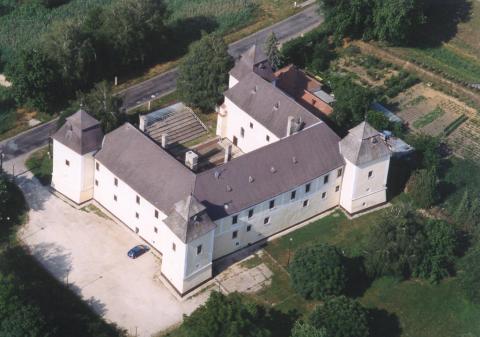
Körmend Castle is a notable historic fortress located in the town of Körmend in western Hungary. This hill castle stands on a strategic elevation, offering commanding views of the surrounding landscape, which historically provided both defensive advantages and control over the region. Körmend Castle is known for its architectural evolution through the centuries, primarily reflecting Renaissance and Baroque styles that were prominent in Hungary from the 16th to the 18th centuries.

Historical background and significance

The origins of Körmend Castle date back to the medieval period, with the earliest fortifications likely established in the 14th or 15th century. Over time, the castle underwent significant modifications and expansions, especially during the Renaissance era when Hungary saw a wave of castle rebuilding and modernization to adapt to new military technologies and aesthetic preferences.

The castle played an important role in regional defense, particularly during the turbulent times of the Ottoman invasions in the 16th and 17th centuries. It served as a noble residence and a military stronghold for various Hungarian aristocratic families, including the Batthyány family, who were influential patrons and owners of the castle for several centuries.

Architectural features and style

Körmend Castle exhibits architectural features characteristic of both the Renaissance and Baroque periods. The Renaissance influence is evident in the castle's symmetrical layouts, elegant facades, and the use of classical elements such as pilasters, cornices, and arched windows. Later Baroque modifications introduced more ornate decorations, grand staircases, and richly decorated interiors, reflecting the tastes of the aristocracy in the 17th and 18th centuries.

The castle complex includes a central residential building surrounded by defensive walls and bastions, typical of hill castles designed to withstand sieges. The presence of courtyards, residential chambers, and service buildings within the castle grounds illustrates its dual function as a fortress and noble residence.

Defensive structures

The castle's defensive system originally included thick stone walls, towers for surveillance and defense, and a moat or ditch that enhanced its security. Although some of these features have been altered or partially lost over time, remnants of the fortifications remain visible and contribute to the castle's historic character.

Cultural and heritage importance

Körmend Castle is an important cultural landmark in Hungary, representing the architectural and historical development of the region. It reflects the transition from medieval fortifications to Renaissance and Baroque noble residences, showcasing the evolving needs and tastes of Hungarian nobility.

Today, the castle is a site of interest for historians, architects, and tourists alike. Its preserved structures and historical ambiance offer insights into Hungary's feudal past and the architectural trends that shaped Central Europe.

Current condition and visitor information

The castle is well preserved and has undergone restoration efforts to maintain its structural integrity and historical appearance. It is accessible to visitors, offering guided tours that highlight its architectural features and historical significance.

Visitors can explore the castle grounds, including the courtyards, halls, and remaining defensive elements. The castle often hosts cultural events and exhibitions that enrich the visitor experience and promote Hungarian heritage.

Frequently asked questions (FAQ)

What is the historical significance of Körmend Castle?
Körmend Castle, built in the 13th century, played a vital role in the defense of the region against invasions. It has witnessed numerous historical events and changes in ownership, reflecting the tumultuous history of Hungary. Today, it stands as a symbol of the local heritage and offers insights into medieval architecture.
When was Körmend Castle constructed?
The construction of Körmend Castle began in the 13th century, with significant modifications made over the centuries. Its enduring structure showcases various architectural styles that have evolved from the medieval period to the Renaissance. This long history contributes to its charm and significance as a heritage site.
Can I visit Körmend Castle, and what are the opening hours?
Yes, visitors can explore Körmend Castle throughout the year. The castle is typically open from Tuesday to Sunday, with specific hours varying by season, so it’s advisable to check the official website for the most current information before planning your visit.
Is it possible to access Körmend Castle with mobility aids?
Körmend Castle has made efforts to improve accessibility for visitors with mobility challenges. While some areas may present difficulties due to the historic structure, there are paths and facilities designed to accommodate visitors with limited mobility. It's best to contact the castle staff in advance for detailed accessibility information.
What are the ticket prices for visiting Körmend Castle?
The ticket prices for Körmend Castle are generally affordable, with discounts available for students and seniors. Children under a certain age may enter for free. It's recommended to check the latest pricing information on the castle's official website or at the entrance.
When is the best time to visit Körmend Castle?
The best time to visit Körmend Castle is during the spring and early autumn months when the weather is mild and pleasant. These seasons also offer beautiful landscapes surrounding the castle, enhancing your experience. Additionally, visiting during this time allows you to enjoy various local events and festivals.
What nearby attractions can I explore while visiting Körmend Castle?
While visiting Körmend Castle, you can also explore the picturesque town of Körmend, which features charming streets and local shops. Additionally, the surrounding area offers natural parks and hiking trails, perfect for outdoor enthusiasts. Don't miss the opportunity to visit other historical sites nearby for a full day of exploration.

Photo gallery

Körmend Castle
Click to view

Photo by Carsten Steger•CC BY-SA 4.0

1 photo • Click any image to view in full screen

Information

Hill Castle

Loading map...

Visitor reviews

No reviews yet. Been here? Write the first review and help other travelers!

Write the first review

Visited this castle? Share your experience

Your review helps other travelers and adds first-hand knowledge to our encyclopedia.
Write a review

(5/5)

0/2000 characters

Your review will be visible after admin approval

Nearby castles

14.5 km
Széll Mansion, Rátót — Hungary castle

Széll Mansion, Rátót

Rátót, Hungary

The Széll Mansion located in Rátót, Hungary, is a notable example of a historic hill castle that reflects the architectural and cultural heritage of the region. Although detailed records about the mansion's origins and construction date are limited, it is recognized for its strategic location and characteristic features typical of Hungarian hill castles.Situated on elevated terrain, the mansion was designed to take advantage of the natural landscape, which provided both defensive benefits and commanding views of the surrounding countryside. This positioning is a hallmark of hill castles, which were often constructed to serve as fortified residences for noble families and local leaders.Architectural features and layoutThe Széll Mansion exhibits typical elements of a hill castle, including robust stone walls and a layout adapted to the uneven terrain. The mansion likely includes a central residential block surrounded by defensive structures such as curtain walls and possibly towers or bastions, although specific architectural details are scarce.The design would have balanced residential comfort with defensive capabilities, featuring thick walls to withstand attacks and limited access points to control entry. The mansion's construction materials and techniques reflect local building traditions, incorporating stone and possibly brickwork.Historical context and ownershipThe mansion is associated with the Széll family, a noble lineage in Hungary, which suggests its role as a family seat and administrative center in the region. The Széll family played a part in the local history, contributing to the political and social landscape of the area.While precise dates are not documented, the mansion likely dates from the late medieval to early modern periods, a time when many such estates were established or renovated to reflect changing defensive needs and residential styles.Preservation and current conditionThe current condition of the Széll Mansion is not widely documented, but as a historic structure, it may be in a state ranging from partially preserved to restored. Its status as a hill castle suggests that it retains some of its original defensive features and architectural integrity.Efforts to maintain or restore the mansion would focus on preserving its historical character while adapting it for modern use, possibly as a cultural site or private residence.Significance in Hungarian heritageThe Széll Mansion holds cultural and historical significance as part of Hungary's network of hill castles, which illustrate the country's feudal past and architectural evolution. It represents the intersection of military architecture and noble residential design, offering insights into the lifestyle and social structure of its era.As a historic site, the mansion contributes to the understanding of regional history and the development of castle architecture in Hungary.

Late Medieval (14th–15th c.)
Details
20.9 km
Egervár Castle — Hungary castle

Egervár Castle

Egervár, Hungary

Egervár Castle stands as a significant historical monument in the municipality of Egervár, Hungary, embodying centuries of military and noble heritage. Originally constructed as a medieval stronghold by the Hungarian kingdom, it formed part of the western defensive network protecting the kingdom’s borders. The castle's strategic location on a hill allowed it to serve as a formidable bastion against invading forces, especially during the turbulent periods of Ottoman expansion and Habsburg consolidation. First documented in 1288 under the name "castrum Egerwar", the castle initially belonged to noble families such as the Geregye, who later adopted the Egervári surname, reflecting their close association with the fortress. The castle's early history was marked by conflict, including its destruction in 1409 by the sons of Ban Henrik. Its restoration was authorized in 1476 by King Matthias Corvinus, a notable Hungarian monarch known for his military and cultural achievements. During this period, the castle was under the tenure of Croatian Ban László Egervári, emphasizing its continued strategic importance. Ownership and military significance in the 16th and 17th centuries In 1539, ownership of Egervár Castle passed to Orsolya Kanizsai, wife of Palatine Tamás Nádasdy, a prominent nobleman. Under their direction, their son Ferenc Nádasdy implemented significant repairs and fortifications. The castle's role as a border defense structure intensified after the fall of the nearby fortress of Kanizsa in 1600, a critical event during the Ottoman-Hungarian wars. The castle endured a notable siege in 1664, successfully resisting an attack by Ottoman forces. However, later that same year, the fortress was set ablaze by the Ottomans, highlighting the ongoing military pressures faced by Hungarian border fortifications. Following the Wesselényi conspiracy—a noble uprising against Habsburg rule—the castle was transferred to imperial ownership in 1671. Subsequent restoration efforts were undertaken by tenant Mátyás Radonay between 1674 and 1676, and later by Archbishop György Széchényi and his nephew, who assumed captaincy of Egervár and other fortresses in 1687. Architectural transformations in the 18th century Ownership remained with the Széchényi family, passing to György's son Zsigmond in 1712. Zsigmond initiated substantial architectural modifications, including the demolition of the northern wing, which had been damaged during earlier conflicts. This demolition was in compliance with the Treaty of Szatmár (1711), which mandated the reduction of the castle's military capabilities. To enhance the residential character of the castle, arcaded corridors were extended along the southern and western wings, providing covered walkways that improved both functionality and aesthetic appeal. Additionally, the entire building was raised by an extra floor, altering its silhouette and increasing interior space. These changes reflect a shift from purely military use to a more noble residential function. In 1760, a devastating fire necessitated further rebuilding. By 1787, parts of the castle had been adapted for agricultural storage, signaling a decline in its military and noble residential significance. Structural deterioration accelerated due to damage to the wooden pile foundations, which had been embedded in marshy terrain. The draining of surrounding wetlands contributed to the decay of these foundations. 19th and 20th century decline and restoration Between 1802 and 1809, renovations aimed at stabilizing the castle were undertaken to address the structural issues caused by foundation decay. Ownership changed hands in 1874 when László Solymosy acquired the property. However, the castle experienced neglect during the 20th century, especially after World War II, which brought it close to ruin. A restoration campaign in the 1960s helped to reverse some of the damage, preserving key elements of the castle's fabric. More comprehensive restoration efforts began in 2009, supported by the European Union. These initiatives have focused on preserving the castle's historical integrity and enhancing public engagement through modern exhibition techniques, including interactive displays and multimedia guides. Architectural features and layout Egervár Castle is arranged on a roughly square ground plan, featuring three or four corner towers designed in the style of old Italian bastions. This fortification style emphasizes defense, reflecting the castle's original military purpose rather than a purely residential palace. Constructed predominantly of stone, the castle exhibits architectural elements from the Renaissance period, resulting from multiple phases of rebuilding and refurbishment during the 16th and 18th centuries. A significant alteration to the original medieval layout was the early 18th-century demolition of the northern wing, mandated by the Treaty of Szatmár to reduce military strength. The southern and western wings were enhanced with arcaded corridors, providing covered walkways that improved the castle's residential functionality. The addition of an extra floor during this period changed the castle's silhouette and expanded usable interior space. The castle originally rested on wooden pile foundations embedded in marshy terrain. The draining of the adjacent wetlands led to the deterioration of these piles, causing structural instability and contributing to the castle's decline before 19th- and 20th-century restorations. Today, the courtyard includes a covered area with seating for approximately 450 people, demonstrating its adaptation for public events and cultural activities. Exhibition and archaeological significance The southeastern tower houses a permanent exhibition detailing the castle's layered history. Archaeological excavations have uncovered important features from its fortress phase, including sealed gunports designed as embrasures for early firearms such as bearded muskets. These features illustrate the evolution of defensive military technology and provide valuable insights into the operational use of such weaponry in a border bastion context. Overall, Egervár Castle serves as a well-preserved example of a fortified noble residence whose architectural fabric and modifications chronicle the shifting political and military landscape of Hungary from the Middle Ages through the early modern period. Its combination of medieval defense structures and later Renaissance-style architectural elements offers a tangible connection to the region's historical challenges and transformations.

High Medieval (11th–13th c.)
Details
22.1 km
Burg Gussing — Austria castle

Burg Gussing

Gussing, Austria

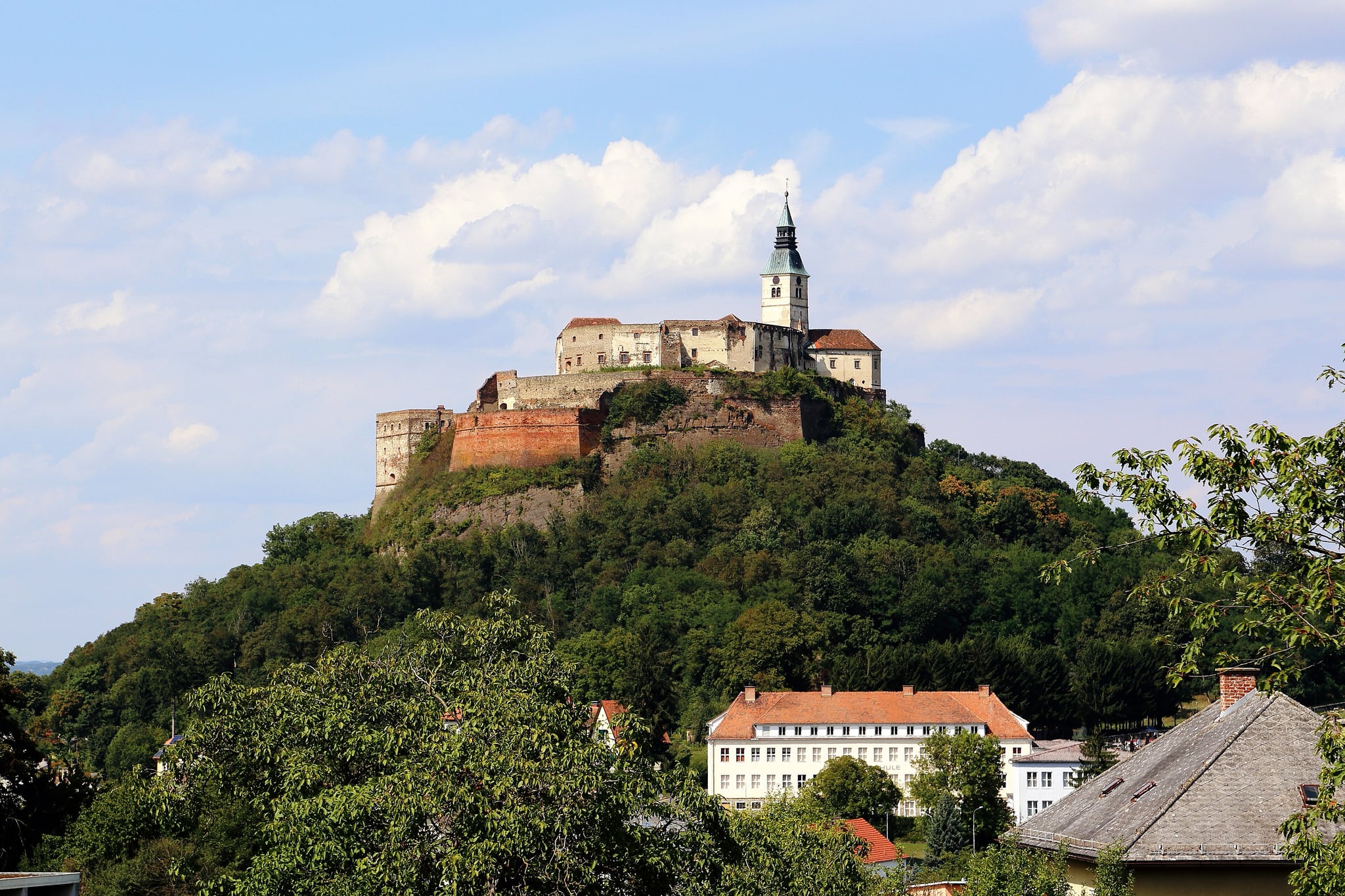
Burg Gussing stands as the oldest castle in Burgenland, Austria, with origins tracing back to the 12th century. This high medieval fortress has witnessed centuries of regional history and remains a significant cultural landmark. Its strategic location atop a hill provided natural defense advantages, typical of hill castles constructed during this era. The medieval origins and architectural significance Constructed in the 12th century, Burg Gussing exemplifies the architectural style and defensive needs of the High Medieval period. The castle's design reflects typical features of hill castles, including robust stone walls, a fortified keep, and elevated position for surveillance and protection. Over time, the castle underwent modifications to adapt to evolving military technologies and residential requirements, but much of its medieval character remains intact. Strategic location and defensive features Perched on a prominent hill overlooking the surrounding landscape, Burg Gussing was ideally situated to control trade routes and monitor potential threats. The castle's fortifications include thick curtain walls and a central donjon or keep, which served as the last line of defense. Its elevated position not only provided military advantage but also symbolized feudal power in the region. Ownership by the Batthyany family and preservation efforts On June 30, 1524, Burg Gussing was acquired by the influential Batthyany family, who have maintained ownership through a historical foundation dedicated to the castle's care and upkeep. This continuity of ownership has been crucial in preserving the castle's structural integrity and historical authenticity. The Batthyany family's stewardship has ensured that Burg Gussing remains a well-preserved monument reflecting Burgenland's medieval heritage. Restoration and maintenance Throughout the centuries, various restoration projects have been undertaken to stabilize and restore parts of the castle. These efforts have focused on preserving original stonework and architectural details, preventing deterioration caused by weather and time. The foundation managing the castle continues to oversee conservation activities, balancing preservation with public accessibility. Cultural and tourist significance today Today, Burg Gussing functions not only as a historical monument but also as a vibrant cultural venue. During the summer months, the castle grounds host theater performances, concerts, and literary readings, attracting visitors interested in history and the arts. These events utilize the atmospheric setting of the medieval fortress, enhancing the visitor experience. The family museum Within the castle, a family museum offers insights into the history of the Batthyany family and the castle's role throughout the centuries. Exhibits include artifacts, historical documents, and displays that contextualize the castle within the broader history of Burgenland and Austria. This museum enriches the educational value of a visit and connects guests to the castle's living heritage. Visitor information and accessibility Burg Gussing is accessible to the public with guided tours available that explore its architectural features and historical significance. The castle's hilltop location requires a moderate ascent, but pathways are maintained for visitor safety. Seasonal opening hours and ticket prices are managed by the foundation, ensuring sustainable tourism that supports ongoing preservation. Nearby attractions The castle's location in the Burgenland region places it near other historical sites and natural landscapes, offering visitors additional opportunities for exploration. The region's rich cultural tapestry complements a visit to Burg Gussing, making it a focal point for those interested in medieval history and Austrian heritage.

High Medieval (11th–13th c.)
Details