Konigstein Fortress
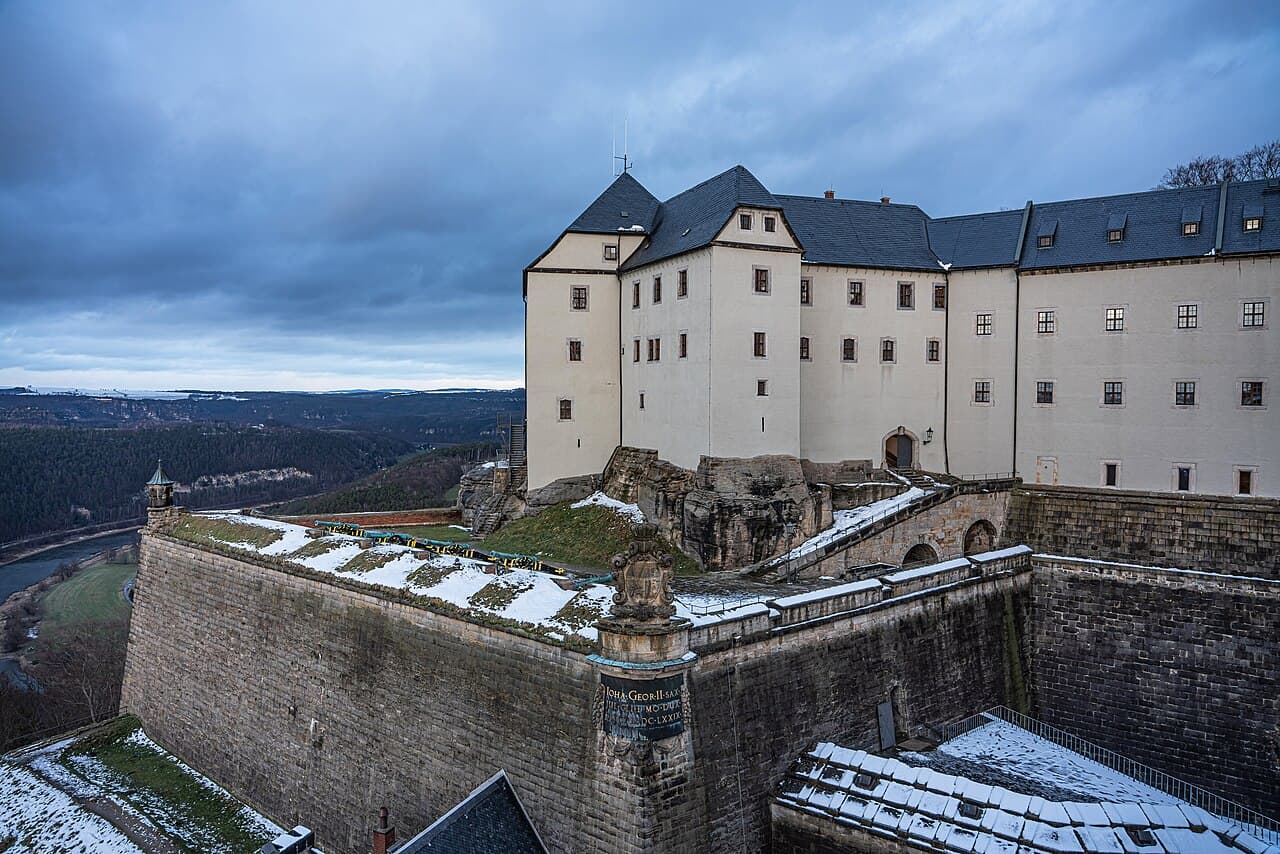
Konigstein Fortress, often called the "Saxon Bastille," stands as one of the most formidable hilltop fortresses in Europe. Perched on a massive table hill rising 240 metres above the River Elbe near the town of Konigstein, this fortress covers a sprawling 9.5 hectare plateau. Its strategic location and imposing natural sandstone cliffs have made it a virtually impregnable stronghold throughout its long history.
The fortress complex comprises over 50 buildings, many dating back more than 400 years, reflecting centuries of military and civilian life. The ramparts stretch approximately 1,800 metres, with walls soaring up to 42 metres high, blending seamlessly with the steep sandstone faces of the hill. At the heart of the fortress lies a remarkable engineering feat: a 152.5 metre deep well, the deepest in Saxony and the second deepest in Europe, which ensured a reliable water supply critical for withstanding sieges.
Early history and medieval origins
The earliest confirmed record of a castle on Königstein dates back to a 1233 deed by King Wenceslas I of Bohemia. However, archaeological and architectural evidence suggests that a stone castle may have existed on the site as early as the 12th century. The fortress's oldest surviving structure is its castle chapel, constructed around the turn of the 13th century, which stands as a testament to the site's medieval origins.
Fortification development through the centuries
16th-century expansion and modernization
Between 1563 and 1569, a monumental well was bored deep into the rock plateau, replacing the previous reliance on cisterns and rainwater collection. This innovation significantly enhanced the fortress's resilience during sieges. In the late 16th century, under the rule of Prince-Elector Christian I of Saxony and his successor, Königstein underwent extensive fortification upgrades. From 1589 to 1597, the hill was encircled by imposing high walls, and key buildings such as the Gatehouse (Torhaus), Streichwehr (a defensive wall), the Old Barracks (Alte Kaserne), Christiansburg (Friedrichsburg), and the Old Armoury (Altes Zeughaus) were constructed, transforming Königstein into the strongest fortress in Saxony.
17th and 18th-century enhancements
The fortress saw further development between 1619 and 1681, including the construction of the John George Bastion, which bolstered its defensive capabilities. The period from 1694 to 1756 marked additional expansion, notably the enlargement of the Old Barracks. During the reign of August the Strong, from 1722 to 1725, the fortress gained a unique cultural landmark: the Königstein Wine Barrel, built by coopers under the direction of Böttger. This enormous barrel, housed in the cellar of the Magdalenenburg, had a capacity of 249,838 litres, making it the largest wine barrel in the world at the time. Although the barrel was removed in 1818 due to deterioration, it remains a symbol of Königstein's historical significance beyond military functions.
Military and political significance
Despite its formidable defenses, Königstein Fortress was rarely tested in battle. Its primary role was as a secure refuge for the Saxon dukes and prince-electors during times of war and political turmoil. The fortress also served as a state prison, earning its nickname "Saxon Bastille." Its reputation as an impregnable stronghold made it a trusted location for safeguarding the state treasury and valuable artworks, including treasures from the renowned Zwinger Palace.
In the 19th century, following the unification of Germany in 1871, Königstein was integrated into the empire's fortification system. Between 1870 and 1895, new battery ramparts with eight firing points were added to provide all-around defense, although the fortress never faced an actual siege during this period. These additions represent the last major construction phase, marking the transition of Königstein from a medieval fortress to a modern military installation.
Architectural highlights and features
Königstein Fortress is a masterpiece of military architecture, combining natural geological advantages with human ingenuity. The extensive ramparts, towering walls, and steep sandstone cliffs create a formidable defensive perimeter. The complex includes a variety of structures such as barracks, gatehouses, armories, and chapels, each reflecting different architectural styles from the high medieval period through the Renaissance and into the 19th century.
The fortress's well is an engineering marvel, drilled deep into the rock to secure a reliable water source. The presence of the Magdalenenburg and its vast wine barrel illustrates the site's dual military and cultural roles. The John George Bastion exemplifies the evolution of bastioned fortifications designed to withstand artillery assaults.
Modern era and tourism
Since 1955, Königstein Fortress has operated as an open-air military history museum, attracting approximately 700,000 visitors annually. It offers a unique glimpse into centuries of Saxon history, military strategy, and architectural development. The fortress's well-preserved buildings and panoramic views over the Elbe Valley make it a premier destination for history enthusiasts and tourists alike.
Visitors can explore the extensive grounds, including the deep well, bastions, and historic buildings, while learning about the fortress's multifaceted past. The site also hosts cultural events and exhibitions that celebrate its rich heritage.
Cultural and historical legacy
Königstein Fortress stands as a symbol of Saxony's resilience and strategic importance in European history. Its role as a refuge, prison, and cultural site highlights the complex interplay of military power and regional governance. The fortress's enduring presence on the Königstein hilltop continues to inspire awe and scholarly interest, preserving its legacy for future generations.
Frequently asked questions (FAQ)
- What is the historical significance of Konigstein Fortress?
- Konigstein Fortress is one of the largest mountain fortresses in Europe, with a history that dates back to the 13th century. It played a crucial role in the defense of the Saxon region and has witnessed many historical events, including the Thirty Years' War. Today, it stands as a testament to military architecture and a symbol of Saxon heritage.
- When was Konigstein Fortress built?
- Construction of Konigstein Fortress began in 1240, and it has undergone numerous expansions and renovations over the centuries. Its strategic location atop a high rock provides panoramic views of the surrounding landscape, making it an ideal defensive stronghold. The fortress was continuously used until the 20th century, which adds to its historical depth.
- Can I visit Konigstein Fortress year-round?
- Yes, Konigstein Fortress is open to visitors year-round, although opening hours may vary seasonally. Typically, it is best to visit during the spring and summer months when the weather is pleasant, and the surrounding natural beauty is at its peak. Be sure to check the official website for specific opening hours and any seasonal events.
- What are the ticket prices for Konigstein Fortress?
- Ticket prices for Konigstein Fortress are generally very reasonable, with discounts available for students, seniors, and families. Children under a certain age may enter for free, making it an affordable outing for families. Tickets can be purchased on-site or online for convenience.
- Is it possible to access Konigstein Fortress by public transportation?
- Yes, Konigstein Fortress is accessible by public transportation, with regular bus and train services available from nearby cities. Once you arrive in Konigstein, a short hike or local shuttle can take you to the fortress entrance. The journey offers beautiful views, making it a pleasant part of your visit.
- What is the best time to visit Konigstein Fortress?
- The best time to visit Konigstein Fortress is during the spring and early autumn months when the weather is mild, and the scenery is vibrant. Additionally, visiting during weekdays can help you avoid crowds, allowing for a more enjoyable experience. Special events and festivals often take place in summer, adding to the allure of a summer visit.
- What nearby attractions can I explore while visiting Konigstein Fortress?
- While visiting Konigstein Fortress, you can also explore the picturesque town of Konigstein, known for its charming streets and local shops. Additionally, the nearby Saxon Switzerland National Park offers stunning natural landscapes, perfect for hiking and outdoor activities. These attractions provide a well-rounded experience for visitors looking to immerse themselves in the local culture and nature.
- Are there any accessibility options available at Konigstein Fortress?
- Konigstein Fortress is committed to making the site accessible to all visitors. While some areas may be challenging due to the fortress's historical design, there are pathways and facilities to assist those with mobility issues. It is recommended to check in advance for specific accessibility options to ensure a comfortable visit.

Information
Website
Visit websiteSources & official resources
Verify the information above using these authoritative references.
Loading map...
Visitor reviews
No reviews yet. Been here? Write the first review and help other travelers!
Write the first reviewVisited this castle? Share your experience
Your review helps other travelers and adds first-hand knowledge to our encyclopedia.