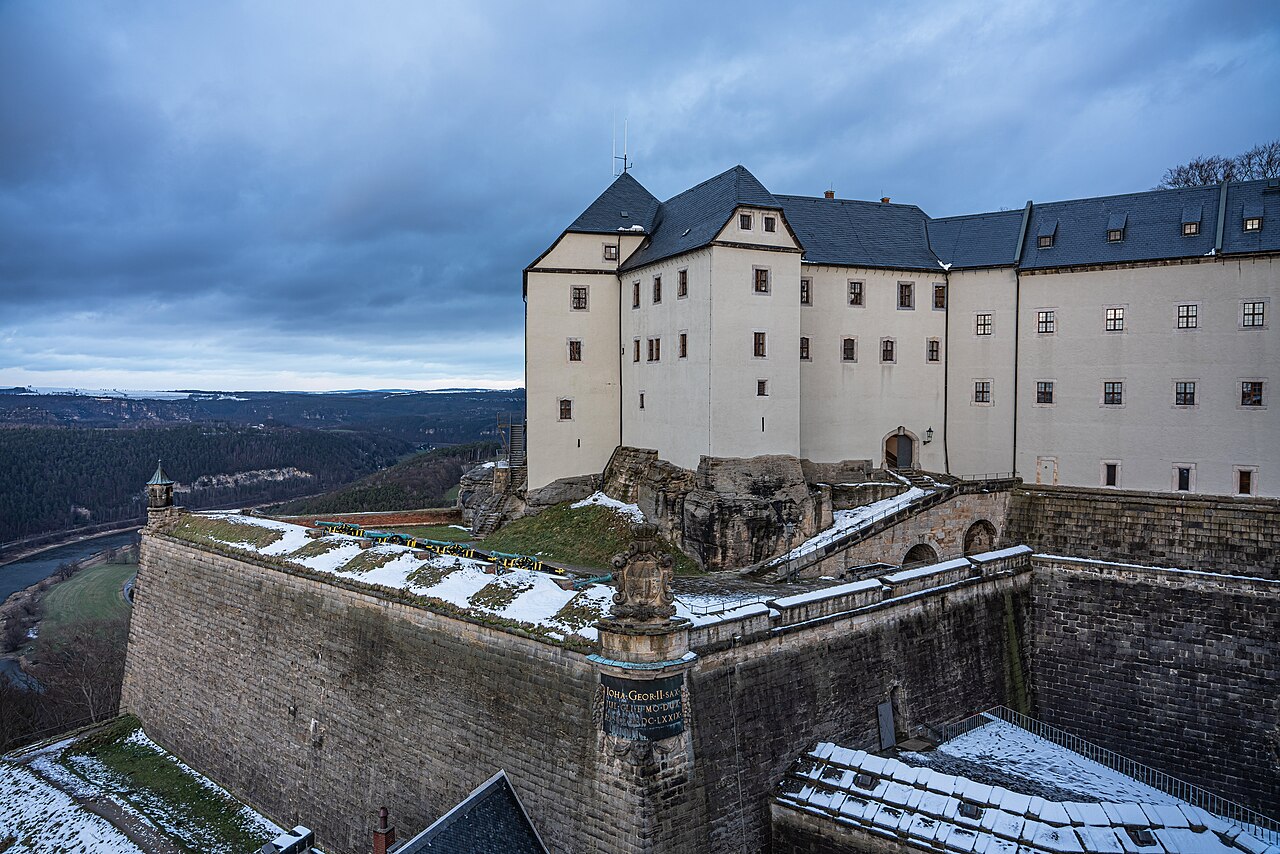
Königstein Fortress is a monumental hilltop fortress perched atop the vast rock plateau of Table Mountain, covering an impressive area equivalent to 13 football fields. This hill castle is renowned for its strategic location and formidable defenses, which have rendered it virtually unconquerable throughout history. Visitors today can explore more than 50 historic buildings and lush green spaces, offering a vivid glimpse into the life and operations of a major fortress complex.
Architectural features and layout
The fortress is a sprawling complex that includes a variety of military and residential buildings, courtyards, and fortifications designed to withstand prolonged sieges. Its elevated position on the sandstone plateau provides natural protection, augmented by thick defensive walls, bastions, and towers. Among the fortress's remarkable features are the first Saxon garrison church, which served the spiritual needs of the stationed troops, and the giant wine barrel of August the Strong, a unique historical artifact reflecting the opulence of the Saxon court.
Another engineering marvel within the fortress is the deepest fountain in Saxony, which ensured a reliable water supply during sieges. The fortress's dungeons, famously known as the "Saxon Bastille," housed numerous notable prisoners, including the social democrat August Bebel and the writer Frank Wedekind.
Historical significance and usage
Throughout its history, Königstein Fortress served multiple critical roles. Due to its impregnable location and robust construction, it was a favored refuge for the Saxon court during times of political turmoil. The fortress was also chosen as a secure storage site for the Saxon state treasure, highlighting its importance in safeguarding the region's wealth.
One of the fortress's most intriguing historical episodes involves the inventor of European porcelain, Johann Friedrich Böttger, who was kept at Königstein to protect the secret of his discovery. The fortress's reputation as a prison for high-profile detainees further cements its role in Saxony's political and social history.
Cultural heritage and visitor experience
Today, Königstein Fortress offers a rich cultural experience, combining historical exhibitions with original gastronomic offerings. Visitors can enjoy panoramic views of the Elbe Sandstone Mountains, a stunning natural landscape surrounding the fortress. The site hosts diverse exhibitions that illuminate various aspects of fortress life, military history, and regional culture.
The fortress's extensive grounds and well-preserved buildings provide an immersive experience, allowing guests to walk through centuries of history. Whether exploring the dungeons, marveling at the architectural ingenuity, or attending special events, Königstein Fortress remains a compelling destination for history enthusiasts and tourists alike.
Frequently asked questions (FAQ)
- How do I get to Koenigstein Fortress?
- Koenigstein Fortress is easily accessible by car and public transportation. If you are traveling by train, the nearest station is in Pirna, from where you can take a bus or taxi to the fortress. Additionally, there are well-marked hiking trails from nearby towns for those who prefer a scenic walk.
- What is the historical significance of Koenigstein Fortress?
- Koenigstein Fortress has a rich history dating back to the 13th century, serving as a royal residence and a military stronghold. It played a crucial role in various conflicts, including the Thirty Years' War, and has been a symbol of Saxon power and resilience. Its strategic location offers stunning views of the Elbe River and surrounding landscapes.
- When was Koenigstein Fortress built?
- Construction of Koenigstein Fortress began in 1241, making it one of the oldest fortifications in Saxony. Over the centuries, it underwent numerous expansions and renovations, adapting to the changing needs of defense and royal residence. The fortress architecture reflects a blend of Gothic and Renaissance styles, showcasing its historical evolution.
- Can I visit Koenigstein Fortress year-round?
- Yes, Koenigstein Fortress is open to visitors year-round, though hours may vary depending on the season. It's advisable to check the official website for specific opening hours and any seasonal events. Visiting during the spring and summer months allows you to enjoy the beautiful surrounding nature and gardens.
- Why is Koenigstein Fortress a popular tourist attraction?
- Koenigstein Fortress is renowned for its breathtaking views, impressive architecture, and rich history, attracting visitors of all ages. The fortress also houses a museum that showcases artifacts and exhibits related to its storied past. Visitors often enjoy guided tours, which provide deeper insights into its historical significance.
- Is it possible to access all areas of Koenigstein Fortress?
- While many areas of the fortress are accessible to visitors, some parts may have restricted access due to preservation efforts. The main attractions, including the museum and lookout points, are designed to be visitor-friendly. It's recommended to check for any accessibility options if you have specific needs.
- What are the ticket prices for Koenigstein Fortress?
- Ticket prices for Koenigstein Fortress are quite reasonable, with discounts available for students, seniors, and families. Children under a certain age may enter for free, making it an affordable outing for families. Be sure to check the official website for the latest pricing and any special offers.
- What are the best times to visit Koenigstein Fortress?
- The best times to visit Koenigstein Fortress are during the spring and early fall when the weather is mild and the gardens are in full bloom. Weekdays tend to be less crowded, allowing for a more enjoyable experience. Additionally, special events and festivals throughout the year can enhance your visit.
- Are there nearby attractions to Koenigstein Fortress?
- Yes, there are several nearby attractions, including the breathtaking Saxon Switzerland National Park, which offers stunning hiking trails and natural beauty. The charming town of Pirna is also close by, featuring historic architecture and lovely cafes. Together, these sites make for a full day of exploration.
Loading map...
Visitor reviews
No reviews yet. Been here? Write the first review and help other travelers!
Write the first reviewVisited this castle? Share your experience
Your review helps other travelers and adds first-hand knowledge to our encyclopedia.