Kondaveedu Fort
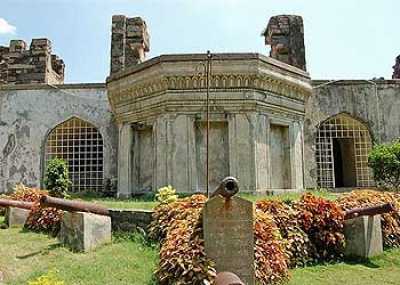
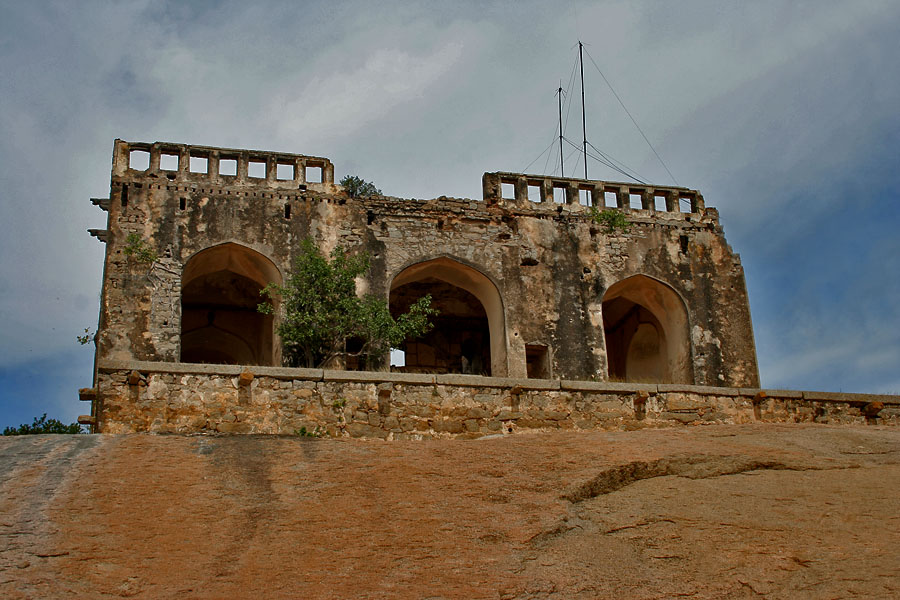
Kondaveedu Fort is an ancient hill fortress located near the village of Kondaveedu in the Palnadu district of Andhra Pradesh, India. Positioned about 16 miles west of the city of Guntur, this fortification stands on a rugged hill range that provided a strategic vantage point for controlling the surrounding region. The fort complex includes massive bastioned walls, defensive ramparts, and extensive ruins of magazines and storehouses, reflecting its military importance during the medieval and early modern periods.
The fort was originally constructed by Prolaya Vema Reddy in the early 14th century, around 1328, as a stronghold for the Reddy dynasty. It served as their capital until 1482, after they shifted from their previous seat at Addanki. The fortifications were designed to utilize the natural rocky terrain, enhanced with bastions and thick walls to withstand sieges. The location atop hills offered natural defenses and panoramic views, essential for spotting approaching enemies.
Historical significance and rulers
Kondaveedu Fort played a key role in the power struggles of the Deccan region. In 1516, it was captured by the famed Vijayanagara emperor Krishnadevaraya, who recognized its strategic value. Later, the fort became contested by the Golconda Sultanate, with battles fought in 1531, 1536, and 1579. Ultimately, Sultan Quli Qutb Shah seized the fort in 1579, renaming it Murtazanagar. This marked a shift in control from Hindu to Muslim rulers, reflecting the turbulent political landscape of the time.
Colonial period and decline
In the 18th century, Kondaveedu Fort came under the control of the French colonists in 1752. The French undertook extensive fortification efforts, adapting the defenses to contemporary military needs. However, by 1788, the fort passed to the British East India Company, who eventually abandoned it in the early 19th century in favor of developing the nearby Palnadu district. Since then, the fort has fallen into ruin, though its imposing walls and bastions still dominate the hilltop.
Architectural features and layout
The fort is classified as a bastioned fortress, characterized by angular bastions projecting from the curtain walls to provide overlapping fields of fire. Its design reflects a blend of indigenous and later military architectural influences. The fort complex includes multiple gates, defensive walls, and watchtowers strategically placed to control access and enhance security.
Inside the fort, visitors can find the remains of several magazines and storehouses, which were used to store ammunition and supplies. Although much of the internal structures are in ruins, their foundations reveal the scale and complexity of the fort's logistical arrangements. The fort's position on a hill range made it difficult to besiege, contributing to its long military significance.
Conservation and heritage status
Efforts are underway to preserve Kondaveedu Fort and promote it as a cultural heritage site. There are ongoing initiatives to classify it as a UNESCO World Heritage Site, recognizing its historical and architectural importance. The fort is a popular destination for history enthusiasts and trekkers who explore its rugged terrain and extensive ruins.
Despite its ruined state, Kondaveedu Fort remains a significant monument illustrating the military architecture and regional history of medieval Andhra Pradesh. Its layered history of dynastic rule, colonial occupation, and eventual abandonment offers valuable insights into the evolving political and military strategies of South India.
Frequently asked questions (FAQ)
- How do I reach Kondaveedu Fort from Guntur?
- Kondaveedu Fort is located about 16 miles west of Guntur. Visitors can reach the fort by road via local buses or taxis, followed by a trek uphill to the fort complex.
- What is the historical importance of Kondaveedu Fort?
- Kondaveedu Fort was the capital of the Reddy dynasty between the 14th and 15th centuries and later controlled by Vijayanagara and Golconda rulers, reflecting its strategic military significance.
- Can I explore the fort ruins on my own?
- Yes, visitors can freely explore the extensive ruins, including bastioned walls, magazines, and storehouses. However, the terrain is rugged, so appropriate footwear and caution are advised.
- Is Kondaveedu Fort recognized as a heritage site?
- Efforts are ongoing to classify Kondaveedu Fort as a UNESCO World Heritage Site due to its architectural and historical significance.
- When is the best time to visit Kondaveedu Fort?
- The best time to visit is during the cooler months from October to March, as the weather is more comfortable for trekking and exploring the hilltop ruins.
Photo gallery

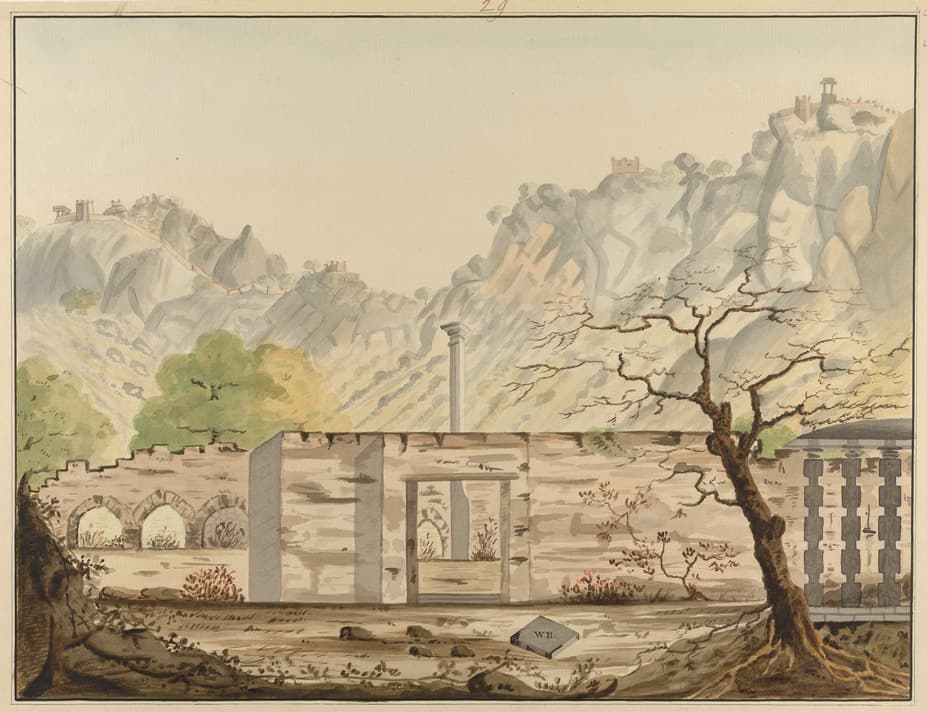
Photo by R., William (fl. 1784-1816)•Public domain
Information
Loading map...
Visitor reviews
No reviews yet. Been here? Write the first review and help other travelers!
Write the first reviewVisited this castle? Share your experience
Your review helps other travelers and adds first-hand knowledge to our encyclopedia.