Bočac Fortress
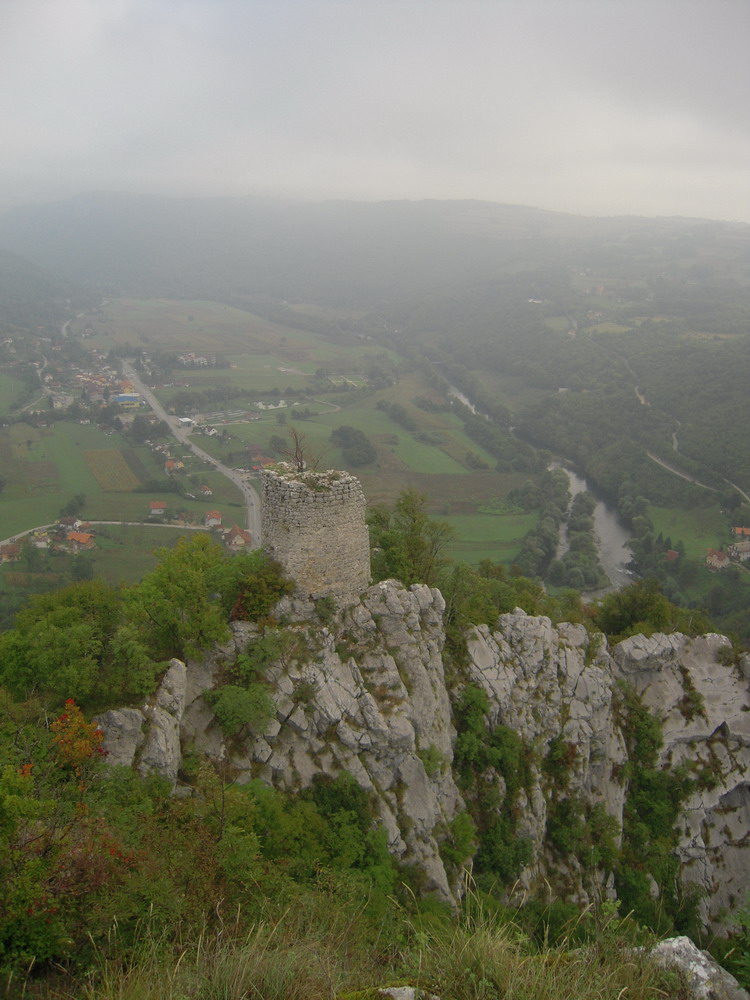
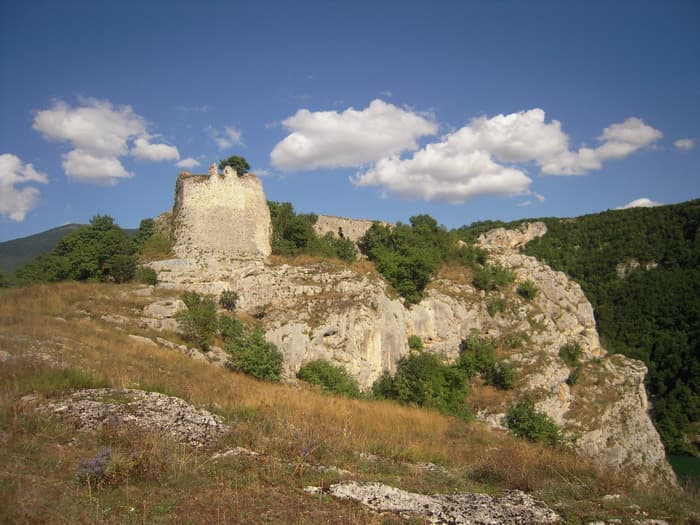
Bočac Fortress stands prominently on the left bank of the Vrbas River, strategically positioned between the cities of Banja Luka and Jajce along the modern motorway E661. Constructed in the early 15th century, this late medieval bastioned fortress was built atop a rocky outcrop to control and defend a crucial river crossing, which was vital for military and trade routes in the region.
Historical significance and early mentions
The fortress is first documented in a charter from 1448, indicating its established importance by the mid-15th century. Initially, Bočac Fortress served as a defensive stronghold within the Banovina of Jajce, a significant administrative and military district in the medieval Bosnian state. From 1463 to 1527, the fortress was a key fortification guarding the Banovina during a turbulent period marked by the Ottoman Empire's expansion into the Balkans.
Architectural features and fortifications
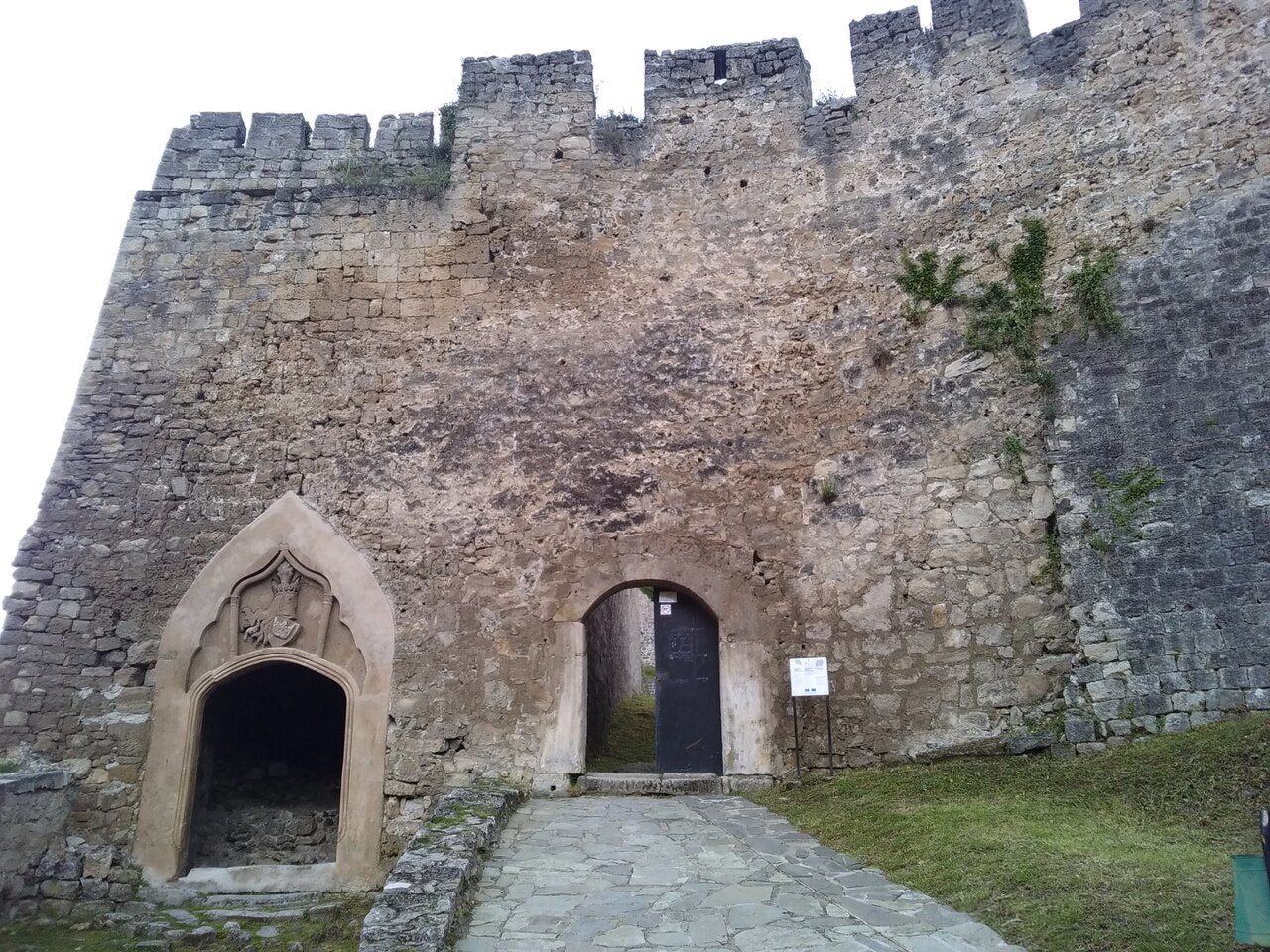
Bočac Fortress exemplifies the bastioned fortress typology, a style that became increasingly prevalent in the late medieval period as artillery warfare evolved. The fortress is constructed on a natural rocky foundation, which enhances its defensive capabilities. Its fortified walls and towers are arranged to provide overlapping fields of fire, a hallmark of bastioned design intended to eliminate blind spots and resist cannon attacks.
The complex includes multiple towers that once housed artillery pieces, as well as thick curtain walls that enclose the central area. The fortress's position overlooking the river crossing allowed defenders to monitor and control movement along the Vrbas, crucial for both military defense and economic control.
Ottoman modifications and later history
Following the Ottoman conquest in 1527, Bočac Fortress continued to hold military significance. The Ottomans maintained and reinforced the fortress, adapting it to their defensive needs. Records from the early 18th century describe Bočac as a settlement with several cannons, indicating its ongoing strategic role.
Despite continued use, the fortress was eventually abandoned before 1833, as military technology and political boundaries shifted. Today, the fortified walls and towers that surround what was once the town's large garden remain relatively well preserved, offering valuable insights into late medieval and early modern military architecture in Bosnia and Herzegovina.
Geographical and strategic importance
The fortress's location on the Vrbas River was critical for controlling one of the main transit routes through the region. The river valley served as a natural corridor between the interior of Bosnia and the Adriatic coast, making Bočac a key defensive point against invasions and a checkpoint for trade.
The rocky terrain on which the fortress was built provided a natural elevation advantage, enhancing its defensive posture and making direct assault difficult for attackers. This combination of natural and man-made defenses exemplifies the military engineering approaches of the late medieval period.
Preservation and current condition
Today, Bočac Fortress is classified as well preserved considering its age and historical use. The surviving bastioned walls and towers offer a tangible connection to the region's medieval past and Ottoman period adaptations. The site is accessible to visitors interested in military architecture and Balkan history, although facilities and interpretive materials may be limited compared to more prominent castles.
Efforts to maintain the fortress help preserve an important cultural heritage site that reflects the complex history of Bosnia and Herzegovina's borderlands during the late medieval and early modern periods.
Frequently asked questions (FAQ)
- When was Bočac Fortress built and what was its original purpose?
- Bočac Fortress was built in the early 15th century to defend the crossing over the Vrbas River, serving as a key military fortification in the region.
- What architectural style characterizes Bočac Fortress?
- Bočac Fortress is a bastioned fortress, a late medieval style designed to withstand artillery attacks with thick walls and strategically placed towers.
- Is Bočac Fortress accessible to visitors today?
- Yes, the fortress is relatively well preserved and accessible to visitors interested in exploring its historical and architectural features.
- How did the Ottoman Empire influence Bočac Fortress?
- After the Ottoman conquest in 1527, the fortress was maintained and fortified further, reflecting Ottoman military architectural adaptations.
- What is the current condition of Bočac Fortress?
- The fortress is well preserved, with its fortified walls and towers still standing, providing insight into medieval and early modern fortification techniques.
Photo gallery

Information
Loading map...
Visitor reviews
No reviews yet. Been here? Write the first review and help other travelers!
Write the first reviewVisited this castle? Share your experience
Your review helps other travelers and adds first-hand knowledge to our encyclopedia.