Koluvere Castle
Koluvere Castle, located in Lääne County, Estonia, is a notable example of a medieval water fortress with a rich history dating back to the 13th century. Originally established by the bishop's vassal Lode, the castle was strategically built on a hill surrounded by water, combining natural defenses with architectural fortifications typical of the high medieval period.
Early history and construction
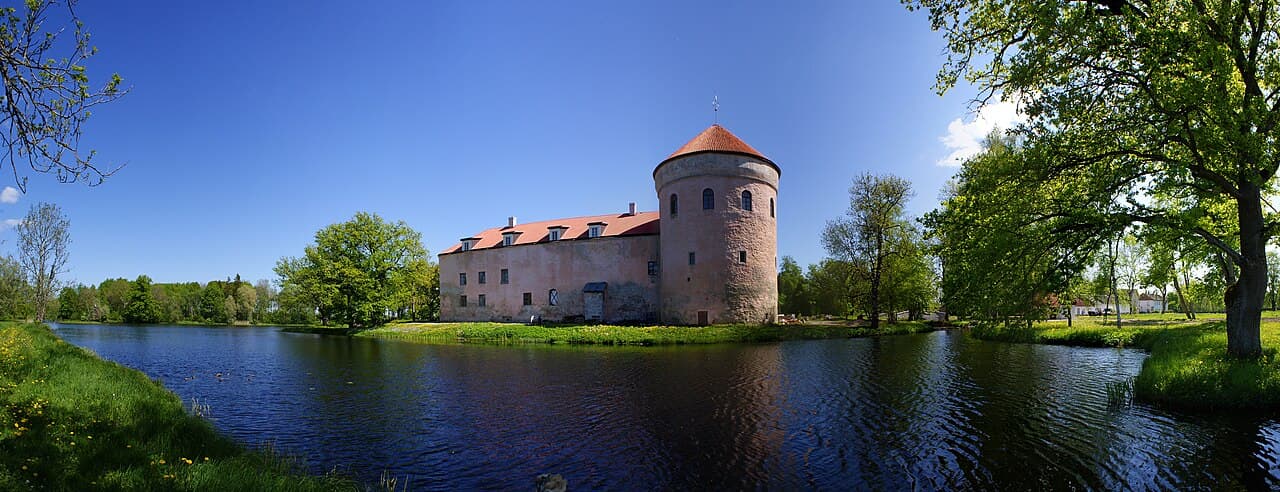
The initial fortress was constructed as a water castle, utilizing the surrounding moat and natural water bodies to enhance its defenses. The core structure included a tower fortress, which served as the main stronghold, alongside a convention hall and a cannon tower added in later phases to bolster its military capabilities. These features reflect the castle's evolution from a simple defensive site to a more complex fortification adapting to advancements in warfare, such as the introduction of artillery.
Role in regional conflicts
Koluvere Castle played a significant role during key historical conflicts in Estonia. It was a battlefield during the St. George’s Night uprising (1343), an important peasant revolt against the ruling powers, and later during the Livonian War (1558–1583), which involved multiple regional powers vying for control over the Baltic territories. These events underscore the castle's strategic importance in the defense and control of western Estonia.
Episcopal residence and transformation
In 1439, the fortress became one of the residences of the Saare-Lääne bishop, marking its transition from purely military use to a combined ecclesiastical and administrative center. This period saw the castle serving as a symbol of both religious authority and regional governance. By the 17th century, the fortress underwent significant transformation into a manor ensemble, reflecting changing architectural tastes and the reduced military threat in the region.
Ownership under Russian imperial rule
In 1771, during the reign of Empress Catherine II of Russia, the castle was purchased and gifted to her lover, Prince Grigori Orlov. This acquisition marked the castle's integration into the estates of the Russian czar's family, who used it as a country residence until 1917. The castle's role shifted from a fortress to a noble estate, with modifications likely made to accommodate residential comfort and status display typical of the Russian aristocracy.
20th century uses and current status
Following the Russian Revolution, Koluvere Castle served various civic functions, including as a boys’ educational establishment and later as a nursing home. These adaptations reflect the building's versatility and the changing social landscape of Estonia during the 20th century. Currently, the castle is privately owned and undergoing renovation efforts aimed at preserving its historical and architectural heritage. It is accessible to visitors by advance booking, allowing a controlled and respectful exploration of this significant site.
Architectural features and style
The castle's architecture is characteristic of high medieval defensive structures with later additions reflecting Renaissance and post-medieval influences. The tower fortress and cannon tower demonstrate adaptations to evolving military technology, while the manor elements introduced in the 17th century exhibit more residential and stylistic features. The castle's water defenses remain a defining feature, enhancing its imposing presence in the landscape.
Visiting information
Today, Koluvere Castle stands as a well-preserved example of medieval and early modern architecture in Estonia. Visitors interested in medieval history, ecclesiastical heritage, and Russian imperial connections will find the castle a fascinating destination. Due to its private ownership and ongoing renovations, visits are by appointment only, ensuring the site is maintained and respected.
Frequently asked questions (FAQ)
- How do I arrange a visit to Koluvere Castle?
- Visits to Koluvere Castle are available by advance booking only due to its private ownership and ongoing renovations. It is recommended to contact the current owners or local tourist information centers in Lääne County to schedule a visit.
- What historical events took place at Koluvere Castle?
- Koluvere Castle was a battlefield during the St. George’s Night uprising in 1343 and the Livonian War in the 16th century. It also served as a residence for the Saare-Lääne bishop and later for Russian czar’s family members.
- What architectural features are notable at Koluvere Castle?
- The castle features a tower fortress, a convention hall, and a cannon tower reflecting its medieval defensive purpose. Its water moat and later manor ensemble elements illustrate its evolution from fortress to noble residence.
- Is Koluvere Castle accessible to the public?
- Yes, but only by prior arrangement. Due to its private ownership and renovation status, the castle is not open for casual visits. Booking in advance is necessary to explore the site.
- When was Koluvere Castle originally built?
- Koluvere Castle was established in the 13th century by the bishop’s vassal Lode as a water fortress in western Estonia.
Photo gallery

Information
Sources & official resources
Verify the information above using these authoritative references.
Loading map...
Visitor reviews
No reviews yet. Been here? Write the first review and help other travelers!
Write the first reviewVisited this castle? Share your experience
Your review helps other travelers and adds first-hand knowledge to our encyclopedia.