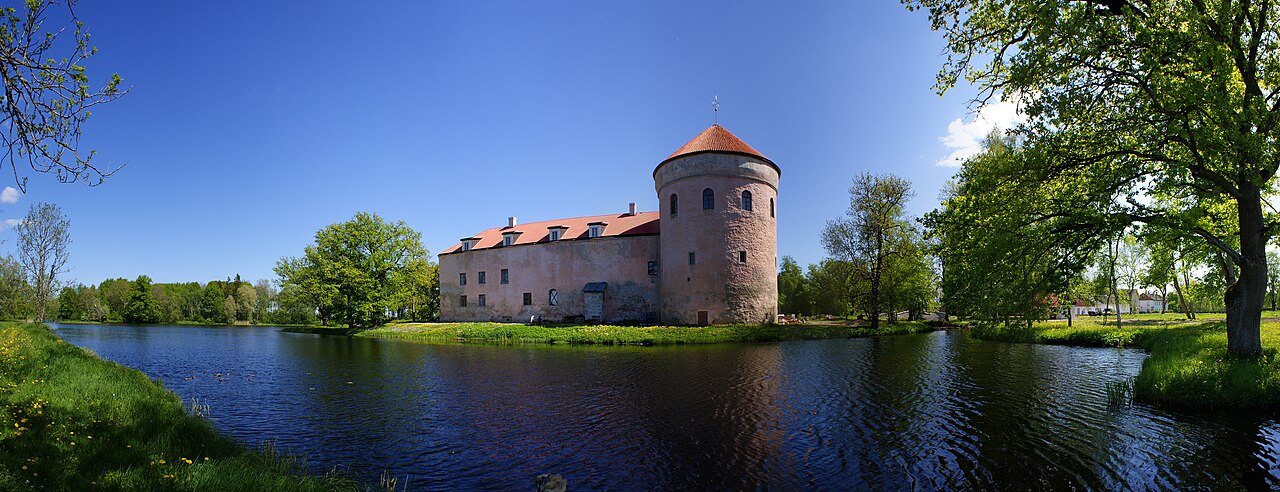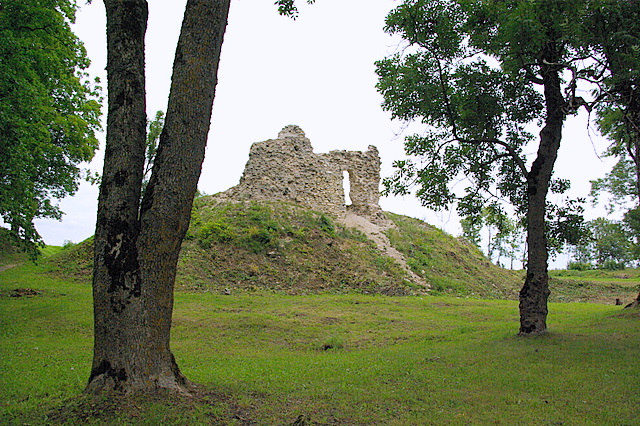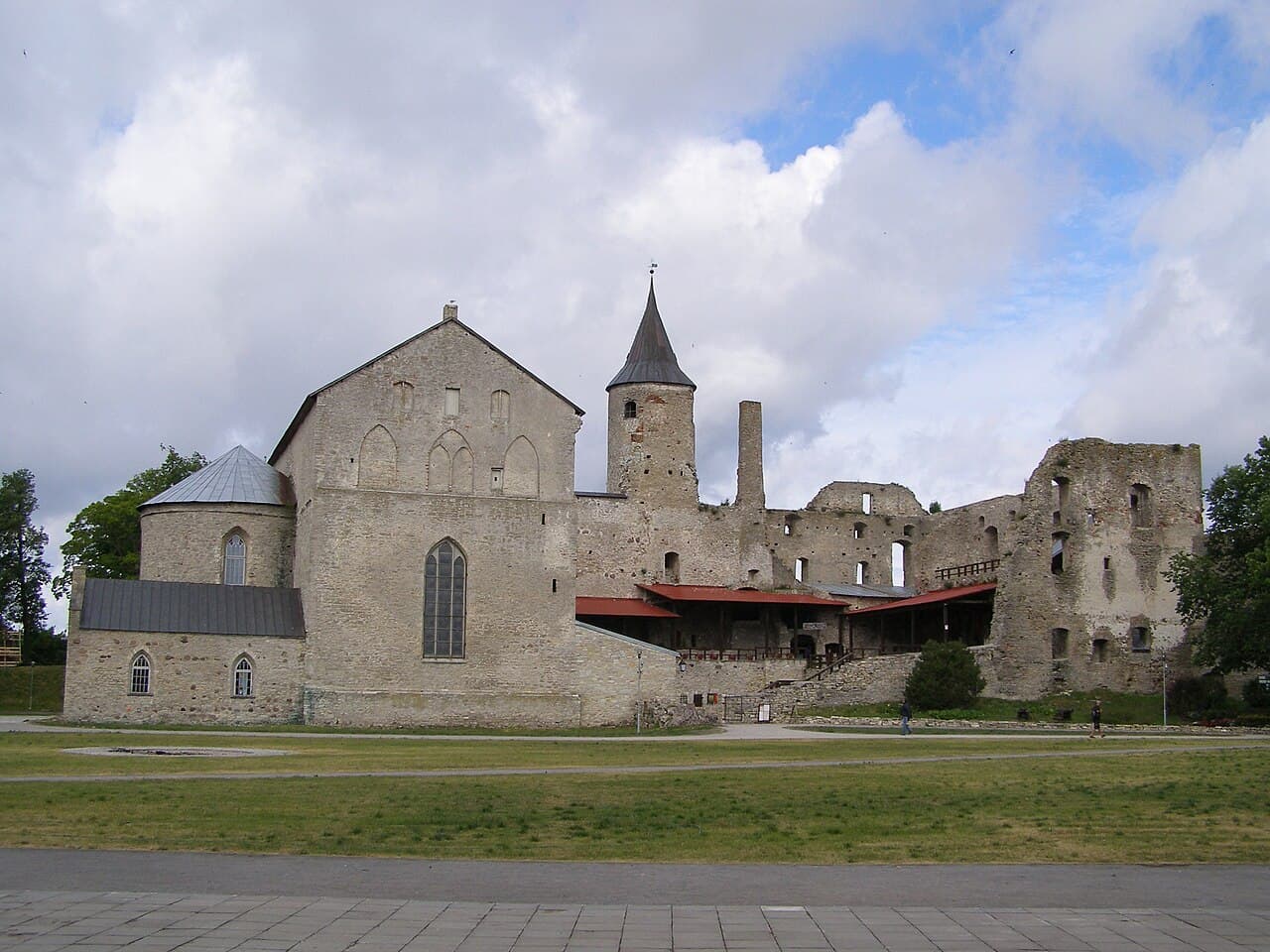
Haapsalu Castle
Haapsalu Castle stands as a remarkable example of a medieval bishop's fortress in Estonia, embodying centuries of ecclesiastical power, military architecture, and cultural heritage. Founded in the 13th century as the main residence of the Bishop of Läänemaa, it served as the administrative and spiritual center of the Ösel-Wiek bishopric, a vassal state under the Holy Roman Empire. The castle complex, including the adjoining cathedral, reflects a continuous evolution of architectural styles and defensive features shaped by changing military technologies and political circumstances.
The origins of the castle date back to 1228, when the bishopric was established by Archbishop Albert of Riga. Initially, the bishop's seat was located elsewhere but was moved to Haapsalu following the destruction of earlier centers. Construction of the fortress and the cathedral began soon after and extended over nearly three centuries, culminating in the castle's final form under Bishop Johannes IV Kievel between 1515 and 1527. The castle's design and fortifications were adapted multiple times to withstand evolving threats, including the introduction of artillery during the Livonian War (1558–1582).
Historical significance and political context
The Ösel-Wiek bishopric was created as a territorial state within the framework of the Holy Roman Empire, governed by a prince-bishop who wielded both spiritual and temporal authority. Its establishment was part of the broader Northern Crusades aimed at Christianizing the Baltic region. The bishopric's borders were formalized by Papal legate Wilhelm of Modena in 1234, underscoring its recognized status within the medieval European order.
The castle's initial role was to serve as a fortified episcopal residence and administrative center. The complex's strategic location in Haapsalu allowed control over important trade routes and regional governance. Over time, the castle became a symbol of the bishopric's power and a bastion against external threats, including military orders like the Livonian Swordbrothers and neighboring pagan tribes.
Architectural features and construction phases
Castle layout and fortifications
Haapsalu Castle occupies an extensive area of over 30,000 square meters, enclosed by formidable walls originally built to heights exceeding 10 meters and later raised to about 15 meters. The walls, constructed from robust stone materials, range between 1.2 and 1.8 meters in thickness, reflecting the need for strong defensive capabilities against siege weaponry.
The western side of the castle features a prominent 29-metre watchtower, dating from the early 13th century. This tower was later converted into a bell tower, signaling a shift in the castle's function from purely military to ecclesiastical. The castle's fortifications were enhanced during the Livonian War with the addition of inner trenches and bomb shelters designed to accommodate cannon warfare, demonstrating adaptation to gunpowder weaponry.
The castle complex also includes a smaller inner castle and outer defensive structures, parts of which were severely damaged during the Livonian War and never fully restored. These elements illustrate the intense military conflicts that shaped the region's history.
The cathedral of st. nicholas
Attached to the castle is the Cathedral of St. Nicholas, the largest single-naved church in the Baltic countries, covering an area of approximately 425 square meters with 15.5-metre-high domical vaults. Constructed between 1263 and 1270, the cathedral was designed in a transitional style combining Romanesque and early Gothic architectural elements, reflecting the influence of the Cistercian Order.
The cathedral served as the official seat of the bishop and the working place of the bishopric's chapter. Its original Romanesque portal featured a round arch with a decorative gable (wimperg) housing a niche with a figure of the patron saint. Later expansions in the 15th century added rooms, increased wall heights, and introduced a new gable without the earlier wimperg.
A unique feature of the cathedral is the round baptistery chapel on its eastern side, built in the 14th or 15th century. This chapel is notable for its vaulted cross ceiling and is unparalleled in the Baltic region. It is also the site of the famous White Lady legend, where a ghostly apparition is said to appear on the chapel's inner wall during moonlit August nights.
The white lady legend and cultural heritage
The White Lady is a well-known local legend associated with Haapsalu Castle. According to the story, a young woman who fell in love with the abbot was secretly brought into the castle disguised as a choirboy. When discovered, she was bricked into the chapel wall as punishment, while the abbot was imprisoned. The apparition of the White Lady is said to mourn her fate eternally and is visible as a silhouette on the chapel wall when moonlight shines through the eastern window during August full moons.
This legend has become a cultural symbol for Haapsalu and is commemorated annually by the White Lady music festival, attracting visitors and celebrating the castle's mystical heritage.
Historical transformations and restoration efforts
Haapsalu Castle underwent significant changes throughout its history. Following the Livonian War, the castle was heavily damaged, and its military importance declined during the Swedish rule in the 17th century. The fortress ceased to serve defensive purposes and was partially demolished by order of Tsar Peter I during the Great Northern War in 1710, leaving it largely in ruins.
The cathedral also suffered damage over the centuries, including the destruction of its copper roof by fire in 1688 and further damage by a storm in 1726. Religious services dwindled as the local congregation diminished, and the church was eventually closed during the Soviet occupation in the 20th century. It was repurposed for grain storage and even considered as a swimming pool facility.
Restoration efforts began in the late 19th century, with major work between 1886 and 1889. This included replacing the original Romanesque portal with a pseudo-Gothic stair portal, covering medieval wall paintings, and removing tombstones from the floor. Religious services resumed in 1889, reviving the cathedral's spiritual role.
After Estonia regained independence, the cathedral was restored to active use by the Estonian Lutheran Church in 1990. In 1992, the Mother's Altar was consecrated inside the cathedral, honoring Estonian mothers who perished during the Soviet occupation, featuring a statue of the Virgin and Child by sculptor Hill Palm.
Visiting haapsalu castle today
Today, Haapsalu Castle is a significant historical and cultural landmark in Estonia. Visitors can explore the extensive ruins, including the imposing walls, the watchtower, and the beautifully preserved Cathedral of St. Nicholas. The castle's grounds offer insight into medieval ecclesiastical architecture and the turbulent history of the Baltic region.
The castle hosts various cultural events, including the annual White Lady music festival, which celebrates the local legend and attracts tourists from across the region. The site is accessible to the public and provides educational opportunities about medieval fortifications, religious history, and Estonian heritage.
Haapsalu Castle remains a testament to the region's complex history, blending military, religious, and cultural narratives into a compelling visitor experience.
Frequently asked questions (FAQ)
- When was Haapsalu Castle originally built?
- Haapsalu Castle was originally constructed beginning in 1228 as the episcopal residence of the Bishop of Läänemaa.
- What architectural styles are present in Haapsalu Castle and its cathedral?
- The castle and cathedral exhibit a mix of Romanesque and Gothic architectural styles, with later additions reflecting changes in military technology.
- Is the White Lady apparition at Haapsalu Castle real?
- The White Lady is a local legend associated with the castle's baptistery chapel, where a ghostly figure is said to appear during full moon nights in August.
- Can visitors explore the cathedral inside Haapsalu Castle?
- Yes, the Cathedral of St. Nicholas is accessible to visitors and remains in active use by the local Lutheran congregation.
- What happened to Haapsalu Castle during the Livonian War?
- The castle was severely damaged during the Livonian War (1558–1582), with parts of the walls and outer fortifications left partly destroyed.
- Are there any annual events held at Haapsalu Castle?
- The White Lady music festival is held annually in August to celebrate the castle's famous legend and attract visitors.
Photo gallery

Information
Website
Visit websiteSources & official resources
Verify the information above using these authoritative references.
Loading map...
Visitor reviews
No reviews yet. Been here? Write the first review and help other travelers!
Write the first reviewVisited this castle? Share your experience
Your review helps other travelers and adds first-hand knowledge to our encyclopedia.