Kollmitz Castle
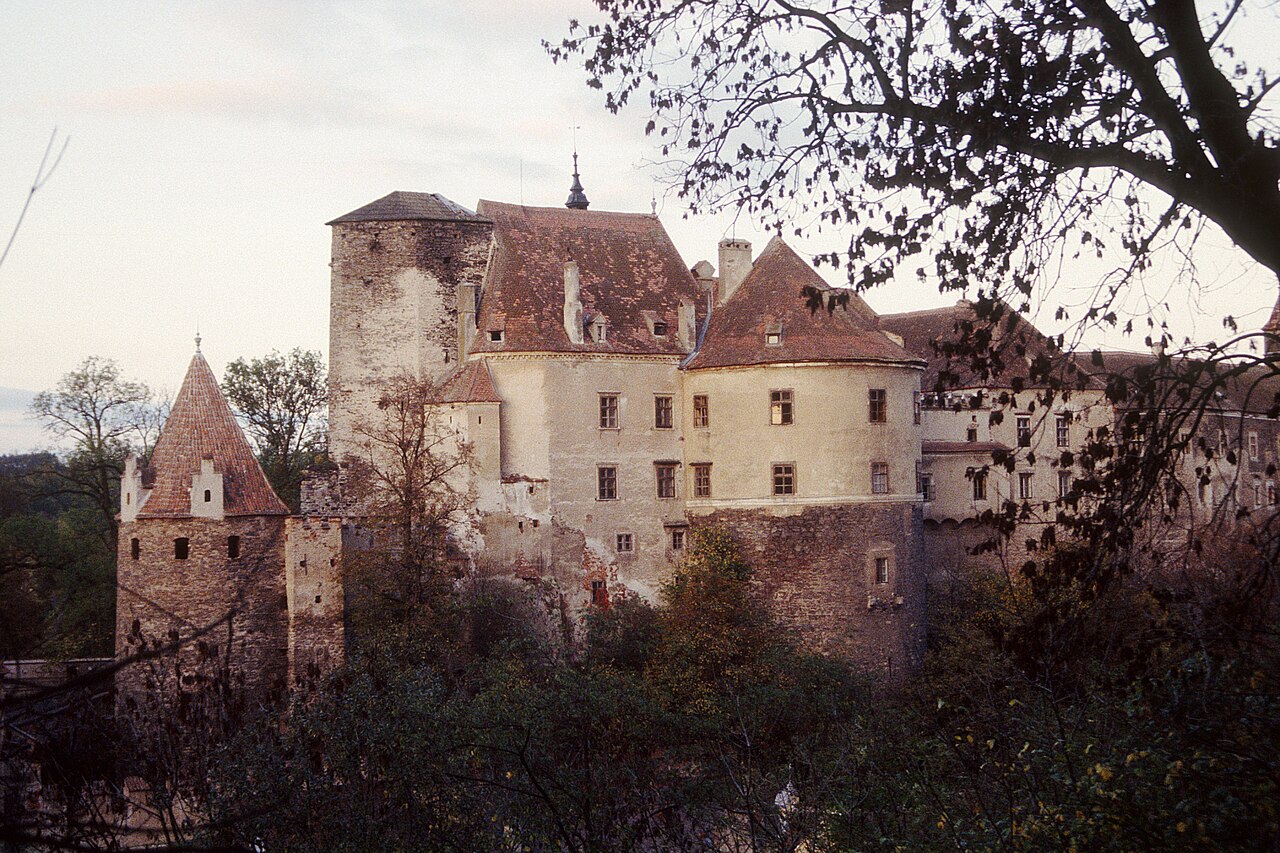
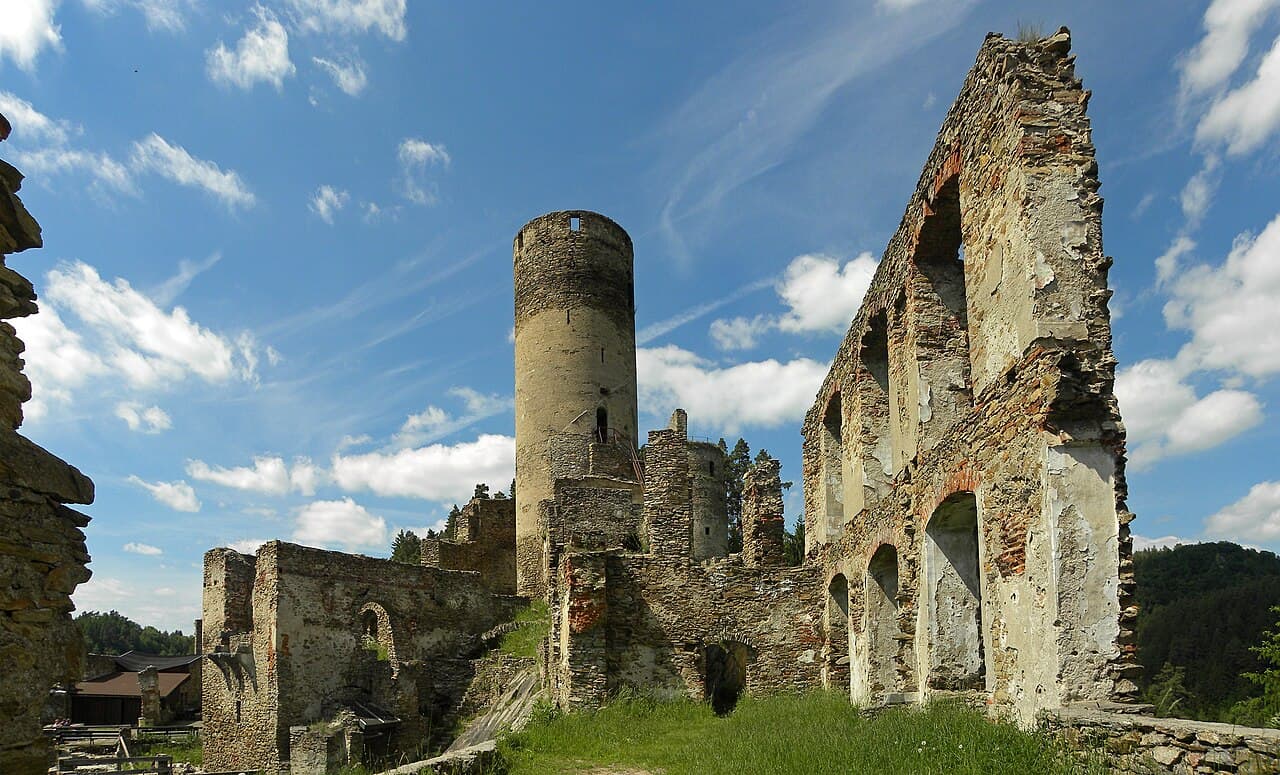
Kollmitz Castle, known locally as Burg Kollmitz, is a significant medieval ruin located near the village of Kollmitzgraben in the province of Lower Austria. Positioned strategically on a ridge within a bend of the Thaya river valley, it ranks among the largest castle ruins in Austria. The site offers a fascinating glimpse into medieval fortification and noble residence architecture, featuring a semicircular gate tower, a round corner tower, a massive keep, and the remains of a two-level residential building.
Historical background and ownership
The castle was first documented in the 12th century under the name "Chalmunze," marking its origins in the high medieval period. Throughout its history, Kollmitz Castle changed hands multiple times, initially belonging to various noble families before passing to the Gera Abbey and later the Lords of Raabs. Its most prosperous era occurred during the renaissance under the ownership of the Lords of Hofkirchen, a family that controlled the castle from 1411 until the early 17th century.
The Hofkirchen family's tenure ended in 1611 when Wolfgang von Hofkirchen died in exile in Prague amid the Habsburg Counter-Reformation, during which he was viewed as a leader of Protestant nobility. Subsequently, the castle passed through several owners and eventually fell into disuse.
Architectural features and fortifications
The keep and towers
The keep of Kollmitz Castle is a dominant feature, standing approximately 25 meters tall with walls nearly 2.90 meters thick. This robust structure served as the stronghold and last line of defense. Adjacent to the keep is a gothic corner tower, likely constructed in the 15th century, notable for its exceptionally thick walls measuring 3.7 meters. Both towers are accessible to visitors and provide panoramic views of the surrounding landscape.
Residential buildings and renovations
The castle's residential quarters included a two-level building that underwent renovation around 1700. However, the imposition of a roof tax during the Napoleonic Wars led to the removal of roofs around 1800, rendering the castle uninhabitable and accelerating its decline into ruin.
The bohemian or devil's wall
Approximately 400 meters north of the main castle ruins stands a remarkable freestanding defensive structure known as the Bohemian wall or Devil's wall. Built around 1448, this curtain wall stretches about 160 meters in length and rises 5 meters high, spanning the narrowest part of the ridge to protect the road leading to the castle. This wall is unique in Austria for being a separated defensive barrier and played a crucial role in defending the castle during a siege by the troops of the Bohemian King Podiebrad in 1450.
Decline and preservation
Following its abandonment as a residence and administrative center, Kollmitz Castle fell into disrepair. In 1708, it was acquired by Franz Anton von Quarient und Raal, under whose ownership the castle no longer served a practical purpose and continued to deteriorate. The removal of roofs in the early 19th century further hastened its ruinous state.
Today, the ruins are owned by the city of Raabs and maintained by the Society for the Preservation of the Kollmitz Ruins. The site is freely accessible to the public, offering visitors the opportunity to explore its extensive passageways, large cellars, and climb both the keep and the round tower.
Visitor experience and surroundings
The approach to Kollmitz Castle involves a scenic walk through wooded terrain, enhancing the sense of entering a medieval stronghold. The ruins themselves provide a tangible connection to Austria's medieval past, with well-preserved structural elements that illustrate the defensive and residential functions of the castle. Its location on a ridge overlooking the Thaya river valley adds strategic and aesthetic value to the site.
While detailed historical records are limited, the castle's architectural remains and its distinctive Bohemian wall offer valuable insights into medieval fortification techniques and the region's turbulent history during the late Middle Ages and Renaissance periods.
Frequently asked questions (FAQ)
- How do I get to Kollmitz Castle?
- Kollmitz Castle is located near the village of Kollmitzgraben in Lower Austria. Visitors can reach the site by car or local transport, followed by a walk through the surrounding woods to the castle ruins.
- What are the opening hours for visiting Kollmitz Castle?
- The ruins of Kollmitz Castle are freely accessible to the public at all times, as there are no formal opening hours or entrance fees.
- Can I climb the towers at Kollmitz Castle?
- Yes, visitors are allowed to climb both the keep and the round gothic tower, offering panoramic views of the Thaya valley and surrounding landscape.
- What is the historical significance of the Bohemian wall near Kollmitz Castle?
- The Bohemian wall, built around 1448, is a unique freestanding defensive curtain wall that protected the castle's access road. It played a key role during the 1450 siege by Bohemian King Podiebrad's troops.
- Is Kollmitz Castle suitable for family visits?
- The castle ruins feature large cellars and passageways that can be explored safely. The walk to the castle through the woods is pleasant for families, but visitors should wear suitable footwear and supervise children closely due to uneven terrain.
Photo gallery

Information
Website
Visit websiteSources & official resources
Verify the information above using these authoritative references.
Loading map...
Visitor reviews
No reviews yet. Been here? Write the first review and help other travelers!
Write the first reviewVisited this castle? Share your experience
Your review helps other travelers and adds first-hand knowledge to our encyclopedia.