Burg Wehlen
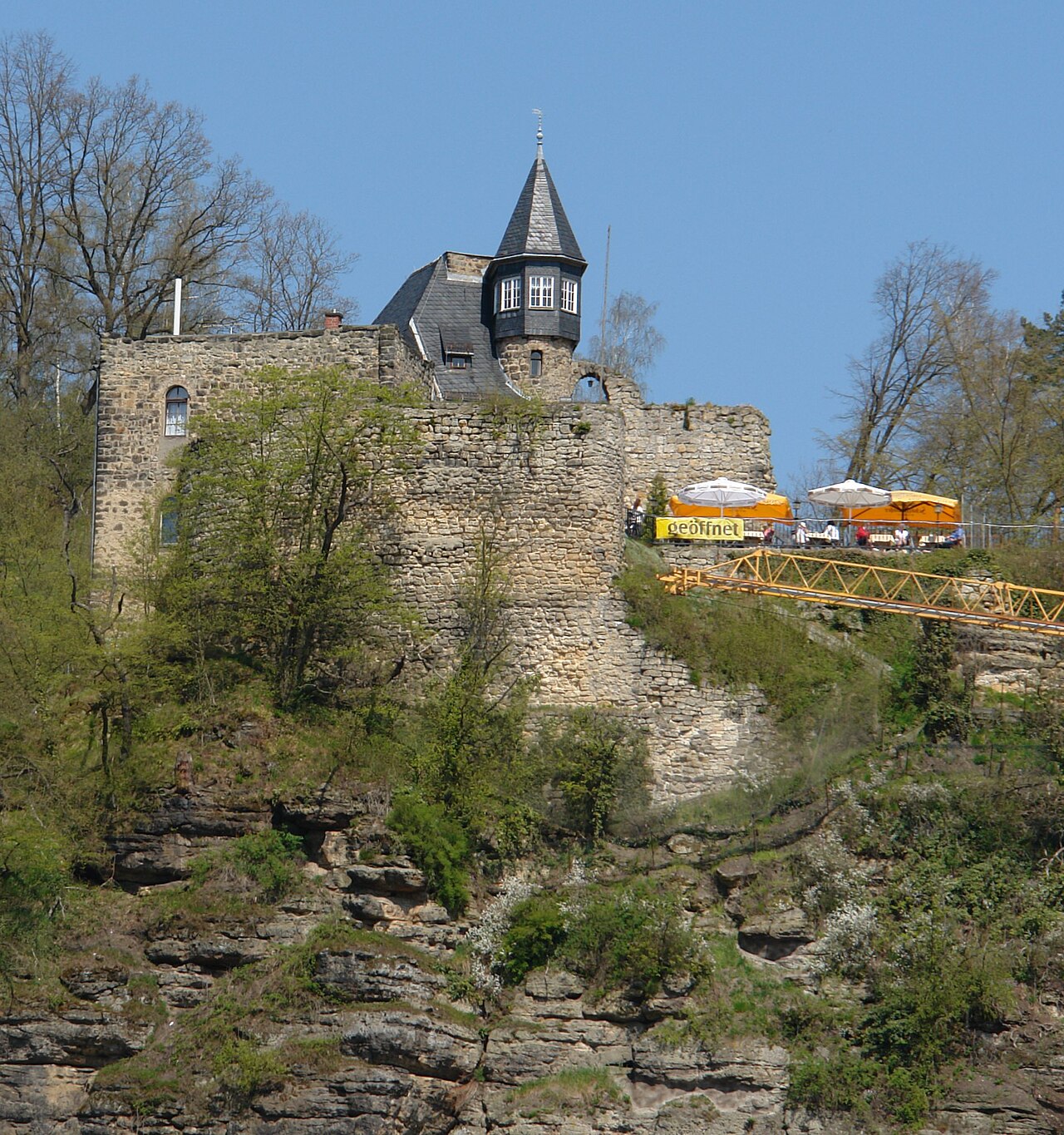
Burg Wehlen is a prominent medieval hill castle located on a rocky promontory overlooking the Elbe River in the town of Wehlen, Germany. This fortress, built during the early 12th century, exemplifies the strategic military architecture of the period and reflects the territorial ambitions of regional nobility in Saxony. Its position 25 meters above the river, flanked by the Elbe and the Grundbach stream, offered natural defensive advantages that were expertly utilized in its design.
The castle's earliest documented mention dates to 1269, although it was significant enough by 1245 to be included in royal dowry arrangements. Specifically, Bohemian King Wenceslaus I incorporated Burg Wehlen into the dowry of his daughter Agnes upon her marriage to Margrave Henry the Illustrious of Meissen. This alliance highlights Burg Wehlen's role within the complex political landscape of Central Europe during the High Middle Ages.
Historical ownership and political significance
Following its royal association, Burg Wehlen was enfeoffed to prominent local noble families, initially the von Saalhausen lineage and later the von Köckritz family. The sale of the castle in 1484 by Nickel von Köckritz marked a transition in ownership during the late medieval period. Between 1523 and 1543, the estate was controlled by the Schönburg lords, who eventually exchanged it with Duke Moritz of Saxony. After this exchange, Burg Wehlen ceased to function as a noble residence, with its military and domestic roles diminishing significantly.
By the mid-16th century, specifically after 1547, the castle was abandoned as a residence. Its decline accelerated when Elector August authorized the dismantling of its building materials in 1550. These materials were repurposed by nearby towns, signaling the end of Burg Wehlen's active military and residential use. The late 18th century saw further destruction, with major wall collapses in 1787 and 1788, leading to the removal of all upper structures and the transformation of the site into gardens from 1789 onward.
Architectural features and layout
The original layout of Burg Wehlen extended approximately 85 meters long and 16 meters wide, incorporating two outer baileys—enclosed courtyards typical of medieval fortifications that served defensive and domestic functions. The castle's design took full advantage of the natural topography, with steep drops on multiple sides enhancing its defensibility.
Today, the surviving remains include the foundations of a single tower and an adjacent cellar owned by the town of Wehlen. These cellars feature cross vaults and barrel vaults, showcasing the sophisticated medieval stone construction techniques used. These vaulted chambers were first uncovered in the late 19th century by the Saxon Mountain Club, although they were later filled in during the 1960s due to structural concerns.
A notable surviving structure is the round building locally known as the "Trommel", which likely functioned as a bastion or fortified outwork. This bastion contributed to the castle's defensive perimeter and was occupied until the 1980s, demonstrating its adaptive reuse long after the castle's decline.
19th and 20th century transformations and restorations
In 1883, the Saxon Mountain Club acquired the ruins and began converting the site into a scenic viewpoint. They erected an observation tower on the site of the former main residential tower and constructed stairways to facilitate visitor access. In 1896, a memorial obelisk was installed on the castle plateau to commemorate the 26th anniversary of the Battle of Sedan, linking the site to 19th-century German national history.
During the period of the German Democratic Republic (GDR), restoration efforts included structural repairs such as the stabilization of a collapsed south wall in the 1960s. However, the observation tower was dismantled despite local opposition, the cellars were filled again, and the Sedan memorial was removed and hidden, reflecting the political climate's impact on heritage preservation.
Recent conservation and modern additions
Since 2017, a local interest group has undertaken clearing and partial restoration of the ruins, including reopening the cellars to the public in 2020. The rediscovery and re-erection of the Sedan memorial in 2021 restored an important commemorative element to the site.
A significant modern intervention began in spring 2024 with the construction of a new observation tower approximately seven meters tall. This tower, designed in a contemporary architectural style distinct from the medieval origins, was partially funded by seized assets from the former Socialist Unity Party (SED). It was inaugurated on June 21, 2025, providing visitors with panoramic views while echoing the silhouette of the original castle tower.
Cultural significance and visitor experience
Burg Wehlen today stands as a testament to the region's medieval heritage and evolving historical narratives. The combination of original medieval ruins, 19th-century commemorative structures, and modern architectural additions creates a layered cultural landscape. Visitors can explore the castle's foundations, vaulted cellars, and bastion remains, gaining insight into medieval defensive architecture and noble residence life.
The castle's elevated position offers spectacular views of the Elbe River valley, making it a popular destination for history enthusiasts and hikers alike. The site's ongoing restoration and interpretation efforts ensure that Burg Wehlen remains an accessible and engaging monument, preserving its legacy as a strategic stronghold, noble estate, and place of remembrance.
Frequently asked questions (FAQ)
- How do I get to Burg Wehlen?
- Burg Wehlen is located in the town of Wehlen, Germany, accessible by local roads and hiking trails from nearby areas along the Elbe River.
- What is the best time to visit Burg Wehlen?
- The best time to visit Burg Wehlen is during the spring to early autumn months when the weather is mild and the views of the Elbe River valley are most scenic.
- Is Burg Wehlen accessible to visitors year-round?
- While the ruins are generally accessible year-round, visitor access may be limited during adverse weather conditions or restoration work. It is advisable to check local information before planning a visit.
- Can I explore the castle ruins freely?
- Visitors can explore the castle ruins, including the foundations and vaulted cellars, though some areas may be restricted for safety reasons. Guided tours or informational signage may be available to enhance the experience.
- Why was the observation tower dismantled during the GDR period?
- The observation tower was dismantled during the GDR era due to political and ideological reasons, reflecting shifting attitudes toward heritage sites and commemorative monuments at the time.
Information
Sources & official resources
Verify the information above using these authoritative references.
Loading map...
Visitor reviews
No reviews yet. Been here? Write the first review and help other travelers!
Write the first reviewVisited this castle? Share your experience
Your review helps other travelers and adds first-hand knowledge to our encyclopedia.