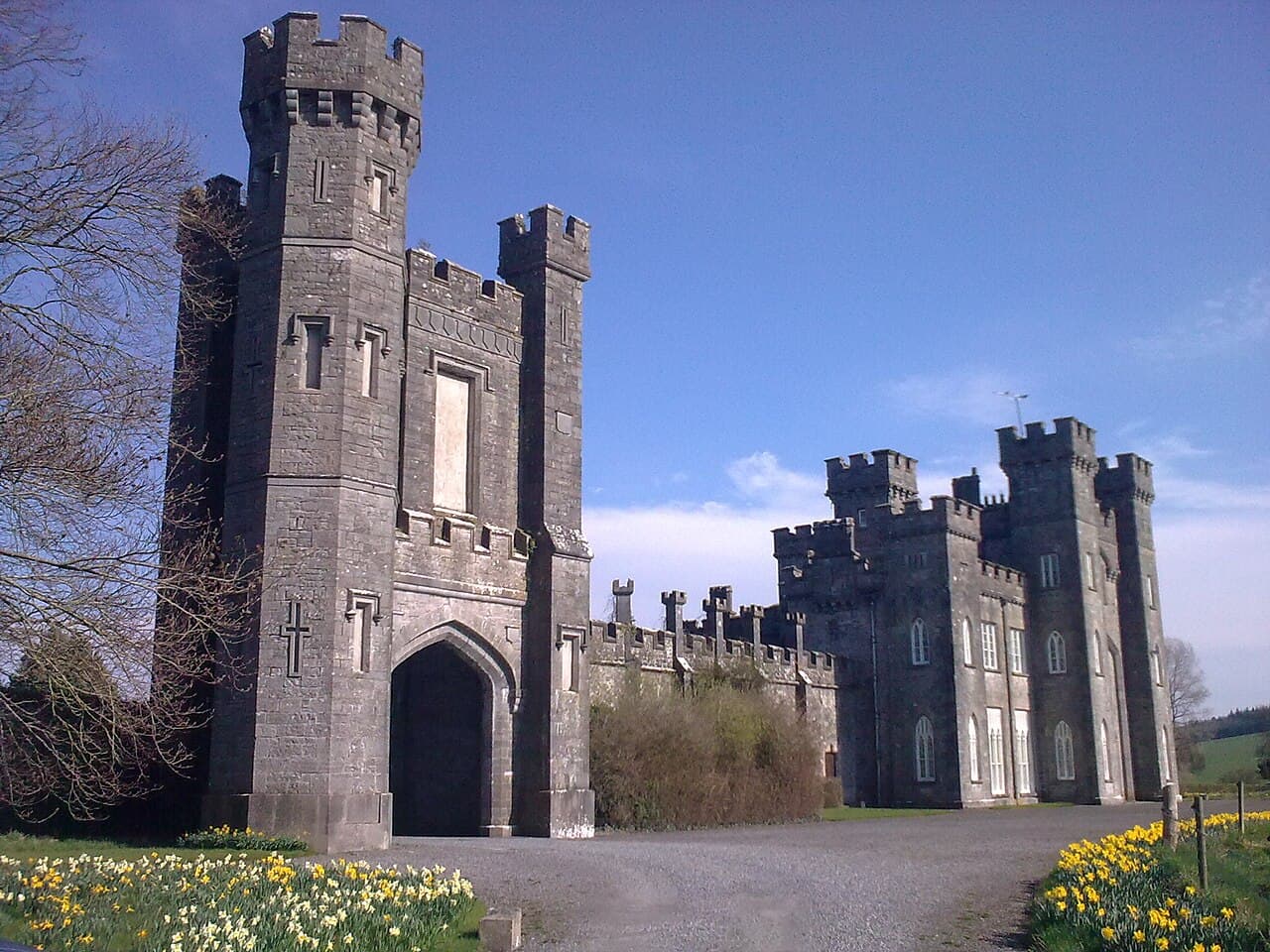
Knockdrin Castle — Ireland castle

Knockdrin Castle

Knockdrin Castle, County Westmeath, Ireland
Post-Renaissance (17th–18th c.)

Knockdrin Castle, located in County Westmeath, Ireland, is a notable example of an 18th-century hill castle that reflects the architectural and historical heritage of the Irish post-medieval period. Situated approximately 5.6 kilometers northeast of Mullingar, this castle stands prominently in the townland of Knockdrin, which is also recognized as an electoral division. The castle is positioned along the R394 regional road, the primary route connecting Mullingar to Castlepollard, highlighting its accessibility and strategic location.

Historical context and ownership

The origins of Knockdrin Castle date back to the 18th century, a period characterized by the transition from fortified medieval structures to more comfortable and stately country houses that still retained defensive features. The castle was constructed during the post-Renaissance era, reflecting the architectural tastes and social aspirations of the Irish gentry of the time. While specific details regarding the original builder and successive owners are less documented, the castle has long been associated with prominent local families who played roles in the social and economic life of County Westmeath.

Architectural features and style

Knockdrin Castle exemplifies the characteristics of a hill castle, built on elevated ground to provide commanding views of the surrounding landscape. This strategic siting was typical for defensive purposes but also for demonstrating status and control over the estate. The castle's design incorporates elements typical of the post-Renaissance period, blending traditional defensive features with the emerging emphasis on residential comfort and aesthetic appeal.

The castle's exterior is marked by robust stone walls and battlements that hint at its fortified nature, though the emphasis is more on grandeur than military defense. Architectural details include tall chimneys, large windows, and a symmetrical facade that aligns with the stylistic preferences of the time. The interiors, while less publicly documented, are known to contain spacious halls and chambers designed for both formal entertaining and private living.

Surrounding grounds and landscape

The castle is set within a sizable estate that includes landscaped grounds and parkland typical of the estates of the Irish gentry. These grounds would have been designed to complement the castle's stature and provide a picturesque environment for leisure and hunting activities. Notably, Knockdrin is home to the Westmeath Hunt, an indication of the estate's long-standing connection to traditional Irish hunting culture.

Significance and current status

Today, Knockdrin Castle remains an important cultural and architectural landmark within County Westmeath. Its preservation offers insight into the evolution of Irish country houses from fortified residences to stately homes. The castle's location and historical associations make it a point of interest for visitors exploring the region's heritage.

While detailed information about public access and current ownership is limited, the castle's presence along a well-traveled regional road ensures it remains visible and appreciated by locals and tourists alike. The combination of its architectural features, historical context, and scenic setting contributes to Knockdrin Castle's enduring legacy in Ireland's built environment.

Access and visitor information

Visitors interested in viewing Knockdrin Castle should note that it is located near Mullingar and accessible via the R394 regional road. While the castle itself is primarily a private estate and may not be open for public tours, the surrounding area offers opportunities for countryside exploration and appreciation of Irish rural heritage.

Frequently asked questions (FAQ)

How do I get to Knockdrin Castle?
Knockdrin Castle is located about 5.6 kilometers northeast of Mullingar, accessible via the R394 regional road connecting Mullingar to Castlepollard.
Can I visit the interior of Knockdrin Castle?
Knockdrin Castle is primarily a private estate and is not generally open to the public for interior tours, but visitors can view the castle from the nearby public roads.
What is the historical significance of Knockdrin Castle?
Built in the 18th century, Knockdrin Castle represents the post-Renaissance transition in Irish country house architecture, blending defensive features with residential comfort.
Is Knockdrin Castle associated with any local traditions?
Yes, Knockdrin Castle is home to the Westmeath Hunt, reflecting its connection to traditional Irish hunting culture and rural heritage.
When is the best time to visit the area around Knockdrin Castle?
The best time to visit is during the warmer months when the surrounding parkland and countryside are most accessible and visually appealing.

Photo gallery

Knockdrin Castle
Click to view

Photo by fr:Gavigan:Knockdrin_a.jpg/Knockdrin_a.jpg•GFDL

1 photo • Click any image to view in full screen

Information

Hill Castle

Loading map...

Visitor reviews

No reviews yet. Been here? Write the first review and help other travelers!

Write the first review

Visited this castle? Share your experience

Your review helps other travelers and adds first-hand knowledge to our encyclopedia.
Write a review

(5/5)

0/2000 characters

Your review will be visible after admin approval

Nearby castles

17 km
Castlelost Castle — Ireland castle

Castlelost Castle

, Ireland

Castlelost Castle (Irish: Caisleán Loiste, meaning 'castle of the losset') is a significant ruined motte-and-bailey castle situated in the townland of Castlelost, just north of Rochfortbridge in County Westmeath, Ireland. This castle dates back to the late 12th century, a period marked by the Norman invasion of Ireland, and is historically linked to the Norman lord Hugh Tyrrel (died 1199), who played a prominent role in the establishment of Norman power in the region. Historical background and ownership The construction of Castlelost Castle coincides with the widespread Norman strategy of establishing motte-and-bailey fortifications across Ireland to secure newly conquered territories. The castle served as a defensive stronghold and administrative center for the Tyrrel family, who retained possession of the castle through the medieval period into the 16th century. The Tyrrels were a notable Norman family influential in the Midlands of Ireland, and their control of Castlelost symbolized their regional power. The castle's fortunes changed dramatically in the 17th century during the turbulent period of the Irish Rebellion of 1641 and the subsequent Cromwellian conquest of Ireland. These conflicts resulted in the confiscation and redistribution of lands held by many Irish and Anglo-Norman families, including the Tyrrels, leading to the loss of Castlelost Castle and its surrounding estates. Architectural features and layout Motte-and-bailey design Castlelost Castle exemplifies the typical motte-and-bailey castle design introduced by the Normans, consisting of a raised earthwork mound (the motte) topped by a fortified structure, and an enclosed courtyard (the bailey) surrounded by defensive palisades and ditches. Although much of the original wooden structures have long since disappeared, the earthworks remain visible, providing insight into the castle's original defensive layout. Ruined tower house The most prominent surviving feature on the site is the ruined tower house, a later medieval stone structure that likely replaced or supplemented the original wooden fortifications. Tower houses were common in Ireland from the late medieval period onward, serving as fortified residences for local lords. The remains of this tower house offer valuable evidence of the castle's architectural evolution and adaptation over several centuries. Site condition and archaeological significance Today, Castlelost Castle is classified as ruins and an archaeological site. The visible remains include the tower house ruins, the motte, and traces of the bailey enclosure. The site is protected and listed on the Record of Monuments and Places for County Westmeath, reflecting its cultural heritage importance. Archaeological interest in Castlelost Castle centers on its representation of Norman military architecture in Ireland and the continuity of occupation and adaptation through the medieval period. The remnants provide valuable material for understanding the transition from early wooden fortifications to stone-built residences and the impact of historical conflicts on the castle's fate. Location and access Castlelost Castle is located near the small town of Rochfortbridge in County Westmeath, positioned strategically to oversee the surrounding landscape. The site’s rural setting allows visitors to appreciate the castle's historical context within the Irish Midlands. Access to the ruins is subject to local landowner permissions and may be limited, reflecting the site's status as an archaeological monument rather than a developed tourist attraction. Legacy and cultural importance While Castlelost Castle no longer functions as a defensive or residential structure, it remains an important symbol of the Norman influence in Ireland and the complex history of Anglo-Norman settlement in the Midlands. The castle's association with the Tyrrel family and its survival through centuries of conflict highlight the layered historical narratives embedded in Ireland’s medieval castles. Preservation efforts focus on maintaining the site’s integrity and promoting awareness of its historical value. Castlelost Castle contributes to the broader understanding of medieval Irish fortifications and the social dynamics of Norman lordship in Ireland.

High Medieval (11th–13th c.)
Details
20.2 km

Ballinlough Castle

, United Kingdom

Ballinlough Castle stands as a remarkable example of a 17th-century fortified country house located near Clonmellon in County Westmeath, Ireland. Constructed in the early 1600s, it reflects the architectural and social ambitions of the landed gentry during a period of significant political and cultural change in Ireland. The castle's strategic placement on a hill overlooking two lakes within a wooded landscape underscores its dual purpose of defense and aesthetic appeal, typical of fortified houses of the era. Historical background and ownership The castle was originally built by the O’Reilly family, prominent local landowners, with the construction traditionally dated to 1614. This date is supported by the presence of the O’Reilly family coat of arms above the main entrance, though some historians have debated the exactness of this year. The O’Reillys were influential in the region, and the castle served as a symbol of their status and power. In the late 18th century, around 1790, the estate underwent significant expansion under Sir Hugh O’Reilly. He added a new wing to the castle, likely designed by Thomas Wogan Browne, an amateur architect known for his work on Malahide Castle, home to Sir Hugh’s sister. This addition reflects the family's sustained prosperity during this period. An important familial transformation occurred in 1812 when Hugh O’Reilly was granted a baronetcy and adopted the surname Nugent by royal licence, following a bequest from his maternal uncle, John Nugent. Since then, the castle has remained the ancestral seat of the Nugent baronets. Notably, the Nugents are among the few Irish Catholic families to have continuously inhabited their original family home through centuries marked by political and religious upheaval. Architectural features and layout Ballinlough Castle exemplifies the fortified country house style of the early 17th century, combining defensive elements with domestic comfort. Its prominent hilltop location provides commanding views of the surrounding lakes and woodland, enhancing both security and scenic enjoyment. The castle's interior layout includes a ground floor with a large drawing room and dining room, designed for social and formal gatherings. The first floor houses four bedrooms accessed via a distinctive vaulted corridor, an architectural feature that adds both strength and elegance to the structure. One of the castle's most notable architectural details is its exceptionally tall windows, reputedly the tallest installed in a private house from the period. These windows flood the interiors with natural light and offer expansive views of the estate, reflecting a balance between fortification and comfort. The drawing room features a chimneypiece identical in design to a known Wyatt chimneypiece at Curraghmore House in County Waterford, linking Ballinlough Castle to wider architectural trends among Irish country houses of the era. Landscape and cultural significance The castle is set within private gardens, lakeside areas, and woodland walks that contribute to the estate's historic character and natural beauty. Although these grounds are not open to the public, they enhance the overall setting of the castle and reflect the traditional country estate layout. In the 21st century, Ballinlough Castle has become a notable venue for cultural events, hosting music performances and festivals that attract visitors from across Ireland and beyond. Since 2006, the estate has welcomed artists such as Kenny Rogers and Van Morrison, as well as festivals including the Life Festival in 2009 and Ireland's first gay music festival, MILK, in 2010. The annual Body & Soul music festival, held since 2010, further underscores the castle's ongoing role as a vibrant cultural hub. Preservation and current status Ballinlough Castle remains in the possession of the Nugent family, currently the eighth Baronet Nugent, maintaining its status as a continuous family residence. The castle is well-preserved, retaining key architectural elements from its original construction and subsequent expansions. Its enduring presence through centuries of Irish history, including periods of conflict and change, marks Ballinlough Castle as a significant heritage site. The combination of its architectural features, historical associations, and contemporary cultural use make it an important example of Ireland's fortified country houses.

Details
21.3 km

Tyrrellspass Castle

, United Kingdom

Tyrrellspass Castle stands as a remarkable example of an Anglo-Norman tower house in Ireland, embodying centuries of rich history and architectural resilience. Constructed around 1411 by the Tyrrell family, who were prominent Anglo-Norman settlers, this castle is located in the historic region of Fartullagh, now corresponding to the modern town of Tyrrellspass. The castle served as the familial stronghold and is the only surviving structure directly linked to the Tyrrell lineage, making it a significant cultural and historical landmark.The castle's strategic importance was highlighted during the turbulent late 16th century, particularly in the Nine Years’ War. In 1597, Captain Richard Tyrrell, allied with the Gaelic leader Hugh O’Neill, Earl of Tyrone, led forces to a decisive victory against English troops at the Battle of Tyrrellspass. This battle was a pivotal moment in the conflict between Gaelic Irish lords and English attempts to consolidate control over Ireland, underscoring the castle's role as a military stronghold.During the Cromwellian conquest of Ireland in the mid-17th century, the castle endured significant hardship. Around 1650, the occupants faced severe reprisals, including executions, reflecting the brutal nature of the conquest. Subsequently, ownership transferred to the Rochfort family, who later became the Earls of Belvedere, maintaining possession for over a century. This period saw the castle transition from a purely military fortress to a leased property, including its use as a British army barracks from 1796.In the 19th century, the estate passed to Charles Brinsley Marlay through maternal inheritance linked to the first Earl of Belvedere. Later, Lieutenant-Colonel Charles Howard-Bury, an explorer of note, became an owner, during whose tenure the estate houses were sold, marking a decline in the castle's prominence.The 20th century brought restoration efforts led by Phillip Ginnell in the 1970s, which helped preserve the castle's medieval character. In the early 1990s, the castle was adapted for modern use as a restaurant that hosts medieval-style banquets, blending heritage tourism with contemporary hospitality, thereby ensuring the castle's continued relevance and preservation.Architectural features and structureTyrrellspass Castle is a classic example of a tower house, rising approximately twenty meters high and constructed predominantly from robust stone. Tower houses were vertical defensive residences common in Ireland during the medieval period, designed to provide secure living quarters within a compact footprint. The castle's stone walls emphasize durability and defense, essential during its era of construction and use.Defensive elementsThe castle retains several key defensive features typical of medieval military architecture. Among these is a well-preserved murder-hole located above the main entrance, an opening through which defenders could drop stones or pour boiling liquids on attackers attempting to breach the doorway. The presence of battlements along the roofline further enhanced the castle's defensive capabilities, allowing defenders to repel invaders from a protected vantage point.Interior layout and original detailsInside, the castle features an original spiral staircase that connects the multiple floors within the tower, facilitating efficient movement while offering a defensive advantage due to its narrow, winding design. A particularly notable architectural element is a large roof beam dated to 1280, which predates the castle itself but remains exposed in the restaurant lounge area. This beam likely represents reused timber from an earlier structure, providing a tangible link to the region's architectural past.Historical significance and ownershipThe castle's history is deeply intertwined with the Anglo-Norman influence in Ireland and the subsequent conflicts that shaped the nation's history. The Tyrrell family's establishment of the castle around 1411 marks the consolidation of Anglo-Norman power in the region. The castle's role in the Nine Years’ War and the Cromwellian conquest illustrates its strategic military importance over several centuries.Ownership changes reflect broader social and political shifts. The transfer to the Rochfort family and their tenure as Earls of Belvedere symbolize the integration of Anglo-Irish aristocracy into the region's fabric. Leasing the castle to the British army in 1796 marks a new phase in its functional history, adapting to the needs of the time.Modern restoration and current useThe castle's restoration in the 1970s by Phillip Ginnell was crucial in preserving its structural integrity and historical features. The adaptive reuse of the castle as a restaurant in the early 1990s, featuring medieval-style banquets, has allowed visitors to experience the ambiance of the castle while ensuring its economic sustainability.This blend of preservation and modern function highlights the castle's ongoing cultural significance and its role as a living monument to Ireland's medieval and early modern history.Visitor experience and cultural heritageToday, Tyrrellspass Castle offers visitors a unique opportunity to explore a well-preserved medieval tower house with authentic architectural features such as the spiral staircase, murder-hole, and battlements. The presence of the ancient 1280 roof beam adds a rare historical artifact that enriches the visitor experience.The castle's use as a venue for medieval banquets provides an immersive cultural experience, combining historical education with entertainment. Its location in the historic region of Fartullagh connects visitors to the broader narrative of Anglo-Norman settlement and Irish history.Overall, Tyrrellspass Castle stands as a testament to the architectural ingenuity and historical resilience of Ireland's medieval fortifications, continuing to attract interest from historians, architects, and tourists alike.

Late Medieval (14th–15th c.)
Details
