Castlelost Castle
Castlelost Castle (Irish: Caisleán Loiste, meaning 'castle of the losset') is a significant ruined motte-and-bailey castle situated in the townland of Castlelost, just north of Rochfortbridge in County Westmeath, Ireland. This castle dates back to the late 12th century, a period marked by the Norman invasion of Ireland, and is historically linked to the Norman lord Hugh Tyrrel (died 1199), who played a prominent role in the establishment of Norman power in the region.
Historical background and ownership
The construction of Castlelost Castle coincides with the widespread Norman strategy of establishing motte-and-bailey fortifications across Ireland to secure newly conquered territories. The castle served as a defensive stronghold and administrative center for the Tyrrel family, who retained possession of the castle through the medieval period into the 16th century. The Tyrrels were a notable Norman family influential in the Midlands of Ireland, and their control of Castlelost symbolized their regional power.
The castle's fortunes changed dramatically in the 17th century during the turbulent period of the Irish Rebellion of 1641 and the subsequent Cromwellian conquest of Ireland. These conflicts resulted in the confiscation and redistribution of lands held by many Irish and Anglo-Norman families, including the Tyrrels, leading to the loss of Castlelost Castle and its surrounding estates.
Architectural features and layout
Motte-and-bailey design
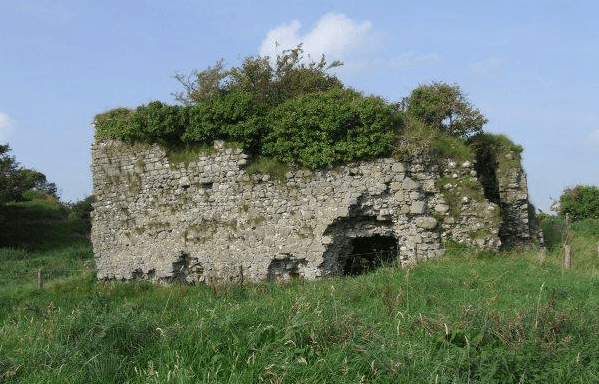
Castlelost Castle exemplifies the typical motte-and-bailey castle design introduced by the Normans, consisting of a raised earthwork mound (the motte) topped by a fortified structure, and an enclosed courtyard (the bailey) surrounded by defensive palisades and ditches. Although much of the original wooden structures have long since disappeared, the earthworks remain visible, providing insight into the castle's original defensive layout.
Ruined tower house
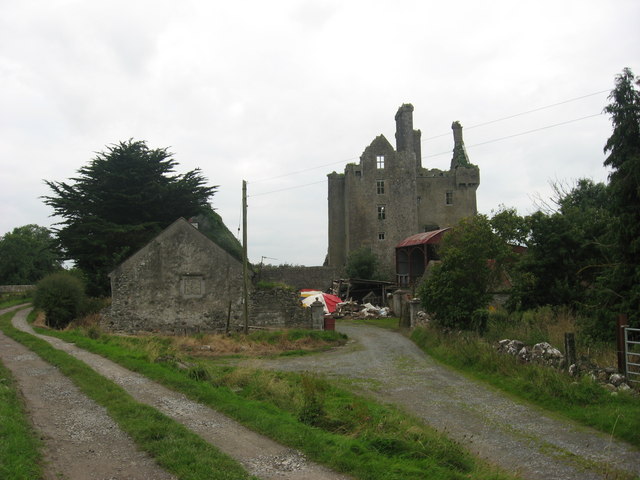
The most prominent surviving feature on the site is the ruined tower house, a later medieval stone structure that likely replaced or supplemented the original wooden fortifications. Tower houses were common in Ireland from the late medieval period onward, serving as fortified residences for local lords. The remains of this tower house offer valuable evidence of the castle's architectural evolution and adaptation over several centuries.
Site condition and archaeological significance
Today, Castlelost Castle is classified as ruins and an archaeological site. The visible remains include the tower house ruins, the motte, and traces of the bailey enclosure. The site is protected and listed on the Record of Monuments and Places for County Westmeath, reflecting its cultural heritage importance.
Archaeological interest in Castlelost Castle centers on its representation of Norman military architecture in Ireland and the continuity of occupation and adaptation through the medieval period. The remnants provide valuable material for understanding the transition from early wooden fortifications to stone-built residences and the impact of historical conflicts on the castle's fate.
Location and access
Castlelost Castle is located near the small town of Rochfortbridge in County Westmeath, positioned strategically to oversee the surrounding landscape. The site’s rural setting allows visitors to appreciate the castle's historical context within the Irish Midlands. Access to the ruins is subject to local landowner permissions and may be limited, reflecting the site's status as an archaeological monument rather than a developed tourist attraction.
Legacy and cultural importance
While Castlelost Castle no longer functions as a defensive or residential structure, it remains an important symbol of the Norman influence in Ireland and the complex history of Anglo-Norman settlement in the Midlands. The castle's association with the Tyrrel family and its survival through centuries of conflict highlight the layered historical narratives embedded in Ireland’s medieval castles.
Preservation efforts focus on maintaining the site’s integrity and promoting awareness of its historical value. Castlelost Castle contributes to the broader understanding of medieval Irish fortifications and the social dynamics of Norman lordship in Ireland.
Frequently asked questions (FAQ)
- How do I visit Castlelost Castle?
- Castlelost Castle is located near Rochfortbridge in County Westmeath. As it is a protected archaeological site on private land, visitors should check access permissions locally before planning a visit.
- What is the historical significance of Castlelost Castle?
- Castlelost Castle represents a typical Norman motte-and-bailey fortification from the late 12th century, linked to Hugh Tyrrel and the Norman conquest of Ireland.
- When was Castlelost Castle built?
- The castle was constructed in the late 12th century during the Norman invasion of Ireland, serving as a defensive and administrative stronghold.
- What remains can be seen at Castlelost Castle today?
- Visitors can see the ruins of a tower house, the earthwork motte, and traces of the bailey enclosure, all protected as part of the archaeological site.
- Is Castlelost Castle accessible year-round?
- Access depends on landowner permissions and local conditions; there are no formal visitor facilities or opening hours, so planning ahead is recommended.
Photo gallery

Information
Loading map...
Visitor reviews
No reviews yet. Been here? Write the first review and help other travelers!
Write the first reviewVisited this castle? Share your experience
Your review helps other travelers and adds first-hand knowledge to our encyclopedia.