Tyrrellspass Castle
Tyrrellspass Castle stands as a remarkable example of an Anglo-Norman tower house in Ireland, embodying centuries of rich history and architectural resilience. Constructed around 1411 by the Tyrrell family, who were prominent Anglo-Norman settlers, this castle is located in the historic region of Fartullagh, now corresponding to the modern town of Tyrrellspass. The castle served as the familial stronghold and is the only surviving structure directly linked to the Tyrrell lineage, making it a significant cultural and historical landmark.
The castle's strategic importance was highlighted during the turbulent late 16th century, particularly in the Nine Years’ War. In 1597, Captain Richard Tyrrell, allied with the Gaelic leader Hugh O’Neill, Earl of Tyrone, led forces to a decisive victory against English troops at the Battle of Tyrrellspass. This battle was a pivotal moment in the conflict between Gaelic Irish lords and English attempts to consolidate control over Ireland, underscoring the castle's role as a military stronghold.
During the Cromwellian conquest of Ireland in the mid-17th century, the castle endured significant hardship. Around 1650, the occupants faced severe reprisals, including executions, reflecting the brutal nature of the conquest. Subsequently, ownership transferred to the Rochfort family, who later became the Earls of Belvedere, maintaining possession for over a century. This period saw the castle transition from a purely military fortress to a leased property, including its use as a British army barracks from 1796.
In the 19th century, the estate passed to Charles Brinsley Marlay through maternal inheritance linked to the first Earl of Belvedere. Later, Lieutenant-Colonel Charles Howard-Bury, an explorer of note, became an owner, during whose tenure the estate houses were sold, marking a decline in the castle's prominence.
The 20th century brought restoration efforts led by Phillip Ginnell in the 1970s, which helped preserve the castle's medieval character. In the early 1990s, the castle was adapted for modern use as a restaurant that hosts medieval-style banquets, blending heritage tourism with contemporary hospitality, thereby ensuring the castle's continued relevance and preservation.
Architectural features and structure
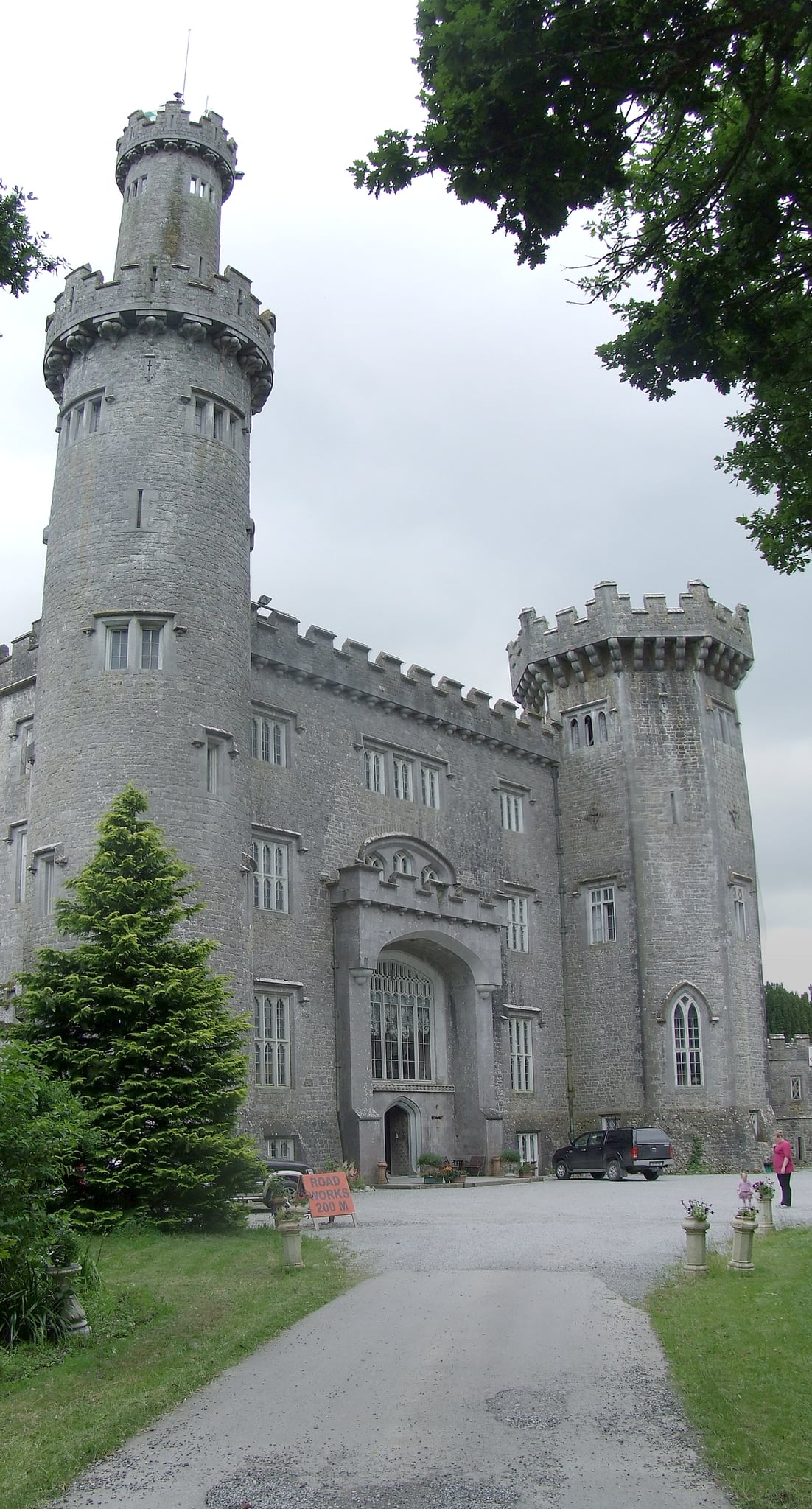
Tyrrellspass Castle is a classic example of a tower house, rising approximately twenty meters high and constructed predominantly from robust stone. Tower houses were vertical defensive residences common in Ireland during the medieval period, designed to provide secure living quarters within a compact footprint. The castle's stone walls emphasize durability and defense, essential during its era of construction and use.
Defensive elements
The castle retains several key defensive features typical of medieval military architecture. Among these is a well-preserved murder-hole located above the main entrance, an opening through which defenders could drop stones or pour boiling liquids on attackers attempting to breach the doorway. The presence of battlements along the roofline further enhanced the castle's defensive capabilities, allowing defenders to repel invaders from a protected vantage point.
Interior layout and original details
Inside, the castle features an original spiral staircase that connects the multiple floors within the tower, facilitating efficient movement while offering a defensive advantage due to its narrow, winding design. A particularly notable architectural element is a large roof beam dated to 1280, which predates the castle itself but remains exposed in the restaurant lounge area. This beam likely represents reused timber from an earlier structure, providing a tangible link to the region's architectural past.
Historical significance and ownership
The castle's history is deeply intertwined with the Anglo-Norman influence in Ireland and the subsequent conflicts that shaped the nation's history. The Tyrrell family's establishment of the castle around 1411 marks the consolidation of Anglo-Norman power in the region. The castle's role in the Nine Years’ War and the Cromwellian conquest illustrates its strategic military importance over several centuries.
Ownership changes reflect broader social and political shifts. The transfer to the Rochfort family and their tenure as Earls of Belvedere symbolize the integration of Anglo-Irish aristocracy into the region's fabric. Leasing the castle to the British army in 1796 marks a new phase in its functional history, adapting to the needs of the time.
Modern restoration and current use
The castle's restoration in the 1970s by Phillip Ginnell was crucial in preserving its structural integrity and historical features. The adaptive reuse of the castle as a restaurant in the early 1990s, featuring medieval-style banquets, has allowed visitors to experience the ambiance of the castle while ensuring its economic sustainability.
This blend of preservation and modern function highlights the castle's ongoing cultural significance and its role as a living monument to Ireland's medieval and early modern history.
Visitor experience and cultural heritage
Today, Tyrrellspass Castle offers visitors a unique opportunity to explore a well-preserved medieval tower house with authentic architectural features such as the spiral staircase, murder-hole, and battlements. The presence of the ancient 1280 roof beam adds a rare historical artifact that enriches the visitor experience.
The castle's use as a venue for medieval banquets provides an immersive cultural experience, combining historical education with entertainment. Its location in the historic region of Fartullagh connects visitors to the broader narrative of Anglo-Norman settlement and Irish history.
Overall, Tyrrellspass Castle stands as a testament to the architectural ingenuity and historical resilience of Ireland's medieval fortifications, continuing to attract interest from historians, architects, and tourists alike.
Frequently asked questions (FAQ)
- How do I get to Tyrrellspass Castle?
- Tyrrellspass Castle is located in County Westmeath, Ireland, easily accessible by car from major cities like Dublin and Galway. Public transport options may include local buses, but it's advisable to check the latest schedules and routes for convenience.
- What is the historical significance of Tyrrellspass Castle?
- Tyrrellspass Castle dates back to the 15th century and is an important example of medieval architecture in Ireland. It has a rich history involving various noble families and has witnessed numerous historical events over the centuries.
- When was Tyrrellspass Castle built?
- The castle was constructed in the early 15th century, specifically around 1400. It was initially built by the Tyrrell family and has since undergone several renovations and restorations.
- Can I take guided tours of Tyrrellspass Castle?
- Yes, guided tours are available at Tyrrellspass Castle, providing visitors with insightful information about its history and architecture. It is recommended to check the castle's official website for tour schedules and booking options.
- Why is the architecture of Tyrrellspass Castle unique?
- Tyrrellspass Castle features a distinctive blend of medieval defensive structures and later architectural styles, showcasing the evolution of castle design over the centuries. Its impressive stonework and tower make it a fascinating study for architecture enthusiasts.
- Is it possible to host events at Tyrrellspass Castle?
- Yes, Tyrrellspass Castle is available for private events, including weddings and corporate gatherings. Interested parties should contact the castle management for details on availability, services, and pricing.
- What are the opening hours for Tyrrellspass Castle?
- Tyrrellspass Castle typically opens to visitors from April to October, with varying hours depending on the season. It is advisable to check the castle's official website for the most current opening times before planning your visit.
- What are the ticket prices for visiting Tyrrellspass Castle?
- Ticket prices for Tyrrellspass Castle vary based on age and whether you are part of a guided tour. Discounts may be available for children, seniors, and group bookings, so checking the official site for the latest pricing information is recommended.
- What is the best time to visit Tyrrellspass Castle?
- The best time to visit Tyrrellspass Castle is during the spring and summer months when the weather is generally milder and the gardens are in full bloom. However, it can also be a beautiful experience in the fall, with the autumn colors enhancing the castle's charm.
- Are there any nearby attractions to explore while visiting Tyrrellspass Castle?
- Yes, nearby attractions include the picturesque village of Tyrrellspass itself, as well as the scenic Lough Ennell and the historic sites of Athlone. Visitors can enjoy a variety of outdoor activities, local shops, and traditional Irish cuisine in the surrounding area.
Information
Loading map...
Visitor reviews
No reviews yet. Been here? Write the first review and help other travelers!
Write the first reviewVisited this castle? Share your experience
Your review helps other travelers and adds first-hand knowledge to our encyclopedia.