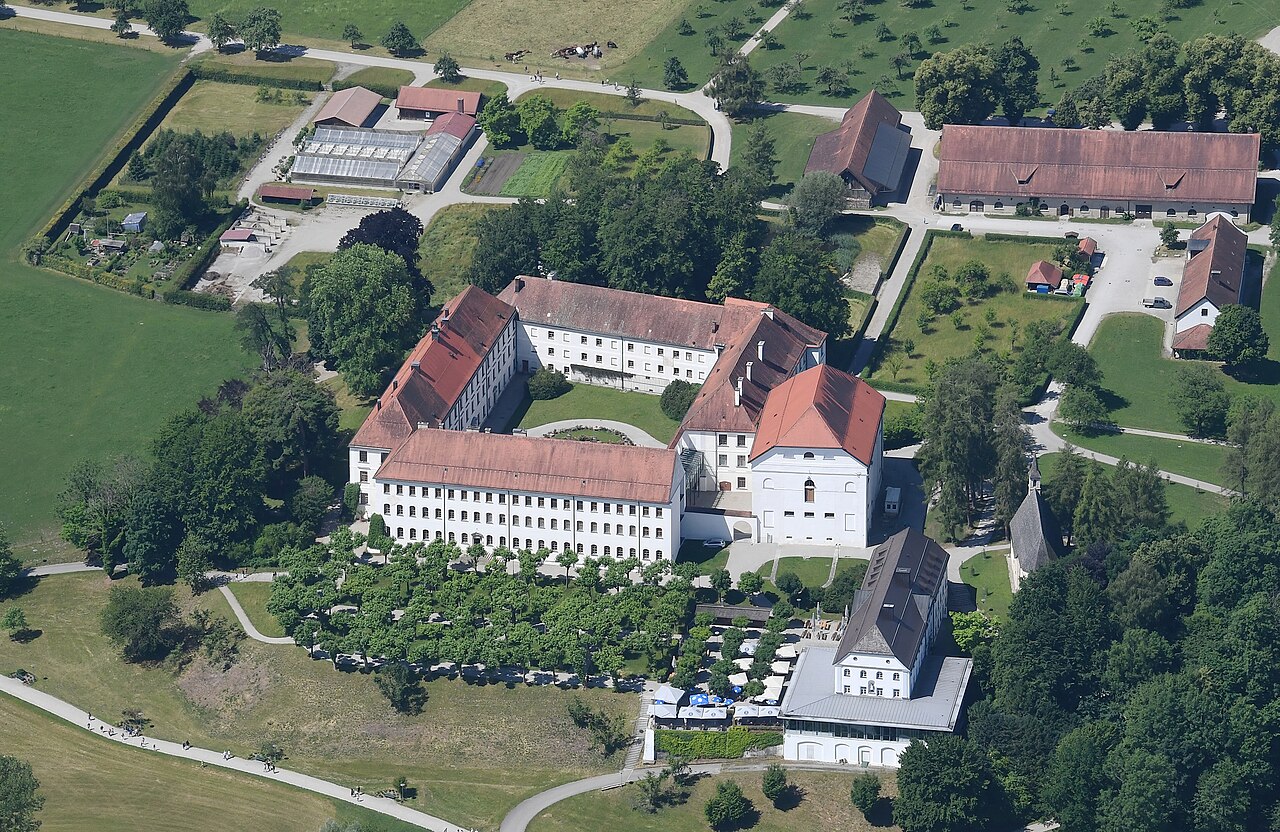
Herrenchiemsee Castle
Herrenchiemsee Palace, also known as Neues Schloss Herrenchiemsee, stands majestically on the island of Herrenchiemsee, the largest island in the Chiemsee lake in southern Bavaria, Germany. This 19th-century palace is a remarkable example of historicist architecture inspired by the Palace of Versailles in France, reflecting the extravagant vision of its patron, King Ludwig II of Bavaria. Often called Neues Schloss Herrenwörth, the castle perpetuates the ancient name of the island, Herrenwörth, linking its identity to the region's historical roots.
The construction of Herrenchiemsee began in 1878 under the reign of King Ludwig II, who sought to create a monument to the grandeur and opulence of the French monarchy, particularly the reign of Louis XIV. The palace was designed primarily by the architect Georg von Dollman, with significant contributions from Julius Hofmann, the master builder responsible for overseeing the complex construction process. Despite its ambitious scale and lavish design, Ludwig II only resided in the palace for a few days before his mysterious death in 1886. Consequently, many parts of the palace remain unfinished, providing a unique glimpse into the king's grand but incomplete vision.
Architectural grandeur and design inspiration
Herrenchiemsee Palace is a testament to the historicist architectural style prevalent in the late 19th century, characterized by its deliberate emulation of earlier periods, particularly the French Baroque style of the 17th century. The palace's design closely mirrors the layout and decoration of the Palace of Versailles, including its hall of mirrors, grand state apartments, and intricate ornamental gardens. The palace's façade features elaborate baroque elements such as sculpted reliefs, ornate cornices, and grandiose columns, all crafted to evoke the splendor of the French royal court.
The interior is richly decorated with luxurious materials including gold leaf, crystal chandeliers, and fine tapestries. The hall of mirrors at Herrenchiemsee is one of the most striking features, designed to rival its Versailles counterpart with its expansive mirrors and opulent lighting. The palace also includes a royal chapel, ballroom, and numerous state rooms that showcase the king's taste for grandeur and the arts.
Historical context and king ludwig ii's vision
King Ludwig II, often referred to as the "Fairy Tale King," was known for his passion for art, music, and architecture. Herrenchiemsee was conceived as a tribute to his admiration for the absolute monarchy of Louis XIV and the cultural achievements of the French court. The palace was intended not only as a royal residence but also as a symbol of Bavarian pride and cultural refinement.
Construction was an enormous undertaking involving hundreds of craftsmen and artisans who worked meticulously on the intricate details of the palace. However, Ludwig II's untimely death in 1886 abruptly halted the project, leaving several wings and decorative elements incomplete. Despite this, Herrenchiemsee remains a significant cultural monument, reflecting the king's unique vision and the artistic aspirations of his era.
Gardens and surrounding landscape
The palace is set within extensive formal gardens designed in the French style, featuring symmetrical layouts, manicured lawns, and ornamental fountains. These gardens were planned to complement the palace's architectural grandeur and to provide a setting reminiscent of Versailles. Visitors can stroll through the carefully maintained grounds, which include tree-lined avenues, flower beds, and water features that enhance the overall aesthetic experience.
The island of Herrenchiemsee itself is part of the scenic Chiemsee lake, often called the "Bavarian Sea," known for its natural beauty and recreational opportunities. The combination of the palace and its idyllic island location makes Herrenchiemsee a popular destination for tourists seeking both cultural heritage and natural charm.
Public access and cultural significance
Today, Herrenchiemsee Palace is managed by the Bavarian Administration of State-Owned Palaces, Gardens and Lakes. The palace and its gardens are open to the public, offering guided tours that showcase the lavish interiors and the history behind the construction. Since 1987, the south wing houses a dedicated museum honoring King Ludwig II, providing visitors with insights into his life, reign, and architectural projects.
Herrenchiemsee remains an important cultural landmark in Bavaria, attracting visitors interested in 19th-century architecture, royal history, and the legacy of one of Germany's most enigmatic monarchs. Its blend of historicist design, incomplete grandeur, and picturesque setting continues to captivate and inspire.
Architectural features and layout
The palace complex includes a central main building flanked by two wings, forming a U-shaped layout typical of grand palatial architecture. The state apartments are arranged in a sequence that reflects the ceremonial functions of the court, culminating in the magnificent hall of mirrors. The royal chapel is notable for its intricate decoration and serves as a spiritual centerpiece within the palace.
Additional features include service buildings, stables, and gardens pavilions, all designed to support the palace's function as a royal residence and cultural hub. The use of high-quality materials and skilled craftsmanship is evident throughout the complex, from the stone masonry to the elaborate interior furnishings.
Frequently asked questions (FAQ)
- How do I get to Herrenchiemsee Palace?
- Herrenchiemsee Palace is located on Herrenchiemsee island in Chiemsee lake, accessible by regular ferry services from the towns of Prien am Chiemsee and Gstadt. Visitors should check ferry schedules in advance, especially during off-season periods.
- What are the opening hours of Herrenchiemsee Palace?
- The palace is generally open to visitors from spring to autumn, with specific opening hours varying by season. It is recommended to consult the official website or local tourist information for up-to-date visiting times.
- Can I visit the gardens of Herrenchiemsee Palace?
- Yes, the formal French-style gardens surrounding Herrenchiemsee Palace are open to the public and can be explored independently or as part of guided tours. They offer a scenic complement to the palace's architecture.
- Is there a museum at Herrenchiemsee Palace?
- Since 1987, the south wing of Herrenchiemsee Palace houses a museum dedicated to King Ludwig II, featuring exhibits on his life, reign, and architectural projects, providing deeper insight into the palace's history.
- Why was Herrenchiemsee Palace left unfinished?
- Herrenchiemsee Palace was left unfinished due to the sudden death of King Ludwig II in 1886, which halted construction. Many planned wings and decorative elements were never completed, preserving the palace in a unique state of partial completion.
Information
Architect
Georg von Dollman
Current owner
Bavarian Administration of State-Owned Palaces, Gardens and Lakes
Loading map...
Visitor reviews
No reviews yet. Been here? Write the first review and help other travelers!
Write the first reviewVisited this castle? Share your experience
Your review helps other travelers and adds first-hand knowledge to our encyclopedia.