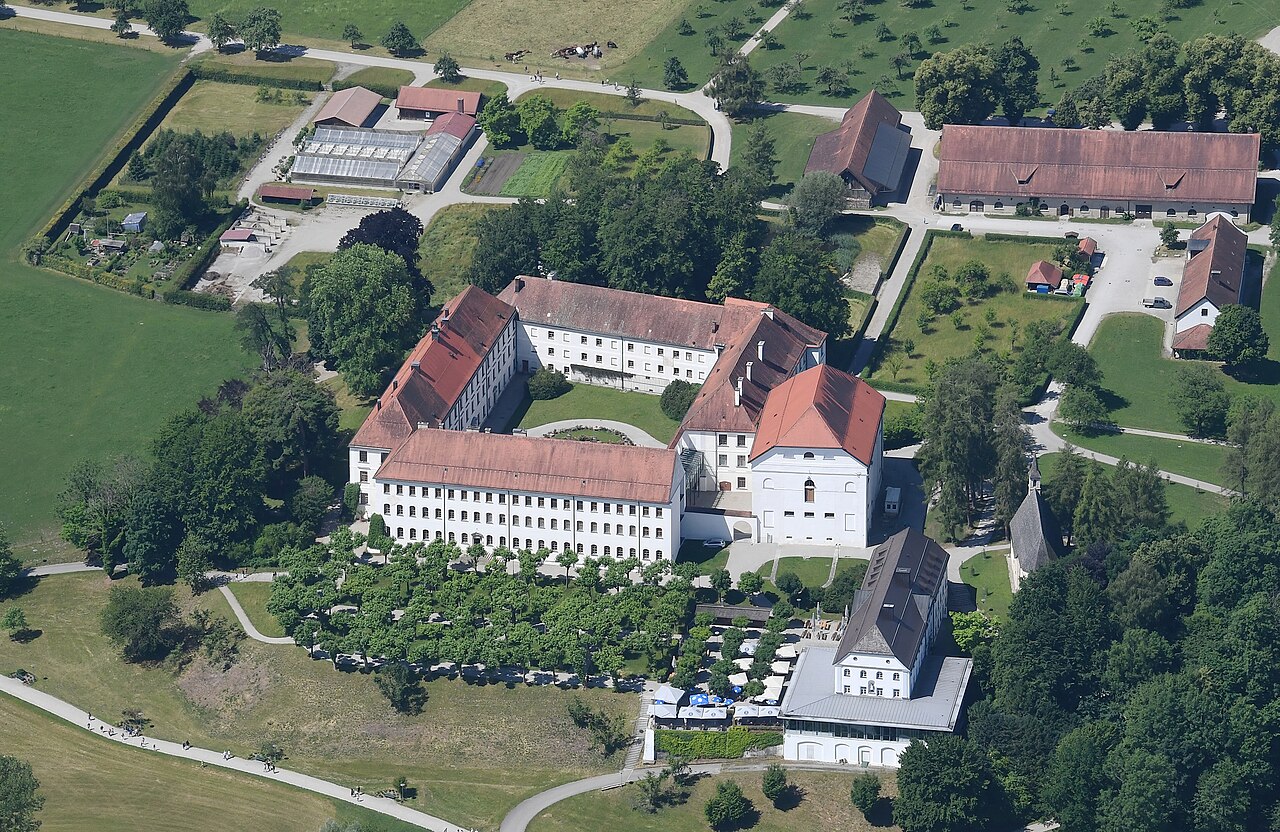
Hohenaschau Castle
Hohenaschau Castle stands as a remarkable example of a high medieval hill castle located in the picturesque municipality of Aschau im Chiemgau, Germany. Erected in the late 12th century by Konrad and Arnold von Hirnsberg, this fortress was strategically positioned at the entrance to the Upper Priental valley on a commanding rocky ridge approximately 50 meters above the valley floor. Its location provided both a natural defensive advantage and a dominant view over the surrounding landscape, a typical characteristic of hill castles designed for both military and administrative functions.
The castle's origins are deeply rooted in the medieval feudal system, with its first documented mention around 1170 in the Codex Falkensteinensis under the name "Castro Aschawe." This name influenced the noble family that took residence there, who adopted the name Aschauer. The land on which the castle was built had belonged to the Archbishopric of Salzburg since 891, and local administration was delegated to the Hirnsberg family by the Counts of Falkenstein-Neuburg in the mid-12th century.
Medieval foundation and noble lineage
Constructed initially as a fortified seat, Hohenaschau Castle evolved through the centuries into a significant noble residence and administrative center. After the extinction of the Aschauer family line in 1382, ownership passed to Konrad Freiherr von Freyberg, who had acquired the castle by 1374. The Freyberg family maintained stewardship for over two centuries, during which the castle saw substantial economic growth and architectural development.
One of the most notable figures during this period was Pankraz von Freyberg, who initiated significant Renaissance-style expansions around 1529. These enhancements reflected the artistic and cultural trends of the time, marking a transition from purely defensive architecture to more comfortable and stylistically refined noble living quarters. However, Pankraz's later life was marred by religious conflict; as a Protestant in a predominantly Catholic region, he was imprisoned and died in exile in 1565, illustrating the turbulent religious dynamics that impacted the castle's history.
Renaissance and baroque transformations
Following the Freyberg era, the castle entered the possession of the Freiherren von Preysing family around 1608 through marriage. They retained ownership for nearly 250 years and undertook significant renovations that reshaped the castle's appearance and function. Between 1672 and 1686, extensive Baroque-style renovations were completed, including the construction of a festive hall and a castle chapel. These additions enhanced the castle's role as a noble residence and symbol of aristocratic prestige.
The castle's strategic importance was underscored during military conflicts such as the War of the Spanish Succession, when it was besieged and plundered in 1704. It also suffered damage during the 1809 Tyrolean uprisings. Despite these challenges, the castle remained a significant landmark in the region.
Decline, restoration, and modern use
The decline of noble privileges in Bavaria in 1848 diminished the castle's administrative role. After the Preysing family line ended in 1853, the castle gradually fell into neglect. In 1866, the Bavarian state acquired important historical archives related to the castle, preserving its documented past.
In 1875, industrialist Theodor Freiherr von Cramer-Klett purchased the castle, establishing a family trust to secure its future. His son led a comprehensive restoration from 1905 to 1908, modernizing the complex with new residential wings, utilities, and conveniences rare in castles of that era. Notably, a funicular railway was installed to improve access from the valley, and modern amenities such as central heating and sanitary facilities were introduced.
During the First World War, the castle served as a military hospital. Financial difficulties during the Second World War led to its sale to the German Reich in 1942, after which it was used as a naval rest home. Post-war, the castle became federal property and has been leased since 1960 to social welfare organizations as a holiday and recreation center.
Since 1988, the Priental Museum has been housed within the castle's benefice house and several rooms, showcasing the cultural heritage of the region. Renovations in the early 21st century prepared the castle to host the 2008 Bavarian State Exhibition "Nobility in Bavaria," highlighting its aristocratic legacy.
Architectural features and layout
Hohenaschau Castle crowns an oval ridge stretching east to west along a rocky elevation. Its core consists of interconnected buildings, mostly two to three stories tall, arranged to form an enclosing ring typical of hill castles. The western section features a substantial tower adjacent to the main inner gate, leading visitors via a staircase to the upper courtyard.
The castle is protected by an outer bailey enclosed by a robust defensive wall with loopholes for archers and gunners, two semicircular bastions, and an outer gate. The castle chapel and adjacent benefice house (now the Priental Museum) stand within the bailey. The northern and parts of the southern sides are fortified naturally by steep rock faces, some with overhangs, enhancing defense.
Inside, the upper floor of the north wing houses the Baroque festival hall, a suite of two chambers decorated with dark wood, historically used for noble gatherings. The south wing contains the Ahnensaal or ancestors' hall, comprising three rooms with life-sized statues of former residents. Below are the "Gothic rooms," once servant quarters.
Early 20th-century additions include the Vogelbau, a family living quarter near the tower, and the Cavallierbau, a guest wing with a small round tower and an octagonal stair tower fitted with an elevator. These connect to the medieval core via covered passages and stairways.
Many original furnishings and armor have been lost, but the museum preserves artifacts such as cannons, mortars, and an execution sword linked to the castle's military and judicial history. Portions of original wall and ceiling decorations, historic tiled stoves, and other period features remain intact.
Cultural significance and preservation
Hohenaschau Castle is officially registered as a protected architectural monument and recognized as an archaeological site. This status safeguards both the visible structures and subsurface remains, ensuring the conservation of its medieval and early modern heritage. The castle's enduring presence and adaptation through centuries reflect the complex history of noble power, architectural evolution, and regional identity in Bavaria.
Frequently asked questions (FAQ)
- What is the historical significance of Hohenaschau Castle?
- Hohenaschau Castle, built in the 12th century, played a crucial role in the defense of the region during the Middle Ages. It served as a residence for the noble family of Hohenaschau and is an excellent example of medieval architecture, showcasing the feudal power structure of the time.
- When was Hohenaschau Castle built?
- Hohenaschau Castle was constructed in the early 12th century, specifically around the year 1100. This makes it one of the oldest castles in the Chiemgau region, reflecting the architectural styles and defensive needs of its era.
- Can I visit Hohenaschau Castle?
- Yes, Hohenaschau Castle is open to visitors, offering guided tours that provide insights into its history and architecture. Visitors can explore the castle's grounds and enjoy stunning views of the surrounding Alps.
- What are the opening hours for Hohenaschau Castle?
- Hohenaschau Castle is typically open for tours from April to October, with specific hours varying by season. It is advisable to check the official website or contact the castle for the most current opening times before planning your visit.
- Is it possible to access Hohenaschau Castle by public transport?
- Yes, Hohenaschau Castle is accessible via public transport. Visitors can take a train to Aschau im Chiemgau and then a short bus ride or a scenic hike to reach the castle.
- What are the ticket prices for visiting Hohenaschau Castle?
- Ticket prices for Hohenaschau Castle generally range from €4 to €8, depending on the type of tour chosen. Discounts may be available for students, seniors, and groups, so be sure to inquire when purchasing your tickets.
- When is the best time to visit Hohenaschau Castle?
- The best time to visit Hohenaschau Castle is during the spring and early autumn months when the weather is mild, and the surrounding landscape is particularly beautiful. Additionally, visiting during weekdays can help you avoid larger crowds.
- Are there any nearby attractions to Hohenaschau Castle?
- Yes, there are several nearby attractions, including the scenic Chiemsee lake and the charming town of Aschau im Chiemgau. Outdoor enthusiasts can also enjoy hiking trails in the surrounding mountains, providing a perfect complement to your visit to the castle.
Information
Website
Visit websiteSources & official resources
Verify the information above using these authoritative references.
Loading map...
Visitor reviews
No reviews yet. Been here? Write the first review and help other travelers!
Write the first reviewVisited this castle? Share your experience
Your review helps other travelers and adds first-hand knowledge to our encyclopedia.