Kliczków Castle
Kliczków Castle stands as a remarkable example of a high medieval hill castle that evolved through centuries into a sophisticated aristocratic residence. Founded in 1297 by Duke Bolko I of Jawor as a strategic border fortress on the Kwisa River, it played a crucial role in the defense of Silesian territories against Bohemian incursions during the High Medieval period. The castle’s initial military function gradually gave way to residential and representational purposes, reflecting broader shifts in castle architecture and noble lifestyles across Europe.
Throughout its history, Kliczków Castle has been shaped by various noble families, most notably the von Rechenberg family from Saxony, who held it for nearly three centuries starting in 1391. Under their stewardship, the fortress lost much of its military significance and underwent a transformation into a Renaissance-style manor. The main building, constructed in 1585, showcases the Renaissance architectural style characterized by symmetry, proportion, and classical details, marking a departure from purely defensive medieval fortifications.
Historical development and ownership
Founding and medieval significance
The castle’s foundation by Duke Bolko I was part of a broader strategy to fortify the Silesian borders during a period of regional territorial conflicts. Its location on the Kwisa River was strategically chosen to control river crossings and monitor movements along this frontier. The original medieval construction likely featured typical defensive elements such as thick stone walls, a keep or donjon, and possibly a moat or earthworks, although much of this early fabric has been altered or replaced over time.
Renaissance transformation under the von Rechenberg family
By the late 16th century, the castle’s military role had diminished, and the von Rechenbergs initiated a significant rebuilding phase culminating in the 1585 Renaissance main building. This period introduced architectural elements emphasizing comfort and status, including large windows, ornamental façades, and more elaborate interior spaces. The castle also gained cultural prominence, evidenced by a visit from Matthias, King of Bohemia in 1611, who later became Holy Roman Emperor, underscoring its importance within aristocratic networks.
Solms-baruth era and 19th-century expansions
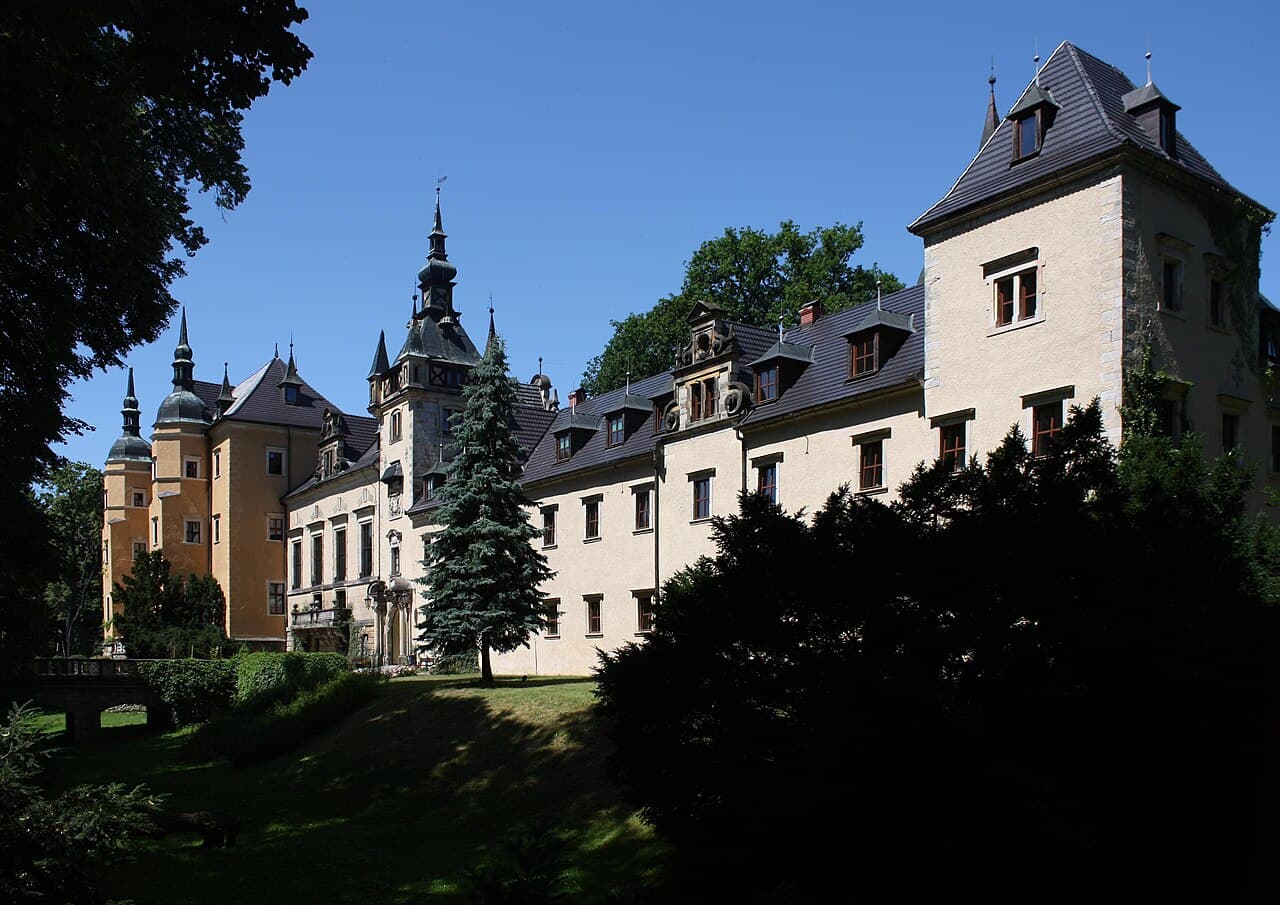
Acquired by the Solms-Baruth family in 1767, the castle entered a new phase of modernization and expansion. The addition of a grand Empire-style ballroom in 1810 reflected contemporary tastes for neoclassical elegance and social functions. The most transformative changes occurred between 1879 and 1882, when architects Heinrich Joseph Kayser and Karl von Großheim undertook an extensive remodeling. Their design merged English Gothic revival with Italian Renaissance and French Mannerist elements, creating an eclectic architectural ensemble. Notable features from this period include a neo-Gothic tower and richly decorated façades that blend stylistic motifs, demonstrating the 19th-century fascination with historicism and romanticized medieval forms.
Architectural features and interior design
Exterior and structural elements
The castle’s current appearance is a palimpsest of its layered history. The Renaissance core remains visible in the symmetrical layout and classical proportions of the main building. The 19th-century additions introduced vertical emphasis through towers and pointed arches typical of Gothic revival, alongside ornate Renaissance details such as pilasters and decorative cartouches. Heraldic decorations on the exterior, including coats of arms of the Solms-Baruth and allied families, reinforce the castle’s noble heritage.
Interior spaces and decorative arts
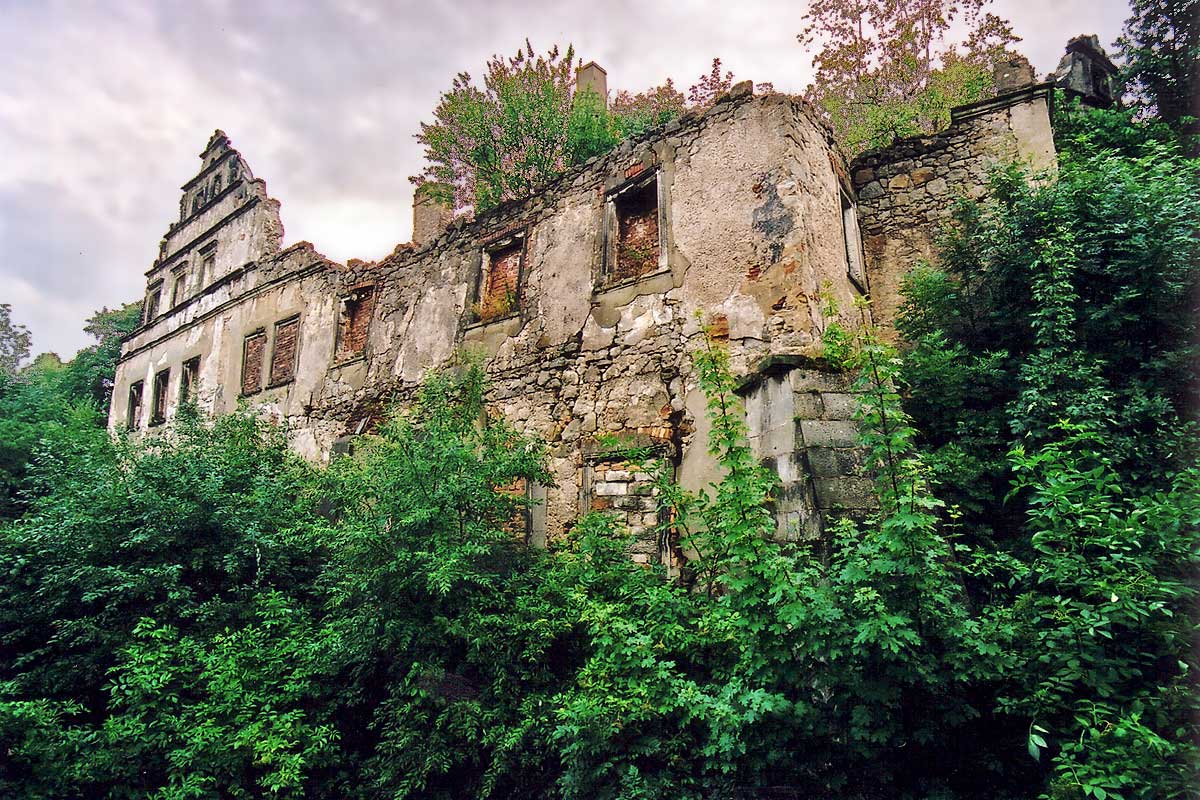
Inside, the once lavish Empire-style ballroom featured exquisite stuccowork, tiled stoves, carved wooden boiseries, and painted ornamentation. Architectural details such as elaborately carved portals, fireplaces, and chimneys reflected the high craftsmanship of the period. Unfortunately, much of this interior richness suffered damage during and after World War II due to looting, neglect, and a destructive fire in 1949 that consumed the servants’ quarters and carriage house. Restoration efforts in the late 20th century have aimed to preserve and revive these historic interiors where possible.
Landscape and ancillary features
English country garden and park
The castle is set within an extensive 80-hectare English landscape park designed by the renowned landscape architect Eduard Petzold. This park exemplifies 19th-century landscape design principles, featuring naturalistic layouts, winding paths, and scenic vistas that complement the castle’s romantic architectural style. The garden is part of a wider cultural heritage route emphasizing historic parks and gardens in the region.
Horse cemetery and equestrian traditions
A unique feature of the estate is the preserved horse cemetery, reflecting the Solms family’s longstanding tradition of breeding thoroughbred horses. This element underscores the castle’s role not only as a noble residence but also as a center for aristocratic leisure pursuits such as horse riding and hunting. The presence of an early 19th-century equestrian arena further attests to this aspect of the estate’s history.
20th-century history and restoration
World wars and political upheaval
During the turbulent 20th century, Kliczków Castle witnessed significant political and social changes. In the interwar period, it remained in the hands of the Solms-Baruth family, with Friedrich zu Solms-Baruth notably involved in the anti-Nazi Kreisau Circle resistance. Following the failed assassination attempt on Hitler in 1944, Friedrich was arrested, and the castle was confiscated by Nazi authorities. Remarkably, the castle escaped major physical damage during World War II, although it was looted by Soviet troops in the immediate postwar period.
Postwar neglect and eventual revival
After the war, the castle suffered from neglect and partial destruction, including a serious fire in 1949. The subsequent use by local forestry authorities and the Polish Army led to further deterioration of the interiors and structural elements. A failed restoration attempt by the Wrocław University of Technology in the 1970s was unable to halt decline. However, after the fall of communism, a private company acquired the castle and undertook comprehensive restoration. By 1999, Kliczków Castle reopened as a luxury conference and recreation center, blending historic preservation with modern hospitality.
Cultural significance and visitor experience
Today, Kliczków Castle offers visitors a unique opportunity to explore a site that encapsulates medieval defensive origins, Renaissance elegance, and 19th-century eclectic revival architecture. Its well-preserved park and distinctive features like the horse cemetery enrich the cultural narrative. The castle’s transformation into a hotel and conference venue ensures its ongoing maintenance and accessibility, allowing guests to experience its rich heritage firsthand.
The castle’s history of noble ownership, resistance during the Nazi era, and post-communist restoration contribute to its layered identity as a monument of regional and national importance. Its architectural diversity and landscaped setting make it a significant attraction within the Lower Silesian region of Poland.
Frequently asked questions (FAQ)
- How do I get to Kliczków Castle?
- Kliczków Castle is located in the picturesque village of Kliczków, Poland. You can reach it by car from major cities like Wrocław or Legnica, which are about an hour's drive away. Public transportation options are also available, including regional trains and buses that connect to nearby towns.
- What is the historical significance of Kliczków Castle?
- Kliczków Castle dates back to the 14th century and has a rich history, serving as a noble residence and later as a military stronghold. It has witnessed various historical events and changes in ownership, reflecting the turbulent history of the region. Today, it stands as a monument to Polish heritage and medieval architecture.
- When was Kliczków Castle built?
- Kliczków Castle was originally constructed in the early 14th century, with significant renovations and expansions occurring in the following centuries. The castle features elements from different architectural styles, showcasing its evolution over time. Its most notable architectural features were added during the 19th century, giving it a unique charm.
- Can I take guided tours of Kliczków Castle?
- Yes, guided tours are available at Kliczków Castle, providing visitors with in-depth knowledge of its history and architecture. Tours typically include access to the main halls, gardens, and other significant areas of the castle. Be sure to check the schedule in advance and book your tour to ensure availability.
- Why is Kliczków Castle a popular destination for visitors?
- Kliczków Castle is popular due to its stunning architecture, rich history, and beautiful surroundings. Visitors are drawn to its picturesque location, the serene atmosphere of the castle grounds, and the opportunity to learn about Polish history. Additionally, it often hosts cultural events and exhibitions, enhancing its appeal.
- Is it possible to stay overnight at Kliczków Castle?
- Yes, Kliczków Castle offers accommodations for guests who wish to experience a night in this historic setting. The castle features comfortable rooms and modern amenities while retaining its historical charm. Staying overnight allows visitors to fully immerse themselves in the castle's atmosphere and explore the grounds at their leisure.
- What are the opening hours for Kliczków Castle?
- Kliczków Castle is generally open to visitors from April to October, with specific hours that may vary by season. During peak months, it is open daily, while hours may be limited during the off-peak season. It's advisable to check the official website for the most current opening hours before planning your visit.
- What are the ticket prices for visiting Kliczków Castle?
- Ticket prices for Kliczków Castle vary depending on the type of tour and age group. Typically, adult tickets are around 20 PLN, while discounts are available for students and seniors. Group rates may also apply, so it's a good idea to inquire about any available deals when planning your visit.
- What nearby attractions can I visit while in Kliczków?
- In addition to Kliczków Castle, visitors can explore the beautiful landscapes and hiking trails in the surrounding area. Nearby attractions include the picturesque town of Leśna and the stunning Krzyżowa Valley. Many visitors also enjoy visiting local churches and parks that highlight the natural beauty of the region.
Photo gallery

Photo by image/photo was taken by Wikipedia and Wikimedia Commons user Ludwig Schneider. I would appreciate being notified if you use my work outside Wikimedia. Do not copy this image illegally by ignoring the terms of the license below, as it is not in the public domain. If you would like special permission to use, license, or purchase the image please contact me to negotiate terms. When reusing, please credit me as: Ludwig Schneider / Wikimedia.•CC BY-SA 4.0
Information
Website
Visit websiteSources & official resources
Verify the information above using these authoritative references.
Loading map...
Visitor reviews
No reviews yet. Been here? Write the first review and help other travelers!
Write the first reviewVisited this castle? Share your experience
Your review helps other travelers and adds first-hand knowledge to our encyclopedia.