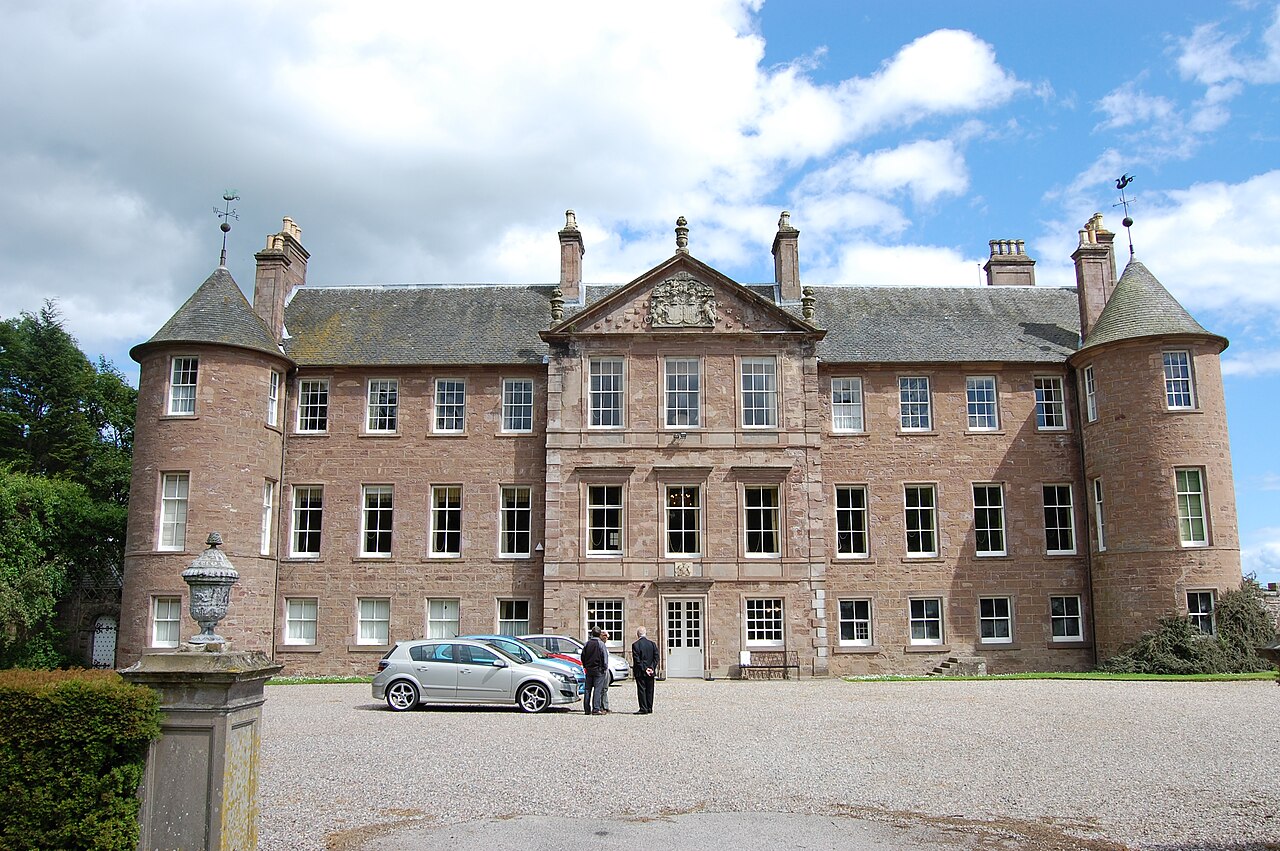
Kinnaird Castle
Kinnaird Castle stands as a significant historic hill castle near Brechin, Scotland, with a lineage deeply intertwined with the Carnegie family, the Earls of Southesk, for more than six centuries. Established around the 15th century, the castle's origins trace back to the marriage of Duthac Carnegie to Mariota of Kinnaird circa 1400, marking the beginning of the estate's association with the Carnegie lineage. The castle's history is marked by resilience, having been destroyed in 1452 during the aftermath of the Battle of Brechin and subsequently rebuilt, preserving its role as a noble residence.
Medieval origins and early history
The first recorded mention of a castle on the site dates to 1409, confirming its establishment under the ownership of Clan Carnegie. The castle suffered significant damage in 1452 when it was set ablaze by Alexander Lindsay, 4th Earl of Crawford, as retribution for the clan's support of King James II of Scotland during the battle. This event underscores the castle's strategic and political importance in the turbulent late medieval period.
17th century prominence and royal connections
During the 17th century, Kinnaird Castle became a residence and meeting place for notable historical figures. James Graham, 1st Marquess of Montrose, a celebrated military leader, lived at the castle for three years starting in 1629 after marrying Magdalene Carnegie, daughter of the 1st Earl of Southesk. The castle also hosted visits from King James VI in 1617 and later from Kings Charles I and Charles II, reflecting its status as a site of political and social significance during the Stuart monarchy.
Political turmoil and jacobite connections
The castle's political narrative continued into the early 18th century, notably during the Jacobite rising of 1715. James Francis Edward Stuart, known as the Old Pretender, stayed at Kinnaird Castle during the winter of 1715, highlighting the estate's involvement in the Jacobite cause. Following the failed rebellion, the estate was confiscated by the British Crown, reflecting the consequences of the clan's political allegiances.
Architectural evolution and restoration
In 1791, the castle underwent a significant transformation under the direction of architect James Playfair, who redesigned it into a large and handsome house reflecting the architectural tastes of the late 18th century. The property returned to Clan Carnegie ownership in 1855, prompting further remodeling by the renowned architect David Bryce, who introduced the high Victorian baronial style that characterizes much of the castle's current appearance.
20th century fire and rebuilding
The castle suffered severe damage due to a fire in 1921. The subsequent rebuilding efforts over the following decades incorporated modern conveniences while respecting the castle's historical and architectural heritage. This restoration preserved key elements of the original structure, including parts of the 15th-century tower house within the south wing.
Architectural features and layout
Kinnaird Castle today presents as a three-storey country house arranged on a square ground plan with an open courtyard at the rear housing stables, blending residential and functional estate components. The west façade is distinguished by a central tower with tourelles and flanked by two square-plan towers, emblematic of the Victorian baronial style. The north side features a column-supported porch entrance, reflecting later architectural adaptations.
Medieval remnants and historic significance
Despite extensive remodeling, medieval masonry and structural fabric survive within the south wing, providing a tangible connection to the castle's origins. The estate's designation as a Category B listed building recognizes its regional architectural importance and the preservation of both medieval and Victorian elements. The surrounding gardens, listed in the national Inventory of Gardens and Designed Landscapes, contribute to the castle's cultural heritage and aesthetic appeal.
The carnegie family and titles
The castle has been the principal seat of the Carnegie family, who hold the titles of Earls of Southesk, for over 600 years. The family's history is intertwined with Scottish nobility and royal connections, with titles granted in the 17th century following loyal service to the crown. The family's lineage also connects to the Duke of Fife through marriage alliances, illustrating the complex heritage of Scottish aristocracy associated with Kinnaird Castle.
Notable historical figures
- James Graham, Marquis of Montrose: Military leader and resident of the castle during the 17th century.
- James Francis Edward Stuart (Old Pretender): Stayed at the castle during the Jacobite rising of 1715.
- Alexander Lindsay, 4th Earl of Crawford: Responsible for the castle's destruction in 1452.
- James Playfair: Architect who redesigned the castle in 1791.
- David Bryce: Architect who remodeled the castle in Victorian baronial style in the 19th century.
Cultural and heritage importance
Kinnaird Castle is a significant heritage site within Scotland, reflecting the architectural evolution from a medieval fortress to a Victorian country house. Its long-standing association with the Carnegie family and its role in key historical events, including the Battle of Brechin and the Jacobite risings, underscore its importance. The castle's preservation and restoration efforts ensure its continued prominence as a cultural landmark and private residence.
Frequently asked questions (FAQ)
- How do I visit Kinnaird Castle?
- Kinnaird Castle is a private residence and is not generally open to the public. Visitors should check for any special open days or events that may allow access.
- What is the historical significance of Kinnaird Castle?
- Kinnaird Castle has been the seat of the Carnegie family, Earls of Southesk, for over 600 years and played roles in the Battle of Brechin and Jacobite risings.
- When was Kinnaird Castle built?
- The castle dates back to the 15th century, with origins linked to a mansion from the 14th century and significant rebuilding after 1452.
- Can I see medieval architecture at Kinnaird Castle?
- Yes, parts of the original 15th-century tower house survive in the south wing, showcasing medieval masonry amid later Victorian modifications.
- What architectural styles are present at Kinnaird Castle?
- Kinnaird Castle features elements of late medieval architecture and high Victorian baronial style, remodeled notably by architects James Playfair and David Bryce.
Information
Sources & official resources
Verify the information above using these authoritative references.
Loading map...
Visitor reviews
No reviews yet. Been here? Write the first review and help other travelers!
Write the first reviewVisited this castle? Share your experience
Your review helps other travelers and adds first-hand knowledge to our encyclopedia.