Brechin Castle
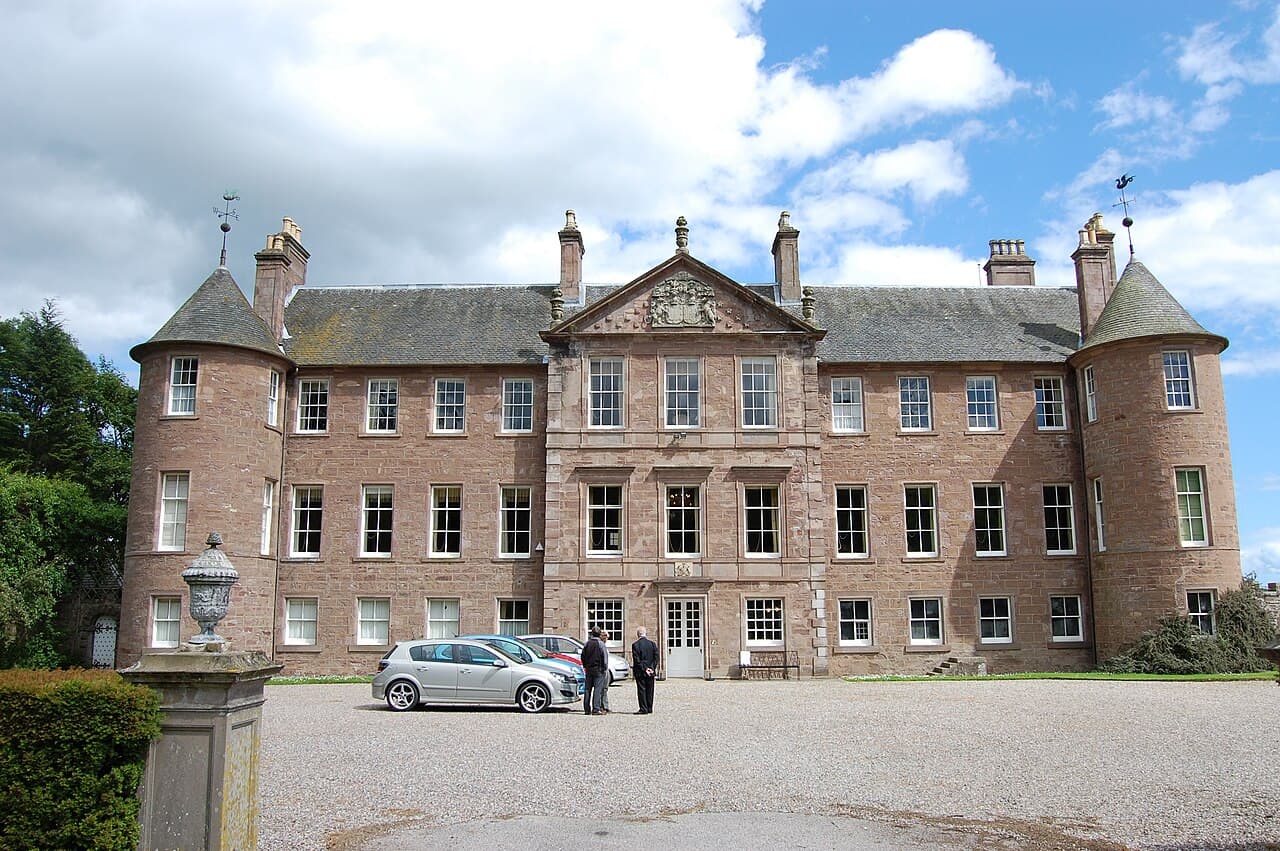
Brechin Castle stands as a significant historic fortress located in Brechin, Angus, Scotland. Originally constructed in stone during the 13th century, the castle has undergone substantial changes over the centuries, with the majority of its present-day structure dating from a major reconstruction in the early 18th century. This extensive rebuilding was overseen by the notable architect Alexander Edward between approximately 1696 and 1709, commissioned by James Maule, 4th Earl of Panmure.
Medieval origins and early history
The origins of Brechin Castle trace back to the medieval period, where it served as a strategic stronghold in the region of Angus. The castle was originally constructed as a stone fortress in the 13th century, a period marked by the widespread development of stone castles in Scotland replacing earlier wooden motte-and-bailey structures. This early construction laid the foundation for the castle's enduring presence in Scottish history.
Throughout the medieval era, the castle was the ancestral seat of the Clan Maule, a noble family with deep roots in the region. The Maule family held the estate from the 12th century, establishing the castle as a center of their power and influence. The estate's continuous occupation by the Maule family underscores its importance as a symbol of clan heritage and territorial authority.
18th-century reconstruction and architectural features
The most notable transformation of Brechin Castle occurred during the late 17th and early 18th centuries. Under the direction of Alexander Edward, a prominent Scottish architect known for his work on country houses and castles, the castle was extensively rebuilt between 1696 and 1709. This reconstruction introduced elements characteristic of the Renaissance architectural style, blending traditional fortress features with more refined residential comforts suitable for a noble family.
The redesign included the enhancement of the castle's living quarters, the addition of formal gardens, and improvements to the surrounding estate. The formal gardens created during this period reflect early 18th-century landscaping trends, emphasizing symmetry and order, which complemented the castle's architectural elegance.
The castle's structure today encompasses approximately 37,748 square feet (3,506.9 m2), featuring robust stone walls, battlements, and a layout that balances defensive capabilities with residential needs. Despite the extensive renovations, the castle retains elements of its medieval origins, visible in parts of the stonework and foundational structures.
Clan Maule and Ramsay heritage
Brechin Castle has been the ancestral home of the Clan Maule since medieval times. In the 18th century, the Maule and Ramsay families were united under a single chieftain, merging their legacies. This union led to the castle becoming the seat not only of the Maule clan but also of the Clan Ramsay.
The Ramsay clan, originally seated at Dalhousie Castle in Midlothian, relocated their chief residence to Brechin Castle in the early 20th century. This move consolidated the clans' leadership and reinforced the castle's status as a central hub for both families' heritage.
Today, the castle remains the home of the Earl of Dalhousie, who serves as the clan chieftain for both Clan Maule of Panmure and Clan Ramsay of Dalhousie. The castle continues to symbolize the historical continuity and cultural identity of these Scottish clans.
Estate grounds and current use
The estate surrounding Brechin Castle is notable for its extensive grounds, which have been maintained by the Maule-Ramsay family since the 12th century. The grounds are included in the Inventory of Gardens and Designed Landscapes in Scotland, reflecting their historical and horticultural significance.
The estate primarily supports agriculture and forestry, activities that have shaped the landscape for centuries. Visitors to the estate can experience the blend of natural beauty and historical ambiance, with several guest lodges available for tourists seeking an immersive stay.
The castle itself is designated as a Category A listed building, a status that highlights its architectural and historic importance. Preservation efforts ensure that the castle's unique character and heritage are maintained for future generations.
Architectural significance and preservation
Brechin Castle exemplifies the evolution of Scottish castle architecture from a medieval fortress to a refined Renaissance residence. The work of Alexander Edward introduced architectural innovations that balanced defense with comfort, a hallmark of castles transitioning into stately homes during the period.
The castle's preservation as a well-preserved historic structure allows for ongoing study and appreciation of Scotland's architectural heritage. Its combination of medieval stonework and 18th-century design elements provides valuable insights into construction techniques and stylistic trends spanning several centuries.
Visitors and scholars alike benefit from the castle's accessibility and the estate's maintained gardens, which together offer a comprehensive view of Scottish noble life across the ages.
Frequently asked questions (FAQ)
- What are the visiting hours for Brechin Castle?
- Brechin Castle is typically open to visitors during specific times, often by appointment or for special events. It is recommended to check the official website or contact the estate directly for current visiting hours.
- How can I learn about the history of Brechin Castle during a visit?
- Visitors can explore the castle's rich history through guided tours that highlight its medieval origins, 18th-century reconstruction, and clan heritage. Informational materials and knowledgeable guides provide detailed insights into the castle's architecture and historical significance.
- Is Brechin Castle accessible for tourists interested in gardens and landscapes?
- Yes, the castle's grounds include formal gardens dating to the early 18th century, which are part of the Inventory of Gardens and Designed Landscapes in Scotland. The estate offers a scenic setting for visitors interested in horticulture and historic landscapes.
- Can I stay overnight on the Brechin Castle estate?
- Several guest lodges are available on the estate for tourists wishing to stay overnight. These accommodations provide a unique opportunity to experience the historic surroundings and natural beauty of the property.
- What architectural styles are represented at Brechin Castle?
- Brechin Castle features a blend of medieval stone fortress elements and Renaissance architectural styles introduced during the early 18th-century reconstruction by Alexander Edward. This combination reflects the castle's evolution over several centuries.
Photo gallery

Photo by Kylemunro1•Public domain
Information
Current owner
Private owner
Loading map...
Visitor reviews
No reviews yet. Been here? Write the first review and help other travelers!
Write the first reviewVisited this castle? Share your experience
Your review helps other travelers and adds first-hand knowledge to our encyclopedia.