Braikie Castle
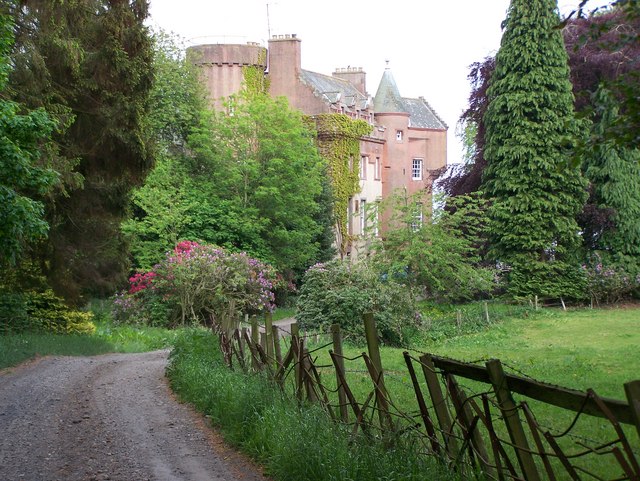
Braikie Castle stands as a notable example of a 16th-century Renaissance fortified laird's house located near Arbroath, Scotland. The castle's origins are marked by a heraldic panel dated 1581 above its entrance, which confirms its construction during this period. Built for Thomas Fraser of Kinnell, who is reputed to be an illegitimate son of the 4th Lord Lovat, the castle embodies the architectural and familial complexities of Scottish nobility in the late Renaissance era. The marriage lintel bearing the combined armorial crests of the Frasers of Lovat and the Kinnaird family—alongside the initials TF and CK—symbolizes the union that helped define the castle's early history.
Architectural design and features
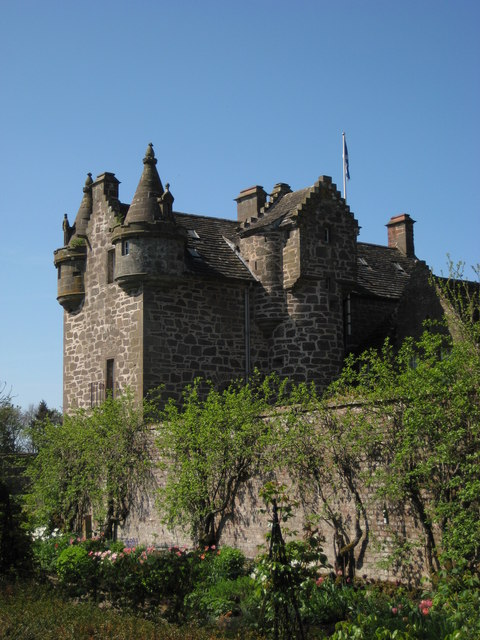
The castle is designed in an L-plan, a common style for Scottish laird's houses of the period, which allowed for both defensive features and comfortable living quarters. It rises to four storeys plus an attic, with a spiral staircase located in the re-entrant angle, a typical feature providing access to all floors while conserving space. Adjacent to the stair is a tall chimney stack, which would have served multiple fireplaces within the castle.
Braikie Castle incorporates corbelled bartizans—small overhanging turrets used for lookout and defense—and crow-stepped gables, which are characteristic of Scottish Renaissance architecture. These elements contribute to the castle's distinctly Scottish aesthetic and defensive capabilities. The castle's hidden basement houses a wine cellar, indicating the importance of storage and hospitality in the laird's lifestyle.
Historical ownership and lineage
Following its construction for Thomas Fraser, the castle passed through several prominent Scottish families. By the mid-17th century, it was owned by Patrick Gray and his family, who maintained the property before it transferred to the Ogilvie family. In 1742, ownership passed to William Maule, Earl of Panmure, a significant Scottish nobleman. Each family likely contributed to the castle's maintenance and modifications, reflecting the evolving needs and tastes of the Scottish gentry over time.
Later history and current condition
Braikie Castle was documented in the seminal 1892 survey of Scottish castles by architects MacGibbon & Ross, where it was referred to as "Brackie." This survey highlighted the castle's architectural significance and preserved its details for posterity. However, around 1960, the castle suffered the loss of its roof, leaving it roofless and vulnerable to the elements.
Today, Braikie Castle remains a roofless ruin, its walls and distinctive features still visible but exposed. Despite this, it retains much of its original form and architectural character, offering valuable insight into Scottish Renaissance castle design and the lifestyle of the lairds who inhabited it.
Significance in Scottish castle architecture
Braikie Castle exemplifies the transition in Scottish castle architecture from purely defensive structures to more comfortable residences that still retained fortification elements. The L-plan design allowed for better internal organization and defense, while features like bartizans and crow-stepped gables combined practicality with stylistic expression. Its heraldic panels and marriage lintels also illustrate the importance of family alliances and status during the Renaissance period in Scotland.
Architectural elements typical of Renaissance laird's houses
The castle's spiral stair in the re-entrant angle is a hallmark of Scottish tower house design, maximizing space and defense. The corbelled bartizans provided vantage points for surveillance and defense without the need for large towers. The crow-stepped gables not only added aesthetic appeal but also helped shed rainwater efficiently, crucial in Scotland's climate.
Heraldry and family connections
The heraldic panel dated 1581 is a key historical feature, combining the coats of arms of the Frasers and Kinnairds, symbolizing the marriage alliance that helped establish the castle's lineage. Such heraldic displays were common in Renaissance Scotland to assert family identity and alliances.
Visiting Braikie Castle
As a roofless ruin, Braikie Castle offers a glimpse into Scotland's Renaissance past. Visitors interested in Scottish history and architecture can explore its remains near Arbroath, although the lack of a roof and partial ruinous state mean that access may be limited and caution is advised. The site is significant for those studying the evolution of Scottish fortified houses and Renaissance architecture.
Frequently asked questions (FAQ)
- How do I get to Braikie Castle?
- Braikie Castle is located near Arbroath, Scotland, and can be reached by car or public transport. The nearest train station is Arbroath, from which you can take a bus or taxi to the castle. Be sure to check local transport schedules for the most convenient routes.
- What is the historical significance of Braikie Castle?
- Braikie Castle dates back to the 16th century and is an important example of Scottish baronial architecture. It has witnessed numerous historical events and changes in Scottish society, making it a fascinating site for history enthusiasts. The castle is a testament to the region's rich heritage and has been preserved to reflect its historical context.
- When was Braikie Castle built?
- Braikie Castle was constructed in the late 1500s, likely around 1570, and has undergone various renovations since its original completion. The structure showcases a mix of architectural styles that reflect the evolution of Scottish castle design over the centuries. Its enduring presence highlights the historical importance of the area.
- Can I visit Braikie Castle?
- Yes, Braikie Castle is open to visitors. However, it is recommended to check the castle's official website for the current visiting hours and any special events. Guided tours may also be available to enhance your experience and provide deeper insights into the castle's history.
- Why is Braikie Castle an architectural marvel?
- Braikie Castle features distinctive Scottish baronial architecture, characterized by its impressive towers and ornate detailing. Its design reflects the medieval period's grandeur while incorporating elements that were modern for its time. The castle stands as a remarkable example of the craftsmanship and artistic vision of its builders.
- Is it possible to host events at Braikie Castle?
- Yes, Braikie Castle may offer facilities for hosting private events, including weddings and corporate gatherings. Interested parties should contact the castle management for availability, pricing, and any specific requirements. The enchanting setting of the castle provides a unique backdrop for memorable occasions.
- What are the opening hours for Braikie Castle?
- Braikie Castle generally opens to visitors from April to October, with varying hours depending on the season. It is advisable to check the castle's official website or contact them directly for the most accurate and up-to-date information on opening times. Special events may also affect regular hours.
- What are the ticket prices for visiting Braikie Castle?
- Ticket prices for Braikie Castle vary depending on the season and age of the visitor. Discounts may be available for children, students, or seniors. For the latest pricing and any available package deals, please visit the castle's official website or inquire at the ticket office upon arrival.
- What are some nearby attractions to Braikie Castle?
- While visiting Braikie Castle, you can explore several nearby attractions, including the historic town of Arbroath and its famous Abbey. The stunning coastline and scenic walking trails offer beautiful views and a chance to enjoy the outdoors. Don't miss the opportunity to visit local shops and restaurants that showcase Scottish culture.
Information
Loading map...
Visitor reviews
No reviews yet. Been here? Write the first review and help other travelers!
Write the first reviewVisited this castle? Share your experience
Your review helps other travelers and adds first-hand knowledge to our encyclopedia.