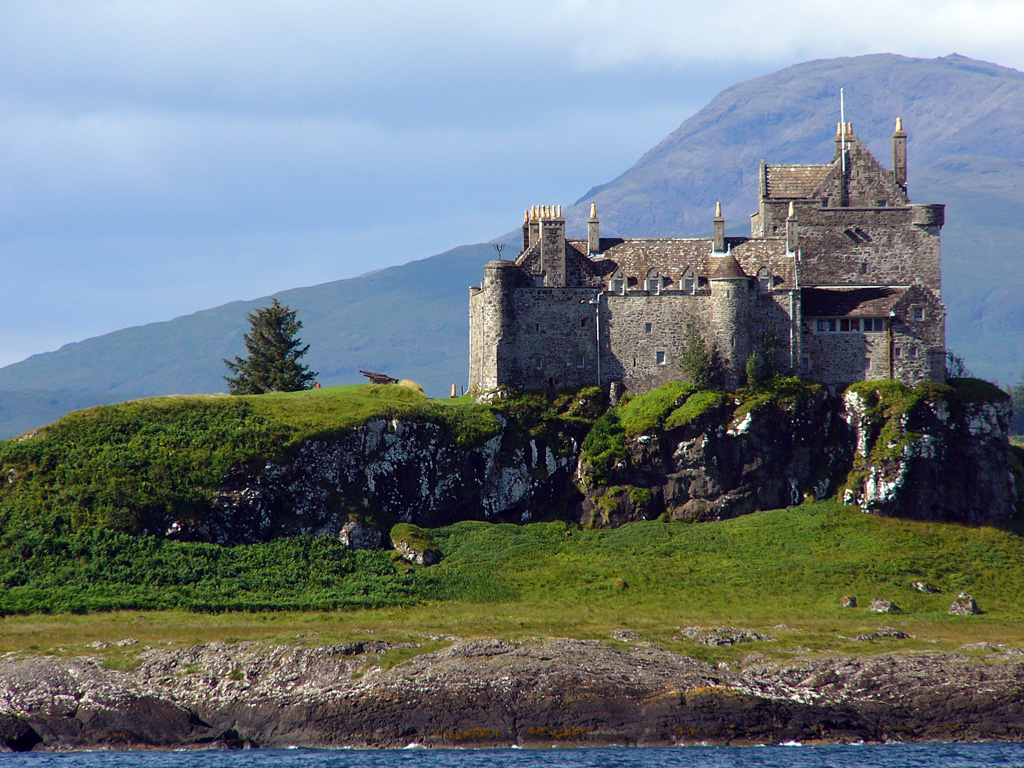
Kinlochaline Castle
Kinlochaline Castle stands as a notable example of a 12th-century Scottish stronghold strategically positioned at the head of Loch Aline in the Highland region of Scotland. This medieval fortress was designed for coastal defense, reflecting the turbulent history of the Scottish Highlands during the High Medieval period. Its location allowed control over maritime access and provided a vantage point to monitor naval and land movements along the loch and surrounding territories.
Architectural features and construction details
The castle is a four-story tower house, measuring approximately 43 by 34 feet with formidable walls up to 10 feet thick. These walls are constructed from blocks of rare sandstone, a material choice that contributes to the castle's robust defensive capabilities and distinctive appearance. The thick masonry walls were typical of the period, designed to withstand sieges and artillery attacks common in medieval warfare.
The tower house design includes narrow windows and battlements that provided defenders with protected firing positions. Internally, the castle would have contained a great hall, private chambers, and storage areas, arranged vertically across its floors. The compact footprint and vertical emphasis are characteristic of High Medieval Scottish castles, built for both defense and residence.
Historical significance and events
Kinlochaline Castle played a significant role in the Wars of the Three Kingdoms during the 17th century. In 1644, it was besieged and burned by forces led by Alasdair Mac Colla, a prominent figure in the conflict known for his campaigns across Scotland. This event marked a critical episode in the castle's history, reflecting the widespread violence and shifting allegiances of the period.
Later, in 1679, the castle was attacked by Archibald Campbell, 9th Earl of Argyll, amid ongoing clan feuds that were common in the Highlands. These attacks contributed to the castle's decline and eventual abandonment around 1690. The feuds and military actions illustrate the castle's role as a contested stronghold in a region marked by clan rivalries and political instability.
Restoration and current status
After centuries of neglect, Kinlochaline Castle underwent significant restoration in the late 1990s. This work was overseen by Historic Scotland, ensuring that the restoration respected the castle's historical integrity and architectural character. The restoration stabilized the structure and adapted it for modern use while preserving its medieval features.
Today, the castle serves as a private residence, blending historical preservation with contemporary living. Its restoration highlights the challenges and successes of conserving medieval architecture in a modern context, allowing visitors and residents alike to appreciate its historical and architectural value.
Architectural context and regional importance
Kinlochaline Castle is representative of High Medieval Scottish defensive architecture, particularly in the Highlands where coastal and inland fortifications were essential for controlling territory and trade routes. The use of rare sandstone and the castle's imposing tower house design distinguish it among other regional castles.
Its location at Loch Aline underscores the strategic importance of waterways in medieval Scotland, serving both as defensive barriers and as conduits for movement and communication. The castle's history of sieges and attacks reflects the broader socio-political dynamics of the Highlands during the 17th century, including clan conflicts and national wars.
Construction techniques
The thick sandstone walls were likely quarried locally, shaped, and laid with lime mortar typical of the period. The robust masonry work provided resistance against cannon fire and prolonged sieges. The vertical arrangement of rooms maximized defensive capabilities while serving residential needs.
Comparison with other Scottish castles
Unlike larger concentric castles or sprawling lowland fortresses, Kinlochaline's compact tower house design reflects the practical needs of Highland lairds. Its preservation and restoration make it a valuable example of this type of castle, which was widespread across Scotland during the High Medieval period.
Frequently asked questions (FAQ)
- What is the historical significance of Kinlochaline Castle?
- Kinlochaline Castle is a notable example of Scottish fortifications, dating back to the 15th century. It played a crucial role in the region's history, serving as a stronghold for the MacLean clan and witnessing various conflicts throughout the centuries.
- When was Kinlochaline Castle built?
- Kinlochaline Castle was constructed in the late 1400s, making it over 500 years old. Its architecture reflects the medieval period, showcasing the strategic importance of castles during that time.
- Can I visit Kinlochaline Castle?
- Yes, Kinlochaline Castle is open to visitors, and guided tours are available to explore its rich history and stunning architecture. It is advisable to check the official website or local tourism information for specific visiting guidelines.
- What are the opening hours for Kinlochaline Castle?
- The opening hours for Kinlochaline Castle can vary by season, so it is best to verify them on the official website before planning your visit. Typically, the castle is open from late spring to early autumn, with extended hours during peak tourist season.
- Is it possible to access Kinlochaline Castle for those with mobility challenges?
- Kinlochaline Castle has limited accessibility due to its historical structure and location. Visitors with mobility challenges should contact the castle administration in advance to inquire about available accommodations and assistance.
- What is the best time to visit Kinlochaline Castle?
- The best time to visit Kinlochaline Castle is during the late spring and summer months when the weather is generally milder and more conducive to outdoor activities. Additionally, this period often features more events and guided tours.
- Are there any nearby attractions to Kinlochaline Castle?
- Yes, there are several nearby attractions to explore, including the stunning Loch Awe and the picturesque village of Kilmartin. These sites offer a rich experience of Scottish culture and natural beauty.
- How much do tickets to Kinlochaline Castle cost?
- Ticket prices for Kinlochaline Castle vary depending on the type of tour and any special events being held. Generally, adult tickets are reasonably priced, with discounts available for children and seniors, so it's best to check the official website for the most accurate information.
Loading map...
Visitor reviews
No reviews yet. Been here? Write the first review and help other travelers!
Write the first reviewVisited this castle? Share your experience
Your review helps other travelers and adds first-hand knowledge to our encyclopedia.