Kingswear Castle
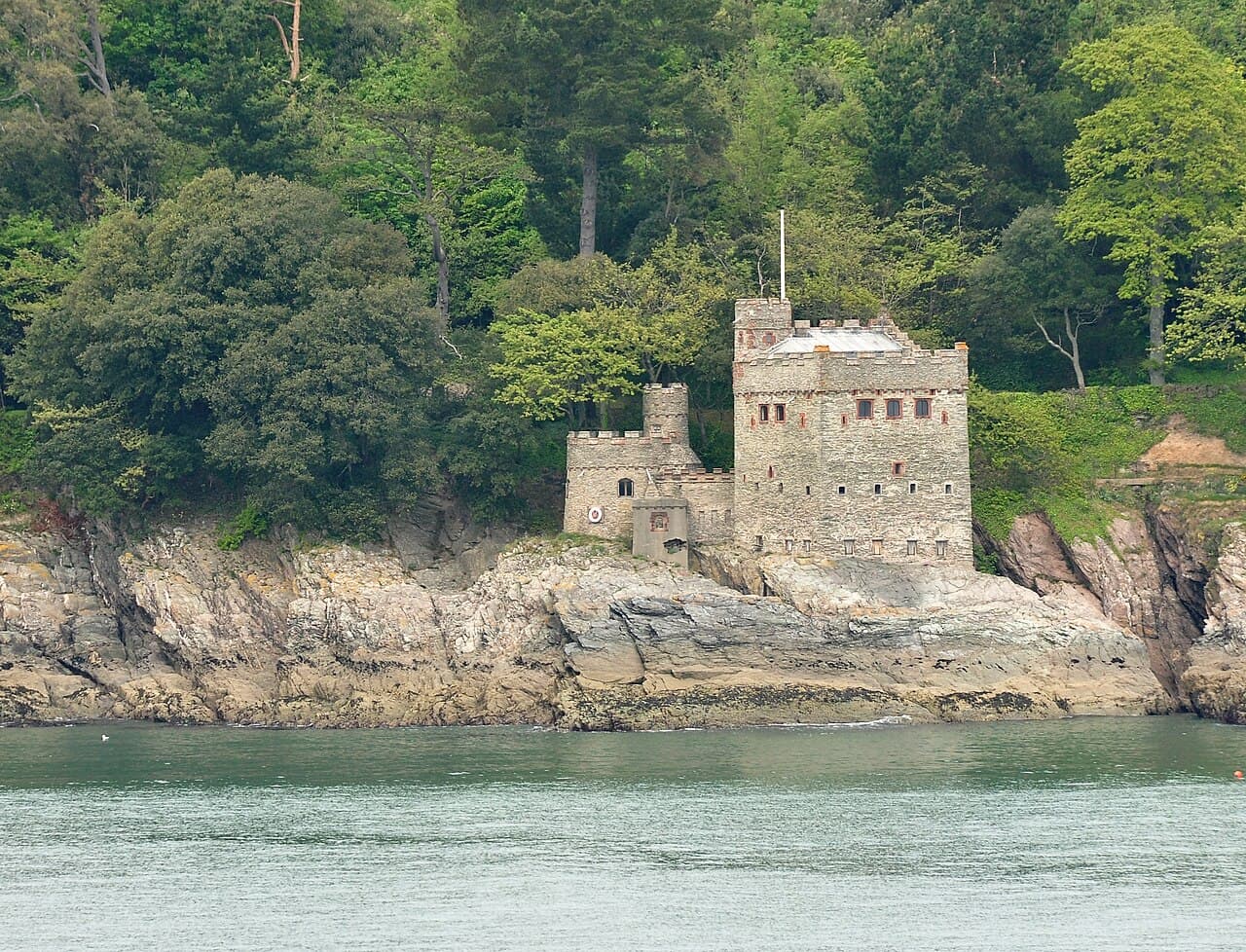
Kingswear Castle is a significant example of a late-medieval artillery fortification located on the eastern shore of the River Dart, guarding the entrance to Dartmouth harbour in Devon, England. Constructed between 1491 and 1502, it was commissioned in response to the growing threat of French naval attacks during the turbulent period at the end of the 15th century. This fort was among the earliest purpose-built artillery forts in Britain, designed specifically to mount and withstand cannon fire, marking a shift in military architecture from traditional medieval castles to artillery-based coastal defenses.
Strategic location and defensive purpose
The castle's location on the steep banks of the River Dart allowed it to control access to one of the most important naval and trading ports in the southwest of England. Its counterpart, Dartmouth Castle, situated on the opposite bank, worked in tandem to create a crossfire zone that could deter or destroy enemy ships attempting to enter the harbour. This strategic positioning was crucial for the defense of the region during the late-medieval period, especially given the frequent conflicts with France and the threat of piracy.
Architectural features and design
Kingswear Castle was constructed primarily from local stone, featuring a compact, rounded artillery tower with thick walls designed to absorb and deflect cannon fire. The circular design was a common innovation in artillery forts of the period, as it minimized blind spots and allowed for a wide arc of fire. The castle included embrasures for mounting cannons, a vaulted interior to support heavy artillery, and a small courtyard enclosed by defensive walls. Unlike earlier medieval castles, which emphasized high walls and towers for archery and melee defense, Kingswear was built low and thick to resist bombardment.
Artillery adaptations
The fort's design reflects the transition in military technology, emphasizing heavy gunpowder weapons. The embrasures were angled to maximize the range and coverage of the cannons. The thick stone walls, sometimes over 3 meters thick, were intended to withstand return fire from enemy ships. The castle's layout was simple but effective, focusing on the practical needs of artillery operation and defense rather than residential comfort.
Historical context and military use
Construction of Kingswear Castle occurred during the reign of King Henry VII, a period marked by efforts to strengthen England's coastal defenses following the Wars of the Roses and ongoing tensions with France. The castle was part of a broader network of fortifications aimed at protecting vital ports and naval bases. By the late 16th century, however, advances in artillery technology, such as longer-range cannons, began to reduce the effectiveness of smaller forts like Kingswear, as enemy ships could attack from beyond the castle's firing range.
During the English Civil War (1642–1651), Kingswear Castle remained strategically important. It was held by Royalist forces and saw some military action, though it was not a major battlefield. The castle continued to be armed and maintained into the early 18th century but gradually fell into disuse as military priorities shifted and newer fortifications were built.
Later history and restoration
By the 18th century, Kingswear Castle had fallen into ruin, reflecting the obsolescence of its design in the face of evolving military technology. In 1855, the castle was restored and converted into a summer house, a common fate for many historic military structures during the Victorian era when there was renewed interest in medieval architecture and romanticized history.
Today, Kingswear Castle is managed by the Landmark Trust and operates as a holiday let, allowing visitors to experience staying within a historic artillery fort. The restoration has preserved much of the castle’s original character while adapting it for modern use. It stands as a rare surviving example of early artillery fortifications in England and offers insights into the evolution of coastal defense architecture from the late medieval period onwards.
Visiting Kingswear Castle
Visitors to Kingswear Castle can explore the surrounding area of Dartmouth and the River Dart, enjoying views of the castle from across the water. While the castle itself is primarily a private holiday rental, its exterior and historical significance are accessible to the public. The site provides a tangible connection to England’s maritime defense history and the early use of artillery in fortifications.
Frequently asked questions (FAQ)
- How do I visit Kingswear Castle?
- Kingswear Castle is managed by the Landmark Trust and is available as a holiday let. While it is not open for general daily tours, visitors can book stays to experience the historic artillery fort firsthand. The castle's exterior can be viewed from the nearby public areas around Dartmouth and Kingswear.
- What is the historical significance of Kingswear Castle?
- Kingswear Castle is one of the earliest purpose-built artillery forts in Britain, constructed between 1491 and 1502 to protect Dartmouth harbour from French attacks. It represents a key development in coastal defense architecture during the late-medieval period.
- When was Kingswear Castle built and by whom?
- Kingswear Castle was built between 1491 and 1502 during the reign of King Henry VII as a response to threats from France. It was constructed by royal order as part of England's coastal defense strategy.
- Can I see the interior of Kingswear Castle?
- The interior of Kingswear Castle is accessible only to guests who book the property as a holiday let through the Landmark Trust. The castle has been restored and adapted for accommodation, preserving many original features.
- Why was Kingswear Castle built with rounded walls?
- The rounded walls of Kingswear Castle were designed to better withstand cannon fire and provide a wide field of artillery fire. This circular design minimized blind spots and was a common feature in early artillery forts.
Photo gallery

Information
Current owner
Landmark Trust
Loading map...
Visitor reviews
No reviews yet. Been here? Write the first review and help other travelers!
Write the first reviewVisited this castle? Share your experience
Your review helps other travelers and adds first-hand knowledge to our encyclopedia.