Dartmouth Castle
Dartmouth Castle stands as a prominent artillery fortification on a rocky promontory overlooking the mouth of the Dart estuary in Devon, England. Constructed in the 1380s during the turbulent period of the Hundred Years War, the castle was originally built by English civic authorities to defend the strategic harbour of Dartmouth from potential French naval attacks. Its earliest incarnation was a small enclosure castle that included the local chapel of Saint Petroc, marking the site’s dual military and religious significance. The fortification was equipped with catapults and possibly some of the earliest cannon used in England, highlighting its role as a pioneering defensive installation.
Throughout its history, Dartmouth Castle evolved in response to changing military technologies and threats. In the late 15th century, under the reign of King Henry VII, the castle underwent a major expansion that included the construction of a distinctive artillery tower. This period also saw the implementation of an innovative harbour chain stretched across the estuary to a tower at Godmerock, designed to physically block enemy ships. This chain represents one of the earliest known examples of purpose-built coastal artillery defenses in Britain. By 1495, the artillery tower was completed and armed with a variety of guns, including "murderer" and "serpentine" cannons, reflecting advancements in artillery technology.
Expansion and military significance in the 16th and 17th centuries
During the 1540s, amid heightened fears of a French invasion during the reign of Henry VIII, Dartmouth Castle’s defenses were further reinforced. New gun batteries were constructed, including the notable Lamberd’s Bulwarke, which was later expanded into the Grand Battery. By the mid-18th century, this battery housed a formidable array of twelve guns, underscoring the castle’s continuing military importance.
The castle also played a role during the English Civil War (1642–1646). Its vulnerability to land-based attacks was exposed, prompting the use of nearby earthworks such as the Gallants Bower to strengthen its defenses. The Carew family, original landowners, maintained a residence within the castle until it was damaged during the conflict and later demolished. Despite these challenges, Dartmouth Castle remained an active military site through the 17th and 18th centuries, although its strategic importance gradually declined.
Architectural features and defensive structures
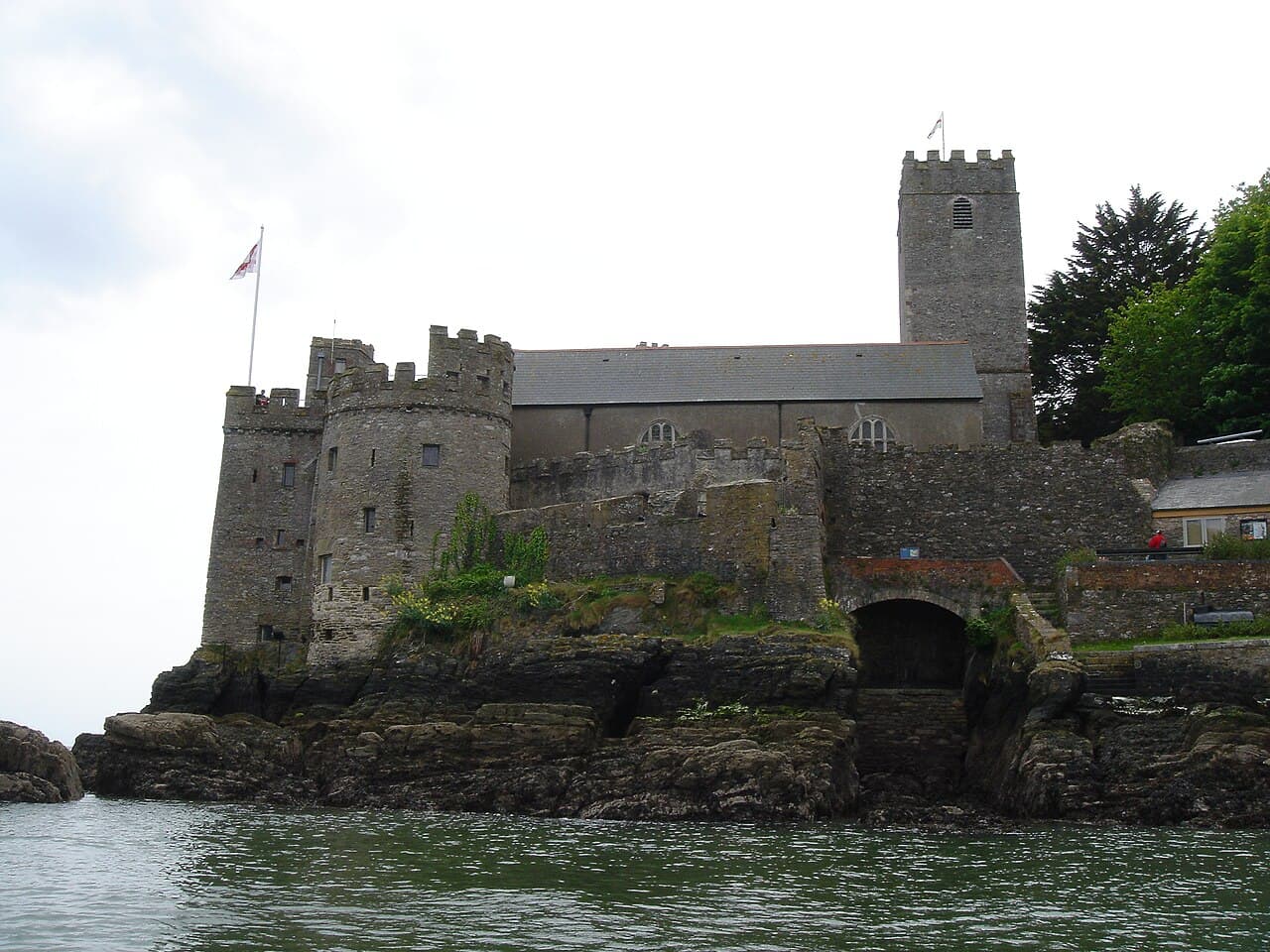
Dartmouth Castle occupies a commanding position on a rocky outcrop guarding the entrance to Dartmouth harbour. The castle’s layout centers on a main gun tower on the north side, facing the River Dart and adjacent to the historic Saint Petrox Church. This tower, built in the late 15th century, rises three storeys and is constructed of a combination of limestone rubble and slate. Its semi-circular section housed the mechanism for the harbour chain, while the square section contained artillery emplacements.
The tower’s interior is organized with two main rooms on each floor—one circular and one rectangular—reflecting architectural modifications during its construction. The basement was used to house artillery pieces, featuring simple gun-ports protected by wooden shutters. The ground floor contained essential facilities such as offices, living quarters, and the chain room equipped with a pulley and capstan system. The first floor served as accommodation and included an oven. Defensive features include gunloops encircling the lower floors for close-range defense, and battlements that were later heightened to protect against musket fire from higher ground. An 18-foot turret extends above the roof, adding to the tower’s defensive capabilities.
Flanking the main tower are two gun platforms dating from the mid-16th century, which were adapted in the 18th century to accommodate newer artillery technology. These platforms enhanced the castle’s ability to control the harbour approaches and defend against seaborne threats.
Old Battery and later modifications
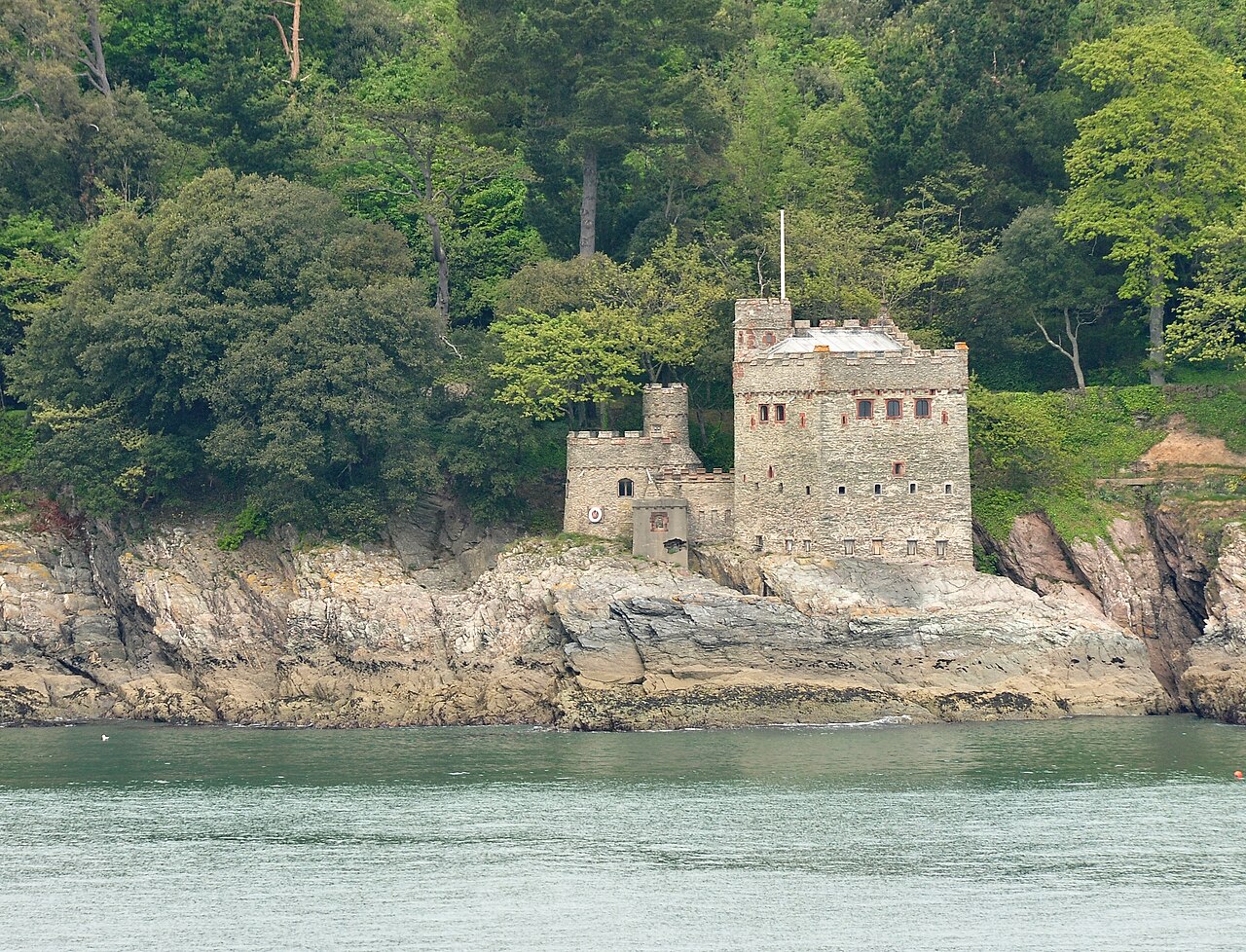
The Old Battery, constructed in 1861 on the site of the former Grand Battery and Lamberd’s Bulwarke,
represents Victorian-era military modernization. It consists of three vaulted casemates designed for heavy guns capable of firing across the sea. A smaller gun position protects the harbour entrance, while two heavy guns are mounted on the battery’s roof. The landward side is fortified with a ditch, rifle loops, and murder-holes—openings through which defenders could repel attackers below. Above the magazines, a guard room is integrated into the complex. A white concrete building, originally disguised as a medieval turret, now serves as the ticket office for visitors.
Behind the Old Battery stands a 19th-century tower that functioned as a lighthouse from 1856 until 1886, further emphasizing the site’s maritime significance and its role in navigation safety.
Religious and cultural significance
The presence of Saint Petrox Church, a three-aisled building mainly dating from 1641 with restorations in 1833, highlights the castle’s long-standing religious association. The church stands just behind the gun tower and reflects the integration of spiritual life within a military context.
Military use and decline in the modern era
By the early 20th century, Dartmouth Castle was considered militarily obsolete, leading to its opening to the public as a historic site. However, it was reactivated during both the First and Second World Wars due to its strategic location guarding the harbour. The castle’s artillery was rearmed to defend against potential naval threats. Ultimately, in 1955, the castle was retired from military service permanently, transitioning fully to a heritage and tourist site.
Today, Dartmouth Castle is managed as a well-preserved historic monument that offers visitors a glimpse into centuries of coastal defense history. Its combination of medieval origins, Tudor expansions, and Victorian modifications make it a unique example of evolving military architecture along England’s south coast.
Frequently asked questions (FAQ)
- What is the historical significance of Dartmouth Castle?
- Dartmouth Castle, built in the 14th century, played a crucial role in defending the port of Dartmouth against invasions, particularly during the Hundred Years' War. It served as a royal fortress and is one of the best-preserved castles in the region, showcasing medieval military architecture.
- When was Dartmouth Castle built?
- Construction of Dartmouth Castle began in 1388 and continued over the following decades. Its strategic location and design highlight the importance of protecting the harbor and trade routes during that period.
- What are the opening hours for Dartmouth Castle?
- Dartmouth Castle is typically open to visitors from 10 AM to 5 PM, but hours may vary seasonally. It is advisable to check the official website before your visit for the most current opening times and any special events.
- Can I buy tickets in advance for Dartmouth Castle?
- Yes, tickets for Dartmouth Castle can be purchased in advance through the official website. This can help you avoid queues and ensure entry, especially during peak tourist seasons.
- Is Dartmouth Castle accessible for visitors with disabilities?
- Dartmouth Castle has made efforts to improve accessibility, with some areas being wheelchair-friendly. However, due to its historical features and terrain, certain parts of the castle may be challenging to navigate.
- What is the best time to visit Dartmouth Castle?
- The best time to visit Dartmouth Castle is during the spring and early autumn months when the weather is mild and the crowds are smaller. This allows for a more enjoyable experience while exploring the castle and its surroundings.
- Are there any nearby attractions to visit along with Dartmouth Castle?
- Yes, visitors can explore the charming town of Dartmouth, known for its picturesque streets and maritime history. Additionally, the nearby Dartmouth Museum and the beautiful River Dart offer further opportunities for exploration and enjoyment.
- How much do tickets cost for Dartmouth Castle?
- Ticket prices for Dartmouth Castle vary depending on age and whether you qualify for concessions. Generally, adult tickets are priced around £8, while children and family tickets are available at discounted rates.
Photo gallery

Photo by Troxx•Public domain
Information
Website
Visit websiteSources & official resources
Verify the information above using these authoritative references.
Loading map...
Visitor reviews
No reviews yet. Been here? Write the first review and help other travelers!
Write the first reviewVisited this castle? Share your experience
Your review helps other travelers and adds first-hand knowledge to our encyclopedia.