Berry Pomeroy Castle
Berry Pomeroy Castle, perched on a limestone outcrop in Devon, England, stands as a striking example of a late medieval hill castle with a rich architectural and historical legacy. Its dramatic ruins evoke a sense of mystery and romance, amplified by tales of hauntings that have captivated visitors for centuries. The castle's evolution from a fortified residence to an Elizabethan and Jacobean mansion reflects the shifting tides of English history and aristocratic life.
Early history and construction
The origins of Berry Pomeroy Castle trace back to the 11th century when the Pomeroy family, Norman settlers, established their presence in the area following the Norman Conquest. While a fortified house existed nearby since the early 12th century, the first clear documentary evidence of the castle on its current site dates to 1496. This period marked a transition from a hunting lodge or park-keeper's house to a fortified residence, built strategically on a hilltop limestone outcrop overlooking the Gatcombe Brook valley.
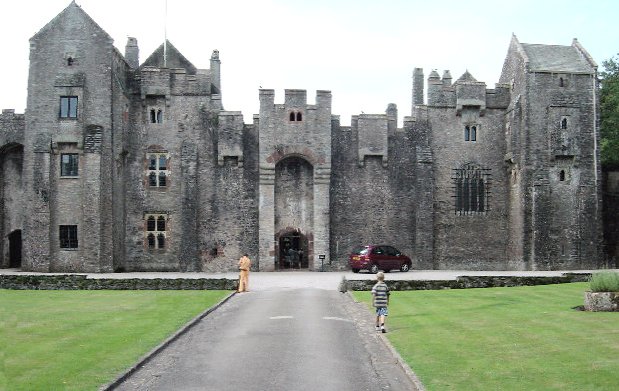
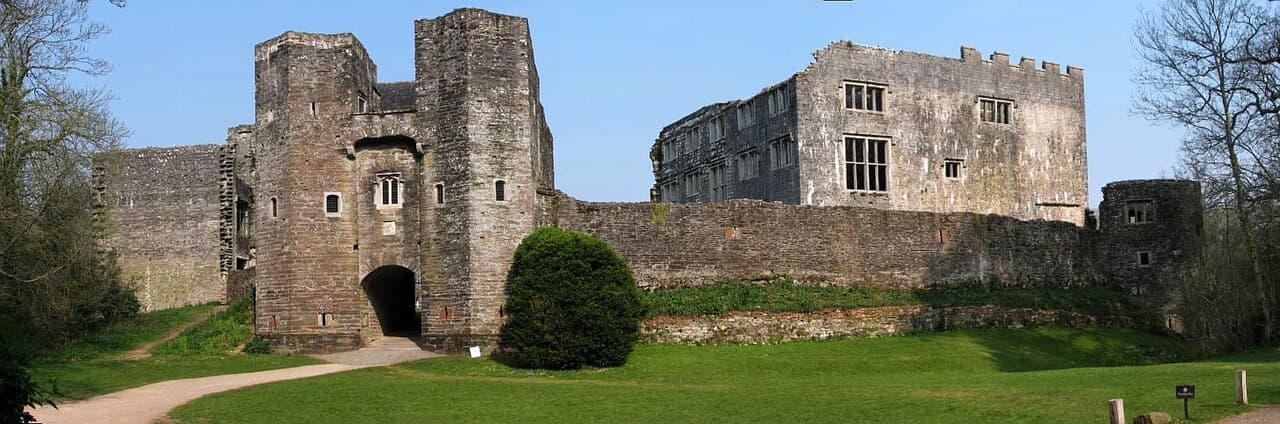
The castle was designed as an irregular quadrangle, shaped by the natural terrain, and enclosed by robust curtain walls constructed from local limestone, shale, sandstone, and granite. Notably, it lacked a traditional central keep or shield wall, instead relying on four corner towers and a twin-towered gatehouse for defense. The gatehouse was a sophisticated structure, incorporating a chapel adorned with a rare Flemish-style wall painting of the Adoration of the Magi dating to around 1490–1500. This highlights the castle's dual role as both a military stronghold and a noble residence.
Late medieval fortifications and innovations
Constructed in the late 15th century, the castle's defenses were advanced for their time. The twin-towered gatehouse and corner towers featured gunports with multiple firing slits, designed for the simultaneous use of different weapons. This innovation reflects the transitional period in military architecture as castles adapted to the increasing use of gunpowder weaponry. The dry moat or neck ditch surrounding the castle, although mostly filled in today, was an integral part of its defensive system.
Transition to the seymour family and elizabethan transformation
Financial difficulties forced the Pomeroy family to sell Berry Pomeroy Castle in 1547 to Edward Seymour, 1st Duke of Somerset, Lord Protector to King Edward VI. Seymour's ownership was brief due to his execution in 1552, after which the castle briefly reverted to the Crown before being restored to his son in 1558.
Between 1560 and 1580, the Seymour family undertook extensive rebuilding, demolishing the medieval main house and erecting a substantial four-storey Elizabethan residence within the castle's curtain walls. This new residence reflected the architectural tastes and social aspirations of the Elizabethan era, emphasizing comfort and status over military defense.
Jacobean expansion and architectural features
From 1600 to 1630, the Seymours expanded the castle further, adding a Jacobean north wing notable for its grand loggia with a colonnade and large north-facing windows. This addition altered parts of the earlier Elizabethan structure and involved the removal of some northern medieval defenses, including the northwest tower. The Jacobean wing exemplifies the transition from fortified castles to elegant country houses, blending defensive remnants with Renaissance-inspired architectural elements.
Role during the english civil war and subsequent decline
During the English Civil War, Berry Pomeroy Castle was never directly besieged but may have served as a Royalist arms store. Following the war, it was seized under Oliver Cromwell's regime and later returned to the Seymour family. The Seymours continued to inhabit the castle until around 1694.
After their departure, the castle was abandoned and deliberately dismantled over several years to provide building materials for local construction. By 1701, it had fallen into ruin, marking the end of its active use as a residence or fortress.
Romantic revival and archaeological research
In the 19th century, Berry Pomeroy Castle gained recognition for its romantic aesthetic, attracting artists and early conservation efforts around 1830. These efforts reflected the Victorian era's fascination with medieval ruins and the picturesque.
Extensive archaeological excavations between 1980 and 1996 clarified the castle's origins and challenged earlier assumptions that it had been destroyed by warfare or fire in the medieval period. These studies revealed the castle's continuous development and use, enhancing understanding of its architectural phases and historical context.
Architectural remains and site features
The castle's surviving structures include the twin-towered gatehouse and St. Margaret's Tower, some of the oldest and most architecturally significant components. The gatehouse's chapel and its unique wall painting are rare survivals of late medieval castle art.
The east and north curtain walls enclose the remains of the medieval great hall or palas and the later Elizabethan residence. The Jacobean north wing's elegant loggia contrasts with the rugged medieval defenses, illustrating the castle's architectural evolution.
While the western curtain wall survives only in fragments, archaeological evidence indicates extensive building remains, confirming the castle's late 15th-century origins. By the late 17th century, inventories recorded around fifty rooms, though the castle's condition was declining due to financial difficulties and dismantling.
The modern car park adjacent to the site occupies a former quarry that supplied stone for the castle's construction, linking the landscape directly to the castle's fabric.
Cultural significance and legends
Berry Pomeroy Castle is renowned not only for its architectural and historical importance but also for its reputation as one of England's most haunted castles. Tales of ghostly apparitions, including the "White Lady" and the "Blue Lady," have drawn paranormal enthusiasts and tourists alike, adding a layer of cultural intrigue to the site.
The castle's romantic ruins continue to inspire artists, historians, and visitors, embodying the complex narrative of England's medieval and early modern aristocracy.
Frequently asked questions (FAQ)
- How do I get to Berry Pomeroy Castle?
- Berry Pomeroy Castle is located just outside of Totnes in Devon, United Kingdom. It is easily accessible by car, with parking available nearby, and is also reachable by public transport via local bus services from Totnes and surrounding areas.
- What are the opening hours of Berry Pomeroy Castle?
- Berry Pomeroy Castle is generally open from 10:00 AM to 5:00 PM, but hours may vary seasonally. It’s advisable to check the official website for the most current information regarding opening times before your visit.
- What is the historical significance of Berry Pomeroy Castle?
- Berry Pomeroy Castle dates back to the 13th century and played an important role in the history of the region. It is known for its intriguing history involving the Pomeroy family and the castle's eventual decline, making it a fascinating site for history enthusiasts.
- Can I bring my dog to Berry Pomeroy Castle?
- Yes, dogs are welcome at Berry Pomeroy Castle, but they must be kept on a lead at all times. This makes it a great destination for visitors who want to explore the beautiful grounds with their furry companions.
- Is Berry Pomeroy Castle accessible for visitors with disabilities?
- Berry Pomeroy Castle has made efforts to improve accessibility, including wheelchair access to certain areas of the site. However, due to its historic nature, some parts of the castle may be challenging to navigate, so it’s best to contact the site in advance for specific accessibility information.
- When is the best time to visit Berry Pomeroy Castle?
- The best time to visit Berry Pomeroy Castle is during the spring and summer months when the gardens are in full bloom and the weather is more favorable. However, visiting during autumn can also provide a beautiful backdrop of changing leaves.
- What are the ticket prices for Berry Pomeroy Castle?
- Ticket prices for Berry Pomeroy Castle vary, with concessions available for seniors and children. It’s recommended to check the official website for the latest pricing details and any special offers that may be available.
- Are there any nearby attractions to Berry Pomeroy Castle?
- Yes, nearby attractions include the historic market town of Totnes, the scenic Dartmoor National Park, and other castles such as Dartmouth Castle. This makes Berry Pomeroy Castle a perfect starting point for a day of exploring Devon’s rich heritage.
Photo gallery

Information
Website
Visit websiteSources & official resources
Verify the information above using these authoritative references.
Loading map...
Visitor reviews
No reviews yet. Been here? Write the first review and help other travelers!
Write the first reviewVisited this castle? Share your experience
Your review helps other travelers and adds first-hand knowledge to our encyclopedia.