Kinbane Castle
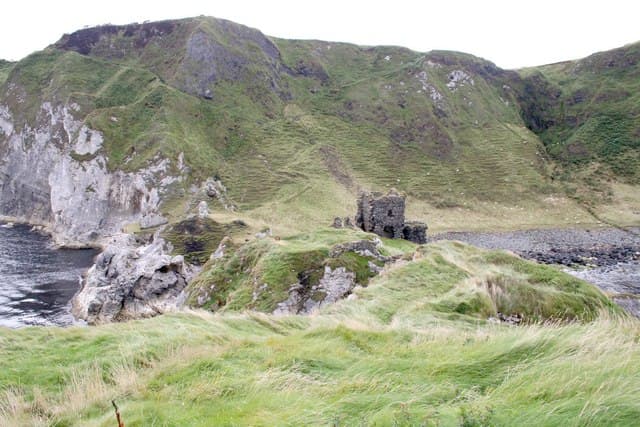
Kinbane Castle, also known locally as Kenbane Castle, is a remarkable 16th-century hill castle situated on a narrow limestone promontory that juts out into the sea northwest of Ballycastle in County Antrim, Northern Ireland. The castle's name derives from the Irish "An Cionn Ban," meaning "White Head," a direct reference to the distinctive white limestone on which the castle stands, a natural defensive feature that shaped both its strategic importance and architectural design.
Constructed in 1547 by Colla MacDonnell, a younger brother of the prominent Sorley Boy MacDonnell, Kinbane Castle was a key stronghold during the height of MacDonnell clan supremacy along the Antrim coast. The MacDonnells, originally of Scottish origin, were influential Gaelic lords who played a crucial role in resisting English expansion into Ireland during the turbulent Renaissance period. The castle's location on a steep basalt cliff made it nearly impregnable by sea, with the only access via a narrow, stepped path carved into the cliff, emphasizing its defensive purpose.
Architectural features and layout
Kinbane Castle was built as a two-storey stone tower house, a typical form of Renaissance Irish tower castles. The main tower overlooked a large enclosed courtyard, which once contained traces of additional buildings likely constructed from wood, used for domestic and defensive functions. The use of local white limestone not only provided a sturdy construction material but also visually linked the castle to its environment, reinforcing its name and identity.
The castle's design incorporated a narrow entrance and steep stone steps leading down the cliff, making direct assault difficult and allowing defenders to control access effectively. The elevated position offered commanding views over the surrounding coastline, including Rathlin Island and the nearby Dunagregor Iron Age fort, demonstrating the continuity of strategic importance on this stretch of coast.
Historical significance and clan conflicts
Kinbane Castle's history is deeply intertwined with the conflicts between the MacDonnell clan and English forces during the mid-16th century. In 1551, the castle was besieged and damaged by English troops under Lord Deputy Sir James Croft as part of a campaign to suppress the MacDonnell influence. A subsequent siege in 1555 saw the castle partly destroyed by cannon fire, reflecting the increasing use of artillery in warfare during this period.
Despite these attacks, the MacDonnells quickly repaired and reoccupied Kinbane. Colla MacDonnell died at the castle in 1558, after which ownership passed to his son Gillaspick MacDonnell. Sorley Boy MacDonnell, Colla's brother and a formidable leader, later exchanged Kinbane with Gillaspick for another property at Colonsay, subsequently granting Kinbane to the MacAlister family as a reward for their loyalty and service.
A notable historical event linked to the castle is the ambush in the ravine below, known as Lag na Sassenach or "Hollow of the English." During the 16th century, a group of English soldiers laying siege to Kinbane were trapped and massacred here by MacDonnell clansmen, who used fires lit on the headland as signals to summon reinforcements. This episode highlights the castle's role as a focal point of Gaelic resistance against English incursions.
Later history and current condition
The MacAlister family retained Kinbane Castle until the 18th century, with local tradition suggesting it was inhabited until that time. The last known resident was reportedly a Mrs. MacAlister. Later, ownership passed to the Woodside family of Carnsampson, who acquired the castle and its associated fishery.
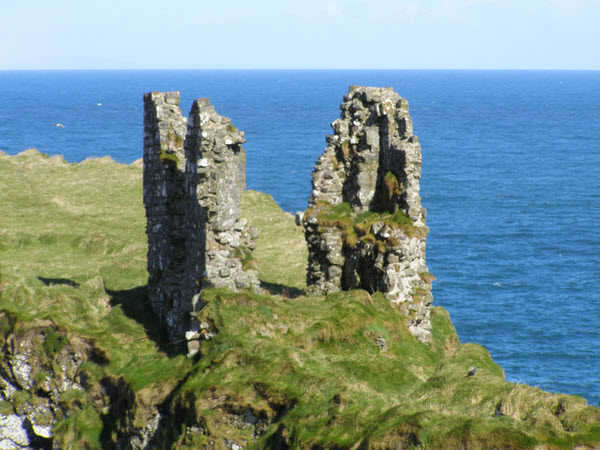
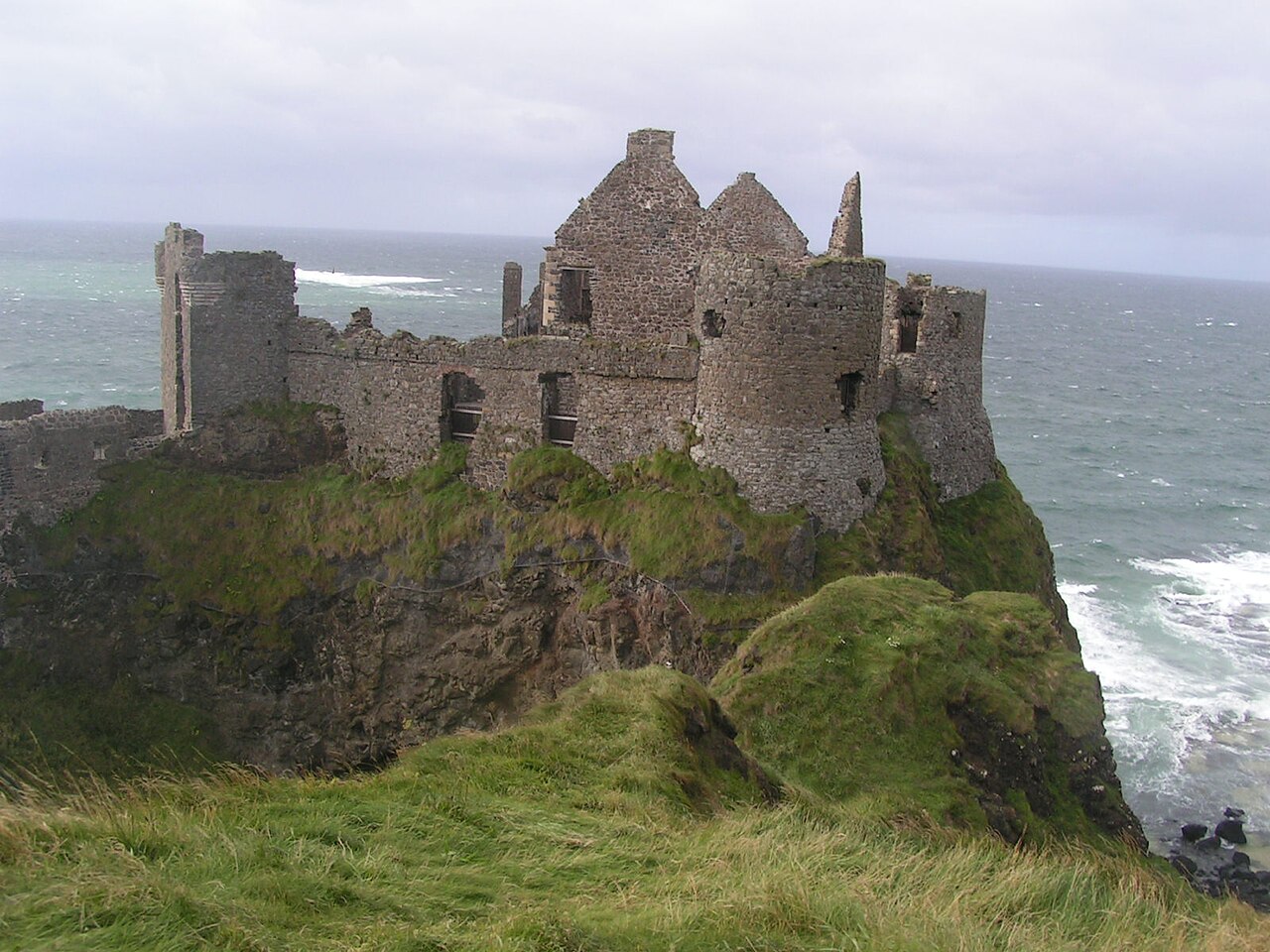
Today, Kinbane Castle stands as a ruined tower with remnants of its original structure still visible. The surrounding enclosure, which once covered half the promontory, has mostly disappeared. The castle is accessible via a steep cliff path with over 140 stone steps, offering visitors spectacular views of the sea and nearby landmarks. Although access to the castle itself may be restricted at times for preservation reasons, the site remains a popular destination for those interested in medieval Irish history and coastal fortifications.
Cultural and heritage importance
Kinbane Castle is protected as a historic monument within the scenic Causeway Coast area, an internationally recognized region for its natural beauty and cultural heritage. The castle exemplifies the fusion of Scottish and Irish Gaelic influences during the Renaissance and stands as a testament to the turbulent history of the Antrim coast during the 16th century.
Archaeological investigations, including test excavations conducted in 2011, have provided insights into the site's occupation, confirming the castle's primary activity period during the 16th century. The ruins offer valuable information about Gaelic fortification techniques, the use of local materials, and the social dynamics of the clans that inhabited the region.
Visitors to Kinbane Castle can appreciate not only the dramatic landscape but also the rich historical narrative embodied in its stones, from its construction by the MacDonnells to its role in clan warfare and eventual decline. The castle remains a poignant symbol of Gaelic resilience and architectural adaptation to a challenging coastal environment.
Frequently asked questions (FAQ)
- How do I get to Kinbane Castle?
- Kinbane Castle is located near Ballycastle in Northern Ireland. Access involves descending a steep cliff path with over 140 stone steps, so visitors should be prepared for a moderately challenging walk.
- What is the historical significance of Kinbane Castle?
- Kinbane Castle was built in 1547 by Colla MacDonnell and played a key role in the clan conflicts of the 16th century, including sieges by English forces. It symbolizes Gaelic resistance and coastal defense during the Renaissance period.
- Is Kinbane Castle open to the public?
- The castle ruins are accessible to visitors, although access to the tower may sometimes be restricted for safety or preservation. The site offers stunning views of Rathlin Island and the surrounding coastline.
- When was Kinbane Castle built and by whom?
- Kinbane Castle was constructed in 1547 by Colla MacDonnell, brother of Sorley Boy MacDonnell, as a defensive stronghold for the MacDonnell clan.
- What can I see at Kinbane Castle today?
- Visitors can explore the ruins of the two-storey tower, the remains of the courtyard enclosure, and the dramatic cliffside setting overlooking the sea. Nearby natural features include the 'Hollow of the English' sea cave and views of Rathlin Island.
Photo gallery

Information
Website
Visit websiteAddress
Whitpark Road, United Kingdom of Great Britain and Northern Ireland
Sources & official resources
Verify the information above using these authoritative references.
Loading map...
Visitor reviews
No reviews yet. Been here? Write the first review and help other travelers!
Write the first reviewVisited this castle? Share your experience
Your review helps other travelers and adds first-hand knowledge to our encyclopedia.