Dunseverick Castle
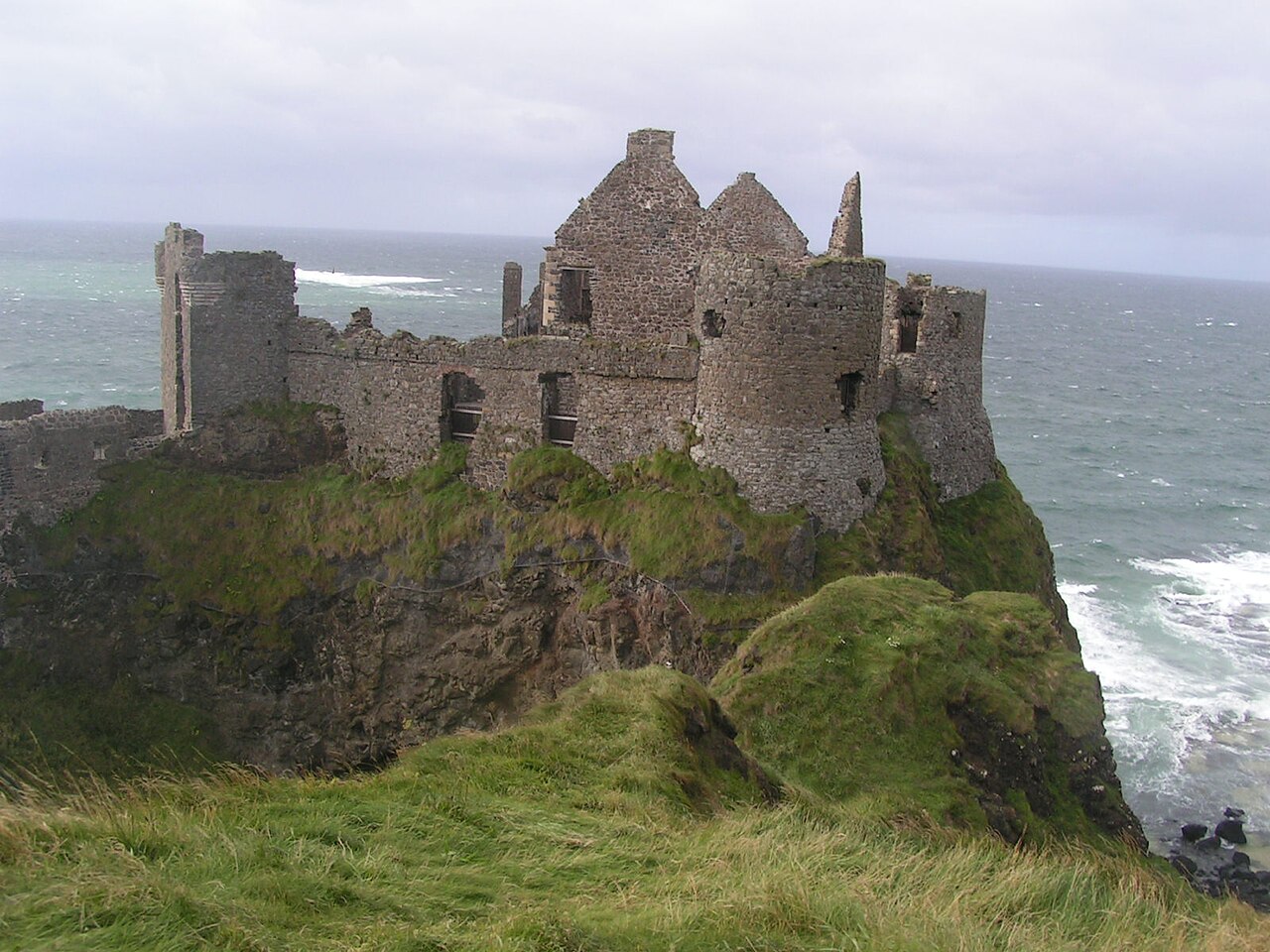
Dunseverick Castle stands on a basalt promontory on the Causeway Coast in County Antrim, Northern Ireland. This early medieval hill castle occupies a site of great antiquity and historic significance, overlooking the North Atlantic and commanding views of the surrounding landscape. The castle's location near the village of Dunseverick and the famous Giant's Causeway places it within a region rich in both natural beauty and cultural heritage.
The ancient origins and early history
The exact date of the first fortification at Dunseverick is uncertain, but the site was a key strategic and ceremonial location in ancient Ireland. It is believed that a stone fort preceded the medieval castle, serving as a defensive stronghold and a royal site. According to tradition, the castle derives its name from Sobairce, a legendary King of Ireland who reputedly established a fort called Dunsobairce here around 1525 BC, although this date falls within the realm of Irish legend rather than documented history.
In the 5th century AD, the site gained religious importance when Saint Patrick visited several times. Saint Patrick is recorded as baptizing a local man named Olcán at Dunseverick, who later became a Bishop of Ireland. A holy well near the cliff edge, known as St. Patrick's Well, is associated with these events and was reputed to be one of Ireland's sacred wells.
Medieval significance and ownership
During the Early Medieval period, Dunseverick was an important royal site connected to the ancient kingdom of Dalriada. In the late 6th century, it served as the seat of Fergus Mor MacEirc (Fergus the Great), King of Dalriada. Fergus was a prominent figure who expanded his sea-kingdom into western Scotland. The castle area is also linked to the Lia Fail or coronation stone, which was loaned by the High King of Ireland, Muirceartaigh MacEirc, to Fergus for his Scottish coronation around 500 AD.
From approximately 1000 AD to 1320 AD, the castle was held by the O'Cahan family, a powerful Gaelic clan. The O'Cahans lost and later regained the castle in the mid-16th century with the assistance of the MacDonnell clan, wresting it from the MacQuillan family. The surviving ruins likely date from this 16th-century reconstruction, reflecting the turbulent clan conflicts of the period.
Conflict and decline in the 17th century
The castle's strategic coastal position made it a target during the 1641 Irish Rebellion. In 1642, General Robert Monro and his troops destroyed Dunseverick Castle as part of a campaign to subdue the region. Monro notably spared only Dunluce Castle, garrisoning it with English soldiers, while Dunseverick was abandoned. The destruction was so extensive that the castle never recovered its former prominence.
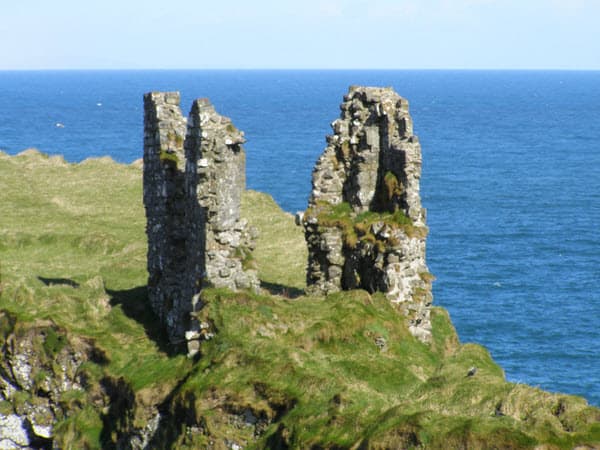
Despite its ruin, a small residential tower on the site survived until 1978, when it finally collapsed into the sea, further diminishing the physical remains of the castle.
Architectural features and current condition
Dunseverick Castle was constructed primarily from basalt stone, a common material in the region, lending durability to its walls. The castle's layout included a tower and defensive walls situated atop the promontory, providing natural protection on three sides by steep cliffs and the sea.
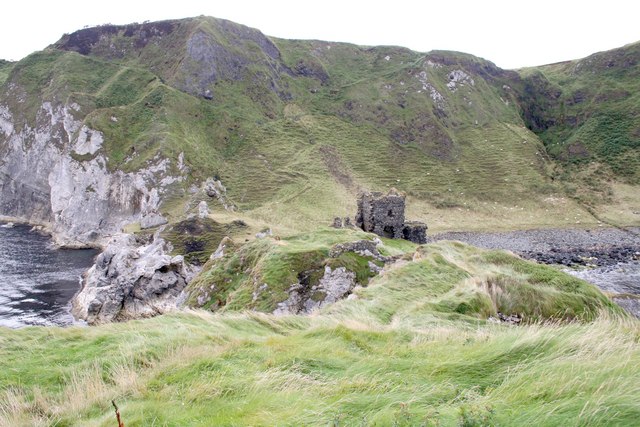
Today, only fragments of the castle walls and foundations remain, overgrown and weathered by time and coastal elements. The site includes the remnants of a gate lodge and the foundations of defensive structures, but no complete buildings survive. The dramatic cliffside setting remains a defining characteristic, offering visitors panoramic views of the coastline and the nearby Giant's Causeway.
Heritage and public access
The castle and its surrounding peninsula were donated to the National Trust in 1962 by local farmer Jack McCurdy, ensuring its protection and public accessibility. Dunseverick Castle and its earthworks are designated as Scheduled Historic Monuments, recognized for their archaeological and cultural significance.
The site is freely accessible to visitors, with the Causeway Cliff Path passing nearby, linking Dunseverick Harbour to the east and the Giant's Causeway to the west. Although the ruins are modest, the combination of historical importance and stunning coastal scenery makes Dunseverick Castle a noteworthy destination for those interested in Irish history and medieval fortifications.
Nearby attractions and landscape
Visitors to Dunseverick Castle can explore the surrounding Causeway Coast, known for its unique geological formations and natural beauty. The proximity to the Giant's Causeway, a UNESCO World Heritage Site, adds to the appeal of the area. The rugged cliffs, sea stacks, and basalt columns provide a dramatic backdrop to the castle ruins and highlight the interplay between natural and human history in this part of Northern Ireland.
Preservation challenges
Being located on a coastal promontory, Dunseverick Castle faces ongoing challenges from erosion and weathering. The collapse of the residential tower in 1978 exemplifies the vulnerability of the site to natural forces. Conservation efforts focus on preserving what remains of the structure and maintaining safe public access, while respecting the site's archaeological integrity.
Frequently asked questions (FAQ)
- What is the historical significance of Dunseverick Castle?
- Dunseverick Castle is a historic site that dates back to the 5th century and is linked to the ancient kingdom of Dal Riata. It played a crucial role in the early Christian history of Ireland and is associated with the legend of Saint Patrick, who is said to have visited the area.
- When was Dunseverick Castle built?
- Dunseverick Castle's origins trace back to around the 5th century, although the current ruins primarily date from the 12th century. The castle has undergone various phases of construction and restoration, reflecting the architectural styles and historical events of its time.
- Can I visit Dunseverick Castle?
- Yes, visitors are welcome to explore Dunseverick Castle and its scenic surroundings. The site offers stunning views of the coastline and is perfect for photography and enjoying nature.
- What are the opening hours for Dunseverick Castle?
- Dunseverick Castle is generally open to visitors year-round, though specific hours may vary seasonally. It is advisable to check the local tourism website or contact the visitor center for the most current opening times before planning your visit.
- Is it possible to access Dunseverick Castle with limited mobility?
- The castle ruins are situated on a rugged coastal site, which may present challenges for visitors with limited mobility. While there are pathways, the terrain can be uneven, so it is recommended to assess personal capabilities or inquire about accessibility assistance upon arrival.
- What is the best time to visit Dunseverick Castle?
- The best time to visit Dunseverick Castle is during the late spring and summer months when the weather is milder and the days are longer. This allows visitors to fully enjoy the breathtaking views and explore the surrounding landscape without the hindrance of harsh weather.
- Are there any nearby attractions to Dunseverick Castle?
- Yes, Dunseverick Castle is located near several attractions, including the Giant's Causeway, a UNESCO World Heritage site, and the scenic coastal paths of the Antrim Coast. These nearby sites offer a rich blend of natural beauty and historical significance, making for an enriching visit.
- What are the ticket prices for visiting Dunseverick Castle?
- Dunseverick Castle is free to enter, allowing all visitors to experience its historical and scenic beauty without any cost. However, donations to support the preservation of the site are always appreciated.
Photo gallery

Information
Loading map...
Visitor reviews
No reviews yet. Been here? Write the first review and help other travelers!
Write the first reviewVisited this castle? Share your experience
Your review helps other travelers and adds first-hand knowledge to our encyclopedia.