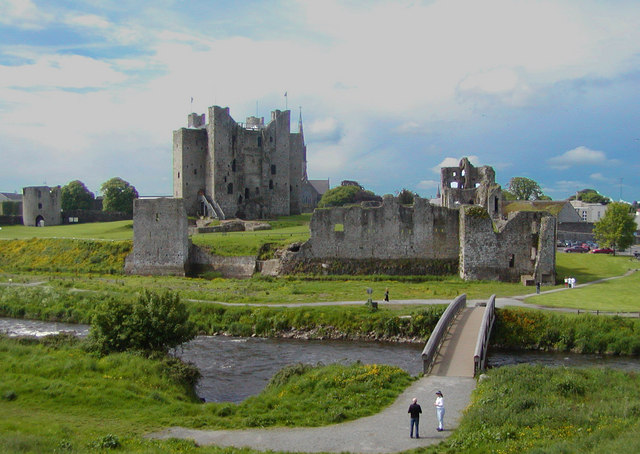
Killua Castle
Killua Castle is a remarkable example of an 18th-century country house that evolved through the early 19th century with romantic architectural additions, located near Clonmellon in Northern Ireland. The estate's origins trace back to the 17th century, following the Cromwellian conquest when lands formerly held by the Knights Hospitallers of St John were confiscated and granted to Benjamin Chapman, a captain in Oliver Cromwell's forces. This transfer of ownership reflects the turbulent political and religious upheavals of the period in Ireland.
The present house was constructed around 1780 by Sir Benjamin Chapman, 1st Baronet, who inherited the estate from his father. This construction replaced an earlier medieval castle on the site, marking a transition from fortified medieval architecture to a refined country residence designed for comfort and status rather than defense. The house was originally laid out with formal reception rooms including a hall, dining room, and drawing rooms, arranged to suit the lifestyle of the landed gentry. Two staircases provided access to the upper floors, while outbuildings such as stables and a haggard supported the agricultural functions of the estate.
Architectural evolution and romantic additions
In the early 1820s, Thomas Chapman, who inherited the estate in 1810, undertook significant expansions that gave Killua Castle its distinctive romantic character. He added several towers, including a large round tower and smaller towers that served as a library and staircase towers. These additions were executed in harmony with the original 18th-century structure, blending Georgian elegance with early 19th-century romanticism. The completion of battlements along the roofline enhanced the castellated appearance, evoking medieval fortifications but serving primarily aesthetic and symbolic purposes rather than defensive ones.
The castle's castellated form is a hallmark of the romantic architectural movement of the time, which sought to revive medieval styles and imbue country houses with a picturesque and historic character. The towers added by Thomas Chapman not only provided functional spaces but also contributed to the visual grandeur and historic ambiance of the estate.
Historical significance and the Raleigh obelisk
Close to the castle grounds, approximately 200 to 300 meters away, stands the Raleigh Obelisk, erected in 1810 by Thomas Chapman. This monument commemorates the reputed introduction of the potato to Ireland by Sir Walter Raleigh, a figure often associated with the early cultivation of this staple crop in the country. Although the precise origins of potato cultivation in Ireland remain debated among historians, the obelisk has become a notable landmark that connects local agricultural history with broader cultural narratives.
The obelisk bears an inscription honoring Raleigh, though it was later altered to include a middle initial "G," which is not historically verified and is considered a form of vandalism. The monument has been preserved with the support of heritage organizations and remains a symbol of the estate's historical depth.
Decline and restoration efforts
The Killua estate remained in the Chapman family until 1949, when the house and the remaining 1,200 acres were sold. Following the sale, the castle gradually fell into disrepair. By the early 21st century, it was largely a ruin, with the roof missing and the walls heavily overgrown with ivy, obscuring much of the architectural detail.
Restoration efforts began in 2006 with the aim of stabilizing and preserving the castle's historic fabric. These conservation works sought to maintain the integrity of both the original 18th-century country house and the 19th-century romantic additions without compromising their historic character. The restoration has helped to protect Killua Castle as a significant heritage site that embodies the architectural and social history of its region.
Architectural features and estate layout
Killua Castle's design reflects the transition from a medieval defensive site to a country estate focused on residential comfort and aesthetic appeal. The original house featured formal rooms arranged for social functions, supported by service areas and agricultural buildings. The later addition of towers and battlements introduced a romantic medieval revival style, popular in the early 19th century, which emphasized picturesque silhouettes and historic references.
The estate included functional outbuildings such as stables, barns, and a haggard for crop storage, underscoring its role as a working agricultural property. The proximity of the Raleigh Obelisk further highlights the estate's connection to local history and agricultural heritage.
The towers
The large round tower added by Thomas Chapman served as a prominent architectural feature, enhancing the castle's skyline and providing additional interior space. Smaller towers, including those housing a library and staircases, combined utility with stylistic expression. These towers were constructed using similar materials and craftsmanship as the main house, ensuring a cohesive appearance.
Battlements and castellated elements
The battlements completed along the roofline contributed to the castle's romanticized medieval look. While not intended for defense, these crenellations symbolized status and historical continuity, aligning with the 19th-century fascination with Gothic and medieval architecture.
Visitor information and cultural importance
Today, Killua Castle stands as a testament to Ireland's layered history, from its medieval origins through Cromwellian upheaval to Georgian refinement and romantic revival architecture. Its restoration has made it accessible for heritage appreciation, and the nearby Raleigh Obelisk adds cultural interest for visitors exploring Ireland's agricultural past.
While not as widely known as some larger castles, Killua Castle offers a unique glimpse into the evolution of country house architecture and the social history of Northern Ireland's landed gentry. The estate's combination of historical significance, architectural features, and restoration efforts make it a valuable site for historians, architects, and visitors alike.
Frequently asked questions (FAQ)
- How do I get to Killua Castle?
- Killua Castle is located in the United Kingdom of Great Britain and Northern Ireland, easily accessible by car or public transport. The nearest train station is a short drive away, and there are local bus services that connect to nearby towns.
- What is the historical significance of Killua Castle?
- Killua Castle is a remarkable example of Gothic Revival architecture and was built in the 19th century. It has a rich history tied to the local aristocracy and showcases the grandeur of its time, making it an important cultural landmark.
- When was Killua Castle constructed?
- Killua Castle was constructed in the early 1800s, with its architectural design reflecting the trends of the Gothic Revival period. The castle has undergone various renovations over the years, preserving its historical charm.
- Can I take photographs inside the castle?
- Yes, visitors are welcome to take photographs inside Killua Castle, but please be mindful of any restricted areas. It's advisable to check with the staff for specific guidelines to ensure a respectful visit.
- Why is Killua Castle considered an architectural gem?
- Killua Castle is considered an architectural gem due to its intricate design and stunning features that reflect the Gothic Revival style. The detailed stonework, soaring towers, and beautiful interiors make it a must-see for architecture enthusiasts.
- Is it possible to host events at Killua Castle?
- Yes, Killua Castle offers facilities for hosting various events, including weddings and corporate gatherings. For more information on availability and options, it's best to contact the castle's event management team.
- What are the opening hours for Killua Castle?
- Killua Castle is typically open to visitors from 10 AM to 5 PM, but it’s recommended to check the official website for seasonal variations. Special openings may occur during holidays or events.
- What are the ticket prices for visiting Killua Castle?
- Ticket prices for Killua Castle vary depending on the type of tour and age group, with discounts often available for children and seniors. It's advisable to purchase tickets online in advance to secure your spot and avoid long queues.
- When is the best time to visit Killua Castle?
- The best time to visit Killua Castle is during the spring and early autumn when the weather is pleasant, and the gardens are in full bloom. However, each season offers a unique charm, so consider your preferences for a memorable visit.
- Are there any nearby attractions to explore?
- Yes, there are several nearby attractions, including beautiful parks, historical sites, and quaint villages. Exploring the surrounding area can enhance your visit to Killua Castle and provide a deeper insight into the local culture.
Information
Website
Visit websiteSources & official resources
Verify the information above using these authoritative references.
Loading map...
Visitor reviews
No reviews yet. Been here? Write the first review and help other travelers!
Write the first reviewVisited this castle? Share your experience
Your review helps other travelers and adds first-hand knowledge to our encyclopedia.