Trim Castle
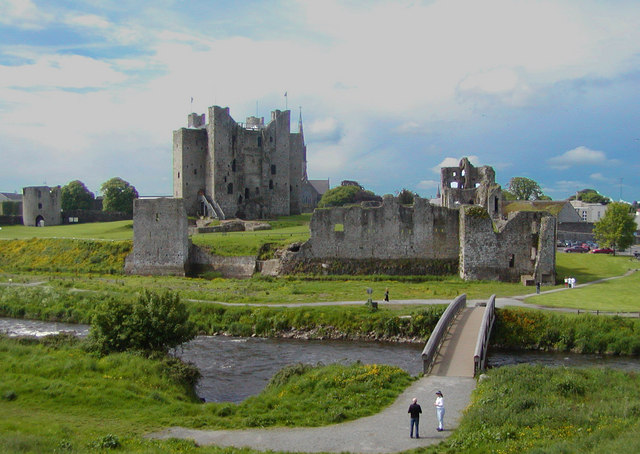
Trim Castle stands as a monumental example of Norman military architecture in Ireland, located on the south bank of the River Boyne in Trim, County Meath. As the largest Norman castle in Ireland, covering approximately 30,000 square meters, it dominates the surrounding landscape and town with its formidable presence and historical significance.
The castle was established in the aftermath of the Norman invasion of Ireland when King Henry II granted the Lordship of Meath to Hugh de Lacy in 1172. De Lacy began construction of the castle shortly thereafter, initially erecting a timber ringwork fortification on a strategically chosen site overlooking a key river crossing. This early wooden structure was soon attacked and destroyed by forces loyal to the Gaelic High King Ruaidrí Ua Conchobair, prompting a transition to more durable stone defenses beginning around 1176.
Architectural design and construction phases
The centerpiece of Trim Castle is its massive cruciform keep, a rare and architecturally unique twenty-sided stone tower. Construction of this three-storey keep began in the late 12th century and extended into the early 13th century, likely completed by the 1220s under the supervision of Hugh de Lacy's son, Walter de Lacy. The keep's cross-shaped plan and multiple towers provided both strong defensive capabilities and impressive visual impact.
Surrounding the keep is a complex system of curtain walls and defensive towers built in several phases. The earliest walls, dating from the 1170s, feature rectangular towers and include the Trim Gate on the west and north sides. Later additions include the Dublin Gate with its round towers and an external barbican, the first recorded in Ireland, constructed in the late 12th or early 13th century. The southern curtain walls with round towers were added in the early 13th century, further enhancing the castle's formidable defenses.
A notable feature is the three-towered forework from the early 14th century, which protects the entrance to the keep and incorporates stables. The castle also contains a large three-aisled great hall from the late 13th century, complete with an undercroft that opens onto the river via a water gate, highlighting the importance of river access for trade and defense.
Additional structures include a late 13th-century defensive tower converted into a solar (private chamber), a smaller aisled hall from the 14th or 15th century, and a building likely used as a mint. Later modifications in the 15th and 16th centuries introduced stone buildings within the town gatehouse and 17th-century additions adjoining the hall range and the north side of the keep.
Historical significance and ownership
Trim Castle served as the administrative center for the Lordship of Meath, a key Norman stronghold established to control central Ireland. Its strategic location overlooking a ford on the River Boyne allowed control over river traffic and local trade routes. The castle was central to the Norman administration and defense efforts in the region.
Throughout its history, Trim Castle was held by prominent families including the de Lacys, the Genevilles, and the Mortimers, who maintained control until the early 15th century. It was used as a meeting place for the Irish Parliament on seven occasions during the 15th century, underscoring its political importance. The castle also housed a mint, further emphasizing its role in governance and economy.
During the Irish Confederate Wars in the 1640s, the castle regained military significance and was occupied by Oliver Cromwell's forces in 1649 following their capture of nearby Drogheda. Ownership later passed to the Wellesley family, including the famed Duke of Wellington, before eventually being acquired by the Irish State in 1993.
Archaeological discoveries and preservation efforts
Extensive archaeological excavations conducted in the 1970s and 1990s revealed significant remains, including human bones with signs of decapitation. These findings are believed to be connected to executions ordered by King Edward IV in the 15th century, offering a grim insight into the castle's turbulent past.
Conservation and restoration efforts led by the Office of Public Works have stabilized the castle's ruins and made it accessible to the public. The moat has been conserved, and a protective roof was installed over the keep to prevent further deterioration. Access to the keep is limited to guided tours, while the castle grounds remain open with an entry fee, allowing visitors to explore this iconic monument.
Cultural impact and modern recognition
Trim Castle's striking medieval architecture has made it a popular filming location, most notably serving as the setting for King John's Castle in the 1995 film Braveheart, directed by and starring Mel Gibson. This exposure has contributed to the castle's fame and draws numerous visitors interested in both its cinematic and historical significance.
Today, Trim Castle is celebrated as one of the finest surviving examples of Norman architecture in Ireland and Europe. Its combination of military strength, administrative function, and architectural innovation reflects the complex legacy of the Norman conquest in Ireland. The castle remains a powerful symbol of medieval history, governance, and cultural heritage, continuing to dominate the landscape and captivate visitors.
Architectural highlights
- Cruciform keep: Unique twenty-sided tower with three stories and multiple defensive towers.
- Curtain walls: Built in phases with rectangular and round towers, including the pioneering Dublin Gate barbican.
- Great hall: Large three-aisled hall with an undercroft and water gate access.
- Forework and stables: Early 14th-century defensive structures protecting the keep's entrance.
- Mint building: Indicates the castle's role in economic administration.
Visiting information
Visitors to Trim Castle can explore the extensive grounds and enjoy guided tours of the keep. The castle offers a vivid glimpse into Norman military architecture and medieval history, set in a well-preserved landscape that retains its historical context. The surrounding town of Trim complements the experience with its own rich heritage and amenities.
Frequently asked questions (FAQ)
- What are the opening hours of Trim Castle?
- Trim Castle is open to visitors daily, with varying hours depending on the season. Typically, the castle opens at 9:30 AM and closes at 5:30 PM, but it's advisable to check the official website for any seasonal changes or special events that may affect these hours.
- How do I purchase tickets for Trim Castle?
- Tickets for Trim Castle can be purchased at the entrance or online through the official website. Prices may vary for adults, children, and family tickets, and online booking often provides the option for discounts or special offers.
- When was Trim Castle built?
- Trim Castle was constructed in the late 12th century, specifically starting in 1172, making it one of the largest and best-preserved Anglo-Norman castles in Ireland. Its historical significance is tied to its role in the defense and control of the surrounding area during medieval times.
- Is Trim Castle accessible for visitors with disabilities?
- Yes, Trim Castle is committed to accessibility and provides facilities for visitors with disabilities. There are designated parking spaces, ramps, and accessible restrooms to ensure that everyone can enjoy their visit to this historic site.
- Why is Trim Castle considered historically significant?
- Trim Castle is historically significant due to its impressive architecture and its role in the Norman invasion of Ireland. It served as a stronghold for the Anglo-Normans and has witnessed many pivotal events in Irish history, making it a key site for understanding the medieval era.
- What is the best time to visit Trim Castle?
- The best time to visit Trim Castle is during the spring and summer months when the weather is generally more pleasant, and the gardens are in full bloom. Additionally, consider visiting during weekdays to avoid larger crowds, allowing for a more enjoyable experience.
- Can I explore the interior of Trim Castle?
- Yes, visitors are permitted to explore the interior of Trim Castle, which includes guided tours that provide insights into its history and architecture. Guided tours typically last about an hour and offer a fascinating glimpse into the castle's past.
- What nearby attractions can I visit while in Trim?
- While in Trim, visitors can also explore the nearby St. Patrick's Cathedral and the picturesque Boyne River, which offers scenic walks and views. Additionally, the town of Trim itself has charming shops, cafes, and historical sites that enrich your visit to the area.
- What architectural features can I expect to see at Trim Castle?
- Trim Castle showcases a mix of medieval architectural styles, including its impressive keep, fortified walls, and distinctive round towers. The castle's design reflects both its strategic military purpose and the artistic influences of the time, making it a fascinating site for architecture enthusiasts.
Information
Website
Visit websiteSources & official resources
Verify the information above using these authoritative references.
Loading map...
Visitor reviews
No reviews yet. Been here? Write the first review and help other travelers!
Write the first reviewVisited this castle? Share your experience
Your review helps other travelers and adds first-hand knowledge to our encyclopedia.