Kilkenny Castle
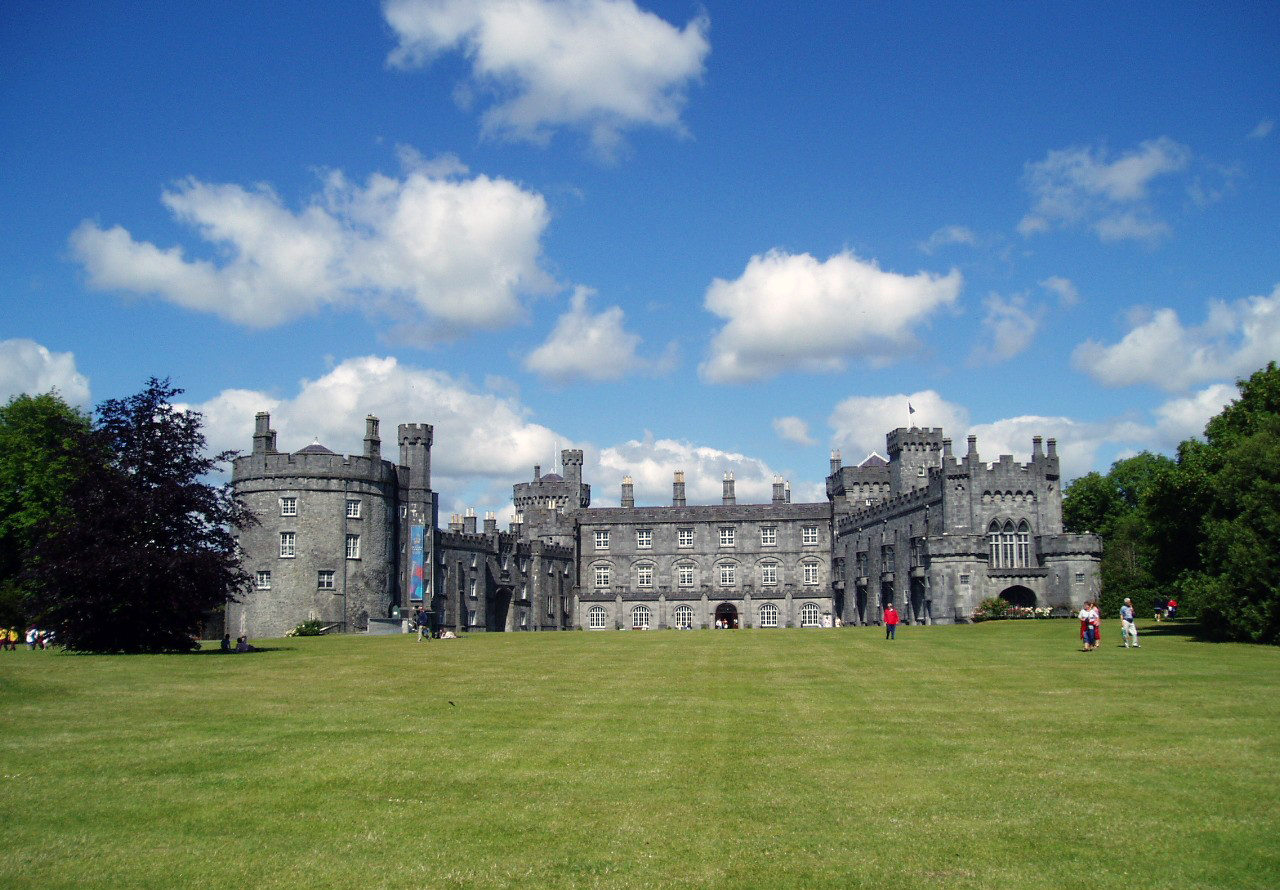
Kilkenny Castle, located in the heart of Kilkenny City, Ireland, stands as a remarkable testament to the Norman conquest and medieval history of the region. Originally constructed in 1195 to control a strategic fording point of the River Nore and key route junctions, the castle symbolized Norman authority and military strength in Ireland. Its imposing stone fortress design, featuring a rectangular layout with four large circular corner towers, was central to the town's defenses during the High Medieval period.
The castle's origins trace back to a wooden motte-and-bailey structure built by Richard de Clare, known as Strongbow, shortly after the Norman invasion around 1171-1173. This initial fortification was replaced by a substantial stone castle commissioned by William Marshal, 1st Earl of Pembroke, between 1195 and 1213. The stone castle's three surviving towers remain prominent features, offering insight into early medieval military architecture.
Historical ownership and significance
Earls of pembroke and early development
Following Strongbow's establishment of Norman control, the castle and surrounding lordship of Leinster passed to his daughter Isabel and her husband William Marshal. Marshal's stewardship marked a major phase of development, including the construction of the enduring stone castle. The castle was held by notable medieval families such as the de Braose and de Bohun before reverting to the English crown in 1381.
The butler family era
In 1391, James Butler, 3rd Earl of Ormonde, purchased Kilkenny Castle, establishing the Butler dynasty's long tenure of over five centuries. The Butlers transformed the castle into their principal residence and a center of political power. Lady Margaret Butler, born in the castle, was the grandmother of Anne Boleyn, linking the site to Tudor England's royal history.
Confederate ireland and military conflicts
During the turbulent 1640s, Kilkenny Castle served as the headquarters of the Catholic Confederation of Ireland, hosting their parliament from 1642 to 1648 amid the Irish Confederate Wars. The castle suffered siege damage in 1650 during Oliver Cromwell's conquest, with parts of the east wall and northeast tower destroyed.
Architectural evolution and restoration
17th-century remodeling and château style
After the Restoration of the monarchy in 1660, James Butler, 12th Earl of Ormonde, remodeled the castle into a more elegant château-style residence. He imported Caen stone from France and constructed a new southern gate, transforming the medieval fortress into a grand noble home while retaining key defensive elements.
19th-century expansions and royal visits
The 19th century saw further restoration and expansion under architect William Robertson in 1854, including rebuilding the north wing and extending the south curtain wall. The castle hosted royal visitors such as the future King George V in 1899 and King Edward VII in 1904, underscoring its social and political prominence.
20th-century decline and preservation efforts
Financial difficulties and changing social conditions led the Butler family to sell the castle's contents and vacate the residence in 1935. The castle remained empty for decades until 1967, when James Butler, 6th Marquess of Ormonde, sold it to the Castle Restoration Committee for a nominal sum to prevent further decay. Since then, extensive restoration has preserved the structure and repurposed parts of the castle for public use.
Castle features and public access
Surviving medieval structures
The castle's rectangular plan with its four circular towers remains clearly visible, with three original towers intact. The defensive moat, once surrounding the castle, is partially preserved and visible near the Parade area. The Parade Tower now functions as a conference venue, blending historical architecture with modern utility.
Gardens, parkland, and cultural use
The adjoining gardens and parkland, maintained by Ireland's Office of Public Works, are open to the public and contribute to the castle's picturesque setting. The castle houses the Butler Gallery, an art exhibition space named after Peggy and Hubert Butler, which hosts rotating exhibitions of local and national artworks.
Archaeological discoveries
Excavations in the 1990s led by archaeologist Ben Murtagh uncovered remnants of the original wooden motte-and-bailey castle, the medieval eastern gate, and foundational structures. These findings have enhanced understanding of the castle's phased construction and historical layers.
Notable historical events and legacy
Irish civil war and siege
During the Irish Civil War in 1922, Kilkenny Castle was besieged by Irish Free State forces. Despite damage from the conflict, the Butler family remained in residence for several years afterward. The castle's resilience through military and political upheavals reflects its enduring significance.
Cultural and heritage importance
Kilkenny Castle remains one of Ireland's most visited historic sites, attracting tourists and scholars alike. Its rich history, architectural evolution, and association with prominent families like the Butlers make it a vital cultural landmark. The castle's public ownership and restoration efforts ensure its preservation for future generations.
Today, Kilkenny Castle stands not only as a monument to medieval fortification and noble residence but also as a vibrant cultural center hosting academic ceremonies, art exhibitions, and community events. Its blend of military, residential, and cultural heritage encapsulates centuries of Irish history in a single, iconic site.
Frequently asked questions (FAQ)
- How do I get to Kilkenny Castle?
- Kilkenny Castle is located in Kilkenny City, accessible by car, bus, or train. It is within walking distance from the city center and well signposted for visitors.
- What are the opening hours of Kilkenny Castle?
- The castle is open daily from 9:30 AM to 5:30 PM, allowing visitors ample time to explore the grounds and interiors.
- What is the ticket price for visiting Kilkenny Castle?
- Admission fees are €8 for adults, €4 for children, and €20 for families, making it an affordable cultural attraction.
- Can I visit the castle gardens?
- Yes, the ornamental gardens and parkland adjoining Kilkenny Castle are open to the public and provide a scenic setting for leisurely walks.
- What historical periods does Kilkenny Castle represent?
- Kilkenny Castle primarily reflects the High Medieval period, with significant 17th and 19th-century renovations that showcase evolving architectural styles.
- Is Kilkenny Castle wheelchair accessible?
- The castle offers some accessibility features, but due to its historic nature, certain areas may be challenging for wheelchair users. Visitors are advised to check in advance for specific accessibility information.
Information
Opening hours
09:30-17:30, daily
Ticket prices
€8 adult, €4 child, €20 family
Current owner
Office of Public Works
Website
Visit websiteSources & official resources
Verify the information above using these authoritative references.
Loading map...
Visitor reviews
No reviews yet. Been here? Write the first review and help other travelers!
Write the first reviewVisited this castle? Share your experience
Your review helps other travelers and adds first-hand knowledge to our encyclopedia.