Kilkenny Castle
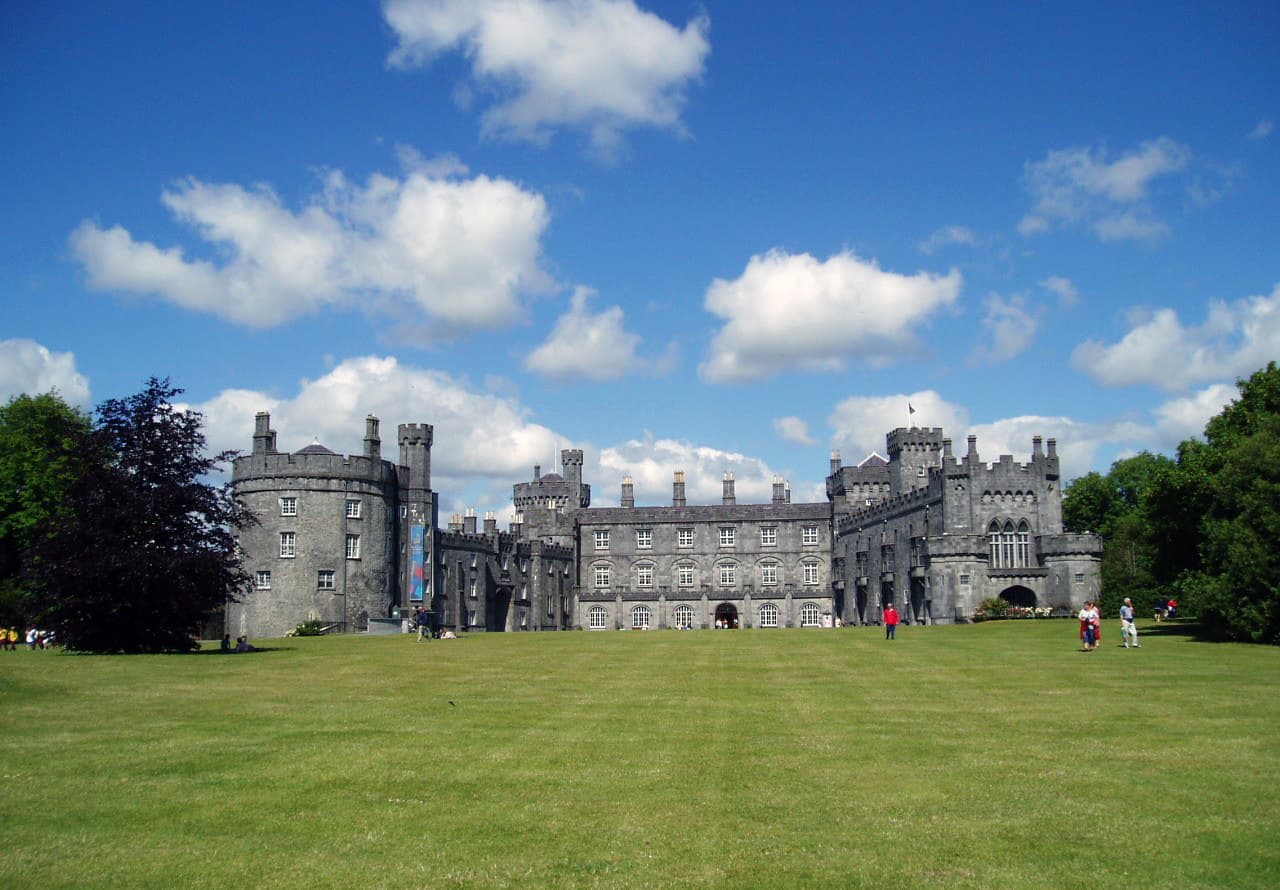
Kilkenny Castle (Irish: Caisleán Chill Chainnigh) stands prominently in Kilkenny, Ireland, as a significant example of a 13th-century Norman hill castle. Constructed in 1260, the castle was strategically positioned to control a vital fording point of the River Nore and the junction of several important medieval routeways. This location made it a key defensive and administrative center during the High Medieval period, symbolizing Norman authority and power in the region.
Medieval origins and strategic importance
The castle was originally built by the powerful Butler family, who played a central role in the governance and military control of southeastern Ireland. Its design reflects typical Norman military architecture of the period, featuring four large circular corner towers that provided both defensive strength and a commanding view of the surrounding landscape. The castle was surrounded by a massive ditch, part of which remains visible today near the Parade, adding to its formidable defenses.
The location of Kilkenny Castle was no accident; it guarded a key crossing of the River Nore, which was crucial for controlling trade and military movements. The castle's presence helped establish Kilkenny as a significant urban center during the medieval era, fostering the town's growth and prosperity under Norman rule.
Architectural features and evolution
Kilkenny Castle's original 13th-century construction was typical of Norman fortifications, with thick stone walls and robust towers designed to withstand siege warfare. The four corner towers were circular, a design choice that reduced blind spots and improved defensive capabilities against attackers.
Over the centuries, the castle underwent numerous modifications and expansions, reflecting changing architectural styles and the needs of its occupants. While the core medieval structure remains, later additions incorporated elements of Renaissance and post-medieval architecture, including more comfortable living quarters and ornamental features. These changes illustrate the castle's transition from a purely military fortress to a noble residence.
The castle's grounds include extensive gardens and parkland, which have been developed and maintained over the centuries, contributing to the site's aesthetic and recreational value today.
The butler family and later history
The Butler family, who held the title of Earls and later Marquesses of Ormonde, were the castle's principal owners for several centuries. Their influence extended beyond Kilkenny, playing a significant role in Irish political and social history. The castle served as their family seat and a center of power.
In the 20th century, the castle's role shifted as the Butler family faced financial difficulties. In 1967, Arthur Butler, the 6th Marquess of Ormonde, sold the castle for a nominal sum of £50 to the Castle Restoration Committee, ensuring its preservation for public benefit. This transfer marked a new chapter in the castle's history, emphasizing conservation and public access.
Modern use and public access
Today, Kilkenny Castle is managed by the Office of Public Works and serves as a major cultural and historical attraction in Ireland. The castle's gardens and parkland are open to the public, offering visitors a chance to explore the beautifully maintained grounds alongside the historic architecture.
The Parade Tower, once part of the castle's defensive system, has been repurposed as a conference venue, blending historic ambiance with modern functionality. Since 2002, the castle has hosted ceremonies for awarding degrees to graduates of the National University of Ireland, Maynooth's Kilkenny Campus, highlighting its ongoing role in the community.
Architectural significance and preservation
Kilkenny Castle remains a well-preserved example of High Medieval Norman architecture in Ireland. Its combination of military and residential features offers insight into the evolution of castle design from the 13th century onward. The preservation efforts since the 1960s have been crucial in maintaining the castle's structural integrity and historical character.
Visitors can still observe key architectural elements such as the circular towers, the remnants of the defensive ditch, and the extensive stone walls. These features provide a tangible connection to Ireland's medieval past and the Norman influence on its landscape.
Frequently asked questions (FAQ)
- How do I get to Kilkenny Castle?
- Kilkenny Castle is easily accessible by car and public transport. If you are traveling by train, the nearest station is Kilkenny Railway Station, which is about a 15-minute walk from the castle. Local buses also provide service to the castle from various parts of the city.
- What is the historical significance of Kilkenny Castle?
- Kilkenny Castle, built in the 12th century, is a symbol of the medieval heritage of Ireland. It served as the principal seat of the Butler family, who played a significant role in the history of Ireland for over 600 years. The castle is an important example of the evolution of architecture in Ireland, showcasing styles from medieval to Victorian periods.
- When was Kilkenny Castle last renovated?
- Kilkenny Castle underwent significant restoration in the 19th century, particularly during the 1960s when it was restored to its former glory after falling into disrepair. The restoration efforts have preserved many of the castle's original features while also making it accessible to the public. Ongoing maintenance ensures that the castle remains a key historical site.
- Can I take guided tours of Kilkenny Castle?
- Yes, guided tours are available at Kilkenny Castle, offering visitors a chance to learn about its rich history and architectural features. Tours are typically led by knowledgeable guides who share fascinating stories and insights into the castle's past. Self-guided audio tours are also available for those who prefer to explore at their own pace.
- Why is Kilkenny Castle a popular tourist attraction?
- Kilkenny Castle is popular for its stunning architecture, historical significance, and beautiful gardens that provide a picturesque setting for visitors. The castle offers a glimpse into Ireland's medieval past and is surrounded by the vibrant culture of Kilkenny city. Its accessibility and variety of activities make it a must-visit destination.
- Is it possible to host events at Kilkenny Castle?
- Yes, Kilkenny Castle offers facilities for hosting various events, including weddings, corporate functions, and private gatherings. The castle's grand setting and beautiful surroundings make it an ideal venue for memorable occasions. Interested parties are encouraged to contact the castle management for more details on booking and available services.
- What are the opening hours for Kilkenny Castle?
- Kilkenny Castle is generally open to visitors from 9:00 AM to 5:30 PM, with extended hours during the summer months. It is advisable to check the castle's official website for any seasonal changes or special events that may affect opening times. This ensures you have the most up-to-date information before your visit.
- What are the ticket prices for Kilkenny Castle?
- Admission to Kilkenny Castle is typically free for the grounds, while there is a small fee for guided tours and access to certain areas of the castle. Discounts may be available for students, seniors, and families, making it affordable for a wide range of visitors. Always check the official website for the latest pricing information and any special offers.
- When is the best time to visit Kilkenny Castle?
- The best time to visit Kilkenny Castle is during the spring and summer months, when the gardens are in full bloom and the weather is generally mild. However, the castle can be visited year-round, and each season offers a unique experience. If you prefer fewer crowds, consider visiting on weekdays or during the off-peak season.
- Is Kilkenny Castle accessible for visitors with disabilities?
- Yes, Kilkenny Castle strives to be accessible to all visitors, including those with disabilities. The castle provides ramps and designated parking spaces, and staff are available to assist with any needs. It is recommended to contact the castle in advance for specific accessibility inquiries to ensure a comfortable visit.
Photo gallery

Photo by No machine-readable author provided. Tolivero~commonswiki assumed (based on copyright claims).•Public domain
Information
Loading map...
Visitor reviews
No reviews yet. Been here? Write the first review and help other travelers!
Write the first reviewVisited this castle? Share your experience
Your review helps other travelers and adds first-hand knowledge to our encyclopedia.