Kilkea Castle — Ireland castle

Kilkea Castle

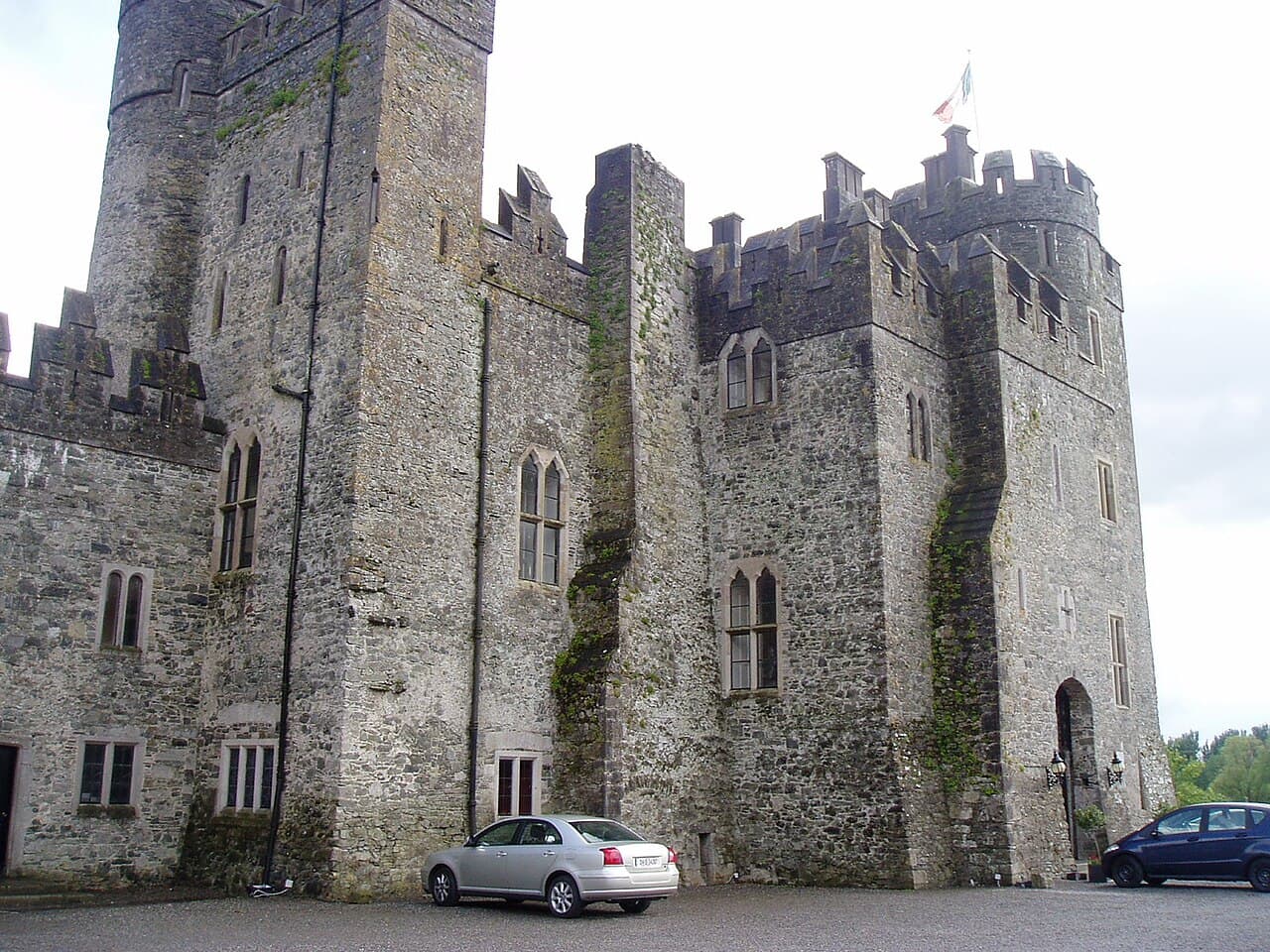
Kilkea Castle, historic Fitzgerald stronghold in County Kildare
Castledermot, Ireland
Late Medieval (14th–15th c.)
Partially Restored

Kilkea Castle is a prominent medieval hill castle situated approximately 5 km northwest of Castledermot in County Kildare, Ireland. Positioned near the village of Kilkea on the R418 regional road connecting Athy to Tullow, this castle served as the ancestral seat of the Fitzgerald family, Earls of Kildare, for over seven centuries. Its strategic location on elevated ground provided both defensive advantage and control over the surrounding lands, a common feature of hill castles constructed during the medieval period.

Historical background and significance

The origins of Kilkea Castle trace back to the late 12th century, shortly after the Norman invasion of Ireland. The Fitzgeralds, a powerful Anglo-Norman dynasty, established the castle as a stronghold to consolidate their influence in the region. Over the centuries, Kilkea Castle became a symbol of the family's power and prestige, witnessing numerous historical events tied to the turbulent history of Ireland.

Throughout its history, the castle played a key role during the medieval and early modern periods, including involvement in various conflicts such as the Wars of the Roses and the Irish Confederate Wars. The Fitzgeralds' loyalty and political alliances shifted over time, reflecting the complex dynamics between English rule and Irish interests.

Architectural features and development

Original medieval construction

The castle's earliest structures were typical of Norman fortifications, featuring a rectangular keep with thick stone walls designed for defense. The initial construction included a moat and curtain walls enclosing a courtyard, with towers positioned at strategic points to maximize surveillance and protection.

Later modifications and expansions

Over the centuries, Kilkea Castle underwent several phases of enlargement and remodeling. In the 16th and 17th centuries, Renaissance influences began to appear, with the addition of more comfortable living quarters, larger windows, and decorative elements reflecting changing tastes and the castle's transition from purely military use to a noble residence.

Despite these updates, many medieval defensive features remained intact, including battlements and arrow slits. The castle's walls were reinforced to withstand artillery, a necessity during the evolving warfare of the period.

The castle's decline and restoration efforts

Following the decline of the Fitzgerald family's fortunes and the political upheavals of the 17th and 18th centuries, Kilkea Castle gradually fell into disrepair. Parts of the structure were abandoned, and the castle ceased to function as a primary residence.

In the 20th century, restoration efforts began to preserve the castle's historical fabric. These initiatives aimed to stabilize the ruins and adapt sections of the castle for modern use, including hospitality purposes. Today, Kilkea Castle operates as a hotel and golf resort, blending its rich heritage with contemporary amenities.

Cultural and heritage importance

Kilkea Castle stands as a significant monument to Ireland's medieval past and the legacy of the Fitzgerald dynasty. Its long history reflects the broader narrative of Anglo-Norman influence, Irish nobility, and the changing political landscape over several centuries.

The castle attracts visitors interested in medieval architecture, Irish history, and heritage tourism. Its preservation provides valuable insights into castle construction techniques, defensive strategies, and noble life in Ireland from the medieval period onward.

Frequently asked questions (FAQ)

How do I get to Kilkea Castle?
Kilkea Castle is located in Castledermot, Ireland, easily accessible by car from Dublin, which is about an hour's drive away. Public transport options are available, but they may require transfers and additional travel time. Visitors are encouraged to check local transport schedules for the most convenient routes.
What is the historical significance of Kilkea Castle?
Kilkea Castle dates back to the 12th century and is one of the oldest inhabited castles in Ireland. It has a rich history, having been home to the FitzGerald family for centuries, and it played a significant role in Ireland's medieval period. The castle has undergone various renovations over the years, preserving its historical essence while adapting to modern needs.
When was Kilkea Castle last renovated?
Kilkea Castle underwent a major renovation in 2018, transforming it into a luxury hotel while maintaining its historical architecture and charm. The renovation included updating the interiors and improving facilities for guests without compromising the castle's historical integrity. Visitors can now enjoy a blend of medieval history and modern luxury.
Can I visit Kilkea Castle year-round?
Yes, Kilkea Castle is open to visitors year-round, but it's advisable to check their official website for specific opening hours and any seasonal events. The castle offers guided tours, which provide deeper insights into its history and architecture. Booking in advance is recommended, especially during peak tourist seasons.
Why is Kilkea Castle considered an architectural gem?
Kilkea Castle features a mix of architectural styles, showcasing elements from its medieval origins to Victorian influences added during renovations. The castle's impressive stonework, turrets, and beautiful gardens enhance its aesthetic appeal. Its unique design and historical features attract architecture enthusiasts and history lovers alike.
Is it possible to host events at Kilkea Castle?
Yes, Kilkea Castle offers various venues for hosting events, including weddings, corporate meetings, and private parties. The castle's stunning backdrop and luxurious amenities make it a popular choice for special occasions. Interested parties should contact the castle's event planning team for details on availability and packages.
What is the best time to visit Kilkea Castle?
The best time to visit Kilkea Castle is during the spring and summer months when the weather is milder, and the gardens are in full bloom. However, autumn also offers beautiful foliage, making it a picturesque time to explore the grounds. Regardless of the season, visitors can enjoy the castle's rich history and stunning architecture.
What are the ticket prices for visiting Kilkea Castle?
Ticket prices for Kilkea Castle vary depending on the type of tour and package chosen. General admission for self-guided tours is typically affordable, while guided tours may have a slightly higher fee. Visitors should check the official website for the latest pricing and any special offers.
What nearby attractions are there to explore?
Kilkea Castle is surrounded by beautiful Irish countryside and is close to several attractions, including the historic town of Carlow and the scenic Barrow River. Other nearby points of interest include the picturesque Kilkenny Castle and the ancient monastic site of St. Mary's Abbey. These attractions provide a rich cultural experience for visitors to the area.

Photo gallery

Kilkea Castle
Click to view

Photo by GsmithEIDW•CC BY-SA 3.0

1 photo • Click any image to view in full screen

Information

Hill Castle

Loading map...

Visitor reviews

No reviews yet. Been here? Write the first review and help other travelers!

Write the first review

Visited this castle? Share your experience

Your review helps other travelers and adds first-hand knowledge to our encyclopedia.

Write a review

(5/5)

0/2000 characters

Your review will be visible after admin approval

Nearby castles

0 km

Kilkea Castle

Kilkea, United Kingdom

Kilkea Castle stands as a remarkable testament to the turbulent and rich history of Norman Ireland. Located near the village of Kilkea in County Kildare, Ireland, this castle originated in the late 12th century as a motte-and-bailey fortification, a common Norman military design featuring a wooden stronghold atop an artificial mound. Founded in 1180 by Sir Walter de Riddlesford, a Norman knight, Kilkea Castle was initially constructed to secure Norman control during their expansion into Irish territories. The castle's historical significance is deeply intertwined with the Fitzgerald family, one of the most powerful Anglo-Irish dynasties. The estate passed into Fitzgerald hands through marriage, when de Riddlesford's granddaughter wed Maurice Fitzgerald, 3rd Baron of Offaly. This family maintained possession of Kilkea Castle for over seven centuries, shaping its evolution from a wooden fortress into a substantial stone castle. Medieval origins and architectural evolution The original motte-and-bailey design of Kilkea Castle reflects the typical Norman approach to fortification during the High medieval period. The motte, an artificial mound, provided a vantage point for surveillance and defense, while the bailey enclosed a courtyard protected by wooden palisades. Over time, the wooden structures were replaced with stone, marking a transition to a more permanent and defensible residence. In the early 15th century, significant reconstruction transformed Kilkea Castle under the direction of John FitzGerald, 6th Earl of Kildare. This rebuilding phase, around 1426, strengthened the castle's defenses and enhanced its residential capabilities. The stone walls, towers, and gatehouses from this period exemplify medieval military architecture adapted to the needs of a powerful noble family. Defensive features and layout The castle's layout includes robust curtain walls and fortified towers that provided defensive positions against attackers. While specific details of the original bailey and motte structures have been obscured by later modifications, the surviving stonework reveals a complex designed for both defense and habitation. The castle's hilltop location further enhanced its strategic advantage, allowing control over the surrounding countryside. The wizard earl and cultural legacy The 16th century brought one of Kilkea Castle's most colorful historical figures, Gerald FitzGerald, 11th Earl of Kildare, known as the "Wizard Earl." Following the tragic execution of his half-brother "Silken Thomas" and other family members during the Tudor suppression of Irish nobility, Gerald became the head of the Fitzgeralds. He was reputed to practice alchemy and magic, contributing to local legends that he would return to Kilkea Castle every seven years riding a silver-shod white horse. These stories have become an integral part of the castle's folklore, enriching its cultural heritage. Religious significance and later history In the 17th century, Kilkea Castle served a religious role when the widow of the 14th Earl of Kildare leased it to the Jesuit Order. The Jesuits used the castle as a residence from 1634 until 1646, during which time it also provided refuge to Archbishop Rinuccini, the papal nuncio to the Irish Confederation. This period highlights the castle's strategic and ecclesiastical importance amid the Irish Confederate Wars. The 18th century saw the Fitzgerald family relocate their main seat to Carton House, leasing Kilkea Castle to tenants such as Thomas Reynolds, a silk merchant and informer during the 1798 United Irishmen rebellion. The castle was sacked by military forces during this uprising, reflecting the unrest in Ireland at the time. 19th-century restoration and modern use After suffering fire damage in 1849, Kilkea Castle was restored under the care of Lord Walter, 3rd Duke of Leinster, who resided there and founded the Kildare Archaeological Society in 1891. This restoration preserved the castle into the modern era and demonstrated a commitment to heritage conservation. Following the sale of Carton House in 1949, Kilkea became the residence of the 8th Duke of Leinster. The Fitzgerald family eventually sold the castle in 1960, after which it was converted into a hotel. Despite financial challenges leading to its closure, the castle was later acquired by an American businessman who invested in renovations and reopened it as a resort, blending historic charm with modern hospitality. Architectural significance and cultural context Kilkea Castle's architecture encapsulates the evolution of Norman military design into a fortified noble residence. Its initial motte-and-bailey form gave way to a substantial stone castle with curtain walls, towers, and residential quarters reflecting medieval and post-medieval architectural trends. The castle's position near the R418 regional road and its commanding hilltop site underscore its strategic importance throughout history. The castle also holds a place in broader cultural history due to its proximity to the birthplace of Sir Ernest Shackleton, the renowned polar explorer born nearby in 1874. This connection adds an additional layer of historical interest to the site. Archaeological and preservation status While no extensive archaeological discoveries such as inscriptions or mosaics have been documented at Kilkea Castle, the surviving structures reveal a palimpsest of architectural adaptations spanning centuries. The castle remains well preserved thanks to restoration efforts, allowing visitors to appreciate its layered history and architectural complexity. Visiting kilkea castle today Today, Kilkea Castle functions as a luxury resort and hotel, offering guests the opportunity to experience a historic castle setting with modern amenities. Its rich history, architectural features, and legendary associations make it a compelling destination for visitors interested in Irish history, Norman architecture, and folklore. Visitors can explore the castle's grounds, appreciate its medieval and Victorian architectural elements, and learn about the Fitzgerald family's enduring legacy. The castle's blend of historical authenticity and contemporary hospitality ensures its continued relevance as a cultural landmark in County Kildare.

High Medieval (11th–13th c.)
Details
12.3 km
Carlow Castle — Ireland castle

Carlow Castle

, Ireland

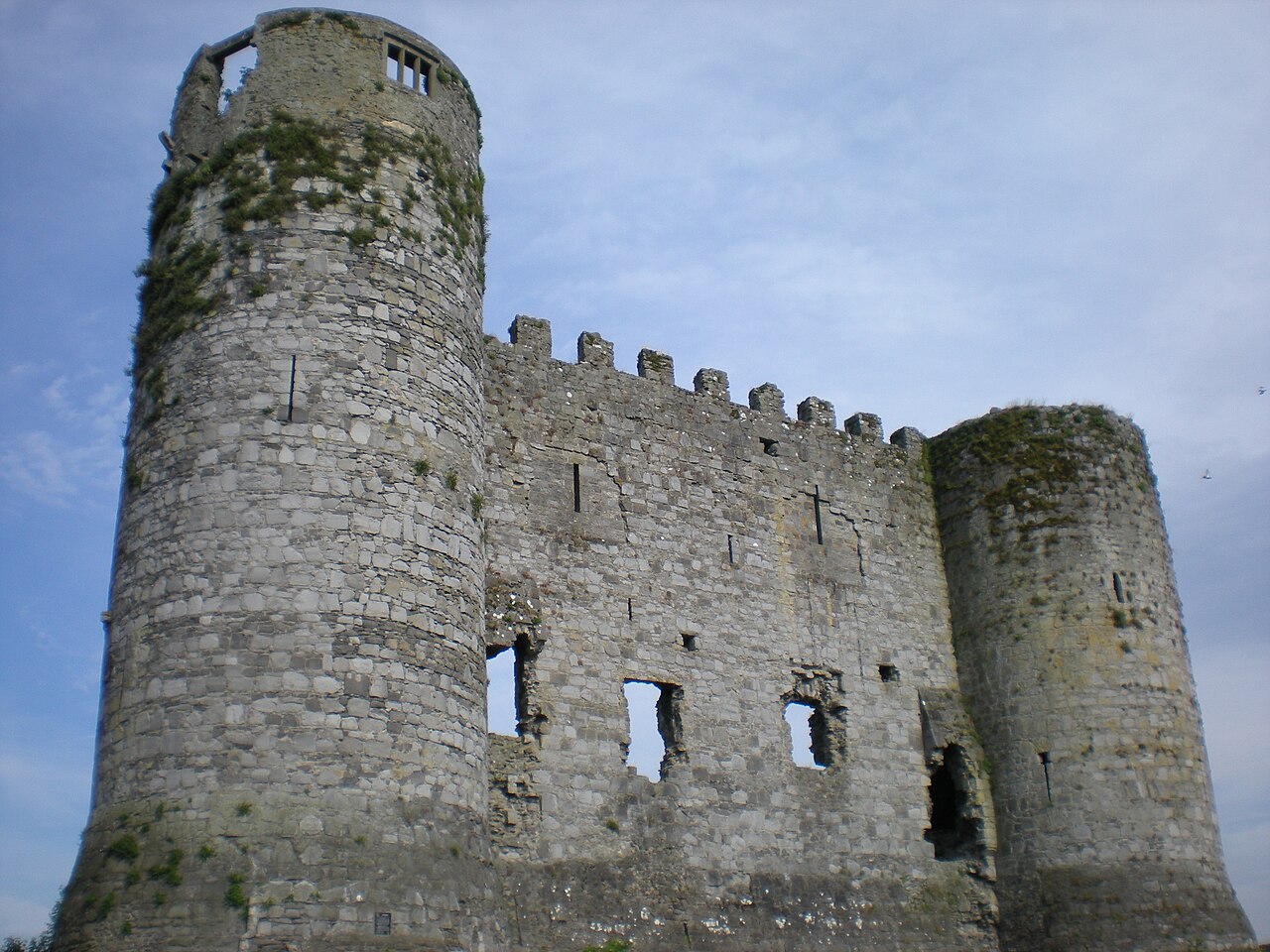
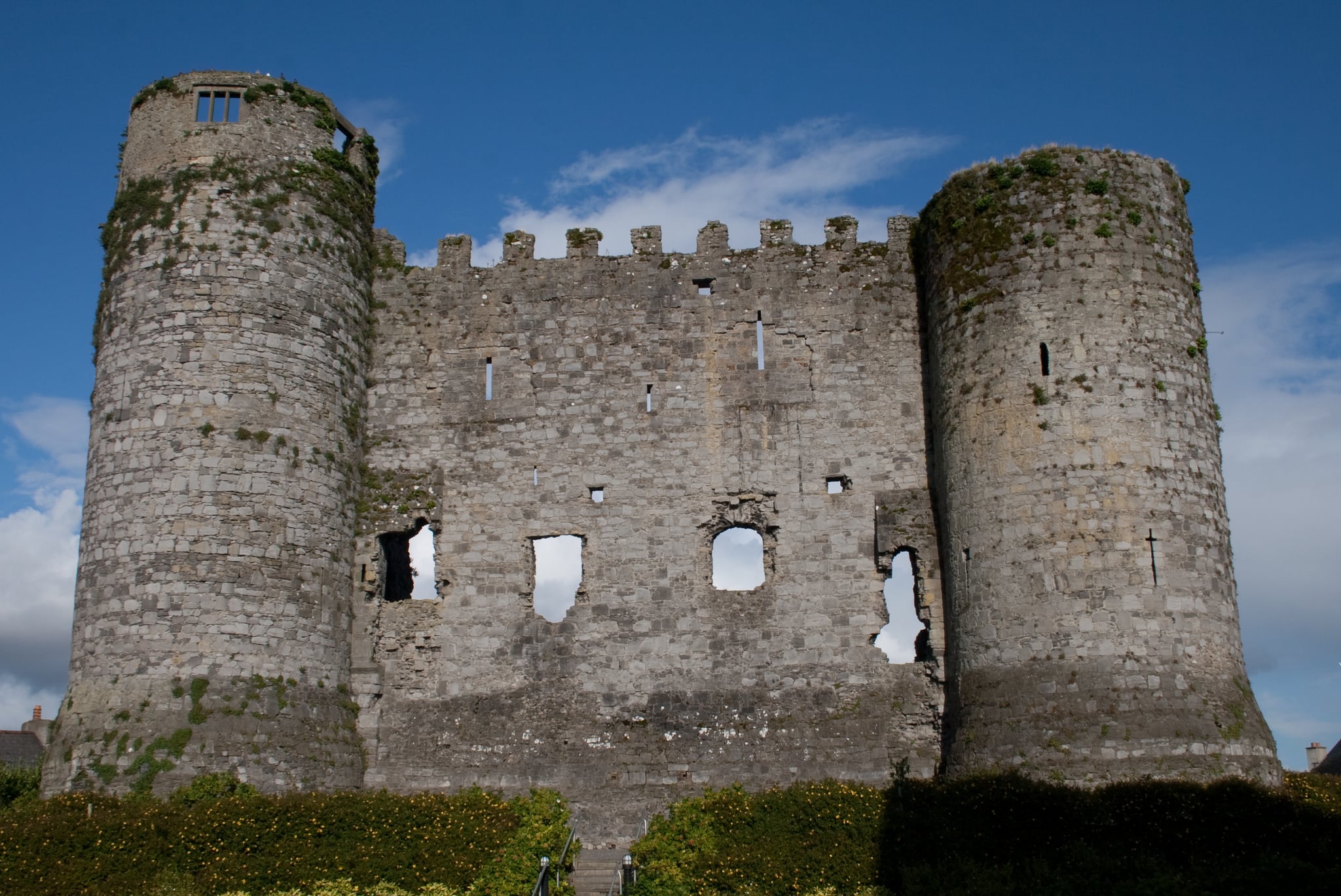
Carlow Castle (Irish: Caisleán Cheatharlach) is a significant high medieval fortress located near the River Barrow in County Carlow, Ireland. Constructed between 1207 and 1213, it is recognized as a National Monument of Ireland due to its historical and architectural importance. The castle's remains today present a valuable glimpse into medieval military architecture and the turbulent history of Norman Ireland. Historical background and strategic significance The castle was built shortly after the Norman invasion of Ireland, during a period when the Normans were consolidating their control over the region. Carlow Castle was strategically positioned near the River Barrow, a crucial waterway for transportation and trade, which also served as a natural defensive barrier. The castle's location allowed it to oversee and control movement along the river and the surrounding lands, making it a vital military and administrative center in the area. Its construction dates to the early 13th century, a time when the Normans were establishing fortified settlements to secure their newly acquired territories. The castle played a role in local conflicts and power struggles typical of the era, reflecting the broader political and military landscape of medieval Ireland. Architectural features and design Carlow Castle was originally built as a rectangular tower house, a common Norman design during the high medieval period. The structure was constructed using local stone, with thick walls designed to withstand attacks. The castle's footprint measures approximately 20 by 12 meters, with walls up to 2.4 meters thick, emphasizing its defensive purpose. The surviving ruins show evidence of multiple floors, with narrow slit windows for archers and a large entrance on the ground floor. The upper floors would have housed the lord's chambers and defensive positions. The castle likely featured a battlemented parapet and possibly a surrounding curtain wall or bailey, although these elements are no longer extant. Its design reflects the typical Norman military architecture adapted to the Irish landscape, combining both residential and defensive functions. The castle's compact form was intended to provide a stronghold against local resistance and rival factions. Current condition and preservation Today, Carlow Castle stands in a state of ruins, with much of its original structure lost to time and weathering. The remaining walls, however, still convey the scale and strength of the original fortress. The site is protected as a National Monument, ensuring its preservation and accessibility to the public. Archaeological investigations have provided insights into the castle's construction techniques and historical context. Conservation efforts focus on stabilizing the ruins and preventing further deterioration, allowing visitors to appreciate the castle's historical significance. Visiting Carlow Castle The castle is accessible to visitors interested in medieval history and architecture. Its location near the River Barrow offers scenic views and opportunities to explore the surrounding landscape. While the castle is primarily a ruin, informational signage helps contextualize its historical role. Visitors should prepare for uneven terrain and limited facilities on-site. The best time to visit is during the warmer months when the weather is favorable for outdoor exploration. Legacy and cultural importance Carlow Castle remains an important symbol of Norman influence in Ireland and the medieval history of County Carlow. Its ruins serve as a tangible connection to the past, illustrating the architectural and military strategies of the period. The castle contributes to the cultural heritage of the region, attracting historians, archaeologists, and tourists alike. Its preservation as a National Monument underscores the value placed on protecting Ireland's medieval architectural legacy.

High Medieval (11th–13th c.)
Details
12.4 km
Carlow Castle — United Kingdom castle

Carlow Castle

Carlow, United Kingdom

Carlow Castle stands near the River Barrow in County Carlow, Ireland, representing a significant milestone in medieval castle architecture. Constructed between 1207 and 1213, it is recognized as the first towered keep in Ireland, featuring a large rectangular stone keep flanked by four smaller three-quarter-circular corner towers. This innovative design marked a departure from earlier fortifications and reflected the evolving military and residential needs of Anglo-Norman settlers during the High Medieval period. The castle's strategic location near the confluence of the Barrow and Burren rivers provided natural defensive advantages. Built primarily of limestone rubble masonry, the castle’s walls are notably thick, measuring approximately 9 feet (2.7 meters), and rise to three stories, with the upper floors originally constructed of timber. The robust western wall, which remains largely intact today, contains stairways and latrines, indicating a sophisticated internal layout designed for both defense and habitation. Historical background and ownership The site of Carlow Castle was initially fortified in the 1180s with a motte-and-bailey structure built by Hugh de Lacy for John de Clahull, serving as a wooden and earthwork defensive position during the early Anglo-Norman consolidation of Ireland. The transition to a stone castle under William Marshal the elder between 1207 and 1213 marked a significant upgrade in fortification technology and style, introducing the distinctive four circular corner towers around a rectangular keep. First mentioned in records from 1231, the castle’s ownership history reflects the turbulent political landscape of medieval Ireland. It came under the control of the Crown in 1306 and was granted to Thomas Plantagenet in 1312. The castle was confiscated by the Crown again in 1537 due to absentee landlords, later purchased by the Earl of Thomond in 1616. During the Irish Confederate Wars, it changed hands multiple times, including capture by Irish rebels in 1641 and retaking by English forces in 1642, with a notable rescue of starving English prisoners. In 1650, the castle was taken by Oliver Cromwell’s forces but subsequently returned to the Earl of Thomond and later passed to the Hamilton family. Architectural features and design Towered keep and defensive elements Carlow Castle is architecturally significant as one of the earliest examples of a towered keep in Ireland. The main structure is a large rectangular keep approximately 16 by 9.2 meters (52 by 30 feet), surrounded by four three-quarter-circular towers each about 15 feet (4.6 meters) in diameter. The walls are constructed without deep foundations, resting directly on a leveled rocky hill, which forms a natural defensive platform. The castle’s defensive features include narrow arrow slits shaped in a cross to allow archers to fire while remaining protected, battlements with loopholes along the roofline, and thick walls designed to withstand siege warfare. The entrance was originally on the first floor on the north side, accessible likely by a removable wooden staircase or ladder, enhancing security by limiting access during attacks. Interior layout and modifications The interior was divided into four main chambers spread across three floors. Initially built with two stories, a third floor was added in the 15th century, reflecting changing residential needs and possibly increased defensive requirements. The western wall contains a stone staircase embedded within its thickness, connecting all floors. Wooden floors and partitions would have provided living and working spaces within the castle. Notably, the castle lacks some typical features of contemporary keeps such as a towered curtain wall, gatehouse, or an undivided great hall, which has led some historians to question its role as a traditional refuge of last resort. Instead, it may have functioned more as a fortified residence or administrative center. Damage, decline, and archaeological rediscovery In 1814, Carlow Castle suffered extensive damage during an ill-fated attempt to convert the structure into a lunatic asylum. An explosion intended to create more space demolished the eastern wall and adjoining towers, leaving only the western wall and its two corner towers largely intact. Subsequent removal of stones by locals further contributed to the castle’s ruinous condition. Archaeological excavations in 1996 uncovered remains of the earlier motte-and-bailey fortifications beneath the stone castle, including seed-drying ovens north of the main structure, which provide insight into the medieval use of the site beyond military defense. These discoveries have helped enrich the understanding of the castle’s layered history and the evolution of fortifications in Ireland. Cultural significance and preservation Today, Carlow Castle is a protected National Monument of Ireland, valued for its pioneering architectural design and its role in the Anglo-Norman conquest and settlement of Ireland. The surviving western towers and walls offer a glimpse into early 13th-century military architecture, while the archaeological findings reveal the complexity of medieval life at the site. The castle's distinctive design influenced later Irish castles and stands as a testament to the innovative spirit of its builder, William Marshal. Its preservation as ruins allows visitors and scholars to explore the tangible remains of Ireland’s medieval past and understand the strategic importance of Carlow in regional history. Visiting carlow castle Visitors to Carlow Castle can explore the ruins and appreciate the impressive scale and design of this early stone keep. The site’s location near the River Barrow provides scenic views and a context for understanding the castle’s defensive advantages. While the castle is largely in ruins, the surviving structures and archaeological features make it a compelling destination for those interested in medieval history and castle architecture. Interpretive signage and local guides often provide historical context, enhancing the visitor experience. The castle’s status as a National Monument ensures ongoing efforts to preserve and protect this important heritage site for future generations.

High Medieval (11th–13th c.)
Details