Kilkea Castle
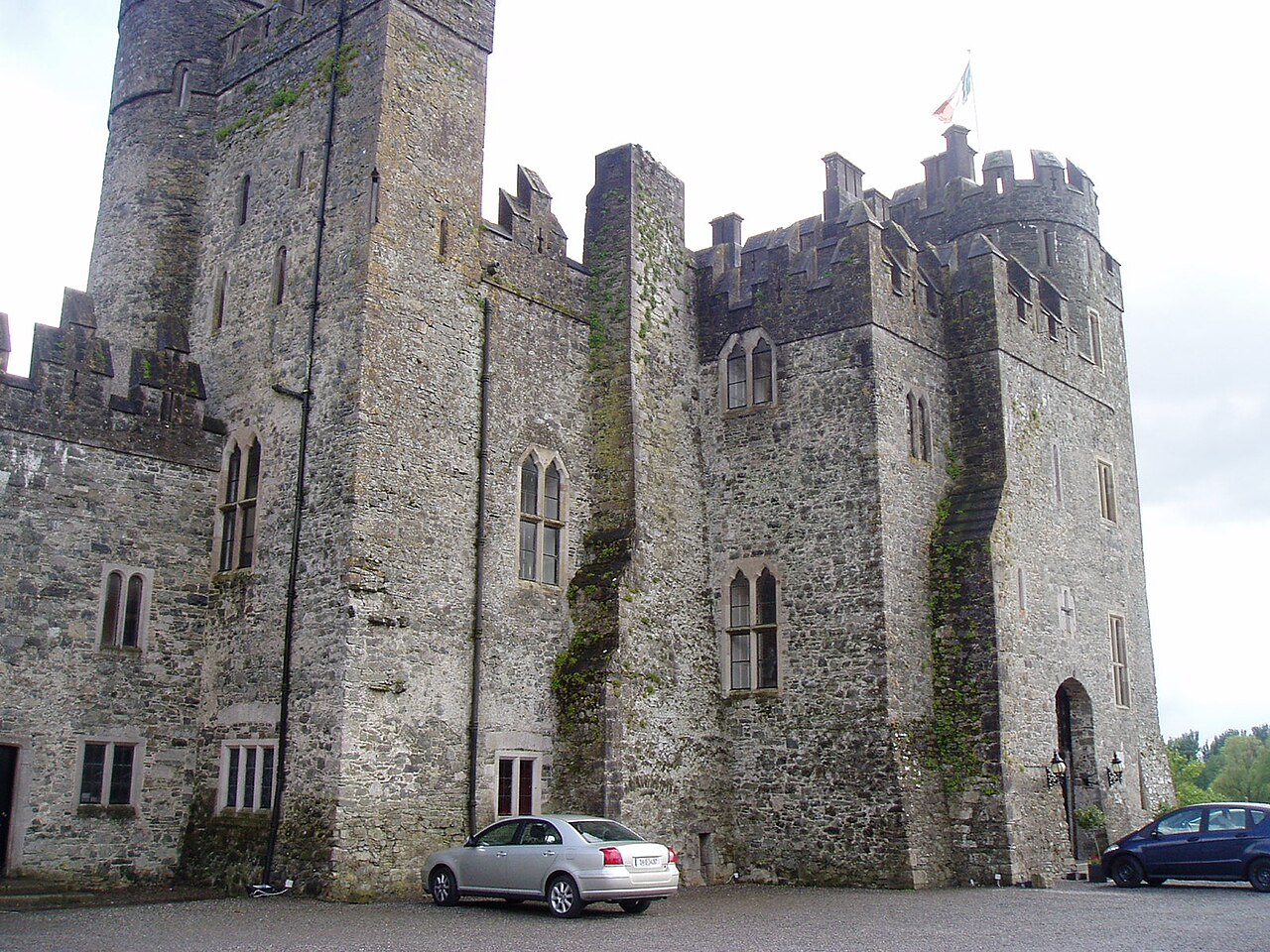
Kilkea Castle stands as a remarkable testament to the turbulent and rich history of Norman Ireland. Located near the village of Kilkea in County Kildare, Ireland, this castle originated in the late 12th century as a motte-and-bailey fortification, a common Norman military design featuring a wooden stronghold atop an artificial mound. Founded in 1180 by Sir Walter de Riddlesford, a Norman knight, Kilkea Castle was initially constructed to secure Norman control during their expansion into Irish territories.
The castle's historical significance is deeply intertwined with the Fitzgerald family, one of the most powerful Anglo-Irish dynasties. The estate passed into Fitzgerald hands through marriage, when de Riddlesford's granddaughter wed Maurice Fitzgerald, 3rd Baron of Offaly. This family maintained possession of Kilkea Castle for over seven centuries, shaping its evolution from a wooden fortress into a substantial stone castle.
Medieval origins and architectural evolution
The original motte-and-bailey design of Kilkea Castle reflects the typical Norman approach to fortification during the High medieval period. The motte, an artificial mound, provided a vantage point for surveillance and defense, while the bailey enclosed a courtyard protected by wooden palisades. Over time, the wooden structures were replaced with stone, marking a transition to a more permanent and defensible residence.
In the early 15th century, significant reconstruction transformed Kilkea Castle under the direction of John FitzGerald, 6th Earl of Kildare. This rebuilding phase, around 1426, strengthened the castle's defenses and enhanced its residential capabilities. The stone walls, towers, and gatehouses from this period exemplify medieval military architecture adapted to the needs of a powerful noble family.
Defensive features and layout
The castle's layout includes robust curtain walls and fortified towers that provided defensive positions against attackers. While specific details of the original bailey and motte structures have been obscured by later modifications, the surviving stonework reveals a complex designed for both defense and habitation. The castle's hilltop location further enhanced its strategic advantage, allowing control over the surrounding countryside.
The wizard earl and cultural legacy
The 16th century brought one of Kilkea Castle's most colorful historical figures, Gerald FitzGerald, 11th Earl of Kildare, known as the "Wizard Earl." Following the tragic execution of his half-brother "Silken Thomas" and other family members during the Tudor suppression of Irish nobility, Gerald became the head of the Fitzgeralds. He was reputed to practice alchemy and magic, contributing to local legends that he would return to Kilkea Castle every seven years riding a silver-shod white horse. These stories have become an integral part of the castle's folklore, enriching its cultural heritage.
Religious significance and later history
In the 17th century, Kilkea Castle served a religious role when the widow of the 14th Earl of Kildare leased it to the Jesuit Order. The Jesuits used the castle as a residence from 1634 until 1646, during which time it also provided refuge to Archbishop Rinuccini, the papal nuncio to the Irish Confederation. This period highlights the castle's strategic and ecclesiastical importance amid the Irish Confederate Wars.
The 18th century saw the Fitzgerald family relocate their main seat to Carton House, leasing Kilkea Castle to tenants such as Thomas Reynolds, a silk merchant and informer during the 1798 United Irishmen rebellion. The castle was sacked by military forces during this uprising, reflecting the unrest in Ireland at the time.
19th-century restoration and modern use
After suffering fire damage in 1849, Kilkea Castle was restored under the care of Lord Walter, 3rd Duke of Leinster, who resided there and founded the Kildare Archaeological Society in 1891. This restoration preserved the castle into the modern era and demonstrated a commitment to heritage conservation.
Following the sale of Carton House in 1949, Kilkea became the residence of the 8th Duke of Leinster. The Fitzgerald family eventually sold the castle in 1960, after which it was converted into a hotel. Despite financial challenges leading to its closure, the castle was later acquired by an American businessman who invested in renovations and reopened it as a resort, blending historic charm with modern hospitality.
Architectural significance and cultural context
Kilkea Castle's architecture encapsulates the evolution of Norman military design into a fortified noble residence. Its initial motte-and-bailey form gave way to a substantial stone castle with curtain walls, towers, and residential quarters reflecting medieval and post-medieval architectural trends. The castle's position near the R418 regional road and its commanding hilltop site underscore its strategic importance throughout history.
The castle also holds a place in broader cultural history due to its proximity to the birthplace of Sir Ernest Shackleton, the renowned polar explorer born nearby in 1874. This connection adds an additional layer of historical interest to the site.
Archaeological and preservation status
While no extensive archaeological discoveries such as inscriptions or mosaics have been documented at Kilkea Castle, the surviving structures reveal a palimpsest of architectural adaptations spanning centuries. The castle remains well preserved thanks to restoration efforts, allowing visitors to appreciate its layered history and architectural complexity.
Visiting kilkea castle today
Today, Kilkea Castle functions as a luxury resort and hotel, offering guests the opportunity to experience a historic castle setting with modern amenities. Its rich history, architectural features, and legendary associations make it a compelling destination for visitors interested in Irish history, Norman architecture, and folklore.
Visitors can explore the castle's grounds, appreciate its medieval and Victorian architectural elements, and learn about the Fitzgerald family's enduring legacy. The castle's blend of historical authenticity and contemporary hospitality ensures its continued relevance as a cultural landmark in County Kildare.
Frequently asked questions (FAQ)
- How do I get to Kilkea Castle?
- Kilkea Castle is located in Kilkea, United Kingdom of Great Britain and Northern Ireland. It is easily accessible by car, and there is ample parking available on-site. If you're using public transport, the nearest train station is a short taxi ride away.
- What is the historical significance of Kilkea Castle?
- Kilkea Castle dates back to the 12th century and is one of the oldest inhabited castles in Ireland. It has a rich history, having been home to various noble families and playing a significant role in Irish heritage. The castle's architecture and surrounding grounds reflect its storied past and historical importance.
- When was Kilkea Castle built?
- Kilkea Castle was originally built in the 12th century, with various renovations and expansions taking place over the centuries. Its current structure showcases a blend of medieval and Victorian architecture, reflecting the styles of its different historical periods. Visitors can appreciate the craftsmanship and historical layers throughout the castle.
- Can I take a guided tour of Kilkea Castle?
- Yes, guided tours are available at Kilkea Castle, allowing visitors to explore its rich history and beautiful architecture. Tours typically include access to the main rooms and gardens, with knowledgeable guides sharing fascinating stories about the castle's past. It's recommended to book in advance, especially during peak tourist seasons.
- Why is Kilkea Castle a popular destination for visitors?
- Kilkea Castle attracts visitors due to its stunning architecture, scenic grounds, and fascinating history. It offers a unique experience combining luxury accommodations, fine dining, and a glimpse into Ireland's heritage. Additionally, the castle's picturesque setting makes it a popular choice for weddings and events.
- Is it possible to stay overnight at Kilkea Castle?
- Yes, Kilkea Castle offers luxurious accommodations for guests who wish to stay overnight. The rooms are elegantly designed, providing a unique blend of modern amenities and historical charm. Staying overnight allows guests to fully immerse themselves in the castle experience and enjoy the beautiful surroundings.
- What are the opening hours of Kilkea Castle?
- Kilkea Castle is typically open to visitors from 10 AM to 6 PM, but hours may vary depending on the season and special events. It's best to check the official website or contact the castle directly for the most up-to-date information. Visitors are encouraged to plan their visit accordingly to maximize their experience.
- What are the ticket prices for visiting Kilkea Castle?
- Ticket prices for Kilkea Castle vary based on the type of experience you choose, such as guided tours or special events. Generally, admission fees are reasonable, making it accessible for most visitors. Discounts may be available for children, students, or seniors, so it's advisable to check the official website for specific pricing details.
- When is the best time to visit Kilkea Castle?
- The best time to visit Kilkea Castle is during the spring and summer months when the gardens are in full bloom and the weather is pleasant. This is also when many events and activities are held, providing a lively atmosphere. However, autumn offers beautiful foliage, making it another picturesque time to explore the castle and its grounds.
- Are there any nearby attractions to Kilkea Castle?
- Yes, there are several nearby attractions to Kilkea Castle, including beautiful parks, historical sites, and charming villages. Visitors can explore the surrounding countryside, enjoy outdoor activities, or visit other castles and ruins in the area. The close proximity to local attractions makes Kilkea Castle an ideal base for a broader exploration of the region.
Information
Website
Visit websiteSources & official resources
Verify the information above using these authoritative references.
Loading map...
Visitor reviews
No reviews yet. Been here? Write the first review and help other travelers!
Write the first reviewVisited this castle? Share your experience
Your review helps other travelers and adds first-hand knowledge to our encyclopedia.