Carlow Castle
Carlow Castle stands near the River Barrow in County Carlow, Ireland, representing a significant milestone in medieval castle architecture. Constructed between 1207 and 1213, it is recognized as the first towered keep in Ireland, featuring a large rectangular stone keep flanked by four smaller three-quarter-circular corner towers. This innovative design marked a departure from earlier fortifications and reflected the evolving military and residential needs of Anglo-Norman settlers during the High Medieval period.
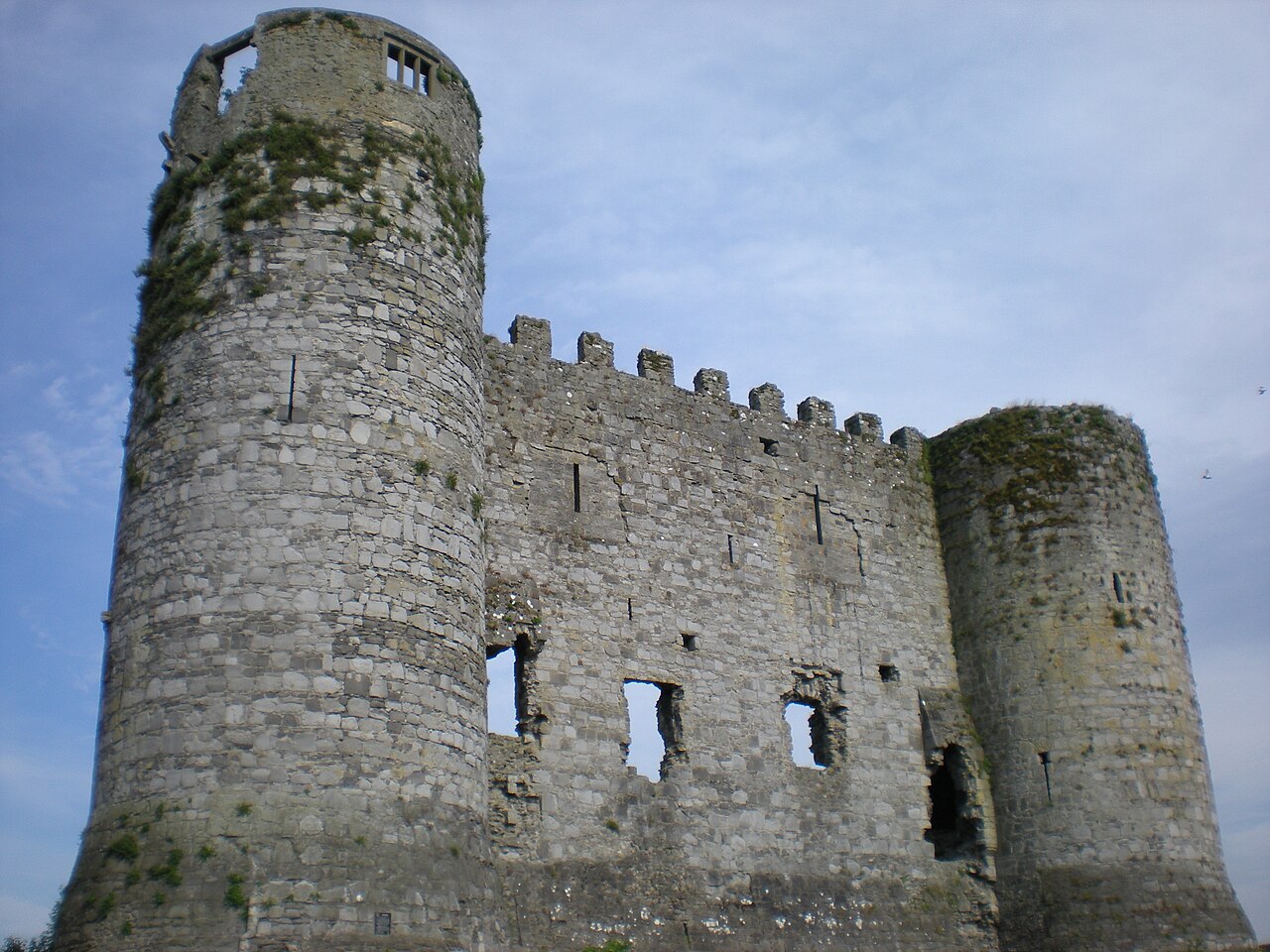
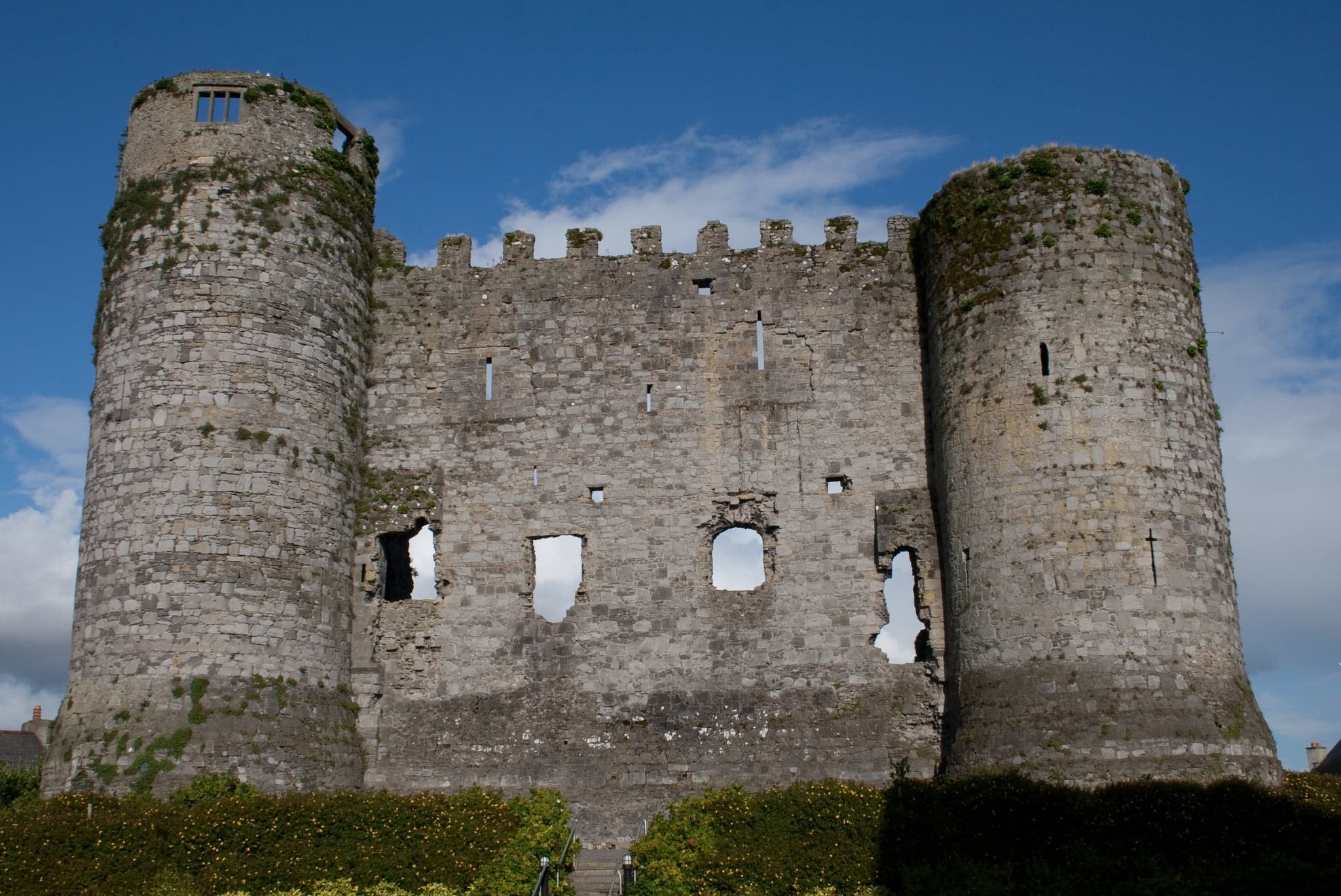
The castle's strategic location near the confluence of the Barrow and Burren rivers provided natural defensive advantages. Built primarily of limestone rubble masonry, the castle’s walls are notably thick, measuring approximately 9 feet (2.7 meters), and rise to three stories, with the upper floors originally constructed of timber. The robust western wall, which remains largely intact today, contains stairways and latrines, indicating a sophisticated internal layout designed for both defense and habitation.
Historical background and ownership
The site of Carlow Castle was initially fortified in the 1180s with a motte-and-bailey structure built by Hugh de Lacy for John de Clahull, serving as a wooden and earthwork defensive position during the early Anglo-Norman consolidation of Ireland. The transition to a stone castle under William Marshal the elder between 1207 and 1213 marked a significant upgrade in fortification technology and style, introducing the distinctive four circular corner towers around a rectangular keep.
First mentioned in records from 1231, the castle’s ownership history reflects the turbulent political landscape of medieval Ireland. It came under the control of the Crown in 1306 and was granted to Thomas Plantagenet in 1312. The castle was confiscated by the Crown again in 1537 due to absentee landlords, later purchased by the Earl of Thomond in 1616. During the Irish Confederate Wars, it changed hands multiple times, including capture by Irish rebels in 1641 and retaking by English forces in 1642, with a notable rescue of starving English prisoners. In 1650, the castle was taken by Oliver Cromwell’s forces but subsequently returned to the Earl of Thomond and later passed to the Hamilton family.
Architectural features and design
Towered keep and defensive elements
Carlow Castle is architecturally significant as one of the earliest examples of a towered keep in Ireland. The main structure is a large rectangular keep approximately 16 by 9.2 meters (52 by 30 feet), surrounded by four three-quarter-circular towers each about 15 feet (4.6 meters) in diameter. The walls are constructed without deep foundations, resting directly on a leveled rocky hill, which forms a natural defensive platform.
The castle’s defensive features include narrow arrow slits shaped in a cross to allow archers to fire while remaining protected, battlements with loopholes along the roofline, and thick walls designed to withstand siege warfare. The entrance was originally on the first floor on the north side, accessible likely by a removable wooden staircase or ladder, enhancing security by limiting access during attacks.
Interior layout and modifications
The interior was divided into four main chambers spread across three floors. Initially built with two stories, a third floor was added in the 15th century, reflecting changing residential needs and possibly increased defensive requirements. The western wall contains a stone staircase embedded within its thickness, connecting all floors. Wooden floors and partitions would have provided living and working spaces within the castle.
Notably, the castle lacks some typical features of contemporary keeps such as a towered curtain wall, gatehouse, or an undivided great hall, which has led some historians to question its role as a traditional refuge of last resort. Instead, it may have functioned more as a fortified residence or administrative center.

Photo by Marie4574 • CC BY-SA 4.0
Damage, decline, and archaeological rediscovery
In 1814, Carlow Castle suffered extensive damage during an ill-fated attempt to convert the structure into a lunatic asylum. An explosion intended to create more space demolished the eastern wall and adjoining towers, leaving only the western wall and its two corner towers largely intact. Subsequent removal of stones by locals further contributed to the castle’s ruinous condition.
Archaeological excavations in 1996 uncovered remains of the earlier motte-and-bailey fortifications beneath the stone castle, including seed-drying ovens north of the main structure, which provide insight into the medieval use of the site beyond military defense. These discoveries have helped enrich the understanding of the castle’s layered history and the evolution of fortifications in Ireland.
Cultural significance and preservation
Today, Carlow Castle is a protected National Monument of Ireland, valued for its pioneering architectural design and its role in the Anglo-Norman conquest and settlement of Ireland. The surviving western towers and walls offer a glimpse into early 13th-century military architecture, while the archaeological findings reveal the complexity of medieval life at the site.
The castle's distinctive design influenced later Irish castles and stands as a testament to the innovative spirit of its builder, William Marshal. Its preservation as ruins allows visitors and scholars to explore the tangible remains of Ireland’s medieval past and understand the strategic importance of Carlow in regional history.
Visiting carlow castle
Visitors to Carlow Castle can explore the ruins and appreciate the impressive scale and design of this early stone keep. The site’s location near the River Barrow provides scenic views and a context for understanding the castle’s defensive advantages. While the castle is largely in ruins, the surviving structures and archaeological features make it a compelling destination for those interested in medieval history and castle architecture.
Interpretive signage and local guides often provide historical context, enhancing the visitor experience. The castle’s status as a National Monument ensures ongoing efforts to preserve and protect this important heritage site for future generations.
Frequently asked questions (FAQ)
- What is the historical significance of Carlow Castle?
- Carlow Castle, built in the 12th century, is a prominent example of medieval architecture in the region. It played a crucial role in the defense of the area during the Anglo-Norman invasion and offers insights into Ireland's turbulent history.
- When was Carlow Castle built?
- Carlow Castle was constructed around 1207 under the orders of William Marshall, a notable Anglo-Norman lord. Its strategic location near the River Barrow made it an essential fortification during the medieval period.
- What are the opening hours for Carlow Castle?
- Carlow Castle is generally open to the public year-round, but hours may vary seasonally. It is advisable to check the official website or local visitor center for the most current information before planning your visit.
- Is it possible to access Carlow Castle with mobility aids?
- Carlow Castle has made efforts to improve accessibility for all visitors. However, due to the nature of its structure, some areas may be challenging to navigate with mobility aids, so it's best to contact the castle administration for specific accessibility options.
- Can I visit Carlow Castle for free?
- Entry to Carlow Castle is typically free; however, special events or guided tours may have a fee. It's recommended to check the castle's official website for any updates regarding admission prices and special events.
- When is the best time to visit Carlow Castle?
- The best time to visit Carlow Castle is during the spring and early autumn months when the weather is mild, and the gardens are in full bloom. Additionally, visiting during weekdays can help you avoid larger crowds.
- What nearby attractions can I explore after visiting Carlow Castle?
- After visiting Carlow Castle, you can explore the picturesque town of Carlow, which features the Carlow County Museum and the beautiful Oak Park Forest Park. Additionally, the River Barrow Walk offers scenic views and is perfect for a leisurely stroll.
Photo gallery


Information
Website
Visit websiteSources & official resources
Verify the information above using these authoritative references.
Loading map...
Visitor reviews
No reviews yet. Been here? Write the first review and help other travelers!
Write the first reviewVisited this castle? Share your experience
Your review helps other travelers and adds first-hand knowledge to our encyclopedia.