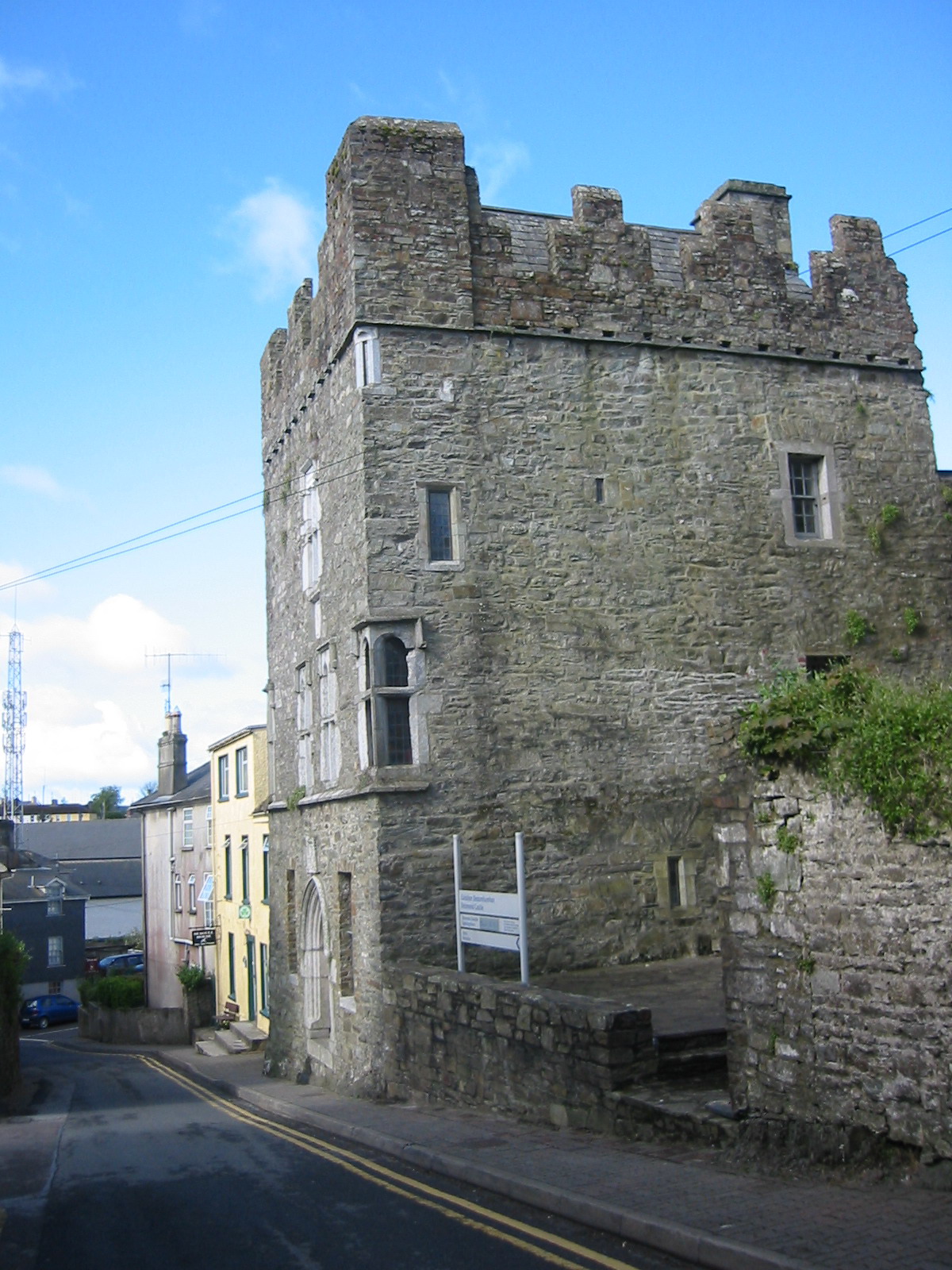
Kilgobbin Castle

Kilgobbin Castle in County Cork, Ireland
Renaissance (15th–17th c.)
Restored

Kilgobbin Castle is a prominent example of a 17th-century Renaissance keep located on a hill overlooking the west bank of the River Bandon, just west of Kinsale in County Cork, Ireland. This imposing square five-storey tower house reflects the architectural style and defensive needs of its era, characterized by its robust stone construction and vertical emphasis.

Historical background and ownership

The origins of Kilgobbin Castle are traditionally linked to the MacCarthy Riabhach family, though the precise date of its initial construction remains uncertain. The castle's documented history becomes clearer in the early 17th century when the Sarsfield family took possession. Subsequently, ownership passed to the Palmer family, reflecting the shifting political and social landscape of Ireland during this period.

By the 18th century, the castle was abandoned and had fallen into a state of disrepair, a fate common to many such fortified residences as military and domestic needs evolved.

Architectural features and design

Kilgobbin Castle is designed as a square keep rising five storeys high, a typical form for fortified residences in Ireland during the Renaissance period. The keep's thick stone walls provided defense against attackers, while its height allowed for surveillance of the surrounding landscape, including the strategic River Bandon valley.

Attached to the north side of the keep is the ruin of a later house, abandoned in the 1960s, indicating continued habitation and adaptation of the site well beyond its initial defensive purpose.

Restoration efforts

In 2004, significant restoration was undertaken by Martin McCarthy, which involved cleaning and re-pointing the stonework, restoring windows and original stone features, and replacing the battlements. A large oak tree that had grown on top of the castle was carefully removed to preserve the structure. Additionally, a slate roof was reinstalled, a historically appropriate feature that helps protect the interior from weather damage.

Location and accessibility

Kilgobbin Castle is situated on private farmland in the area of Hollyhill, near Kinsale, which limits public access. The castle cannot be entered or toured, as it is not open to visitors. Its rural setting contrasts with the castle's historic significance and architectural presence.

Cultural and heritage significance

The castle stands as a testament to the turbulent history of County Cork and the broader region during the Renaissance and early modern period. It illustrates the transition from purely defensive medieval fortifications to more residential and status-symbol structures while retaining strong defensive features.

Despite its current private ownership and limited accessibility, Kilgobbin Castle remains an important architectural and historical landmark, reflecting the legacy of prominent Irish families and the evolution of castle design in Ireland.

Architectural context

The castle is classified as a keep, a type of fortified tower that served as a last refuge during attacks. Its Renaissance style is evident in the refined masonry and the adaptation of medieval defensive elements to more comfortable residential uses.

Visiting information

Due to its location on private property and its current use as part of a disused farmstead, Kilgobbin Castle is not accessible to the public. Visitors can view the castle from a distance but should respect private property restrictions.

Frequently asked questions (FAQ)

How do I get to Kilgobbin Castle?
Kilgobbin Castle is located in Kinsale, which is easily accessible by car and public transport. If you are driving, ample parking is available nearby, and the castle is well-signposted. For those using public transport, local buses connect Kinsale with nearby towns and cities.
What is the historical significance of Kilgobbin Castle?
Kilgobbin Castle dates back to the 16th century and is a prime example of the architectural style of that era. It played a significant role in local history, serving as a stronghold during various conflicts. The castle is also associated with notable historical figures, adding to its allure.
When was Kilgobbin Castle last renovated?
The last major renovations of Kilgobbin Castle occurred in the early 2000s to preserve its historical integrity while enhancing visitor experience. These renovations have made the castle more accessible and have allowed for the display of historical artifacts. Ongoing maintenance ensures that the castle remains a key attraction in Kinsale.
Can I take photographs inside Kilgobbin Castle?
Yes, visitors are encouraged to take photographs inside Kilgobbin Castle, as long as it does not disturb other guests. The stunning architecture and historical details provide excellent photo opportunities. However, please respect any areas where photography may be restricted.
Why is Kilgobbin Castle a popular tourist destination?
Kilgobbin Castle is popular due to its rich history, stunning architecture, and scenic location. Visitors are drawn to its tales of past battles and the picturesque views of the surrounding landscape. Additionally, Kinsale is known for its vibrant culture and excellent dining options, making it an ideal destination.
Is it possible to book a guided tour of Kilgobbin Castle?
Yes, guided tours of Kilgobbin Castle are available and can be booked in advance. These tours provide in-depth information about the castle's history and architecture, enhancing the visitor experience. Private tours can also be arranged for special occasions or larger groups.
What are the opening hours for Kilgobbin Castle?
Kilgobbin Castle is open to visitors from 10 AM to 5 PM daily, with extended hours during the summer months. It is advisable to check the official website for any seasonal changes or special closures. Arriving early can help you avoid crowds and fully enjoy the castle's offerings.
What are the ticket prices for Kilgobbin Castle?
Ticket prices for Kilgobbin Castle are generally affordable, with discounts available for children, students, and seniors. Family tickets are also offered, providing great value for those visiting with children. Advance online booking may offer additional discounts, so it’s worth checking the official site.
What nearby attractions should I visit while in Kinsale?
While in Kinsale, you can explore other attractions such as the picturesque Kinsale Harbour, Charles Fort, and the local shops and galleries. The town is also famous for its gourmet food scene, with numerous restaurants and cafes to enjoy. A stroll along the scenic coastal paths is highly recommended for breathtaking views.

Information

Keep / Donjon

Loading map...

Visitor reviews

No reviews yet. Been here? Write the first review and help other travelers!

Write the first review

Visited this castle? Share your experience

Your review helps other travelers and adds first-hand knowledge to our encyclopedia.
Write a review

(5/5)

0/2000 characters

Your review will be visible after admin approval

Nearby castles

2.7 km
White Castle — United Kingdom castle

White Castle

Llantilio Crossenny, United Kingdom

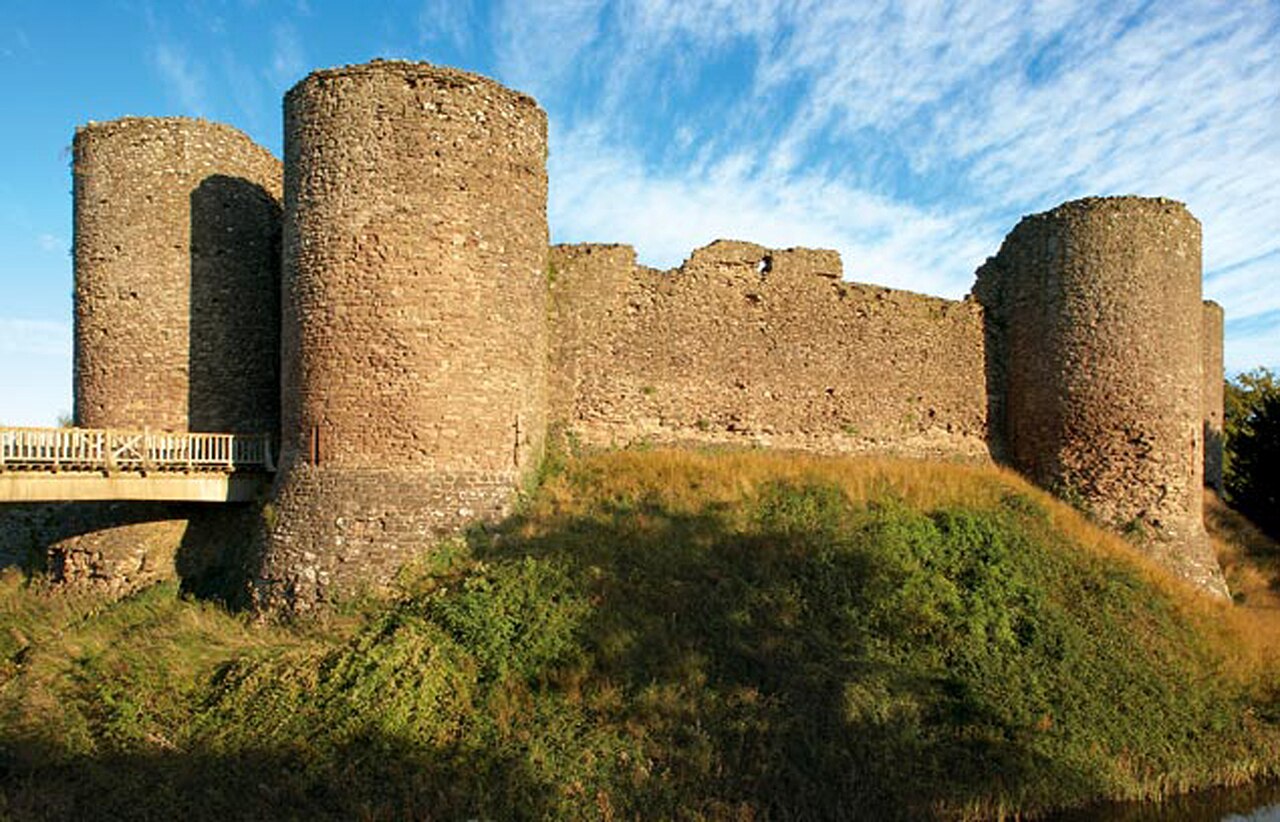
White Castle is a prominent Norman hill castle located near the village of Llantilio Crossenny in Wales, United Kingdom. It stands on a commanding low hill overlooking the Monnow valley, approximately 157 meters above sea level, and is renowned for its distinctive white-rendered exterior walls which inspired its modern name. The castle forms part of the historic "Three Castles" alongside Grosmont and Skenfrith, which together played a crucial role in controlling the volatile Welsh Marches during the Middle Ages. Originally established in the wake of the Norman invasion of England in 1066, White Castle was likely commissioned by William fitz Osbern, Earl of Hereford, to secure the strategic route between Wales and the English town of Hereford. The initial fortification was a classic motte-and-bailey style earth and timber castle, comprising three large earthworks with timber defenses. These early fortifications were designed to assert Norman control over the region and to defend against Welsh uprisings. Historical development and strategic importance In 1135, following a major Welsh revolt, King Stephen organized the defense of this border area by grouping White Castle with Grosmont and Skenfrith to form the "Three Castles" lordship. This triad of fortresses was intended to strengthen English authority and provide a defensive network against Welsh attacks. Throughout the 12th and 13th centuries, White Castle changed hands multiple times, reflecting the turbulent politics of the Welsh Marches. In 1201, King John granted the castle to the influential royal official Hubert de Burgh. Over the subsequent decades, ownership alternated between Hubert de Burgh, the powerful de Braose family, and the Crown, each contributing to the castle's fortifications and upkeep. The castle's military significance remained high during this period, particularly as the threat from Welsh princes intensified. Rebuilding in stone and architectural evolution During the 13th century, White Castle underwent substantial reconstruction, replacing the original timber defenses with formidable stone curtain walls, mural towers, and gatehouses. Scholars debate whether this rebuilding occurred during Hubert de Burgh's tenure (1229–1239) or slightly later under Prince Edward (the future Edward I). Notably, the castle's main entrance was reoriented from the south side to the northeast, reflecting strategic and tactical adaptations. The castle's defensive complex comprises three principal sections: a central inner ward, a crescent-shaped southern hornwork, and a large northern outer ward. The entire complex is constructed primarily from red sandstone, which gives the walls a distinctive reddish hue beneath the white render still visible in places. Architectural features and layout Outer ward and fortifications The outer ward is roughly 98 by 52 meters in size and is enclosed by a robust curtain wall featuring four mural towers—three circular and one rectangular. The rectangular tower served as official lodgings, while the curtain wall was reinforced by a dry ditch and an eastern gatehouse. This gatehouse, which survives up to five meters high, originally included a portcullis and a drawbridge, enhancing its defensive capabilities. Historically, the outer ward housed a large barn measuring approximately 35 by 20 meters, along with smaller ancillary buildings, though these structures have not survived intact. The outer ward was originally larger, extending further east, but only limited traces of these earthworks remain today. Inner ward and main defenses The inner ward, measuring about 46 by 34 meters, is protected by a deep moat cut through the rock and retaining water, providing formidable defense. Its curtain wall is reinforced by four circular towers rising four stories high. The main gatehouse here is flanked by two circular towers and originally featured a portcullis and drawbridge as well. Within the inner ward lie the foundations of key domestic buildings, including the hall, quarters for the castle constable, kitchen facilities, and the castle chapel, part of which was integrated into one of the towers. Early remains of the original Norman keep are also visible in this area. Southern hornwork The crescent-shaped southern hornwork was initially accessible from the inner ward by a wooden bridge spanning the intervening defenses. It was mainly protected by timber fortifications and towers, though some stonework was added later. Today, much of this section survives only in traces, offering insight into the castle’s extended defensive arrangements. Distinctive arrow loops and defensive innovations One of White Castle’s most striking architectural features is its distinctive cross-shaped arrow loops with vertically offset arms. These narrow openings were designed to provide archers with improved firing angles and enhanced protection, though experimental studies suggest they remained vulnerable to incoming attacks. These arrow loops exemplify the castle's role as a military fortress rather than a noble residence. Later history and preservation After the conquest of Wales by King Edward I in 1282, White Castle's military importance declined. It remained in the possession of Edmund, Earl of Lancaster, from 1267 and later became part of the Duchy of Lancaster holdings until 1825. By the 16th century, the castle had fallen into disuse and ruin, though it briefly regained some strategic relevance during the Welsh rebellion led by Owain Glyndŵr around 1404–1405. In the 19th and early 20th centuries, the estate passed through several private hands, including the Duke of Beaufort and Sir Henry Mather Jackson, who undertook efforts to conserve the remaining structures. Official state protection began in 1922, and today the castle is managed by Cadw, the Welsh government's historic environment service. It is designated as a Grade I listed building and a Scheduled Monument, reflecting its cultural and historic significance. White Castle is currently a ruin but remains one of the most impressive examples of Norman military architecture in the Welsh Marches. Its combination of earthworks, stone fortifications, and distinctive defensive features make it a valuable site for understanding medieval castle design and border warfare. Visiting and accessibility White Castle is accessible to visitors, with entry through the late 13th-century gatehouse leading into the outer ward. From there, visitors can cross a wooden bridge over the water-filled moat to reach the inner gatehouse. Climbing the towers offers panoramic views of the surrounding countryside and a close-up look at the castle's defensive structures. While the castle is a ruin, it is well-preserved enough to convey the scale and complexity of its original design. Informational signage and guided tours provide historical context, making it a popular destination for those interested in medieval military history and architecture.

High Medieval (11th–13th c.)
Details
4.9 km

Poulnalong Castle

Next to the R-605 road, United Kingdom

Poulnalong Castle, also known as Shippool Castle, is a historic tower house situated on the east bank of the River Bandon in County Cork, Ireland. This castle was constructed in 1543 by Philip Roche, a member of the prominent Roche family, as a fortified residence typical of the late medieval period in Ireland. Tower houses were a common type of small castle built during this era, serving both defensive and domestic purposes for local lords and gentry. Architectural features and design Poulnalong Castle exemplifies the traditional Irish tower house architecture of the 16th century. It is a vertical, rectangular stone structure designed for defense and habitation. The castle's thick stone walls and narrow windows provided protection against attackers, while the height allowed surveillance over the surrounding landscape, particularly the strategic riverbank location. The tower house likely included features such as a vaulted basement, living quarters on upper floors, a spiral staircase, and battlements or parapets at the roof level. Although the castle is now overgrown and its interior inaccessible, remnants of its original defensive features remain visible from the exterior. The castle's position beside the river would have been advantageous for controlling local transport routes and access. Historical significance and events During the Irish Rebellion of 1641, Poulnalong Castle played a notable role. It was held by Patrick Roche Fitzrichard, a rebel aligned with the Irish insurgents against English rule. In 1642, the castle was besieged by the Bandon garrison, a Protestant English force based in the nearby town of Bandon. The siege was fierce, reportedly resulting in the deaths of around 100 rebel defenders before the castle surrendered to Captain Adderly. This event highlights the castle's strategic importance during the turbulent period of the 17th century when Ireland experienced widespread conflict between native Irish forces and English settlers. Later occupation and decline Following the rebellion, Poulnalong Castle came into the possession of the Merrick family, who used it as a residence until 1787. After they relocated, the castle was abandoned in 1794. Historical accounts suggest that the structure remained in relatively good condition until the early 20th century, around 1907, when it began to fall into disrepair. Today, Poulnalong Castle stands as a ruin, partially obscured by vegetation. Its interior is unsafe and closed to the public, but visitors can view the exterior freely from the roadside. The castle's roadside location and modest size make it a curious and accessible example of Ireland's medieval defensive architecture. Visiting poulnalong castle Poulnalong Castle is accessible to visitors who wish to explore the exterior and appreciate its historical context. The site is open without admission fees, though the castle itself cannot be entered due to safety concerns and overgrowth. The castle's proximity to the R-605 road makes it an easy stop for those touring County Cork and interested in Ireland's rich medieval heritage. Visitors should exercise caution around the ruins and respect the site's preservation. While modest in scale compared to larger Irish castles, Poulnalong offers insight into the defensive strategies and domestic life of 16th-century Irish gentry.

Late Medieval (14th–15th c.)
Details
5.1 km
Desmond Castle — Ireland castle

Desmond Castle

Kinsale, Ireland

Desmond Castle (Irish: Caisleán Deasmhumhan) is a prominent 15th-century tower house situated in the historic town of Kinsale, County Cork, Ireland. This castle is a significant example of late medieval Irish military architecture, originally constructed to serve as a customs house and defensive fortification guarding the important harbor of Kinsale. Its strategic location near the coast allowed it to play a crucial role in controlling maritime trade and protecting the town from seaborne threats during turbulent periods in Irish history. Architectural features and design The castle is a classic example of a tower house, a type of fortified residence common in Ireland during the late medieval period. It features a tall, rectangular stone structure with thick walls, narrow slit windows for defense, and battlements at the roof level. The tower's compact footprint was designed to maximize defensibility while providing living quarters for the castle's occupants. Desmond Castle's Historical context and significance The castle was originally built in the 15th century by the powerful Earls of Desmond, a branch of the Fitzgerald family who were influential Anglo-Norman lords in Munster. The castle's primary function was to oversee and control the customs duties on goods entering Kinsale’s busy port, which was a vital trading hub at the time. Throughout its history, Desmond Castle witnessed numerous conflicts, including involvement in the Desmond Rebellions during the late 16th century, when the Fitzgeralds resisted English rule. The castle also played a role during the Siege of Kinsale in 1601, a pivotal event in Irish history marking the defeat of Irish and Spanish forces by the English. Later uses and preservation After its military importance declined, Desmond Castle was repurposed several times, including use as a prison. In the 18th and 19th centuries, it fell into disrepair but was later recognized for its historical and architectural value. Today, the castle is a well-preserved Visiting Desmond Castle Visitors to Desmond Castle can explore its sturdy stone interiors, climb to the battlements for panoramic views of Kinsale harbor, and learn about its role in Ireland’s maritime and military history. The castle's location in the picturesque town of Kinsale also makes it a popular destination for tourists interested in Irish heritage and coastal scenery. Frequently asked questions When was Desmond Castle built? The castle dates back to the 15th century, constructed by the Earls of Desmond. What type of castle is Desmond Castle? It is a tower house, typical of late medieval Ireland. Can visitors enter the castle? Yes, Desmond Castle is open to the public with guided tours available. What was the castle's original purpose? It served as a customs house and defensive fortification for Kinsale’s port. Is the castle well preserved? The castle is well preserved and maintained as a heritage site.

Late Medieval (14th–15th c.)
Details