Desmond Castle — Ireland castle

Desmond Castle

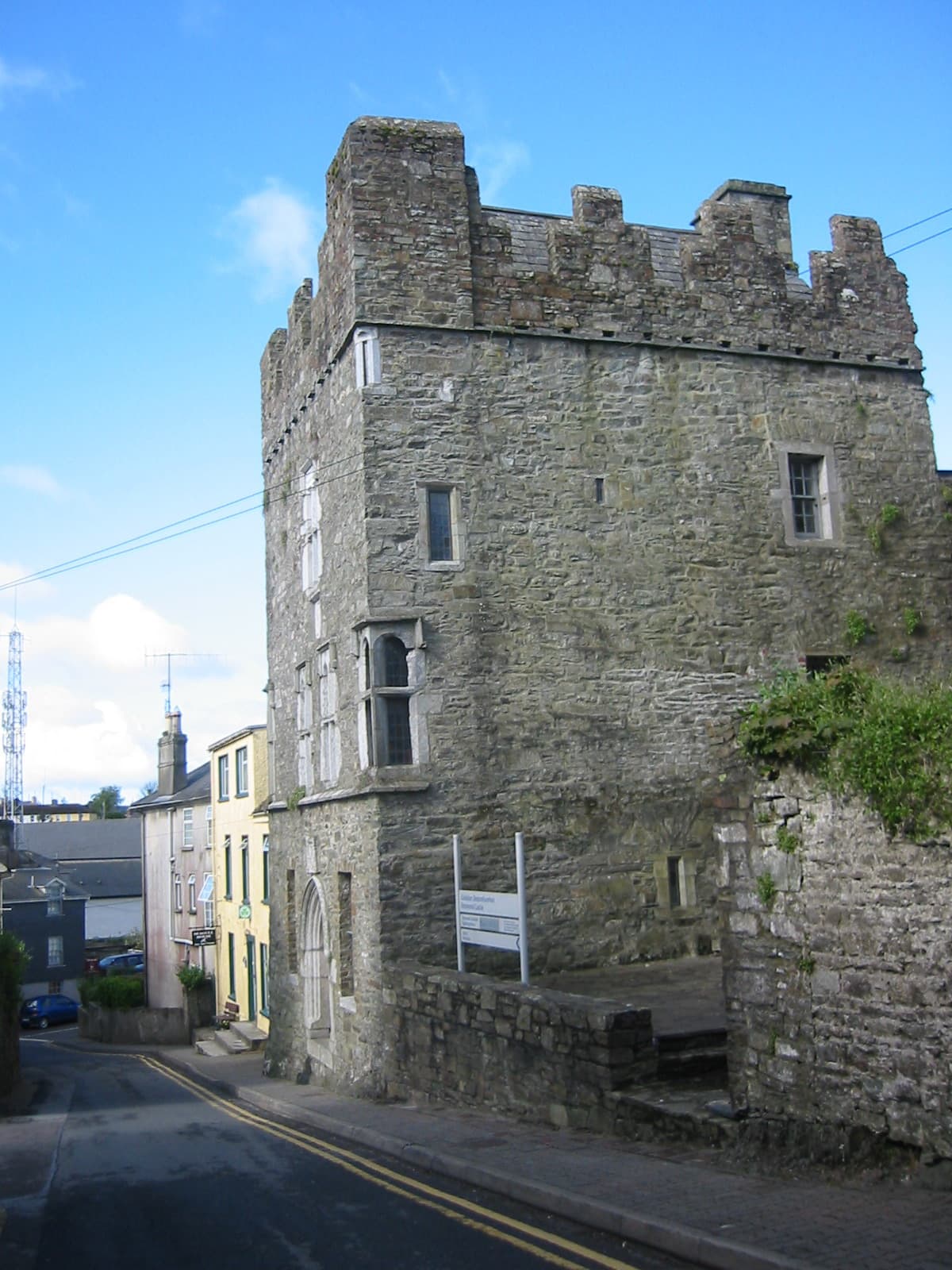
Desmond Castle in Kinsale, County Cork
Kinsale, Ireland
Late Medieval (14th–15th c.)
Well Preserved

Desmond Castle (Irish: Caisleán Deasmhumhan) is a prominent 15th-century tower house situated in the historic town of Kinsale, County Cork, Ireland. This castle is a significant example of late medieval Irish military architecture, originally constructed to serve as a customs house and defensive fortification guarding the important harbor of Kinsale. Its strategic location near the coast allowed it to play a crucial role in controlling maritime trade and protecting the town from seaborne threats during turbulent periods in Irish history.

Architectural features and design

The castle is a classic example of a tower house, a type of fortified residence common in Ireland during the late medieval period. It features a tall, rectangular stone structure with thick walls, narrow slit windows for defense, and battlements at the roof level. The tower's compact footprint was designed to maximize defensibility while providing living quarters for the castle's occupants.

Desmond Castle's

Historical context and significance

The castle was originally built in the 15th century by the powerful Earls of Desmond, a branch of the Fitzgerald family who were influential Anglo-Norman lords in Munster. The castle's primary function was to oversee and control the customs duties on goods entering Kinsale’s busy port, which was a vital trading hub at the time.

Throughout its history, Desmond Castle witnessed numerous conflicts, including involvement in the Desmond Rebellions during the late 16th century, when the Fitzgeralds resisted English rule. The castle also played a role during the Siege of Kinsale in 1601, a pivotal event in Irish history marking the defeat of Irish and Spanish forces by the English.

Later uses and preservation

After its military importance declined, Desmond Castle was repurposed several times, including use as a prison. In the 18th and 19th centuries, it fell into disrepair but was later recognized for its historical and architectural value.

Today, the castle is a well-preserved

Visiting Desmond Castle

Visitors to Desmond Castle can explore its sturdy stone interiors, climb to the battlements for panoramic views of Kinsale harbor, and learn about its role in Ireland’s maritime and military history. The castle's location in the picturesque town of Kinsale also makes it a popular destination for tourists interested in Irish heritage and coastal scenery.

Frequently asked questions

  • When was Desmond Castle built? The castle dates back to the 15th century, constructed by the Earls of Desmond.
  • What type of castle is Desmond Castle? It is a tower house, typical of late medieval Ireland.
  • Can visitors enter the castle? Yes, Desmond Castle is open to the public with guided tours available.
  • What was the castle's original purpose? It served as a customs house and defensive fortification for Kinsale’s port.
  • Is the castle well preserved? The castle is well preserved and maintained as a heritage site.

Frequently asked questions (FAQ)

How do I get to Desmond Castle?
Desmond Castle is located in Kinsale, Ireland, and is easily accessible by car, bus, or on foot from the town center. If you are driving, there is limited parking available nearby. Public transport options include local buses that connect Kinsale to Cork City.
What is the historical significance of Desmond Castle?
Desmond Castle, also known as the Kinsale Wine Museum, has a rich history dating back to the 16th century. It served as a fortress and a customs house for the importation of wine, reflecting Kinsale's importance as a trading port. The castle is a testament to Ireland's medieval architecture and its role in maritime trade.
When was Desmond Castle built?
Desmond Castle was built in the late 1500s, around the time of the Tudor conquest of Ireland. It was constructed by the Earl of Desmond, and its strategic location made it a vital stronghold during conflicts with English forces. Over the centuries, it has undergone various renovations, preserving its historical features.
Can I visit Desmond Castle year-round?
Yes, Desmond Castle is open to visitors throughout the year, although opening hours may vary by season. It is advisable to check the official website or contact the visitor center for the most current information on hours of operation. Special events may also take place during certain times of the year.
Why is Desmond Castle considered an architectural gem?
Desmond Castle showcases a unique blend of medieval and Renaissance architectural styles, making it a fascinating example of historical design. Its stone walls, arched windows, and impressive layout reflect the craftsmanship of the era. Visitors can admire both the exterior and the interior features that highlight its historical significance.
Is it possible to take guided tours of Desmond Castle?
Yes, guided tours are available at Desmond Castle, offering visitors a deeper understanding of its history and architecture. Knowledgeable guides provide insights into the castle's past and its role in Kinsale's development. It is recommended to book in advance during peak tourist seasons to ensure availability.
What are the ticket prices for visiting Desmond Castle?
Ticket prices for Desmond Castle are generally affordable, with discounts available for students and seniors. Children under a certain age may enter for free, making it an excellent family-friendly destination. For the latest pricing information, please check the official website before your visit.
What is the best time to visit Desmond Castle?
The best time to visit Desmond Castle is during the spring and summer months when the weather is mild and pleasant. This season also coincides with the peak tourist period, allowing you to enjoy various local events and activities. Autumn can also be a lovely time to visit, offering fewer crowds and beautiful fall foliage.
Are there any nearby attractions to visit along with Desmond Castle?
Yes, Kinsale is rich in attractions, including the Charles Fort, the Old Head of Kinsale, and several charming shops and restaurants. After visiting Desmond Castle, you can enjoy a scenic walk along the harbor or explore the historic streets of Kinsale. Local tours often combine visits to multiple sites, providing a comprehensive experience of the area's history.

Photo gallery

Desmond Castle
Click to view

Photo by ME•CC BY-SA 3.0

1 photo • Click any image to view in full screen

Information

Tower House

Loading map...

Visitor reviews

No reviews yet. Been here? Write the first review and help other travelers!

Write the first review

Visited this castle? Share your experience

Your review helps other travelers and adds first-hand knowledge to our encyclopedia.

Write a review

(5/5)

0/2000 characters

Your review will be visible after admin approval

Nearby castles

0.4 km

Desmond Castle

Kinsale, United Kingdom

Desmond Castle stands prominently in the historic town of Kinsale, located in County Cork, Ireland. This urban tower house dates back to around 1500 and was originally constructed by Maurice FitzGerald, 9th Earl of Desmond. The castle was built to serve as the Customs House for the bustling port of Kinsale, reflecting the town's growing importance in maritime trade during the late medieval period. The castle's design typifies the fortified residences known as tower houses, which were common in Ireland during the late medieval period. Desmond Castle consists of a three-storey keep with adjoining storehouses at the rear. Its robust stone construction and strategic location in the town center enabled it to oversee and control customs duties on goods entering the port. Another similar example of this type of urban tower house is Tynte's Castle in Youghal. Historical significance and transformations Early history and customs house role The establishment of Desmond Castle shortly after King Henry VII's grant of customs rights in 1497 marked a pivotal moment in Kinsale's development as a maritime hub. Maurice FitzGerald built the castle on the site of an earlier fortification associated with the first Earl of Desmond. The castle's primary function for much of the 16th century was to serve as the official customs house, managing the collection of duties on imports and exports through Kinsale's port. Military use during the battle of kinsale During the Spanish occupation of Kinsale in 1600-1601, Desmond Castle was repurposed as an arsenal by Don Juan de Aguila. This occupation lasted approximately 100 days and culminated in the Battle of Kinsale in 1601, a decisive conflict in Irish history. The castle's strategic location made it a key military asset during this period. Conversion to a naval prison and town gaol After the construction of a new customs house in 1641, Desmond Castle was converted into a naval prison. It primarily housed French prisoners of war captured at sea, earning it the local nickname the "French Prison." The castle's prison function continued well into the 18th century. In 1747, a tragic fire broke out in the castle, resulting in the deaths of 54 prisoners. Later, in 1791, the castle was donated to the town of Kinsale by James Kearney, MP. Subsequently, it served as the town's local jail until 1846. Role during the great famine and 20th-century restoration During the devastating Great Famine in Ireland, Desmond Castle was repurposed as a workhouse to provide relief for those suffering from starvation. By the early 20th century, the castle had fallen into a state of disrepair. In the 1930s, the castle came under state care, and extensive restoration efforts were undertaken in the late 20th century, culminating in its reopening to the public. These restorations preserved the castle's essential medieval features while adapting it for modern use. Architectural features and layout Structure and design elements Desmond Castle is a classic example of an urban tower house, characterized by its vertical emphasis and fortified construction. The main keep rises three stories high, constructed from locally sourced stone with thick defensive walls designed to withstand attack. The rear of the castle includes storehouses that supported its function as a customs facility, allowing for the secure storage of goods and materials. The castle's layout reflects its dual role as both a defensive stronghold and a center of commercial administration. Modifications through its history Over the centuries, Desmond Castle underwent various modifications to suit its changing roles. The conversion to a prison introduced internal changes to accommodate cells and security features. The fire of 1747 likely necessitated repairs and rebuilding of affected sections. Despite these alterations, the castle retains much of its original late medieval character, with restoration efforts carefully balancing preservation with functional adaptation for its current use as a museum. Cultural significance and current use International museum of wine Today, Desmond Castle is home to the International Museum of Wine, which celebrates Ireland's historic connections to the global wine trade. The museum is operated by the Order of the Wine Geese, an organization dedicated to highlighting the Irish influence on the wine industry abroad. The museum exhibits a collection of artifacts, documents, and displays that trace the history of wine and its cultural impact, particularly focusing on Irish emigrants who contributed to wine production in countries such as France, Spain, and Australia. Visitor experience and accessibility Visitors to Desmond Castle can explore the castle's interior, including its stone chambers, courtyards, and defensive features. The museum is open seasonally, typically during the tourist season, and admission is charged to support maintenance and programming. While some visitors find the museum's focus specialized, the castle itself offers a fascinating glimpse into Ireland's maritime, military, and penal history. Its central location in Kinsale makes it easily accessible and a popular stop for those exploring the region's heritage.

Late Medieval (14th–15th c.)
Details
1.6 km

James Fort

Kinsale, United Kingdom

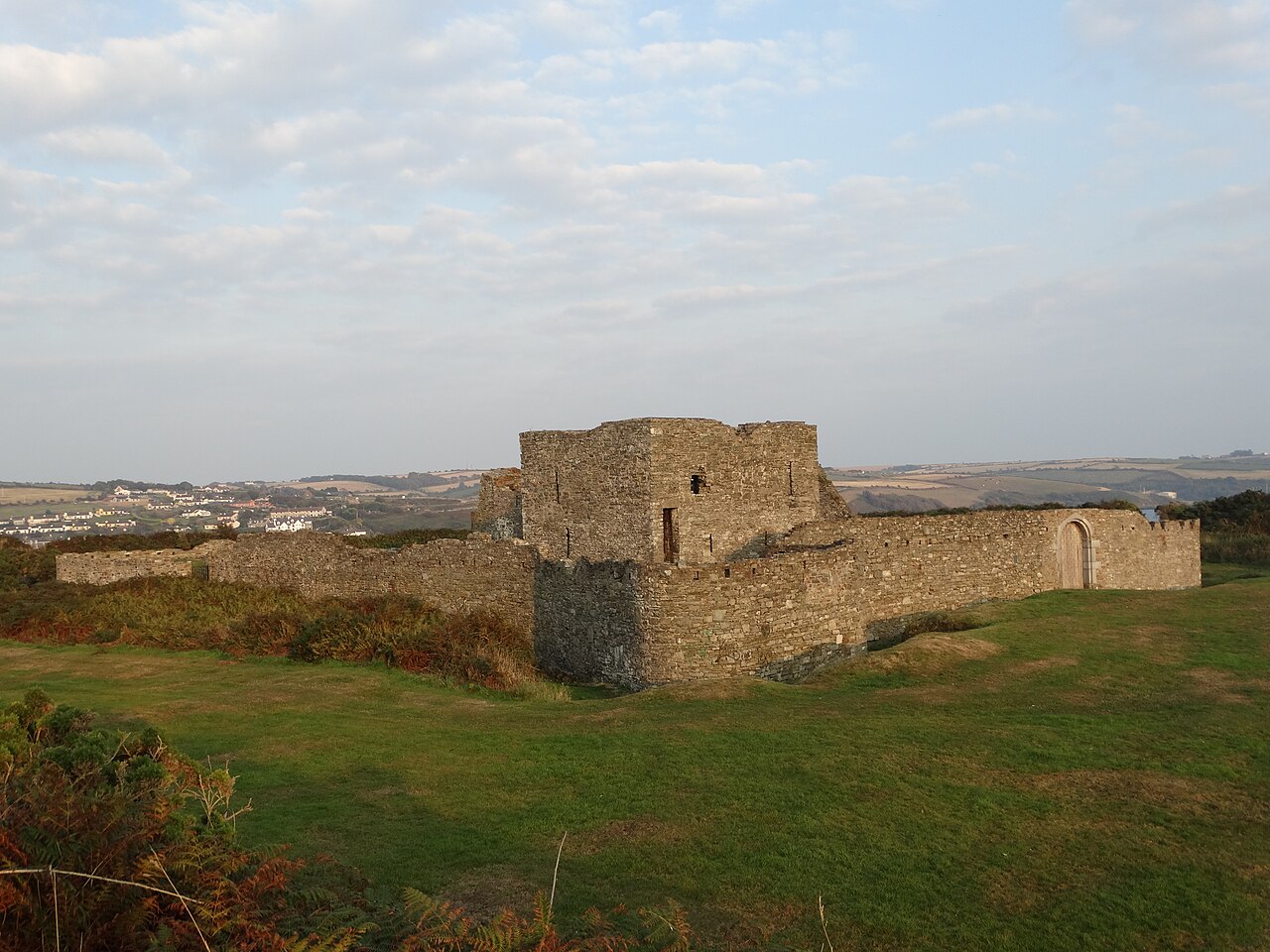
James Fort is a historic military fortification located on the Castlepark peninsula, just south of the town of Kinsale in County Cork, Ireland. This early 17th-century fort was constructed in the aftermath of the Battle of Kinsale, a pivotal conflict that marked the end of the Nine Years' War in Ireland. The fort's strategic position on the peninsula allowed it to control access to Kinsale Harbour, serving as a key defensive installation guarding the estuary. Construction of James Fort began in 1602 under the direction of the notable military engineer Paul Ive. The fort was completed by 1604 at a cost of £645, a significant investment reflecting its military importance. James Fort is designed as a pentagonal bastioned fort, a style characterized by angled bastions projecting outward to cover adjacent walls, enabling defenders to repel attackers more effectively. The fort is enclosed by a substantial rampart of earth and sod topped with a parapet, which provided protection for the garrison and artillery. Architectural features and defensive structures The fort's outer defenses include a deep ditch and a counterscarp, designed to impede enemy advances. On the northeast side, a covered way leads to a water battery positioned at the shore, allowing artillery to command the approach by sea. The main entrance is located in the southern curtain wall, providing controlled access to the interior. In 1611, the fort's defenses were enhanced with the addition of a stone inner fort, which included a gatehouse and a drawbridge. This inner fortification likely incorporated remnants of a small medieval tower that existed on the site prior to the construction of James Fort, suggesting continuity of defensive use at this strategic location. Historical significance and military engagements James Fort played a significant role during the turbulent 17th century in Ireland. In 1649, the fort was captured without resistance by forces loyal to Oliver Cromwell during his campaign in Ireland. This peaceful surrender indicates the fort's strategic value and possibly the overwhelming strength of Cromwell's forces. Further defensive improvements were made in 1667, reflecting ongoing military concerns in the region. The fort's most notable historical episode occurred in 1689 when King James II landed at Kinsale with French support in an attempt to reclaim the English throne during the Williamite War in Ireland. James Fort, along with Charles Fort on the opposite shore of the estuary, came under Jacobite control. In 1690, Williamite forces commanded by the Duke of Würtemburg and John Churchill (later the 1st Duke of Marlborough) launched an assault on both forts. After a siege, James Fort surrendered, marking a crucial moment in the Williamite victory. The fort was held for King James II by Colonel O'Driscoll, a notable Jacobite commander. Current condition and visitor experience Today, James Fort remains a significant historical site with much of its outer earthen ramparts freely accessible to visitors. The inner stone fort can be visited, though access may be restricted at times. The fort's location offers picturesque views of the surrounding coastline and estuary, enhancing its appeal as a heritage attraction. Nearby historic sites include Ringrone Castle and Charles Fort, the latter situated across the estuary, providing visitors with a comprehensive understanding of the area's military history. James Fort's preservation allows insight into early modern military architecture and the strategic defense systems employed in Ireland during the 17th century. Architectural style and classification James Fort is classified as a water castle due to its coastal location and its role in controlling maritime access. Its design reflects the early modern bastioned fortification style, which evolved in response to advances in artillery technology. The fort's pentagonal layout with bastions allowed for overlapping fields of fire, a significant improvement over medieval castle designs. Legacy and cultural importance As a well-preserved example of a 17th-century bastioned fort, James Fort holds cultural and historical significance in Ireland. It exemplifies the military engineering techniques of the period and the geopolitical struggles involving English, Irish, and French forces. The fort's history is intertwined with major events such as the Battle of Kinsale and the Williamite War, making it a key site for understanding Ireland's complex past.

Post-Renaissance (17th–18th c.)
Details
1.6 km
James's Fort — Ireland castle

James's Fort

Kinsale, Ireland

James Fort (Dún Rí Shéamuis in Irish) is a prominent bastioned fortress constructed in the early 17th century on the Castlepark peninsula in Kinsale harbour, County Cork, Ireland. This pentagonal fortification was strategically positioned to guard the harbour and seaborne approaches to the town of Kinsale, an important naval and commercial port during the period. Historical context and strategic importance The fort's construction was initiated during a time of increasing military tension and naval conflict in Ireland and the British Isles. Built under the reign of King James I of England and Ireland, the fort was designed to strengthen defenses against potential Spanish or other European incursions following the Nine Years' War (1594–1603). Its location on the Castlepark peninsula allowed it to control access to the River Bandon and protect the vital maritime trade routes and military supply lines feeding into Kinsale. Architectural design and features James Fort exemplifies the early modern bastioned fortification style, influenced by continental military engineering principles that emerged during the Renaissance. Its pentagonal layout incorporates five bastions projecting from the curtain walls, allowing overlapping fields of fire and eliminating blind spots that earlier medieval castles often suffered from. This design was particularly effective against artillery siege warfare, which had rendered traditional high-walled castles vulnerable. The fort's walls are constructed of thick stone, designed to withstand cannon fire. The bastions are connected by curtain walls with embrasures for cannon placements. Inside the fort, there were barracks, magazines for storing gunpowder and ammunition, and officer quarters. The fort also featured a dry moat on the landward side to hinder enemy advances. Defensive innovations The bastioned design allowed defenders to cover all approaches with cannon and musket fire. The fort's low, angled walls reduced the impact of cannonballs, while the bastions provided elevated platforms for artillery. The layout reflects the shift from medieval fortifications to modern military architecture designed to meet the challenges of gunpowder warfare. Role in military history James Fort played a significant role during the Siege of Kinsale in 1601–1602, a pivotal conflict in Irish history. The siege involved English forces defending against a combined Irish and Spanish army. James Fort was a key defensive position, helping to secure the harbour and prevent enemy reinforcements from landing. Although the siege ultimately ended in an English victory, the event highlighted the strategic importance of the harbour defenses. In the late 17th century, the construction of the more modern Charles Fort on the opposite side of Kinsale harbour led to James Fort being referred to as the "old fort" (an Seandaingean in Irish). While Charles Fort became the primary defense installation, James Fort remained a significant military site for some time. Preservation and public access Today, James Fort is recognized as a protected National Monument of Ireland. It is managed by the Office of Public Works and is open to visitors interested in military history and early modern fortifications. The site offers insights into 17th-century bastioned fort design and the military history of Kinsale harbour. Visitors can explore the fort's walls, bastions, and internal structures, gaining an understanding of the architectural innovations that shaped coastal defenses in the early modern period. The fort's location also provides scenic views of the harbour and surrounding landscape.

Post-Renaissance (17th–18th c.)
Details