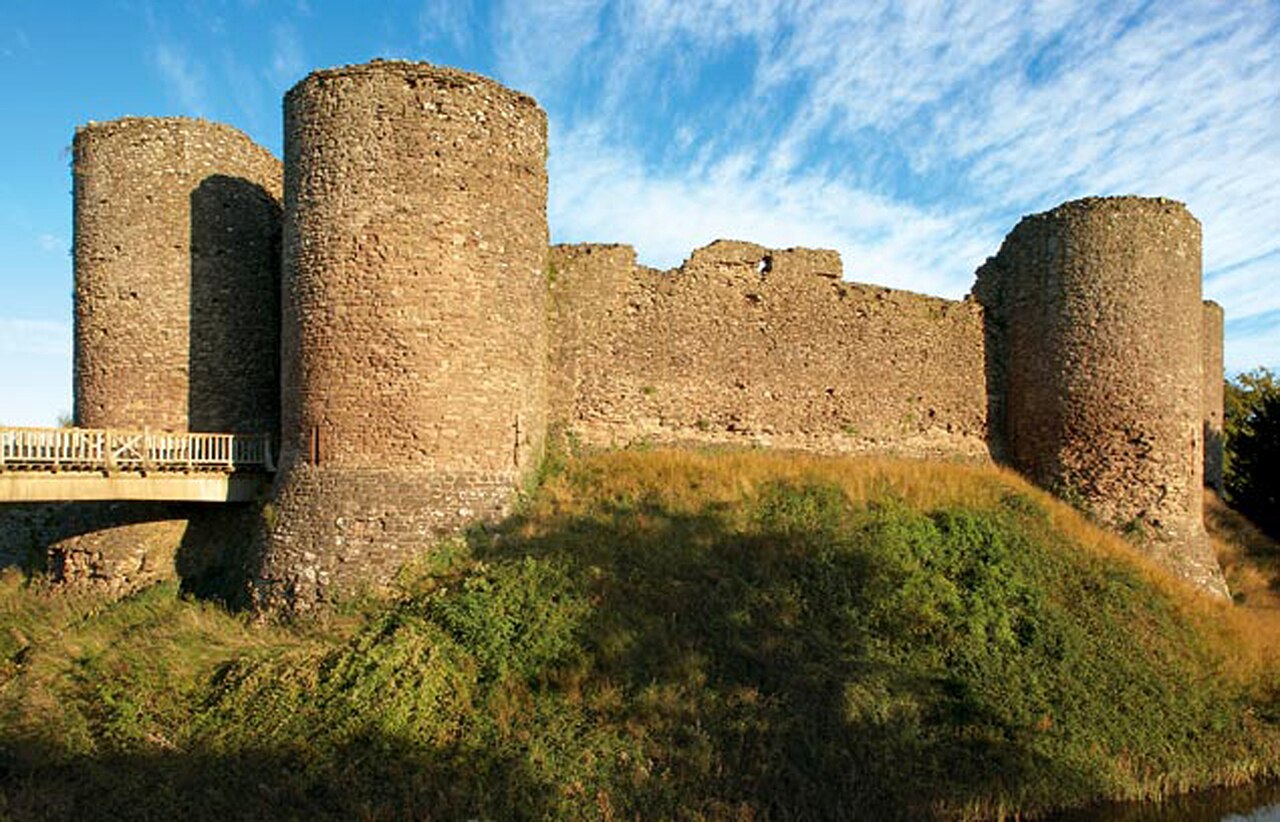
Poulnalong Castle
Poulnalong Castle, also known as Shippool Castle, is a historic tower house situated on the east bank of the River Bandon in County Cork, Ireland. This castle was constructed in 1543 by Philip Roche, a member of the prominent Roche family, as a fortified residence typical of the late medieval period in Ireland. Tower houses were a common type of small castle built during this era, serving both defensive and domestic purposes for local lords and gentry.
Architectural features and design
Poulnalong Castle exemplifies the traditional Irish tower house architecture of the 16th century. It is a vertical, rectangular stone structure designed for defense and habitation. The castle's thick stone walls and narrow windows provided protection against attackers, while the height allowed surveillance over the surrounding landscape, particularly the strategic riverbank location. The tower house likely included features such as a vaulted basement, living quarters on upper floors, a spiral staircase, and battlements or parapets at the roof level.
Although the castle is now overgrown and its interior inaccessible, remnants of its original defensive features remain visible from the exterior. The castle's position beside the river would have been advantageous for controlling local transport routes and access.
Historical significance and events
During the Irish Rebellion of 1641, Poulnalong Castle played a notable role. It was held by Patrick Roche Fitzrichard, a rebel aligned with the Irish insurgents against English rule. In 1642, the castle was besieged by the Bandon garrison, a Protestant English force based in the nearby town of Bandon. The siege was fierce, reportedly resulting in the deaths of around 100 rebel defenders before the castle surrendered to Captain Adderly.
This event highlights the castle's strategic importance during the turbulent period of the 17th century when Ireland experienced widespread conflict between native Irish forces and English settlers.
Later occupation and decline
Following the rebellion, Poulnalong Castle came into the possession of the Merrick family, who used it as a residence until 1787. After they relocated, the castle was abandoned in 1794. Historical accounts suggest that the structure remained in relatively good condition until the early 20th century, around 1907, when it began to fall into disrepair.
Today, Poulnalong Castle stands as a ruin, partially obscured by vegetation. Its interior is unsafe and closed to the public, but visitors can view the exterior freely from the roadside. The castle's roadside location and modest size make it a curious and accessible example of Ireland's medieval defensive architecture.
Visiting poulnalong castle
Poulnalong Castle is accessible to visitors who wish to explore the exterior and appreciate its historical context. The site is open without admission fees, though the castle itself cannot be entered due to safety concerns and overgrowth. The castle's proximity to the R-605 road makes it an easy stop for those touring County Cork and interested in Ireland's rich medieval heritage.
Visitors should exercise caution around the ruins and respect the site's preservation. While modest in scale compared to larger Irish castles, Poulnalong offers insight into the defensive strategies and domestic life of 16th-century Irish gentry.
Frequently asked questions (FAQ)
- How do I visit Poulnalong Castle?
- Poulnalong Castle is accessible from the roadside near the R-605 road in County Cork. Visitors can view the exterior freely, but the interior is closed due to safety concerns.
- What is the historical significance of Poulnalong Castle?
- Built in 1543, Poulnalong Castle played a role in the Irish Rebellion of 1641, where it was held by rebels and later besieged by the Bandon garrison.
- Can I enter Poulnalong Castle?
- The interior of Poulnalong Castle is overgrown and unsafe, so it is not open to the public. Visitors can only explore the exterior of the ruins.
- When was Poulnalong Castle built and by whom?
- Poulnalong Castle was constructed in 1543 by Philip Roche, a member of the Roche family, as a fortified tower house.
- Why is Poulnalong Castle also called Shippool Castle?
- Poulnalong Castle is also known as Shippool Castle, a local alternate name likely derived from historical or geographical associations in the area.
Information
Address
Next to the R-605 road, County Cork, Ireland
Loading map...
Visitor reviews
No reviews yet. Been here? Write the first review and help other travelers!
Write the first reviewVisited this castle? Share your experience
Your review helps other travelers and adds first-hand knowledge to our encyclopedia.