Kilchurn Castle
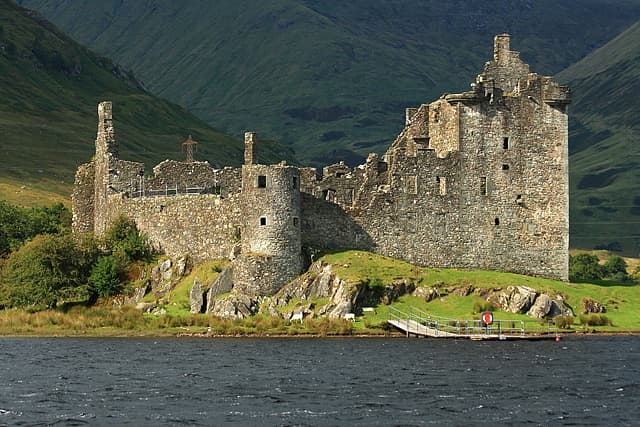
Kilchurn Castle stands as a striking ruin on a rocky peninsula at the northeastern end of Loch Awe in Scotland. Built around 1450 by Sir Colin Campbell, first Lord of Glenorchy, this castle epitomizes the evolution of Scottish medieval fortifications into early modern military barracks. Its history is deeply intertwined with the powerful Campbell clan, one of Scotland's most influential families, who shaped the castle's architecture and strategic role over several centuries.
Originally constructed as a five-storey tower house with a defensive courtyard enclosed by an outer wall, Kilchurn Castle was strategically positioned on a small island in Loch Awe, accessible only by a submerged or low-lying causeway. This insular location provided natural defense and control over key routes into Argyll. The castle's initial design reflects typical late medieval Scottish military architecture, emphasizing verticality and defensibility.
Architectural development and expansions
By the turn of the 16th century, Kilchurn Castle underwent significant expansions under Sir Duncan Campbell, who added a single-storey dining hall known as the laich hall along the inside of the south curtain wall. This addition marked a transition from purely defensive purposes towards greater domestic comfort and social function.
Later in the 16th century, Colin Campbell, the 6th Laird, further enhanced the castle by adding chambers to the north of the tower house and remodeling the parapets. This remodeling included the introduction of distinctive circular corner turrets adorned with corbels, many of which have remarkably survived to this day. These features exemplify the blend of military and residential architecture characteristic of Scottish castles adapting to changing needs.
Around 1614, Sir Duncan Campbell, 1st Baronet, rebuilt the south range and incorporated a chapel within the courtyard, reflecting the castle's growing residential and religious significance. These developments illustrate how Kilchurn evolved from a fortress into a more complex, multifunctional estate.
Military role and later modifications
In 1681, the Campbells' status was elevated when Sir John Campbell of Glenorchy was created the 1st Earl of Breadalbane. Recognizing the turbulent political climate, he transformed Kilchurn into a modern barracks capable of housing approximately 200 soldiers. The most notable architectural addition from this period is the three-storey L-shaped block on the north side of the castle, designed to accommodate troops and enhance defensive capabilities.
Kilchurn Castle served as a government garrison during the Jacobite uprisings of 1715 and 1745, playing a strategic role in suppressing the rebellions. Despite the Campbells' attempts to sell the castle to the government after relocating to Taymouth Castle in 1740, the sale was unsuccessful, and Kilchurn remained under their ownership.
Decline and current status
The castle's active use ended abruptly in 1760 when a lightning strike severely damaged one of its turrets, an event so violent that the turret was toppled upside down into the courtyard. This damage led to the castle's abandonment and gradual decay. By the late 18th century, the roof had been removed, and Kilchurn fell into ruin.
Despite its ruined state, Kilchurn Castle has captured the imagination of artists and poets, including William Wordsworth, who penned an elegiac poem titled "Address to Kilchurn Castle" in 1803. The castle's picturesque isolation and dramatic setting against the backdrop of the Tyndrum mountains and Loch Awe continue to attract visitors and photographers.
Today, Kilchurn Castle is managed by Historic Environment Scotland and is a scheduled monument open to the public during the summer months. Access is possible via boat from Loch Awe pier or by walking from nearby points on the A85 road. The castle remains a prominent example of late medieval Scottish architecture that transitioned into an early modern military fortress, embodying centuries of Scottish history and clan heritage.
Historical context and clan significance
The lands surrounding Kilchurn originally belonged to the Clan MacGregor before passing to the Campbells in the early 15th century through marriage and land grants. The MacGregors served as guardians of Kilchurn during the Campbells' frequent absences, a relationship that ended in the early 17th century following a violent feud. This dynamic reflects the complex clan politics of the Scottish Highlands during this period.
The Campbells of Glenorchy, later the Earls of Breadalbane, used Kilchurn as their ancestral home and a power base in Argyll. The castle's strategic position allowed control over important routes from the west coast into the interior and southern parts of Scotland, underscoring its military and political importance.
Architectural features and remains
The surviving remains of Kilchurn Castle include the imposing five-storey tower house or donjon, surrounded by a courtyard enclosed by an outer defensive wall. The tower house features a ground-level entrance leading to a great hall on the first floor, with upper floors containing living and working chambers and an attic providing access to the roof and battlements.
The south curtain wall houses the original laich hall, which was later extended vertically and eastward to include a chapel in the courtyard's southeast corner. The castle's parapets and circular turrets, supported by corbels, remain prominent architectural elements, showcasing the craftsmanship and defensive priorities of the 16th century.
The 17th-century additions on the north side include the three-storey L-shaped barracks block, designed for troop accommodation. The outer walls are largely intact, with visible remains of two larger residential buildings attached to the main tower or curtain walls. Stone vaults survive in the basement and kitchen areas, although many upper-floor ceilings and floors have not endured.
The inverted turret in the courtyard, a result of the 1760 lightning strike, stands as a tangible reminder of the castle's dramatic decline. Kilchurn Castle's location and architecture provide valuable insights into the evolution of Scottish castle design from the late medieval period through the early modern era.
Frequently asked questions (FAQ)
- How do I get to Kilchurn Castle?
- Kilchurn Castle is located in Tyndrum, Scotland, and can be easily accessed by car or public transport. The nearest train station is Tyndrum Lower, which is just a short walk from the castle. For those driving, there are parking facilities available nearby.
- What is the historical significance of Kilchurn Castle?
- Kilchurn Castle was originally built in the 15th century and served as a stronghold for the Campbell family, playing a key role in Scotland's history. It is one of the most picturesque ruins in the Highlands and reflects the turbulent times of clan battles and power struggles. The castle's strategic position offers insight into the military architecture of the period.
- When was Kilchurn Castle built?
- Kilchurn Castle was constructed in the mid-15th century, with its earliest records dating back to 1450. Over the centuries, it underwent several modifications and expansions, showcasing various architectural styles. Its impressive structure remains a testament to the ingenuity of medieval Scottish castle design.
- Can I visit Kilchurn Castle year-round?
- Yes, Kilchurn Castle is open to visitors throughout the year, although the best time to visit is during the spring and summer months when the weather is milder. However, be sure to check local conditions as access can be affected by weather, especially during winter. Always confirm opening hours before planning your visit.
- Why is Kilchurn Castle a popular tourist attraction?
- Kilchurn Castle attracts visitors due to its stunning scenery and rich history, making it a favorite among photographers and history enthusiasts alike. Its dramatic location on the banks of Loch Awe provides breathtaking views and a serene atmosphere. The castle's ruins tell stories of Scotland's past, drawing in those interested in heritage and culture.
- Is it possible to have guided tours at Kilchurn Castle?
- Currently, Kilchurn Castle does not offer guided tours, but informational signage is available on-site to enhance your visit. Visitors are encouraged to explore the ruins at their own pace while learning about the castle's history through these resources. For a more detailed experience, consider joining local historical tours that include Kilchurn Castle as part of their itinerary.
- What are the ticket prices for visiting Kilchurn Castle?
- Entry to Kilchurn Castle is free of charge, allowing visitors to explore the grounds without any cost. However, donations are appreciated to help with the maintenance and preservation of this historic site. It's a wonderful opportunity to enjoy a piece of Scotland's history without a financial barrier.
- What are the opening hours for Kilchurn Castle?
- Kilchurn Castle is generally open from dawn to dusk, giving visitors ample time to enjoy the site. Seasonal variations may occur, so it's advisable to check the official website or local resources for the most current information on opening hours before your visit. This flexibility allows for a leisurely exploration of the castle and its stunning surroundings.
- Are there any nearby attractions to Kilchurn Castle?
- Yes, Kilchurn Castle is surrounded by several attractions, including the picturesque Loch Awe, which offers opportunities for fishing and boating. The nearby village of Tyndrum features shops and cafes that cater to visitors. Additionally, the stunning landscapes of the Highlands provide numerous hiking and outdoor activities for those looking to explore more of the area.
Photo gallery

Information
Website
Visit websiteFeatured in
Articles on the Castlopedia blog that feature Kilchurn Castle.
Sources & official resources
Verify the information above using these authoritative references.
Loading map...
Visitor reviews
No reviews yet. Been here? Write the first review and help other travelers!
Write the first reviewVisited this castle? Share your experience
Your review helps other travelers and adds first-hand knowledge to our encyclopedia.



