Finlarig Castle
Finlarig Castle stands as a significant example of early 17th-century Scottish castle architecture, located near Killin on a raised mound between the River Lochay and Loch Tay. Constructed in 1629 by the influential "Black" Duncan Campbell of Glenorchy, a prominent figure of the Campbells of Breadalbane, the castle served as a fortified residence and symbol of clan power during a turbulent period in Scottish history.
The castle's design follows a distinctive L-plan tower house layout, a popular architectural form in Scotland during the Renaissance period. This style combined residential comfort with defensive features, reflecting the dual needs of noble families in the early modern era. Finlarig Castle's strategic placement on a peninsula provided natural defenses, with water on two sides enhancing its security.
Historical context and clan significance
The site of Finlarig Castle has a deep historical lineage, with evidence of occupation dating back to the 11th century when the lands were held by Clan Menzies. The present castle was commissioned by Duncan Campbell between 1621 and 1629, during a time when the Campbells were consolidating their influence across Argyll and Perthshire. Known as "Black Duncan" for his formidable reputation, he was instrumental in establishing multiple strongholds, including Finlarig, to assert clan dominance and control over key territories.
Finlarig Castle played a role in regional power dynamics, highlighted by a visit from the legendary Scottish folk hero Rob Roy MacGregor in 1713. This visit underscores the castle's importance as a center of clan activity and influence in the early 18th century.
Architectural features and layout
Structure and defensive elements
The castle is built on an L-shaped plan, sometimes described as a Z-plan due to the positioning of its towers. The main residential block is flanked by two prominent towers located at the northeast and southwest corners, rising originally to four storeys. This configuration allowed for both comfortable living quarters and effective defense against attackers.
The entrance, situated on the south wall, is a notable architectural feature. It is decorated with the royal coat of arms and the initials of King James VI and his queen, Anne of Denmark, linking the castle to the Stuart monarchy. An inscribed date, either 1609 or 1629, marks the entrance, emphasizing the castle's historical and political significance.
Outer defenses and barmekin
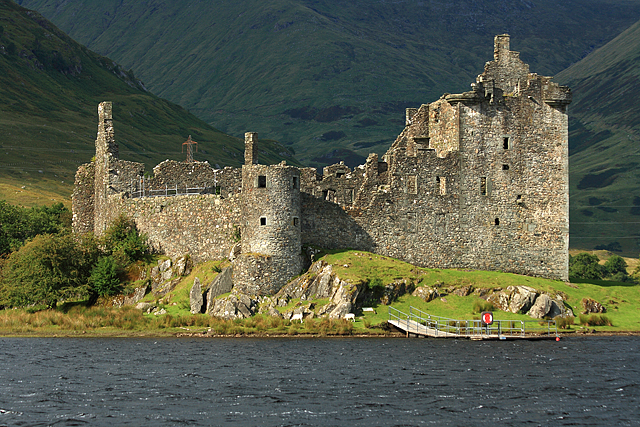
Originally, Finlarig Castle was protected by an outer defensive wall known as a barmekin. This enclosure would have included a courtyard and additional defensive structures, enhancing the castle's security. Today, only fragments of this wall remain, and the site is considered dangerously ruinous, reflecting centuries of neglect and exposure to the elements.
Notable features and local legends
Adjacent to the north wall is a stone-lined pit with a mysterious history. Local legend claims it was used for the beheading of prisoners of noble blood, while commoners were said to have been hanged from a nearby oak tree. Archaeological interpretations suggest the pit may have functioned as a cistern for water storage, demonstrating the practical aspects of castle life alongside its darker folklore.
Breadalbane mausoleum and later history
Near Finlarig Castle stands the remnants of the Breadalbane Mausoleum, a brick-built chapel erected in 1829 in a mock-Tudor style. This mausoleum replaced an earlier chapel and burial ground founded in 1523 by Sir Colin Campbell, an ancestor of the Earls of Breadalbane. The chapel served as the burial place for notable clan members, including Black Duncan Campbell and later lairds such as Sir Gavin Campbell and his wife Alma Graham.
Despite its historical importance, the mausoleum has suffered extensive decay and collapse over the years, mirroring the castle's own decline. Together, these ruins provide a poignant glimpse into the clan's legacy and the architectural evolution of their estates.
Current condition and visitor experience
Today, Finlarig Castle remains a ruin with significant structural instability. Visitors can explore the site, but caution is advised due to the dangerous state of the remaining walls and features. The castle's dramatic setting on a peninsula offers striking views of the surrounding Scottish landscape, including the waters of Loch Tay and the River Lochay.
While the castle and mausoleum are not fully preserved, they continue to attract interest from historians, architects, and tourists fascinated by Scotland's Renaissance castles and clan heritage. The site exemplifies the challenges of conserving early modern fortifications and the rich cultural narratives embedded in Scotland's historic castles.
Architectural and historical significance
Finlarig Castle is an important example of the Scottish tower house tradition, combining residential comfort with defensive capabilities. Its L-plan design and royal heraldry reflect the political aspirations of the Campbells during the early 1600s. The castle's association with figures such as Black Duncan Campbell and Rob Roy MacGregor adds to its historical allure.
The presence of the Breadalbane Mausoleum nearby further enriches the site, linking the castle to the broader narrative of clan identity, memory, and architectural patronage spanning several centuries. Despite its current ruinous state, Finlarig Castle remains a valuable cultural and historical landmark within the Scottish landscape.
Frequently asked questions (FAQ)
- How do I get to Finlarig Castle?
- Finlarig Castle is located in Killin, Scotland, easily accessible by car via the A827 road. There are also public transport options available, with bus services connecting to Killin from larger cities such as Stirling and Perth.
- What is the historical significance of Finlarig Castle?
- Finlarig Castle dates back to the 16th century and was the seat of the Campbell clan in the area. It played a crucial role in the region's history, particularly during the clan conflicts and has connections to notable historical figures.
- When was Finlarig Castle built?
- Construction of Finlarig Castle began in the late 1500s, with significant developments continuing into the early 1600s. The castle reflects the architectural styles of its time, showcasing the evolution of Scottish castle design.
- Can I visit Finlarig Castle?
- Yes, visitors are welcome to explore Finlarig Castle, although it’s important to check the opening hours and any guided tour availability before your visit. The site is open for public access, allowing you to wander the grounds and appreciate the historical ruins.
- Why is Finlarig Castle an important architectural site?
- Finlarig Castle is a fine example of Scottish baronial architecture with its unique stonework and layout. Its design showcases the defensive features typical of the period, making it an important study for those interested in historical architecture.
- Is it possible to access Finlarig Castle for those with mobility issues?
- Access to Finlarig Castle may be challenging for individuals with mobility issues due to uneven terrain and the nature of the ruins. It is advisable to contact local visitor information for the best access routes and any assistance that may be available.
- What is the best time to visit Finlarig Castle?
- The best time to visit Finlarig Castle is during the spring and summer months when the weather is generally milder and the gardens are in full bloom. Early autumn can also be a beautiful time to visit, offering stunning fall foliage in the surrounding area.
- What are the ticket prices for visiting Finlarig Castle?
- Entry to Finlarig Castle is typically free, but donations are encouraged to help with the maintenance of the site. Check local tourism websites for any updates on guided tours that might have associated costs.
- What are the opening hours for Finlarig Castle?
- Finlarig Castle is open year-round, but opening hours can vary seasonally. It's recommended to check ahead of your visit for the most current information regarding specific hours of operation.
- What are some nearby attractions to Finlarig Castle?
- Nearby attractions include the stunning Loch Tay, where you can enjoy various water sports and scenic walks, as well as the picturesque village of Killin itself, known for its charming shops and local eateries. Additionally, the Falls of Dochart are a short walk away and offer beautiful natural scenery.
Information
Loading map...
Visitor reviews
No reviews yet. Been here? Write the first review and help other travelers!
Write the first reviewVisited this castle? Share your experience
Your review helps other travelers and adds first-hand knowledge to our encyclopedia.