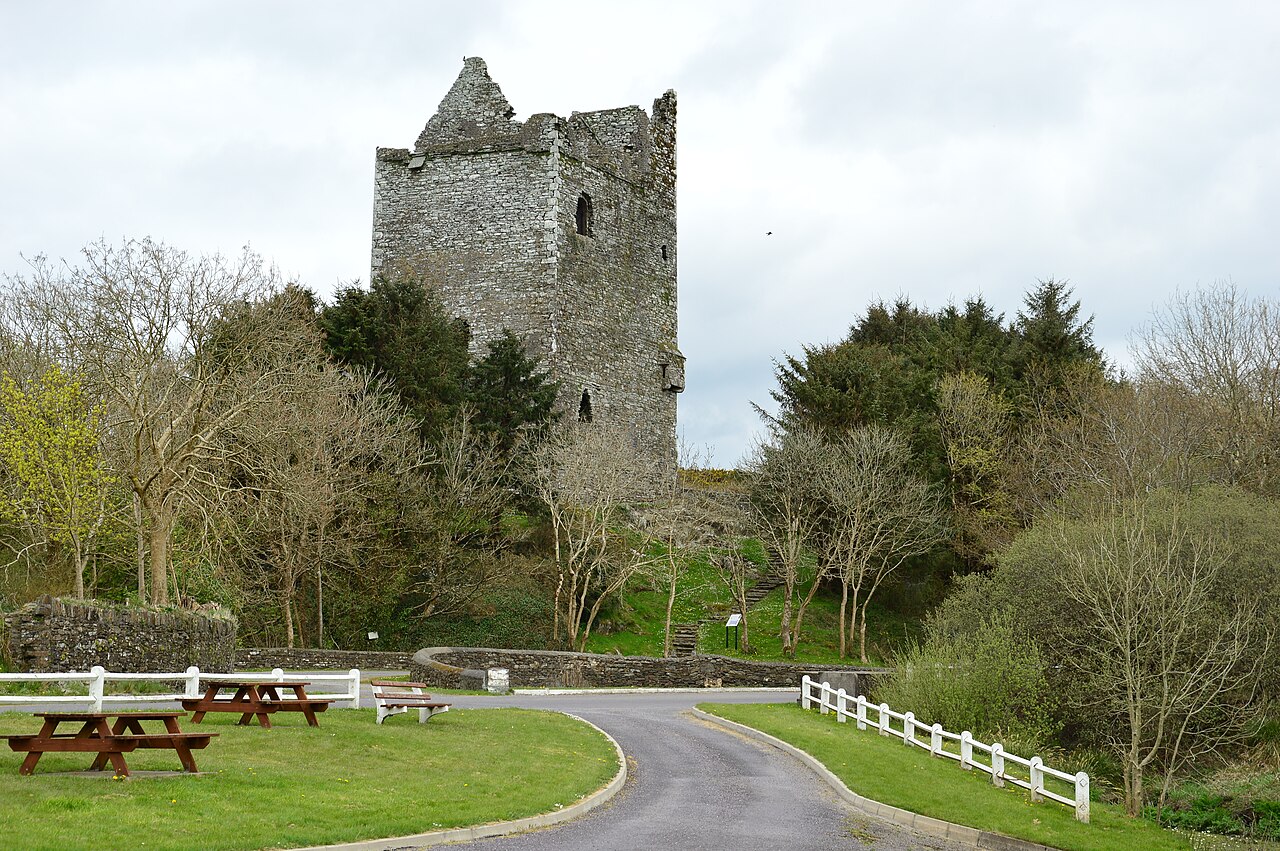
Kilcascan Castle
Kilcascan Castle is a distinctive example of an 18th-century castellated mansion located on an estate west of the village of Ballineen in County Cork, Ireland. Unlike medieval fortresses, Kilcascan Castle was constructed around 1760 by the Daunt family as a residential manor designed to evoke the appearance of a traditional castle rather than serve a defensive purpose. Its architecture reflects the Romantic Gothic revival trend popular among the gentry during the Georgian period, featuring ornamental battlements and turrets that simulate medieval fortifications.
Historical background and significance
The castle's most notable historical event is its association with what is reputed to be the last duel fought in Ireland in 1826. This duel resulted in the death of Joseph Daunt, who was killed by his cousin and neighbor from Manch House. This event marks a rare instance of aristocratic conflict extending into lethal combat in the early 19th century Ireland, reflecting the lingering traditions of honor and personal justice among the landed classes.
Beyond this dramatic episode, Kilcascan Castle was the home of William Joseph O'Neill Daunt, a prominent politician of the era. The Daunt family maintained ownership of the estate until 1989, when it was sold to private owners who have since embarked on a gradual restoration process to preserve its unique architectural character.
Architectural features and style
Though Kilcascan Castle is not a medieval fortress, it incorporates several castellated architectural elements typical of the Georgian Gothic revival style. The building is characterized by its battlemented parapets, turrets, and pointed arch windows, all designed to create the romantic illusion of a fortress. The mansion's layout includes a central block with symmetrical wings, typical of Georgian country houses, but with the added decorative features that give it a castle-like silhouette.
The interior originally combined the comforts of an 18th-century manor with Gothic-inspired decorative motifs, including ornate plasterwork and wooden paneling. While much of the interior detail has been altered or lost over time, ongoing restoration efforts aim to recover some of these elements.
Restoration and current status
Since its acquisition by new owners in 1989, Kilcascan Castle has undergone gradual restoration to stabilize the structure and preserve its historic character. The restoration focuses on maintaining the external castellated features and repairing the masonry, roof, and windows to prevent further deterioration.
The castle is currently partially restored and is accessible to visitors on select days during the summer months. Although not a public museum, permission to explore the grounds can occasionally be obtained from the owners or local residents, as experienced by visitors who have been welcomed by neighbors enjoying the estate.
Location and visitor information
Kilcascan Castle is situated within the rural landscape of County Cork, approximately west of the village of Ballineen. The estate offers a glimpse into the lifestyle of the Georgian gentry in Ireland and stands as an example of 18th-century architectural romanticism rather than military fortification.
Visitors interested in exploring Kilcascan Castle should plan their visit during the summer when the castle is open on specific days. Access may require prior arrangement with the current owners or local contacts, as the site is privately owned and not fully open to the public year-round.
Legacy and cultural context
While Kilcascan Castle does not have the medieval origins or military significance of many Irish castles, it represents an important cultural trend of the 18th century where aristocratic families sought to express status and heritage through the construction of faux castles. This reflects the broader European fascination with medieval styles during the Georgian period and the adaptation of these motifs for residential architecture.
The castle's association with the last duel in Ireland adds a unique historical footnote that connects it to the social customs and conflicts of its time, providing a narrative that enriches its architectural presence.
Frequently asked questions (FAQ)
- When was Kilcascan Castle built and by whom?
- Kilcascan Castle was built around 1760 by the Daunt family as a castellated mansion rather than a defensive fortress.
- What is the historical significance of Kilcascan Castle?
- The castle is known for being the site of the last duel in Ireland in 1826, where Joseph Daunt was killed by his cousin. It was also the home of politician William Joseph O'Neill Daunt.
- Can I visit Kilcascan Castle?
- Yes, Kilcascan Castle can be visited on select days during the summer. It is privately owned, so visitors should check access availability in advance.
- What architectural style characterizes Kilcascan Castle?
- The castle features Romantic Neo-Gothic elements typical of 18th-century castellated mansions, including battlements, turrets, and pointed arch windows.
- What is the current condition of Kilcascan Castle?
- Kilcascan Castle is partially restored, with ongoing efforts to preserve its external castellated features and structural integrity.
Information
Current owner
Private owner
Loading map...
Visitor reviews
No reviews yet. Been here? Write the first review and help other travelers!
Write the first reviewVisited this castle? Share your experience
Your review helps other travelers and adds first-hand knowledge to our encyclopedia.