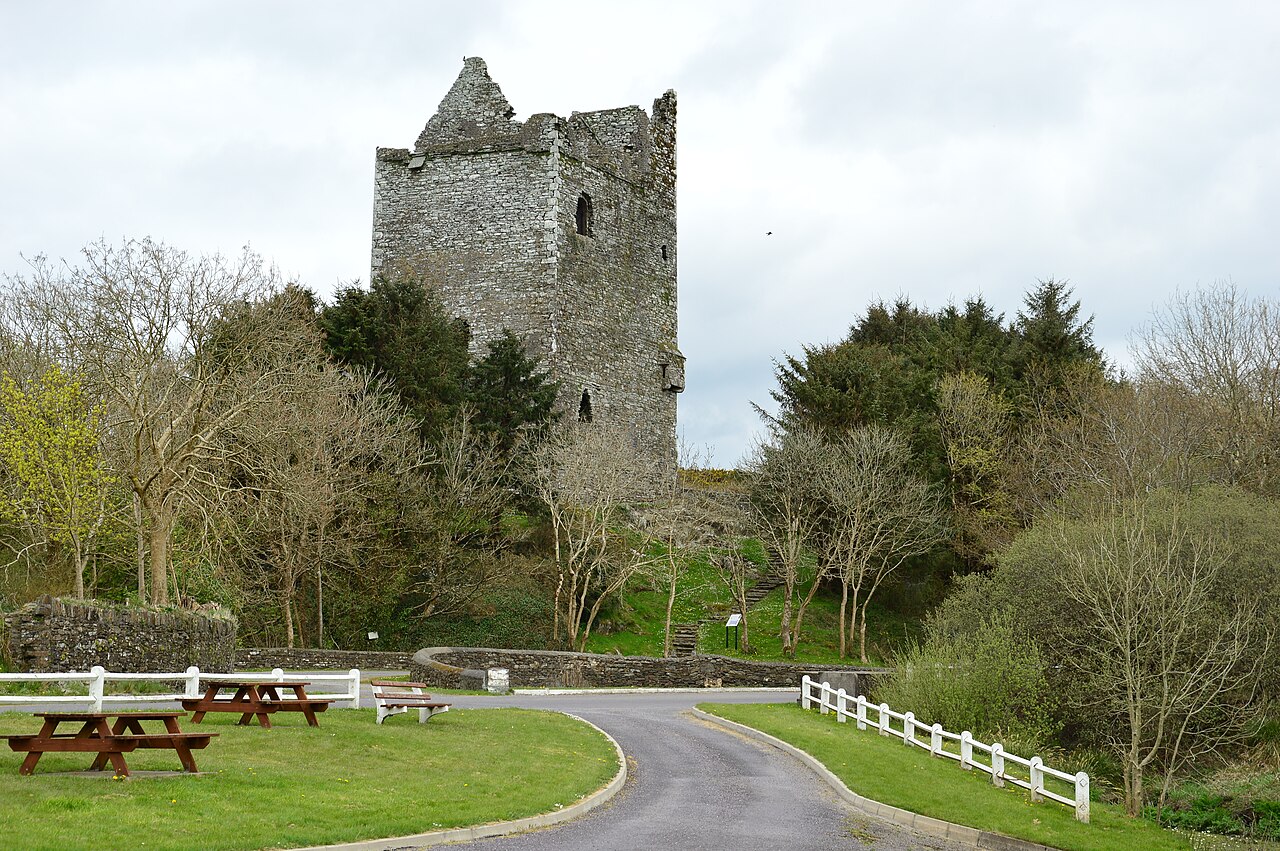
Ballinvard Castle
Ballinvard Castle, also known as Rossmore, is a 16th-century Renaissance castle located in a field in the townland of Rossmore, County Cork, Ireland. This castle was historically an O'Hurley stronghold, most likely constructed by Randal Oge Hurley of Ballynacarriga Castle during the late 16th century. The castle's architecture reflects the Renaissance period influences seen in Ireland during that time, combining defensive features with residential elements typical of Irish tower houses of the era.
Historical context and ownership
The castle played a significant role during the Cromwellian conquest of Ireland in the mid-17th century. In 1650, it was seized and forfeited by English forces. Subsequently, the castle was briefly garrisoned by English soldiers who, upon their departure, deliberately damaged the battlements to render the castle indefensible. This strategic destruction marked the end of Ballinvard Castle as a military stronghold.
Following the conquest, the castle and its surrounding lands were granted to the Archbishop of Dublin, indicating a shift in ownership from the native Irish O'Hurley family to English ecclesiastical authorities. This transfer reflects the broader redistribution of Irish lands during the Cromwellian period.
Architectural features and condition
Ballinvard Castle is characterized by its tower house design, a common architectural style for Irish castles in the Renaissance period. The structure features a prominent tower which remains a notable element of the castle despite its current locked and inaccessible state. The castle's location in a field with difficult access adds to its secluded and somewhat preserved atmosphere.
The deliberate damage to the battlements has left the castle partially ruined, with the defensive capabilities compromised. However, the surviving tower and masonry provide valuable insights into the construction techniques and defensive strategies employed by Irish nobility in the 16th century.
Access and preservation
Today, Ballinvard Castle remains locked and is situated in a field that is challenging to enter, limiting public access. Despite these restrictions, the castle's tower is recognized as a significant historical and architectural feature. Preservation efforts appear limited, and the castle stands as a testament to the turbulent history of Ireland during the Renaissance and Cromwellian eras.
Visitors interested in Irish Renaissance castles and the history of the O'Hurley family may find Ballinvard Castle a compelling site, though access is restricted and the castle is not fully preserved.
Frequently asked questions (FAQ)
- When was Ballinvard Castle built and by whom?
- Ballinvard Castle was built in the late 16th century, most likely by Randal Oge Hurley of Ballynacarriga Castle, as an O'Hurley family stronghold.
- What happened to Ballinvard Castle during the Cromwellian conquest?
- In 1650, the castle was taken by English forces, garrisoned briefly, and its battlements were destroyed to prevent further military use.
- Is Ballinvard Castle accessible to visitors today?
- The castle is currently locked and located in a field that is difficult to enter, so public access is very limited.
- What architectural style does Ballinvard Castle represent?
- Ballinvard Castle is a Renaissance period tower house, typical of Irish noble residences in the 16th century.
- Who owned Ballinvard Castle after the Cromwellian conquest?
- After the conquest, the castle and its lands were granted to the Archbishop of Dublin, reflecting a change in ownership from the O'Hurley family.
Information
Loading map...
Visitor reviews
No reviews yet. Been here? Write the first review and help other travelers!
Write the first reviewVisited this castle? Share your experience
Your review helps other travelers and adds first-hand knowledge to our encyclopedia.