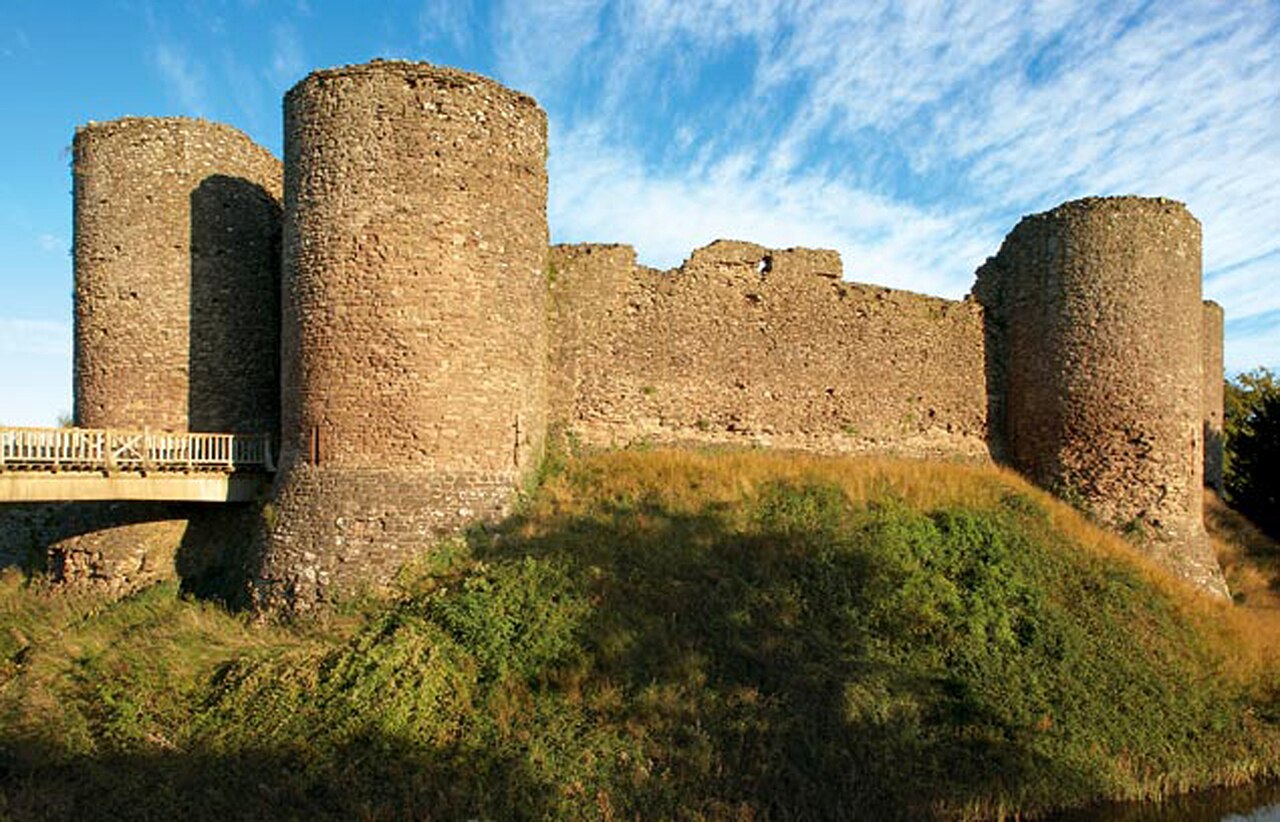
Kilbrittain Castle
Kilbrittain Castle is a notable historic fortress located in a field east of the village of Kilbrittain in County Cork, Ireland. It is considered one of the oldest inhabited castles in Ireland, with origins that may trace back to the early 11th century. The castle's elevated position provides commanding views of the surrounding landscape, a strategic advantage that was crucial for defense and surveillance in medieval times.
Early origins and medieval history
The earliest fortification at the site is believed to have been constructed around 1035 by the O'Mahoney clan. This initial structure likely consisted of a simple defensive earthwork or wooden fortification typical of the period. Subsequently, the castle came under the control of the Norman de Courcy family, who are credited with expanding and strengthening the fortifications. The Normans played a significant role in shaping the castle's medieval architecture and defensive capabilities.
In 1295, the castle was seized by the MacCarthy family after they defeated the de Courcys in battle. The MacCarthys were a powerful Gaelic Irish dynasty who held significant influence in Munster. Throughout the 15th century, ownership of Kilbrittain Castle fluctuated between the MacCarthys and the de Courcys, reflecting the turbulent political and military struggles of the era. Eventually, the castle became the principal seat of the MacCarthy Reagh branch, a prominent lineage within the MacCarthy dynasty.
Architectural features and style
Kilbrittain Castle is primarily a late medieval stone fortress dating from the 15th century. Its construction reflects typical defensive features of the period, including thick stone walls, battlements, and towers designed for both defense and residence. The castle's layout likely included a keep or donjon as the central stronghold, surrounded by curtain walls enclosing a courtyard. Defensive elements such as narrow slit windows for archers and a fortified gatehouse would have been integral to its design.
While much of the original medieval fabric was altered or restored in later centuries, traces of the Gothic architectural style may be present in window openings and stonework details, typical of Irish castles of this period. The castle's elevated site on a natural rise enhances its defensive posture and visibility.
Post-medieval history and restoration
In 1642, during the upheavals of the Irish Confederate Wars and the Cromwellian conquest, the MacCarthys lost possession of Kilbrittain Castle due to their allegiance to the Royalist cause. The castle and its lands were confiscated and granted to the Hollow Sword Blade Company, a London-based financial consortium, as repayment of Crown debts. Following this transfer, the castle fell into disrepair and partial ruin.
The 18th century saw a revival of the castle when it was purchased by the Stalwell family. They undertook extensive restoration work, converting the medieval fortress ruins into a residential house. Unfortunately, this house was destroyed by fire in 1920, further damaging the historic structure.
From 1969 onwards, a significant restoration effort was led by Russell Winn, who restored parts of Kilbrittain Castle for use as a private residence. Today, the castle remains inhabited but is not open to the public, preserving its legacy as a living historical monument.
Cultural significance and heritage
Kilbrittain Castle holds a unique place in Irish heritage as one of the oldest continuously inhabited castles, reflecting centuries of Irish history, clan rivalries, and architectural evolution. Its association with prominent families such as the O'Mahoneys, de Courcys, and MacCarthys highlights its role in regional power dynamics. The castle's survival through periods of conflict, neglect, and restoration embodies the resilience of Ireland's medieval architectural heritage.
Although access to the interior is restricted due to its private ownership, the castle's exterior and surrounding landscape remain a point of interest for historians, architects, and visitors intrigued by Ireland's medieval past.
Frequently asked questions (FAQ)
- How do I visit Kilbrittain Castle?
- Kilbrittain Castle is privately owned and not open to the public, so visits to the interior are not permitted. However, the castle can be viewed from nearby public roads and fields.
- What is the historical significance of Kilbrittain Castle?
- Kilbrittain Castle is one of the oldest inhabited castles in Ireland, with origins dating back to the 11th century. It was a strategic stronghold for the O'Mahoneys, de Courcys, and MacCarthys, reflecting important medieval Irish clan history.
- When was Kilbrittain Castle built?
- The current stone structure of Kilbrittain Castle primarily dates from the 15th century, although the site has earlier origins possibly from 1035.
- Can I see the interior of Kilbrittain Castle?
- The castle is a private residence and is not open for interior tours or public access.
- Why is Kilbrittain Castle important architecturally?
- Kilbrittain Castle exemplifies late medieval Irish castle architecture with features like thick stone walls, battlements, and defensive towers typical of the Gothic style.
Information
Current owner
Private owner
Loading map...
Visitor reviews
No reviews yet. Been here? Write the first review and help other travelers!
Write the first reviewVisited this castle? Share your experience
Your review helps other travelers and adds first-hand knowledge to our encyclopedia.