Khornabuji Castle
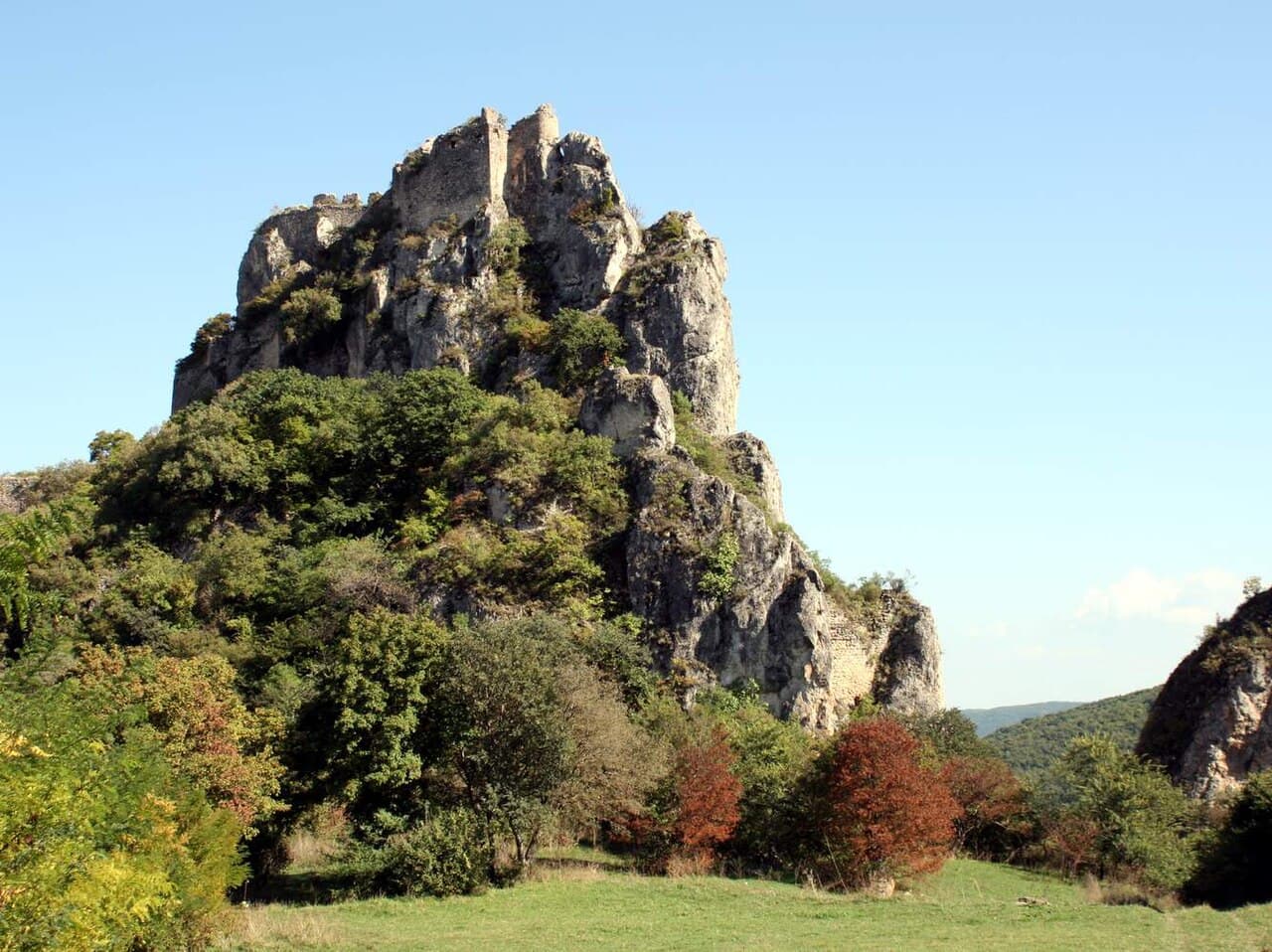
Khornabuji Castle, also known as the Fortress of Tamar, is a significant archaeological and historical site located in the eastern Georgian region of Kakheti, near the town of Dedoplistsqaro. Situated on the commanding heights of the Tsiv-Gombori Range, this castle overlooks the fertile valleys of the Iori and Alazani rivers, which made it a strategic defensive position from ancient times.
The origins of Khornabuji Castle trace back to the end of the 1st millennium BC, making it one of the oldest known fortifications in the region. Its initial construction aimed to control the vital river valleys and protect the settlements that developed in the area. Extensive archaeological excavations conducted in the 1970s uncovered evidence of a thriving settlement beneath the castle, revealing continuous occupation from the pre-medieval period through the medieval era.
Early history and archaeological significance
The earliest written records mentioning Khornabuji date to the reign of Vakhtang I of Iberia (also known as Vakhtang the Wolf Head) in the 5th century. At that time, Khornabuji was one of the largest settlements in the Kakheti region and held ecclesiastical importance, as Vakhtang appointed a bishop there following the construction of the Svetitskhoveli Cathedral in Mtskheta. This highlights the castle's role not only as a military stronghold but also as a center of religious and administrative authority.
In the late 5th or early 6th century, the castle and its surrounding town fell under the control of the Sasanian Empire. Historical accounts suggest that while the town was destroyed during this period, the fortress itself survived, continuing to serve as a defensive bastion. Over the subsequent centuries, the town was reestablished on the flatlands south of the castle rock, indicating the resilience and strategic importance of the location.
Medieval reconstruction and historical events
During the 13th century, some historical sources attribute the rebuilding of Khornabuji Castle to the reign of Queen Tamar of Georgia, a prominent medieval monarch known for her architectural patronage and military campaigns. However, there is scholarly debate about whether these references pertain specifically to Khornabuji or to other fortifications constructed during her reign.
The castle and its township experienced significant upheaval in the mid-13th century. Around 1264, according to one interpretation of historical records, the area was devastated by Mongol invasions led by Berke Khan. Survivors reportedly relocated to the town of Sighnaghi, resulting in the abandonment of the settlement outside the castle walls. An alternative historical perspective suggests that the decline of the township occurred in the 17th century during invasions by Iranian forces under Shāh Abbās, which led to widespread destruction in the region.
Reconstruction under Heraclius II
The fortress saw restoration efforts under Heraclius II of Kartli-Kakheti in the 18th century. While the castle itself was rebuilt to serve defensive purposes during his reign, the surrounding township was not reestablished, leaving the fortress isolated on its rocky outcrop. This restoration reflects the continued military significance of the site even as regional political dynamics shifted.
Architectural features and defensive structures
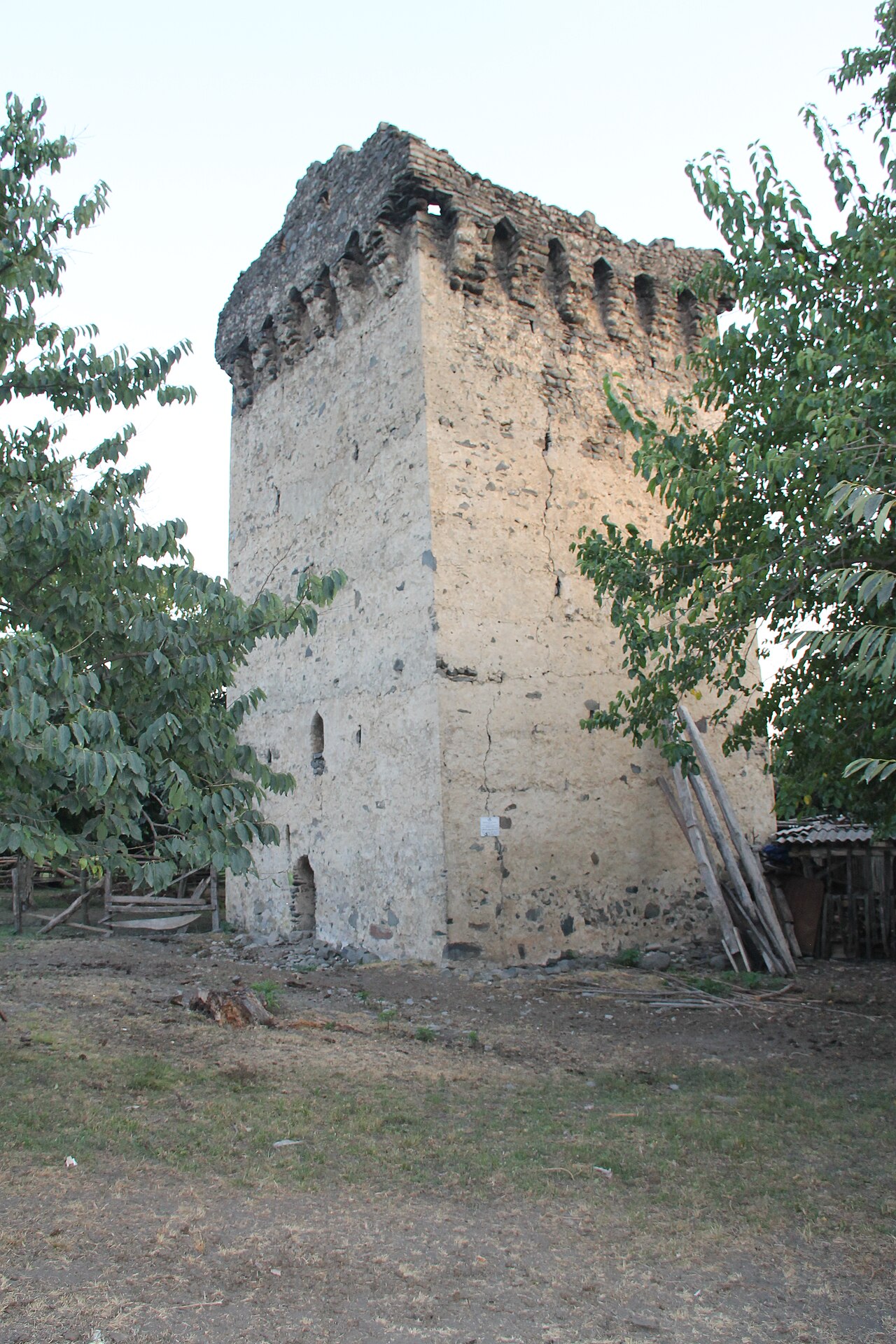
Khornabuji Castle is classified as an archaeological ruin today, with remnants of its medieval fortifications still visible. The castle's location on a steep rocky hill provided natural defense, enhanced by man-made fortifications such as thick stone walls, towers, and battlements designed to repel invaders. The strategic position allowed control over the adjacent river valleys, crucial for monitoring trade routes and military movements.
The castle's layout includes remains of defensive walls that once enclosed the fortress, as well as foundations of towers that would have served as lookout points and platforms for archers. The rocky terrain limited the size of the fortress but increased its defensibility. Archaeological findings also suggest the presence of residential quarters, storage facilities, and possibly a chapel within the castle precincts, indicating its role as both a military and administrative center.
Khornabuji in the context of Georgian history
Khornabuji Castle holds a notable place in the history of eastern Georgia, reflecting the region's turbulent past marked by invasions, religious developments, and shifting political powers. Its connection to prominent figures such as Vakhtang I and Queen Tamar underscores its importance in Georgian cultural heritage. The castle's endurance through centuries of conflict and reconstruction highlights the resilience of Georgian fortification architecture.
Today, Khornabuji is a valuable site for historians and archaeologists studying medieval Georgian fortifications and settlement patterns. Its ruins offer insights into the military strategies and architectural techniques employed in the Caucasus region during the High medieval period. The site also attracts visitors interested in Georgia's ancient history and the dramatic landscapes of Kakheti.
Visiting Khornabuji Castle
While the castle remains are in a state of ruins, the site is accessible to visitors who can explore the rugged terrain and observe the stone remnants that hint at the fortress's former grandeur. The location provides panoramic views of the surrounding valleys, making it a point of interest for both history enthusiasts and nature lovers. Visitors should prepare for uneven ground and limited facilities, as the site is primarily an archaeological preserve rather than a fully restored tourist attraction.
Frequently asked questions (FAQ)
- What is the historical significance of Khornabuji Castle?
- Khornabuji Castle is a significant historical site located in Georgia, known for its strategic military position and rich history dating back to the 6th century. It played a vital role in the defense against invasions and has seen numerous battles throughout its existence, making it a key landmark in Georgian heritage.
- When was Khornabuji Castle built?
- The construction of Khornabuji Castle dates back to the 6th century, during the early medieval period. It was built as a defensive fortress and has undergone various renovations and expansions over the centuries, reflecting the architectural styles of different eras.
- How do I get to Khornabuji Castle?
- Khornabuji Castle is located near Dedoplistsqaro in Georgia, accessible by car or local transportation from nearby cities. The castle is situated on a hill, so visitors may need to hike a short distance to reach the entrance, which offers stunning views of the surrounding landscape.
- What are the opening hours for Khornabuji Castle?
- Khornabuji Castle is generally open to visitors year-round, with specific hours that may vary by season. It is advisable to check local resources or visitor information before planning your trip, as opening times may change due to weather or maintenance.
- Can I take photos inside Khornabuji Castle?
- Yes, visitors are welcome to take photos of the castle and its stunning surroundings. Capturing the beauty of the architecture and the panoramic views from the castle is highly encouraged, but be respectful of other visitors and the site's historical significance.
- Is it possible to explore the castle grounds on my own?
- Yes, visitors can explore Khornabuji Castle's grounds independently, allowing for a personal experience of its history and architecture. However, guided tours are also available for those who prefer a more in-depth understanding of the castle's significance.
- What is the best time to visit Khornabuji Castle?
- The best time to visit Khornabuji Castle is during the spring and fall months when the weather is mild and the landscape is particularly beautiful. Summer can be hot, while winter may bring snow, which could affect accessibility, so plan your visit accordingly.
- Are there any nearby attractions to Khornabuji Castle?
- Yes, there are several nearby attractions, including the scenic Alazani Valley and other historical sites in the region. Visitors can also explore the local villages and enjoy traditional Georgian cuisine, making it a great stop for a broader cultural experience.
- What are the ticket prices for Khornabuji Castle?
- Entry to Khornabuji Castle typically has a modest ticket price, making it an affordable destination for visitors. It's best to check for updated pricing information before your visit, as fees may vary based on the season or any special events.
Photo gallery

Information
Current owner
State museum
Loading map...
Visitor reviews
No reviews yet. Been here? Write the first review and help other travelers!
Write the first reviewVisited this castle? Share your experience
Your review helps other travelers and adds first-hand knowledge to our encyclopedia.