Kernavė
Kernavė is a significant archaeological site and former medieval capital of the Grand Duchy of Lithuania, located in the Širvintos district municipality in southeastern Lithuania. The site is renowned for its well-preserved group of hillforts and ancient settlements that date back to the Late Bronze Age and Early Medieval period. Kernavė offers a unique glimpse into the early history and development of Lithuanian statehood and culture.
Historical significance and early settlement
The area of Kernavė has been inhabited since at least the 3rd millennium BCE, with archaeological evidence revealing continuous settlement through the Iron Age and into the medieval era. The site served as a strategic defensive location due to its position on the banks of the Neris River, surrounded by natural hills which were adapted into fortified hillforts. During the 13th and 14th centuries, Kernavė was one of the main centers of the Grand Duchy of Lithuania before the capital moved to Vilnius.
Architectural features of the hillfort complex
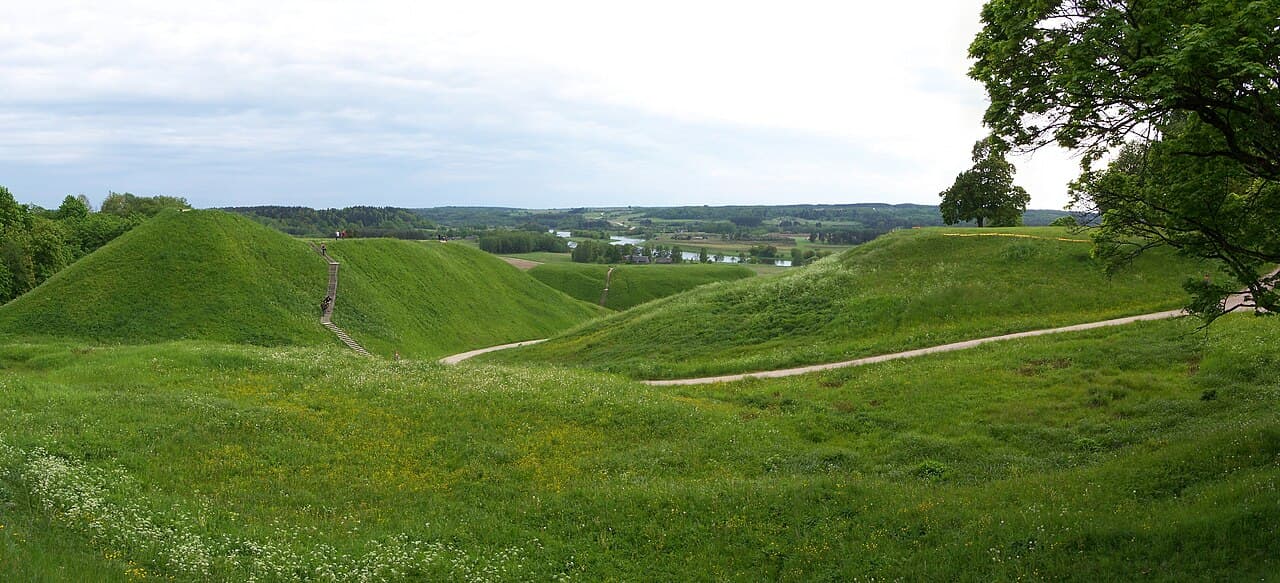
The Kernavė archaeological site consists of five major hillforts: Piliakalnis, Mindaugas Castle Hill, Lizdeika Mound, Balnakalnis, and Linkuvėnai. These earthworks are surrounded by defensive ditches and ramparts, showcasing the typical hill castle fortification style prevalent in the Baltic region during the medieval period. The hillforts were centers of political and military activity, featuring wooden fortifications, residential buildings, and religious sites.
Defensive structures and layout
The fortifications at Kernavė were primarily constructed from earth and timber, with steep slopes and multiple layers of defensive embankments designed to repel invaders. The layout of the hillforts demonstrates a sophisticated understanding of topography and defense, with interconnected mounds allowing for communication and coordinated defense. Archaeological excavations have uncovered remains of wooden palisades, gates, and watchtowers.
Cultural and archaeological importance
Kernavė is recognized as a Lithuanian state cultural reserve, established in 1989 to protect the extensive archaeological remains and surrounding landscape. The site provides invaluable insight into the social, economic, and military aspects of early Lithuanian society. Numerous artifacts, including pottery, tools, weapons, and jewelry, have been discovered, shedding light on the daily lives and craftsmanship of its inhabitants.
UNESCO World Heritage designation
In 2004, the Kernavė Archaeological Site was inscribed on the UNESCO World Heritage List for its outstanding universal value as an archaeological landscape illustrating the development of Baltic cultures from prehistoric times through the medieval period. This designation highlights Kernavė's importance not only to Lithuania but to the broader understanding of European medieval history.
Visiting Kernavė today
Today, Kernavė is a popular tourist destination offering visitors the chance to explore the ancient hillforts and the surrounding cultural reserve. The site features walking trails, informational signage, and a small museum displaying artifacts found during excavations. Visitors can experience panoramic views of the Neris River valley and the unique topography that made Kernavė a natural fortress.
Preservation and ongoing research
While the original wooden structures have not survived, the earthworks and archaeological remains are well-preserved and continue to be the subject of scholarly research and conservation efforts. The site is classified as archaeological ruins and is carefully managed to balance public access with preservation.
Legacy of Kernavė in Lithuanian heritage
Kernavė holds a special place in Lithuanian national identity as one of the earliest known centers of Lithuanian culture and governance. It represents the transition from prehistoric societies to organized medieval states. The site is frequently used for cultural events and educational programs that celebrate Lithuania's rich history and archaeological heritage.
Frequently asked questions (FAQ)
- When was Kernavė first inhabited?
- Kernavė has been inhabited since at least the 3rd millennium BCE, with continuous settlement through the Iron Age and medieval period.
- What makes Kernavė archaeologically important?
- Kernavė provides valuable insight into Baltic cultures from prehistoric times through the medieval era, with well-preserved hillforts and numerous artifacts.
- Is Kernavė open to visitors?
- Yes, Kernavė is open to visitors with walking trails, a museum, and informational signage to explore the archaeological site.
- What is the UNESCO status of Kernavė?
- Kernavė Archaeological Site was inscribed as a UNESCO World Heritage site in 2004 for its outstanding universal value.
- What type of castle is Kernavė?
- Kernavė is classified as an archaeological ruins site, featuring a complex of medieval hillforts rather than a traditional castle structure.
Photo gallery

Information
Current owner
Lithuanian government
Loading map...
Visitor reviews
No reviews yet. Been here? Write the first review and help other travelers!
Write the first reviewVisited this castle? Share your experience
Your review helps other travelers and adds first-hand knowledge to our encyclopedia.