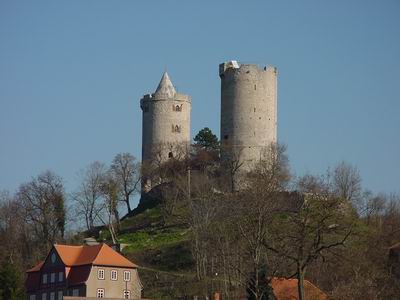
Kellereischloss
Kellereischloss is a notable Baroque palace located in Hammelburg, Bavaria. Constructed between 1726 and 1731, it was designed by Andrea Gallasini (1681-1766), the court architect to Adolphus von Dalberg, the Prince-Abbot of Fulda. The palace stands on a site with a long history as a wine cellar and tax collection point dating back to 1279. The name "Kellereischloss" translates to "Wine Cellar Castle," reflecting its original function and enduring association with wine production in the region.
Historical background and significance
The location of Kellereischloss has been central to Hammelburg's wine trade for centuries. Initially serving as a wine cellar and administrative center for tax collection on wine since the late 13th century, it evolved into a summer residence for the Prince-Abbot of Fulda in the early 18th century. The transformation into a palace was commissioned by Adolphus von Dalberg, who sought a prestigious retreat that reflected his status and the wealth generated by the local wine industry.
Adolphus von Dalberg's decision to build Kellereischloss as a summer residence was realized through the work of Andrea Gallasini, an architect renowned for his mastery of Baroque architecture. The Prince-Abbot's satisfaction with the palace is underscored by the fact that he died there in 1737, just a few years after its completion.
Architectural features and design
Kellereischloss exemplifies the Baroque style with its elegant proportions and ornamental details. The palace's design integrates both residential and functional elements, reflecting its dual role as a noble residence and a center for wine storage and administration.
One of the palace's most remarkable features is its extensive underground cellars. These giant cellars were capable of storing an impressive volume of wine, reaching a peak at the end of the 18th century when they held 101 wine barrels with a total capacity exceeding 700,000 litres. This vast storage capability highlights the importance of wine production in Hammelburg and the economic role Kellereischloss played in the region.
Palace layout and structural elements
The palace includes a series of reception rooms, private chambers, and administrative offices arranged around courtyards, typical of Baroque palatial architecture. The facades feature decorative stucco work and window frames that emphasize symmetry and grandeur. The roofline is punctuated by dormer windows and chimneys, adding to the visual complexity of the structure.
Cellars and wine storage technology
The cellars beneath Kellereischloss are vaulted and constructed with robust masonry to maintain stable temperatures essential for wine preservation. Their design reflects advanced knowledge of storage conditions necessary for high-quality wine aging. The scale of these cellars was exceptional for the time, underscoring the castle's role as a wine production hub.
The cultural and economic role of Kellereischloss
Throughout the 18th century, Kellereischloss was not only a noble residence but also a symbol of the prosperity brought by the wine industry in Hammelburg. The palace's cellars supported the storage and aging of vast quantities of wine, facilitating trade and taxation. This dual function of residence and wine cellar was somewhat unique among palatial estates of the period.
The estate's connection to the Prince-Abbot of Fulda linked it to broader ecclesiastical and political networks, enhancing its significance beyond the local context. The palace remains a testament to the intertwined nature of aristocratic life and economic enterprise in early modern Germany.
Preservation and current status
Kellereischloss is well preserved and continues to be a point of interest for visitors to Hammelburg. Its architectural integrity and the survival of its extensive cellars offer valuable insights into Baroque architecture and historic wine production practices.
Today, the palace serves as a cultural landmark, illustrating the historical importance of wine in the region and the architectural ambitions of the Prince-Abbots of Fulda. Its preservation allows for ongoing study and appreciation of 18th-century palatial design and economic history.
Frequently asked questions (FAQ)
- What is the historical significance of Kellereischloss?
- Kellereischloss, located in Hammelburg, Germany, dates back to the 13th century and served as a noble residence and fortification. Its architecture reflects the medieval style, making it an important example of the region's history and heritage.
- When was Kellereischloss built?
- Kellereischloss was constructed in the early 13th century, with significant modifications and expansions occurring over the following centuries. This long history has contributed to its architectural diversity and significance in the area.
- Can I visit Kellereischloss?
- Yes, Kellereischloss is open to visitors throughout the year. Guided tours are available, allowing guests to explore its rich history and stunning architecture.
- What are the opening hours for Kellereischloss?
- Kellereischloss typically opens from 10 AM to 5 PM, but hours may vary seasonally or for special events. It is advisable to check their official website or contact the castle for the most current hours before planning your visit.
- Is it possible to access Kellereischloss with a wheelchair?
- Kellereischloss has made efforts to improve accessibility for all visitors, including those with mobility challenges. However, certain areas may still present difficulties due to the castle's historical architecture, so it's best to inquire in advance.
- What is the best time to visit Kellereischloss?
- The best time to visit Kellereischloss is during the spring and early autumn when the weather is mild, and the gardens are in full bloom. Additionally, these seasons often feature fewer crowds, allowing for a more enjoyable experience.
- Can I find nearby attractions when visiting Kellereischloss?
- Yes, the area around Kellereischloss offers several attractions, including local museums, scenic parks, and vineyards. Visitors can easily explore the charming town of Hammelburg and its surrounding natural beauty.
- What are the ticket prices for visiting Kellereischloss?
- Ticket prices for Kellereischloss are generally affordable, with discounts available for students and seniors. Children under a certain age may enter for free, making it a great family-friendly destination.
Information
Loading map...
Visitor reviews
No reviews yet. Been here? Write the first review and help other travelers!
Write the first reviewVisited this castle? Share your experience
Your review helps other travelers and adds first-hand knowledge to our encyclopedia.