Keenenburg Castle
Keenenburg Castle, locally known as Kasteel Keenenburg, is situated in the village of Schipluiden in the province of South Holland, Netherlands. This late-medieval castle dates back to 1411, when it was constructed by Philips de Blote, a trustee of the Count of Holland. The castle's origins lie in a rectangular tower house featuring 1.5 meter thick walls, built on a substantial square plot surrounded by a moat. Adjacent to the castle, on a similarly moated plot to the east, a bailey was established, providing additional space for service buildings and defensive functions.
Architectural development and structure
Throughout the 15th century, Keenenburg Castle underwent successive enlargements. Despite these expansions, the castle's defensive capabilities remained modest by contemporary military standards, with walls only about 75 centimeters thick in later additions. The castle's design centered around a fortified tower house rather than a fully developed fortress, reflecting its role as a noble residence and local stronghold rather than a major military bastion.
The castle's moat and the presence of a bailey were typical defensive features of the period, intended to deter attackers and provide controlled access. The bailey east of the main tower would have contained essential outbuildings such as stables, workshops, and storage facilities, critical for the castle's daily operation and defense.
Historical significance and military events
Keenenburg Castle's strategic importance became evident during the Eighty Years' War. Around 1573, William of Orange ordered the demolition of the castle to prevent it from falling into the hands of the Spanish troops advancing through the region. At that time, the castle was owned by the Van Egmond family. However, before demolition could be carried out, the castle was captured by Spanish forces. The ensuing military actions inflicted considerable damage on the castle and resulted in the destruction of the original bailey.
Following the conflict, the castle was rebuilt by Otto van Egmond, a member of the owning family. During the 16th century, a new bailey was constructed to the north of the castle, aligned parallel to the river Gaag. This expansion reflected the adaptation of the castle to changing defensive and residential needs in the post-war period.
Decline and archaeological rediscovery
By the end of the 18th century, during the French era around 1798, Keenenburg Castle was demolished. The reasons likely involved changing political circumstances and the declining military relevance of such feudal structures.
Between 1956 and 1989, the site underwent extensive archaeological excavations, revealing the castle's foundations and structural layout. These campaigns provided valuable insights into the castle's construction phases, defensive features, and historical context.
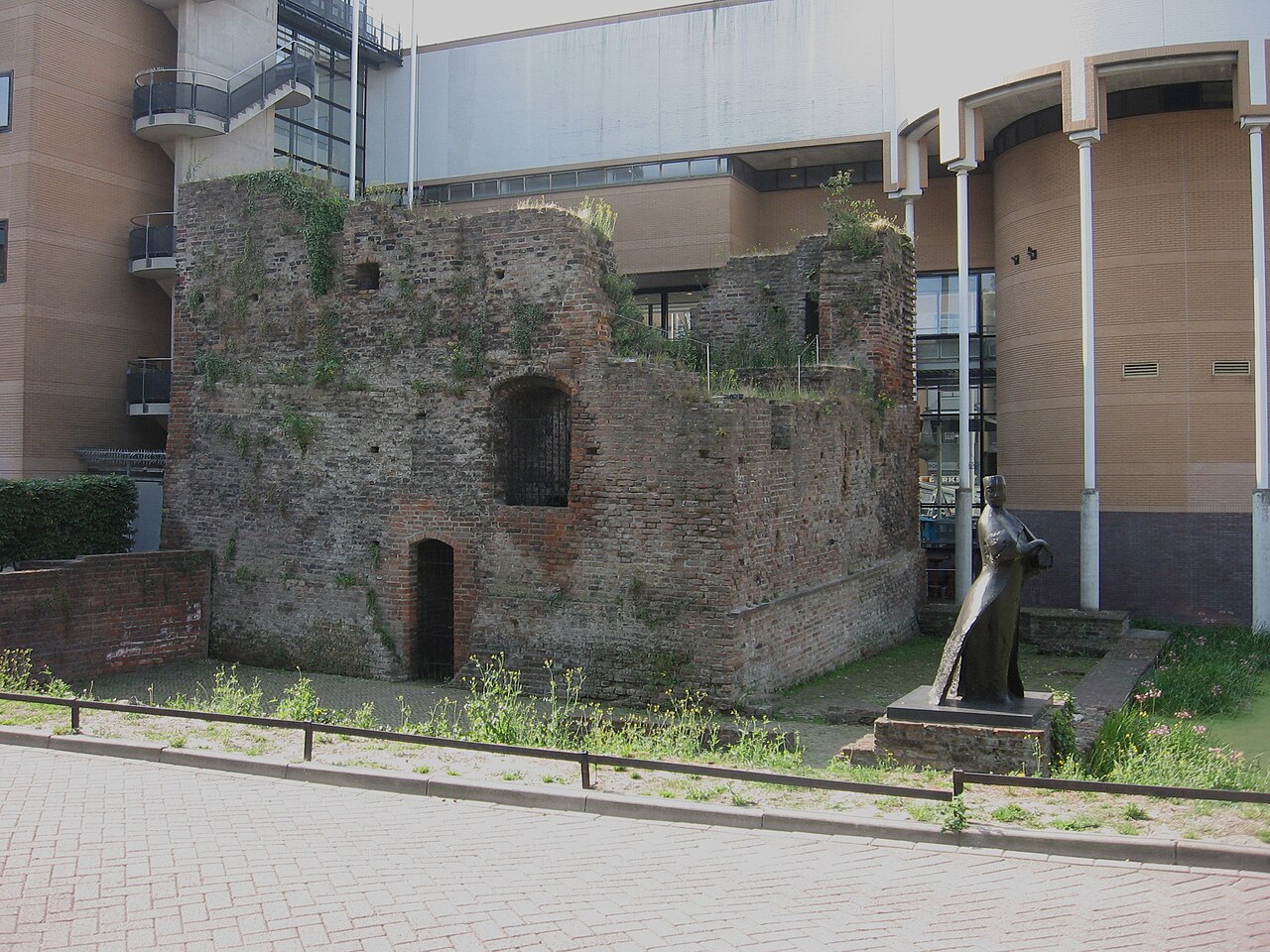
In 1999, parts of the castle were reconstructed using recovered stones, notably the south-west turret and connecting walls, built upon the excavated foundations. However, much of the original site has been built over, and the inner bailey area was partially converted into a small park, limiting the castle's visual and historical presence.
Current condition and visitor experience
Today, the remains of Keenenburg Castle are freely accessible to the public. The reconstruction presents a modern interpretation rather than a faithful medieval restoration, which has drawn mixed opinions among historians and visitors. The castle's location behind commercial buildings and adjacent to a car park diminishes its historic ambiance and prominence in the landscape.
Despite these challenges, Keenenburg Castle remains an important cultural heritage site that offers insights into medieval Dutch castle architecture and the region's turbulent history during the late medieval period and the Eighty Years' War. Visitors can explore the park area and view the reconstructed elements that mark the castle's footprint and historical significance.
Frequently asked questions (FAQ)
- When was Keenenburg Castle originally built?
- Keenenburg Castle was originally built in 1411 by Philips de Blote, a trustee of the Count of Holland.
- What happened to Keenenburg Castle during the Eighty Years' War?
- Around 1573, William of Orange ordered the demolition of Keenenburg Castle to prevent its capture by Spanish troops, but it was seized by the Spanish and suffered significant damage.
- Is Keenenburg Castle open to visitors today?
- Yes, the site of Keenenburg Castle is freely accessible to the public, with some reconstructed parts and a small park on the former inner bailey.
- What remains of Keenenburg Castle today?
- Today, only partial reconstructions of the south-west turret and connecting walls exist, built on the excavated foundations; much of the original site has been built over.
- Where is Keenenburg Castle located?
- Keenenburg Castle is located in Schipluiden, South Holland, Netherlands, on Otto van Zevenderstraat.
Information
Address
Otto van Zevenderstraat, Schipluiden, Netherlands
Loading map...
Visitor reviews
No reviews yet. Been here? Write the first review and help other travelers!
Write the first reviewVisited this castle? Share your experience
Your review helps other travelers and adds first-hand knowledge to our encyclopedia.